

More news on this day
A sudden escalation in the Iran conflict is sending shockwaves through the global travel industry, with airfares, insurance premiums and on-the-ground costs in the Middle East surging just as the region was enjoying a powerful tourism recovery.
Get the latest news straight to your inbox!
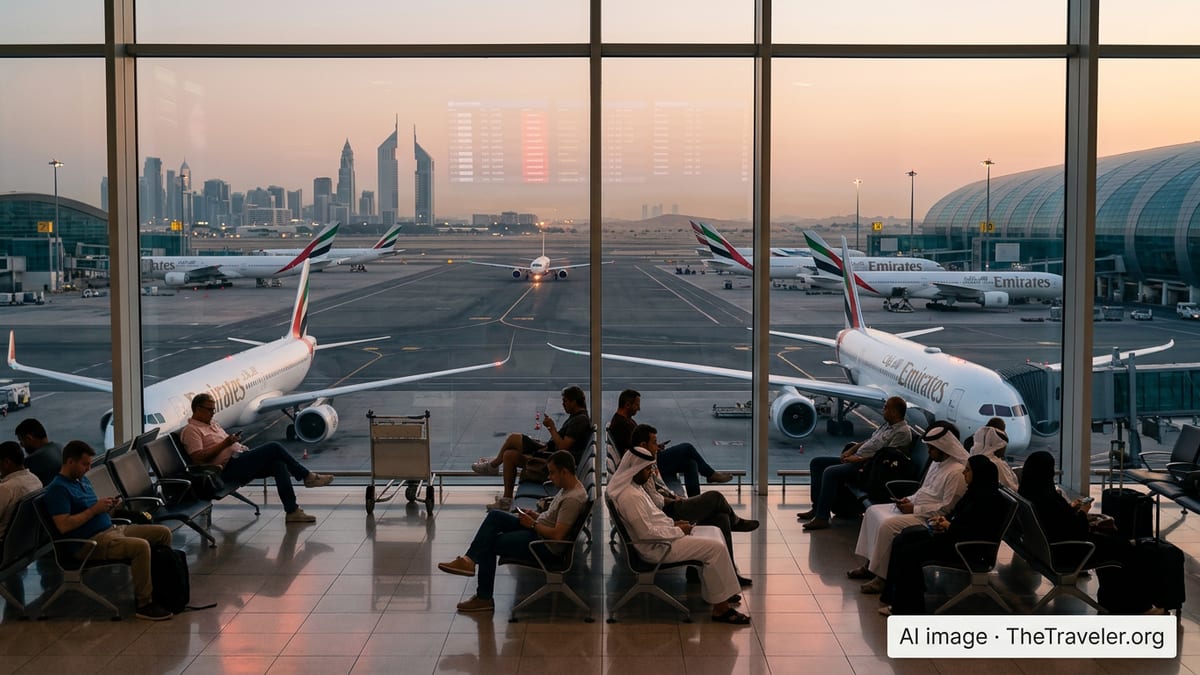
War Fallout Reverses a Regional Tourism Comeback
Before the latest escalation that began with United States and Israeli strikes on Iran on 28 February 2026, the Middle East was widely expected to be one of the fastest-growing tourism regions this year. Industry outlooks published ahead of the conflict pointed to double-digit growth in international arrivals, driven by record investment in destinations such as the United Arab Emirates, Saudi Arabia and Qatar as well as rebounding demand for cultural sites in Jordan and Egypt.
Those projections have now been sharply revised. Analysis from Tourism Economics and other forecasting groups indicates that instead of the previously anticipated 13 percent increase in arrivals, the region could face an 11 to 27 percent decline in 2026, implying a swing of more than 40 percentage points. Publicly available estimates cited by European travel trade publications suggest the conflict is costing the Middle East tourism sector more than half a billion euros per day in lost visitor spending as cancellations mount and new bookings stall.
Popular hubs that had been central to the region’s success story are now among the hardest hit. Reports on Dubai, Abu Dhabi and Doha highlight sharply lower inbound demand, particularly from long-haul markets in Europe and Asia that depend on smooth connections through Gulf mega-hubs. Travel industry data shared at recent trade events indicates that many international tour operators have paused marketing campaigns for Middle Eastern destinations, diverting budgets to other regions until the security outlook stabilises.
The shock is not confined to inbound travel. Regional tourism boards had been banking on increased intra-Gulf and short-haul leisure travel to sustain growth. Early evidence from airline booking systems and hotel partners, however, indicates that a significant share of residents in the Gulf Cooperation Council is postponing or re-routing upcoming trips that would have involved transiting conflict-affected airspace.
Airfares Spike as Fuel and War-Risk Costs Soar
The most immediate impact for travellers is visible in airfares. Jet fuel prices have climbed dramatically since the first days of the conflict, with industry reporting from carriers in Australasia and the Gulf indicating that jet fuel costs have jumped from around 85 to 90 dollars per barrel to ranges as high as 150 to 200 dollars. Airlines in multiple regions, including Qantas, SAS and Air New Zealand, have publicly cited the war-related spike in oil prices and heightened risk in Middle Eastern airspace as reasons for fresh rounds of ticket price increases.
Global aviation coverage from outlets such as Al Jazeera, the Guardian and major wire services describes a broad pattern of surcharges and fare hikes on long-haul routes that traditionally traverse the Gulf. Carriers serving Asia Europe corridors are facing a dual hit from higher fuel bills and lengthy rerouting to avoid vulnerable airspace, adding 30 to 90 minutes to some flights. According to travel industry briefings, airlines are passing a significant share of those extra costs to passengers through fuel surcharges of 20 to 100 dollars per leg, depending on distance and cabin class.
Travel intelligence reports compiled this month indicate that airfare inflation is also being felt well beyond the Middle East. A recent analysis from a major personal finance and travel research firm in the United States found that average airfares were up more than 7 percent year on year in March, with the Iran war identified as the main driver of the latest acceleration. Aviation economists warn that if the conflict persists and oil remains above 100 dollars per barrel, pressure for further fare increases on transatlantic and transpacific routes is likely.
At the same time, airlines appear to be employing revenue management tactics to maximise yields on constrained capacity. Publicly available commentary from Gulf and South Asian carriers suggests that base fares have not always been changed in official tariffs. Instead, cheaper booking classes are being withdrawn earlier, forcing late-booking travellers into higher fare buckets, which further amplifies the perception of a sudden price shock.
Flight Cancellations, Rerouting and Stranded Demand
Safety concerns and new military activity around key Gulf states have led to widespread disruption of airspace and airport operations. Aviation monitoring cited in industry outlets such as Travel Daily News Asia reports tens of thousands of flight cancellations across the wider region in the first days of the conflict. Iran’s declaration of closed airspace, temporary suspensions at airports in Iraq and Kuwait, and intermittent restrictions affecting Saudi Arabia and the United Arab Emirates have all forced airlines to abandon or significantly alter routings.
The closure or curtailment of operations at major transit hubs has far-reaching repercussions for global connectivity. Dubai, Abu Dhabi and Doha normally function as pivotal bridges between Europe, Asia, Africa and Oceania. With those hubs facing capacity constraints and routing uncertainty, travellers are being shifted to secondary channels through Turkey, Central Asia and Southern Europe, often at substantially higher prices. European consumer coverage notes that for Easter 2026 there are effectively no long-haul holiday destinations where airfares have remained entirely unchanged, with the Iran conflict cited as a key reason.
Government travel advisories have further dampened demand. In the United States, publicly available information from the State Department indicates that more than 43,000 American citizens have left the broader Middle East region during the first weeks of the war, following urgent calls to consider leaving countries closest to the fighting. As these travellers return home, airlines are cutting capacity on affected routes, reinforcing a cycle in which reduced supply meets lingering demand and fares remain elevated.
The disruption is also creating ripple effects for neighbouring countries that are not directly involved in the conflict but depend on overflight corridors. Reports focusing on Pakistan, for example, describe rapid increases in fares on routes to and from Gulf destinations, driven by fuel surcharges and the need for more circuitous routing. Similar dynamics are being reported on flights linking India, Southeast Asia and Europe, where journey times have lengthened and competition from Gulf carriers has temporarily weakened.
Hotels, Tour Operators and Local Economies Under Strain
On the ground, hotel groups and tour operators across the Middle East are scrambling to adapt to the abrupt reversal in demand. Coverage from regional business media on Dubai’s hospitality sector notes that luxury properties, which had been enjoying near-record occupancy and rates, are now cutting prices and promoting staycation packages to residents in an effort to offset the collapse of international bookings. In some Gulf cities, hoteliers are reported to be relaxing minimum-stay requirements and offering flexible cancellation policies to attract hesitant guests.
Tour providers in cultural destinations are facing a different challenge. In Jordan, for instance, previous reporting highlighted how attractions such as Petra, Wadi Rum and the Dead Sea had already experienced volatility due to the Gaza conflict and broader regional tensions. The latest Iran war has deepened perceptions of insecurity, leading some international operators to pull group departures and leaving local guides and small businesses dealing with an abrupt loss of income at the start of the peak spring season.
Economic assessments emerging from Europe point to rising losses well beyond the immediate conflict zone. An Italian travel industry federation has warned that disruptions linked to the US Israeli war with Iran and spillover into Gulf airspace could cost Italy alone at least 1.5 billion euros in lost tourism revenue this year, as would be visitors from the Middle East cancel trips and European residents rethink itineraries that involved connections through the region. Russian tour operators, according to local trade commentary, report substantial refunds for cancelled packages to Middle Eastern destinations through May.
Many local economies that invested heavily in tourism as a pillar of diversification away from oil now find themselves exposed on multiple fronts. While higher energy prices may boost hydrocarbon export revenues for some Gulf states, they also raise operating costs for hotels, airlines and ground transport providers. Analysts attending this month’s travel trade fairs in Europe caution that if the conflict is prolonged, governments in tourism-dependent economies may need to consider support measures for small and medium-sized travel businesses.
Travellers Pivot to Alternative Routes and Destinations
With prices rising and uncertainty mounting, travellers are beginning to adjust their behaviour. Publicly reported booking trends from Gulf-based travel agencies suggest that residents who had planned summer trips to nearby destinations such as Georgia, Armenia and Azerbaijan are now looking further afield, turning to Southeast and East Asia instead. Destinations including Thailand, Vietnam, Japan and Sri Lanka are being cited as beneficiaries of redirected demand, as they can be reached without transiting the most affected airspace corridors.
Within the Middle East, some tourism boards are focusing on domestic and regional visitors to cushion the blow from long-haul markets. Media reports from the United Arab Emirates and Saudi Arabia describe campaigns that promote staycations and short breaks for residents, combined with discounted packages at city hotels and resort properties. Early booking data for holiday periods such as Eid suggests that local demand can partially offset international losses, but industry executives acknowledge that it is unlikely to fully close the gap.
For international travellers intent on visiting the broader region despite the conflict, higher prices are being treated as an unwelcome but manageable trade-off in exchange for flexible booking conditions and robust travel insurance. Consumer advocates in Europe advise booking early to secure the best available fares and to monitor airline and government advisories closely, since additional rerouting or schedule changes remain possible. Travel analysts note that if Gulf hubs are able to restore more normal operations in the coming months, competitive pressure could gradually ease some of the current fare spikes.
For now, however, publicly available industry forecasts presented at events such as ITB Berlin 2026 suggest that elevated travel costs and disrupted connectivity may become defining features of the 2026 tourism season. Whether the Middle East can reclaim its role as one of the world’s fastest-growing travel regions will depend heavily on how long the Iran conflict continues to unsettle the skies above it.