

More news on this day
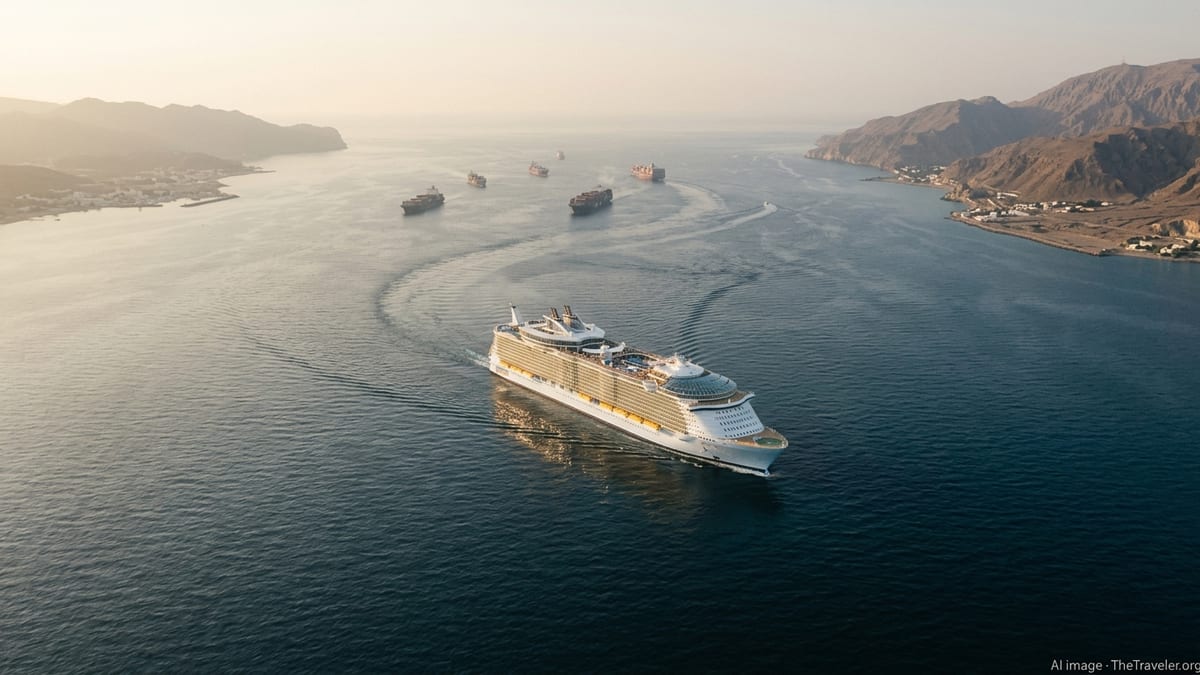
Escalating conflict around Iran, renewed attacks on commercial vessels in the Red Sea and mounting security warnings at key maritime chokepoints are rippling through the global cruise industry, forcing sweeping route diversions and rewriting holiday plans for thousands of travelers.
Get the latest news straight to your inbox!
From Red Sea Flashpoint to Global Cruise Headache
The Red Sea and neighboring waterways have been volatile for more than a year, with Yemen’s Houthi movement repeatedly targeting commercial shipping and prompting many operators to steer clear of the Suez Canal corridor. Industry reports show container traffic through Suez plunged as ships took the longer but safer path around Africa’s Cape of Good Hope, and cruise lines soon followed, wary of being caught in a rapidly evolving security environment.
The newest escalation, linked to the widening conflict between Iran, Israel and Western powers, has intensified those pressures. Publicly available information describes renewed Houthi threats against vessels perceived as linked to Israel, along with sporadic missile and drone activity near major sea lanes. Maritime advisories highlight the Bab al Mandab Strait, the southern gateway to the Red Sea, as particularly exposed, making it a critical factor in cruise planning.
While cruise ships are not the primary targets in most of these incidents, they operate in the same congested shipping lanes as tankers and container vessels. That overlap has pushed cruise companies to treat the Red Sea and adjoining waters as a dynamic risk zone, where a single incident can force immediate course changes, port cancellations or even evacuation logistics for thousands of passengers at once.
Strait of Hormuz Tensions Disrupt Gulf and Middle East Sailings
The latest phase of the Iran conflict has shifted attention eastward to the Strait of Hormuz, a narrow passage that connects the Persian Gulf with the Gulf of Oman and the wider Indian Ocean. According to open-source tracking and defense analyses, maritime traffic there has fallen sharply since late February 2026, after major strikes on Iranian targets and retaliatory moves raised fears of a prolonged closure.
Publicly available coverage indicates that Iran’s forces have asserted de facto control over parts of the strait, and some commercial and passenger vessels have turned back or remained in port amid uncertainty about transit permissions and insurance coverage. Cruise ships that had been based in Gulf ports such as Dubai and Doha have faced particularly acute challenges, with several reports describing thousands of passengers temporarily stranded as operators scramble to reposition vessels or arrange alternative flights.
For travelers, the sudden disruption has meant curtailed itineraries, last-minute hotel nights ashore and, in some cases, emergency repatriation efforts as ships avoid passing through waters designated as high risk. It has also cast doubt over the near-term future of winter sun cruise programs in the Gulf, which had been marketed aggressively in recent years as an alternative to Caribbean sailings.
World Cruises Rewritten Around Africa and the Pacific
Long-duration world cruises, which often rely on smooth passage through both the Red Sea and the Strait of Hormuz, have become the most visible casualties of the shifting security map. Since early 2024, lines including Princess Cruises, Cunard, MSC Cruises and others have publicly outlined major itinerary changes, with ships skipping Middle East ports, dropping Suez Canal transits and instead looping around the Cape of Good Hope.
Reports on recent seasons describe ships such as Island Princess, MSC Poesia and Queen Mary 2 rerouting away from traditional Middle East segments, spending additional days in Australia, southern Africa or the South Atlantic instead. More recently, cruise-planning analysts note that several 2026 and even 2027 grand voyages have been redesigned from the outset to avoid the Red Sea corridor altogether, favoring extended circuits in Asia, the Pacific or the Americas.
This shift has practical consequences for holidaymakers. Passengers who booked specifically for iconic experiences like transiting the Suez Canal or calling at ports such as Aqaba, Safaga, Jeddah or Muscat are finding those highlights removed from their journeys. In many cases they receive future cruise credits, partial refunds or the option to cancel, but rebooking similar cabin grades on peak-season sailings is becoming harder as itineraries compress into fewer perceived safe regions.
Knock-on Effects From India to Southern Europe
The instability is not only felt in the immediate conflict zone. Cruise ports along traditional repositioning routes between Europe and Asia, including hubs on India’s southwest coast, have reported lost calls and reduced bookings linked directly to the Red Sea crisis. Local tourism officials and port authorities in places like Kochi have publicly warned of declining revenue as ships bypass the region, either remaining in Europe for an extra season or heading around Africa without stopping.
In southern Europe and the Mediterranean, some lines are quietly scaling back Eastern Mediterranean calls that bring ships closer to the conflict arc. Schedules for 2025 and 2026 show a tilt toward western Mediterranean ports and Atlantic islands, reducing exposure to sudden airspace or maritime advisories in the eastern basin. Industry observers note that while many of these adjustments appear subtle in marketing materials, the cumulative effect is a geographic contraction of mainstream cruise offerings.
Further south, coastal destinations in South Africa, Namibia and the Indian Ocean are emerging as beneficiaries of the great detour. Openly available cruise schedules for the coming seasons feature more calls in Cape Town, Port Louis and other ports that sit on the longer Africa routes. However, these gains come at the cost of longer sea days, higher fuel consumption and more complex logistics for repositioning ships and crew.
What Passengers Should Expect for Upcoming Seasons
For travelers holding bookings in or near the affected regions, the main takeaway is uncertainty. Cruise lines now frame many Middle East and Red Sea itineraries as “subject to change,” and itinerary fine print often stresses that routes may be altered at short notice due to security assessments, insurance requirements or port restrictions beyond the company’s control.
Travel agencies and consumer advocates advise guests to monitor official travel advisories for countries bordering the Red Sea, Gulf of Aden, Arabian Sea and Persian Gulf, as these notices can influence how operators and insurers categorize risk. Publicly available guidance from governments already highlights piracy, missile threats and potential collateral damage from regional conflict as reasons to reconsider nonessential travel in certain waters.
Travel insurance is also becoming a more complex piece of the planning puzzle. Policies may treat declared conflict zones differently from general security alerts, and coverage for missed ports, emergency evacuation or trip cancellation can vary widely. Passengers are increasingly encouraged to read exclusions closely and to assume that cruise lines will prioritize route flexibility over maintaining a fixed schedule when tensions rise.
Despite the upheaval, industry analysts stress that global cruising is not shutting down, but rather rebalancing. Caribbean, northern Europe, Alaska and many parts of Asia remain largely unaffected in operational terms. Yet for travelers who once dreamed of stitching together Europe, the Middle East and Asia in a single seamless voyage, the Iran conflict and its spillover into key maritime chokepoints have made that dream significantly harder to realize, at least for the coming few seasons.