

More news on this day
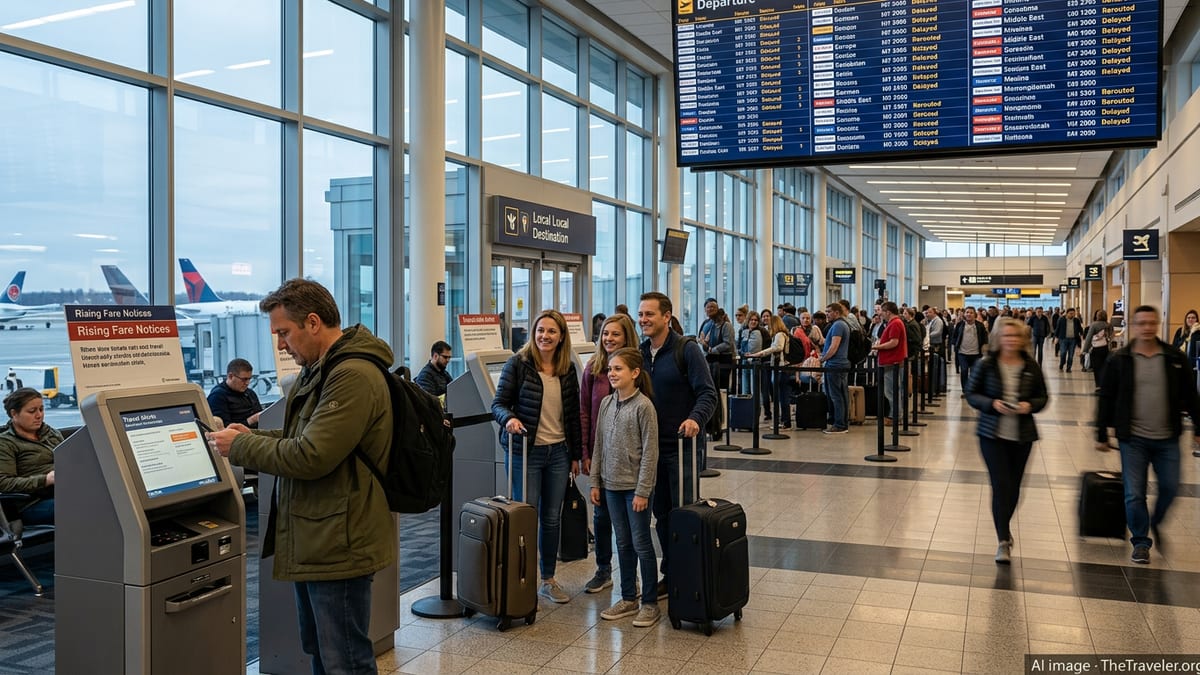
Escalating conflict involving Iran and the resulting disruption to regional airspace and oil flows are beginning to ripple through the global aviation system, pushing up long-haul fares while many travelers pivot to cheaper, closer-to-home destinations.
Get the latest news straight to your inbox!
Conflict, Closures and Costly Reroutes
Airspace restrictions and heightened security concerns around Iran are forcing airlines to redraw route maps across the Middle East and beyond. Reports indicate that carriers in Europe, Asia and the Gulf have been adjusting flight paths to avoid Iranian and neighboring airspace, sometimes adding hundreds of kilometers and significant extra flying time to typical transcontinental routes. Flight-tracking data published by aviation outlets shows wide detours north over Turkey and Central Asia or south via Egypt and Saudi Arabia where direct corridors over Iran, Iraq and parts of the Gulf would once have been standard.
In parallel, temporary airspace closures inside Iran and brief shutdowns in nearby Gulf states during missile exchanges have prompted waves of cancellations and last-minute reroutes. Coverage in specialist aviation media notes that airlines serving hubs such as Dubai, Doha and Abu Dhabi have been among the most exposed, given their role as connectors between Europe, Africa and Asia. Even when airspace formally reopens, many carriers are opting to keep their detours, reflecting continued risk assessments and insurance considerations.
Industry analysis from international airline bodies suggests that detours around conflict zones typically raise fuel burn by several percentage points on affected routes, adding to crew costs and squeezing aircraft and airport capacity. On some Europe–Asia sectors, operational briefings have cited increases in flight time of up to an hour when multiple conflict zones must be avoided, amplifying cost pressures that ultimately feed into ticket prices.
This latest disruption comes on top of an already fragmented global airspace map, with long-established no-go zones over Russia and Ukraine now combined with volatile corridors in the Middle East. For carriers that rely heavily on long-haul connectivity, the Iran conflict is another structural challenge that complicates scheduling, network planning and cost forecasts.
Oil Shock Drives Jet Fuel and Ticket Prices Higher
The conflict’s impact is not limited to navigation charts. Tensions around the Strait of Hormuz, a narrow maritime chokepoint that handles roughly a fifth of global oil shipments, have pushed crude prices sharply higher as tankers face mounting risks and delays. Publicly available energy market data in recent days has shown double-digit percentage jumps in benchmark oil prices after attacks on shipping and infrastructure linked to the Iran war. Analysts warn that any prolonged disruption to traffic through the strait could echo the oil shocks of the 1970s in scale.
Rising crude costs move quickly into jet fuel markets. Recent reporting from business news outlets indicates that average jet fuel prices paid by airlines have spiked compared with pre-war levels, with some indices tracking increases of more than a dollar per gallon within a short period. Carriers with limited fuel hedging are especially exposed, but even those with protection in place typically hedge only a portion of their needs, leaving the remainder vulnerable to spot-market volatility.
With fuel representing one of the largest single line items in airline operating costs, higher prices translate swiftly into pressure on airfares. Industry coverage notes that some non-U.S. airlines have already introduced fuel surcharges on select international routes, while American and European carriers are signaling that sustained cost increases will likely feed into higher ticket prices, particularly for long-haul and premium cabins. Analysts suggest that leisure travelers on discretionary international trips are the most likely to feel the pinch as airlines look to preserve margins on time-consuming, fuel-hungry flights.
These dynamics are unfolding just as global air travel demand had been stabilizing following the post-pandemic surge and subsequent normalization. Forecasts compiled by major corporate travel agencies before the latest escalation in Iran had projected relatively flat average ticket prices in 2025, with only modest regional variations. The new conflict-related cost shock is prompting some of those forecasters to revisit their models, especially for intercontinental journeys that cannot easily avoid affected airspace or oil price turbulence.
Travelers Pivot to Domestic and Regional Escapes
As international fares creep higher and headlines about conflict dominate news cycles, many travelers are adjusting plans. Surveys and booking data released over recent months by travel marketing and analytics firms show a clear tilt toward domestic and short-haul itineraries, even before the most recent escalation. One widely cited holiday travel report found domestic flight bookings up year over year while outbound trips to destinations such as Canada, Mexico, the Caribbean, Asia and Europe declined, underscoring a shift toward closer, generally cheaper journeys.
Industry observers note that this pattern appears to be strengthening as concerns about flying near conflict zones mix with anxiety over rising costs. Travel platforms tracking search behavior for 2026 indicate that interest in smaller regional cities and secondary airports is growing, particularly where low-cost carriers can still offer competitive base fares insulated from the longest, most fuel-intensive routes. In some markets, domestic hotel and vacation rental bookings are rising faster than outbound package holidays, reflecting a preference for so-called staycations or nearcations that keep spending and travel time down.
Tourism boards and local hospitality operators in a number of countries are reporting solid demand for nature-focused escapes, road-trip circuits and rail-connected city breaks. Reports highlight that national parks, coastal drives and historic regional towns are benefitting from travelers looking to avoid the uncertainty surrounding long-haul itineraries. For many households, especially those facing broader inflation pressures, the appeal of a shorter, more predictable trip that does not traverse multiple conflict-adjacent air corridors is proving decisive.
Corporate travel policies are also playing a role. Risk management guidelines issued by some multinational firms in response to the Iran conflict emphasize the need to avoid certain routings and hubs where possible, favoring direct or regional connections. This is reinforcing demand for intra-regional flights and high-speed rail where available, and adding to the relative resilience of domestic aviation markets compared with the more volatile intercontinental sector.
Winners and Losers in a Fractured Travel Landscape
The shifting patterns are creating distinct winners and losers across the travel economy. Long-haul network airlines with heavy exposure to Europe–Asia and trans-Gulf traffic are facing rising costs just as some price-sensitive customers pull back. Analysts tracking airline financial performance warn that smaller or heavily indebted carriers could struggle if fuel prices remain elevated and if airspace restrictions persist for months, potentially accelerating consolidation or prompting state support in strategically important hubs.
Conversely, regional and domestic-focused airlines, especially those operating within large home markets, may see relative gains. These carriers often fly shorter sectors that are less directly affected by the most expensive geopolitically constrained corridors. Several recent travel trend releases point to robust interest in secondary U.S. cities, Canadian provincial hubs and European regional destinations, with some airports reporting year-over-year growth in passenger volumes even as global headlines focus on conflict and uncertainty.
The hospitality sector is experiencing similar divergence. Beach resorts and city hotels that depend heavily on long-haul arrivals from distant continents are bracing for softer seasons or more last-minute bookings as travelers hesitate to commit to expensive flights routed near conflict zones. At the same time, locally oriented properties, boutique hotels in drive-to destinations and operators in rural or nature-based regions report steady or improving occupancy driven by domestic guests.
Travel advisors and online platforms are responding by foregrounding flexible booking options, clearly communicated routing information and tools that allow users to compare the cost and duration of itineraries that avoid sensitive airspace. For many consumers, transparency about where a flight actually goes and how geopolitical events might affect schedules has become just as important as price when choosing a trip.
What It Means for Trip Planning in 2026
For travelers looking ahead to late 2026, the evolving situation around Iran adds another layer of complexity to already dynamic travel planning. Analysts generally recommend that long-haul leisure travelers budget extra for airfare on routes that traditionally pass near the Gulf or across the Middle East, anticipating that both fuel prices and rerouting costs may remain elevated. Flexible dates and willingness to connect through alternative hubs away from the region can still unlock savings, but deep discount deals on ultra-long-haul routes may be rarer in the near term.
At the same time, the momentum behind domestic and regional tourism suggests plenty of opportunity for meaningful trips without crossing multiple conflict-affected borders. Data from booking engines and travel forecasters highlights strong interest in closer-to-home cultural capitals, emerging secondary cities and nature destinations that can be reached with a single short flight or by rail and car. Travelers increasingly appear to be prioritizing value, predictability and perceived safety over distance or novelty alone.
Publicly available forecasts from airline and tourism organizations indicate that global passenger demand is still expected to grow through 2026, but with a mix that tilts more strongly toward intra-regional flows. For destinations positioned to attract visitors from their own domestic base or nearby countries, the Iran conflict and its effect on airfares may paradoxically deliver a boost, as residents who might once have looked first to far-flung beaches or cities instead discover places in their own backyards.
In this environment, the story of skyrocketing international airfares is only half of the narrative. The other half is being written in revitalized local downtowns, national parks and small coastal towns, where the ripple effects of global instability are translating into fuller restaurants, busier trails and hotel registers filled with the names of travelers who chose to stay closer to home.