

More news on this day
Escalating conflict involving Iran is rippling through global tourism, as airspace closures, missile threats, and fast‑changing government advisories unsettle travel plans and rattle confidence at some of the world’s busiest gateways.
Get the latest news straight to your inbox!
Airspace Closures Turn Key Hubs into Bottlenecks
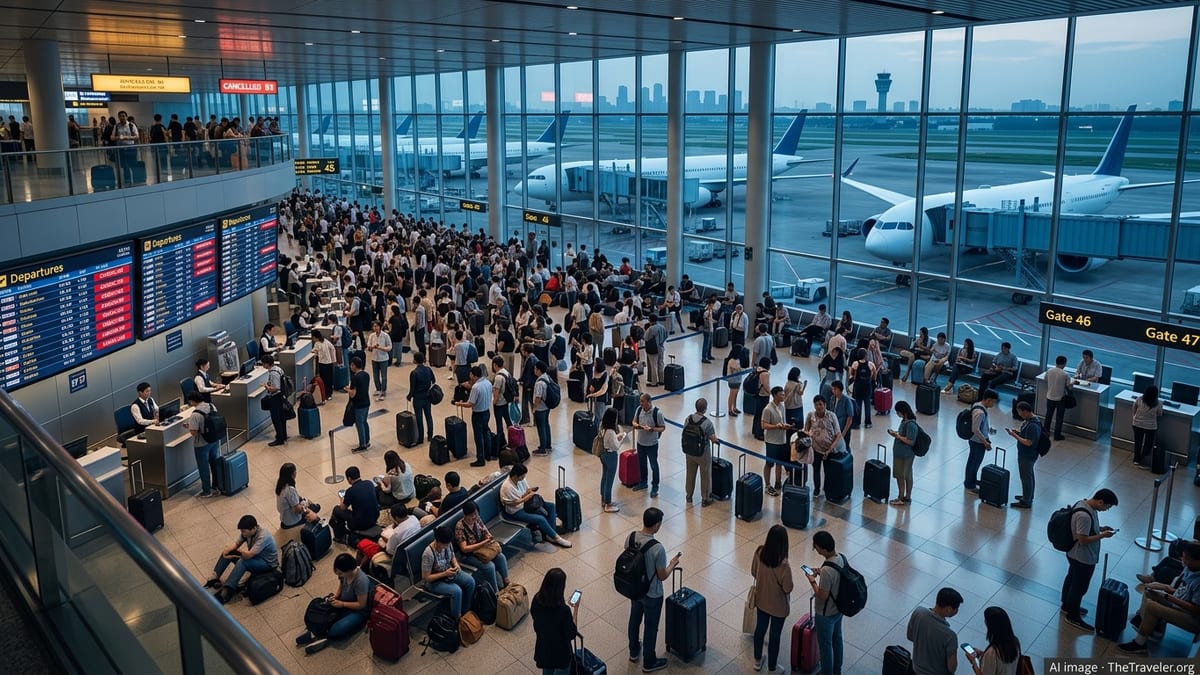
Since coordinated strikes involving the United States, Israel, and Iran on February 28, 2026, airspace closures across large parts of the Middle East have forced airlines into rapid, large‑scale rerouting. Reports from aviation trackers and international media describe near‑total shutdowns or sharply reduced operations at major hubs in Dubai, Abu Dhabi, and Doha, airports that normally function as critical bridges between Europe, Africa, and Asia.
Coverage from global outlets indicates that tens of thousands of passengers have been stranded or delayed after Iran, Iraq, and several Gulf states imposed tight restrictions or full closures of their skies. Some carriers have cancelled or suspended routes entirely, while others are flying long detours to skirt Iranian and Iraqi airspace, adding hours to journeys between Europe and destinations such as Southeast Asia, Australia, and the Indian Ocean.
Regional aviation specialists note that alternative corridors over Central Asia, the Caucasus, and parts of Africa are experiencing a surge in overflights as airlines divert away from the conflict zone. Azerbaijan’s airspace, for example, has seen rising transit traffic since earlier rounds of Middle East instability, and recent data suggests that trend has intensified as Iran‑adjacent routes remain constrained.
Industry analysis suggests these diversions are driving up fuel consumption, crew costs, and scheduling complexity, creating a cascading effect that is being felt at airports far removed from the immediate conflict, from European capitals to Asian resort gateways.
Iconic Landmarks Feel the Shockwaves
The disruption has filtered quickly to some of the world’s most recognizable tourist cities and landmarks, even those far from the battlefront. Published reporting highlights travelers stuck at airports serving destinations such as Bangkok, the Maldives, and Bali after their connecting flights through Gulf hubs were cancelled or significantly delayed, effectively cutting off long‑haul access to marquee leisure spots.
In Israel, previous attacks on resort areas and airports, coupled with the current regional crisis, have continued to depress inbound tourism to Mediterranean beaches and historic religious sites. Economic assessments of the broader Gaza war already documented steep declines in visitor numbers to Israel and neighboring economies, and current tensions with Iran are seen as deepening the slump by extending aviation risk across a wider geography.
Elsewhere, uncertainty over missile and drone trajectories has affected confidence in routes serving iconic destinations across the eastern Mediterranean and Indian Ocean. Travel advisories and aviation alerts from multiple governments reference the possibility of sudden course changes or extended flight times for journeys to popular holiday spots such as Thailand, the Maldives, and Australia, as carriers weave around no‑fly zones above Iran and adjacent territories.
Tourism boards in Southeast Asia are increasingly concerned about the indirect impact. Recent analysis from regional business media suggests that countries relying heavily on European and Middle Eastern transit traffic, including Malaysia and Thailand, could face weaker arrivals during 2026 peak seasons if Gulf hub connectivity remains compromised.
Governments Tighten Advisories and Urge Caution
Government advisories have hardened in step with rising tensions. The United States has previously issued a worldwide caution highlighting the risk of terrorism and state‑linked threats connected to Iran, and recent public guidance has emphasized the potential for sudden changes to aviation routes and security postures across the broader Middle East.
European and Asia‑Pacific governments have likewise updated travel advice for Iran and neighboring states, generally urging citizens to avoid non‑essential travel to areas near active hostilities and to remain prepared for rapid disruption if transiting the region. Some advisories specifically note that the closure of Iranian and Iraqi airspace has turned flight planning into a “jigsaw puzzle,” with itineraries to otherwise calm destinations potentially rerouted at short notice via Central Asia, the Caucasus, or southern corridors over Africa.
Specialist security briefings circulated in early March describe major Iranian gateways, including Tehran’s Imam Khomeini International Airport, as subject to severe disruption, while also flagging constrained operations at a range of Gulf and Levant airports. Governments have been coordinating evacuation assistance and contingency flights in phases, but capacity remains limited and highly dependent on day‑to‑day security assessments.
Advisories consistently encourage travelers to enroll in alert systems, maintain flexible itineraries, and pay close attention to airline notifications, underlining the speed with which conditions can change along routes that connect Western cities with South Asia, East Africa, and Oceania.
Global Tourism Faces a Crisis of Confidence
Industry observers describe the Iran‑linked conflict as the most significant shock to global air travel since the height of the pandemic. A recent analysis of airline schedules reports that more than half of all planned flights in parts of the Middle East have been cancelled since hostilities intensified, with tourism in several Gulf and Levant destinations effectively grinding to a halt.
Economic and tourism think tanks warn that the conflict arrives at a sensitive moment, as global travel demand was finally stabilizing after years of health‑related restrictions. The World Travel & Tourism Council and other groups had projected solid growth for 2026, but updated outlooks now highlight Middle East instability as a key downside risk, with potential knock‑on effects for long‑haul leisure markets worldwide.
Many travelers are responding by postponing or rerouting trips, even to destinations not directly involved in the conflict. Online booking platforms and insurance aggregators report elevated interest in flexible tickets, cancellation coverage, and real‑time safety information, underscoring a broader crisis of confidence in the reliability of complex multi‑leg itineraries.
Analysts note that while some travelers may shift toward closer‑to‑home or nonstop destinations, the wider industry remains vulnerable to further shocks if missile launches, cyber incidents, or regional escalations continue to threaten airspace integrity.
Insurance, Risk Management, and the Future of Long‑Haul Travel
The insurance sector is emerging as a critical buffer in the evolving crisis. One major United States‑based comparison platform recently reported an eighteen‑fold increase in customer inquiries related to Middle East airspace closures, as travelers seek clarity on what happens when flights are rerouted, delayed, or cancelled because of conflict.
Publicly available information from insurers indicates that many standard policies limit or exclude coverage for war‑related events, leading to growing interest in specialized products and add‑ons designed to mitigate geopolitical risk. Providers are promoting benefits such as trip interruption coverage, extra accommodation for stranded passengers, and compensation for missed connections caused by hub shutdowns or forced detours.
For airlines and tourism boards, the present crisis is prompting a reassessment of route structures and marketing strategies. Carriers are weighing the costs of keeping services to the region against reputational and operational risks, while destinations traditionally reliant on Gulf transfer traffic are exploring ways to diversify access through direct flights or alternative hubs in Europe, Central Asia, and Africa.
Strategic airspace managers in countries outside the immediate conflict zone, from the Caucasus to Central Asia, are positioning themselves as reliable corridors for east‑west travel, investing in radar coverage, air traffic control capacity, and contingency planning. How effectively these alternative routes can absorb displaced traffic may help determine how quickly global tourism recovers from Iran’s current threat to the stability of long‑haul networks.