

More news on this day
A worsening fuel crunch tied to the Iran war is rippling through global aviation, triggering widespread flight cuts, sharp fare increases, and mounting disruption for travelers across the Gulf, including Bahrain.
Get the latest news straight to your inbox!
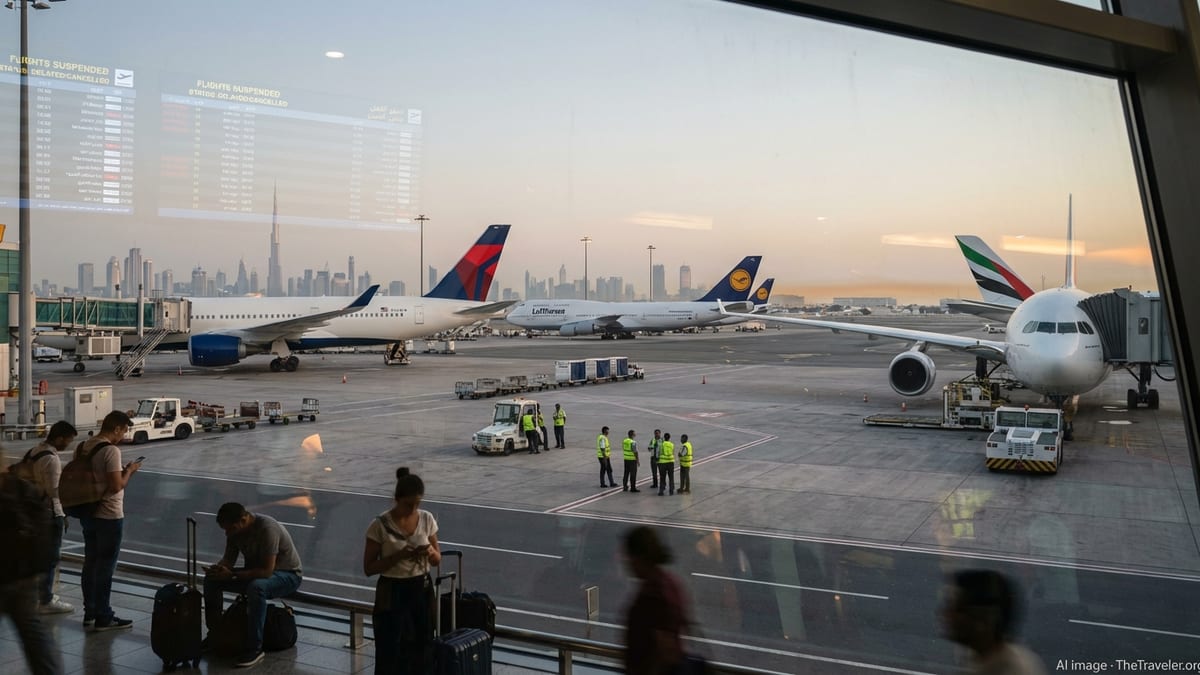
Jet Fuel Shock Reverberates Across Global Airlines
Airlines worldwide are racing to adapt as jet fuel prices surge in the wake of the Iran conflict and attacks on key oil and gas infrastructure in the Gulf. Industry trackers report that benchmark jet fuel costs have risen by more than 100 percent since early January, driven by restricted shipping in and around the Strait of Hormuz and strikes on Iranian energy facilities.
The price shock is already feeding through to airline balance sheets. Publicly available data shows carriers in the United States and Europe warning of higher operating costs and thinner margins as fuel, typically one of their largest expenses, rapidly becomes more expensive. Some U.S. airlines have begun adjusting ancillary fees and signaling that base airfares will climb as they attempt to offset the spike.
European groups such as IAG, Lufthansa, and Air France KLM are relying on fuel hedging to cushion part of the blow, but analysts note that financial protection does not solve the underlying problem of physical fuel availability. If jet fuel supplies tighten further at major hubs, even well-hedged airlines may have to cut flying simply because they cannot secure enough fuel to operate published schedules.
Industry association IATA has warned that the conflict has exposed structural vulnerabilities in jet fuel supply chains. The organization has cautioned that if airport stocks remain depleted for any significant period, airlines will have little choice but to continue trimming services and consolidating routes.
Massive Flight Cuts and Network Rerouting Take Shape
Across the Middle East and beyond, publicly available flight data indicates that tens of thousands of services have been canceled or re-routed since late February, when the latest phase of the Iran war escalated and multiple Gulf airspaces became heavily restricted. Routes traversing the Strait of Hormuz and adjacent conflict zones have been among the most affected, forcing airlines to redesign long-haul patterns between Europe, Asia, and Africa.
Carriers that once relied on fast, fuel-efficient routings via Gulf hubs are diverting via alternative corridors or suspending select services altogether. Aviation specialists describe this as a “perfect storm” in which longer flight paths, enforced detours, and higher fuel prices are combining to undermine the economics of marginal routes. In several cases, airlines are cutting 5 percent or more of near-term capacity as they rework schedules for the northern summer season.
North American and European airlines are also recalibrating their networks. Some have reduced frequencies to destinations that require significant extra fuel due to detours around restricted airspace, while preserving capacity on the most profitable long-haul trunk routes. Others are prioritizing aircraft with better fuel efficiency for extended missions, deploying newer narrowbodies and widebodies on routes where fuel use is most critical.
Observers note that the present disruption is the most severe fuel-related challenge to hit commercial aviation since the pandemic era, because it combines both price spikes and direct access constraints. Unlike purely financial shocks, this crisis limits the ability of airlines to simply pay more and continue flying as before.
Soaring Airfares and New Surcharges Hit Travelers
For passengers, the fuel crisis is increasingly visible in rising ticket prices and new surcharges. Reports from major carriers in Asia and the Middle East indicate fare hikes of 30 percent or more on select international routes, alongside the reintroduction or steepening of fuel surcharges that had been trimmed during periods of lower oil prices.
Low cost and long haul operators are adjusting pricing particularly quickly, as their models are highly sensitive to changes in operating costs. Some budget airlines in Asia have announced fare increases of up to 40 percent and additional fuel surcharges of around 20 percent, while stating that they intend to preserve as much of their route networks as possible. Industry commentators point out that such moves effectively shift a large part of the fuel burden directly onto travelers.
In North America, fee adjustments on services such as checked baggage and priority boarding are emerging as another lever to manage fuel-driven cost inflation. By raising optional fees, airlines can increase per-passenger revenue without formally altering all base fares at once. However, consumer advocates warn that the cumulative effect for travelers booking peak-season trips could be substantial, especially on routes that already command premium prices.
Travel booking platforms are beginning to reflect the new reality. Forward pricing data shows average fares climbing on many Europe Asia and transatlantic routes, with additional volatility expected as airlines continue to recalibrate schedules and capacity through the summer.
Bahrain’s Strategic Role and Local Travel Disruptions
Within the Gulf, Bahrain has emerged as both a pressure point and a potential stabilizing node in the reconfigured air network. Aviation operations briefings describe Bahrain’s airspace as heavily restricted, with periods of tightened control and the possibility of short notice closures as missile and drone risks evolve across the region.
At the same time, Bahrain’s position just outside some of the most contested corridors has turned it into a useful staging point for certain operators. Flight operations experts note that the country sits close to alternative south western bypass routes via Saudi Arabia and Egypt that allow traffic to avoid the most sensitive sections of the Strait of Hormuz. This geography is encouraging some airlines to keep Bahrain on their maps, even as they trim other Gulf stops.
For travelers, the picture is mixed. Some regional and long haul flights to and from Bahrain have been reduced or adjusted as airlines conserve fuel and rationalize their networks. There are reports of last minute schedule changes, extended connection times, and increased reliance on indirect routings via more distant hubs when direct options are suspended. Passengers heading to popular destinations in Europe and Asia are sometimes being rebooked through alternative cities, lengthening total journey times.
Local tourism and business travel stakeholders are watching developments closely. While Bahrain’s continued inclusion in certain airline expansion plans is seen as a positive signal, any escalation in regional airspace restrictions or further deterioration in fuel availability could translate into deeper cuts and more persistent disruption for inbound and outbound travel.
Summer Outlook: Capacity at Risk if Fuel Squeeze Continues
Looking ahead to the peak summer season, aviation analysts warn that the combination of sustained high fuel prices and ongoing constraints on Gulf energy exports could lead to more pronounced capacity reductions. Industry commentary suggests that, if jet fuel supply remains tight into June and July, airlines may need to remove additional flights from their timetables, particularly on leisure oriented routes where travelers are more price sensitive.
Carriers are preparing contingency plans that include consolidating frequencies, prioritizing high yielding corporate markets, and pausing new route launches. Some have also brought forward heavy maintenance and cabin retrofit programs, using the forced slowdown to position fleets for a potential rebound once fuel and security conditions stabilize. Others, however, lack the financial flexibility to absorb prolonged disruption, raising concerns about further consolidation or restructuring in parts of the sector.
Travelers planning trips that touch the Middle East or rely on traditional Gulf transit hubs are being urged by travel advisors and consumer groups to monitor schedules closely, allow extra connection time, and consider flexible or refundable fares despite their higher upfront cost. With the Iran fuel crisis reshaping global air networks in real time, the coming months are expected to remain unpredictable for anyone flying through or around the region.