

More news on this day
India’s largest airline IndiGo has been forced to slash its Europe operations and much of its Middle East network as the Iran-Israel war triggers sweeping airspace restrictions, colliding with Pakistan’s continuing ban on Indian carriers and creating a cascade of disruptions for travelers across India, the Gulf and Europe.
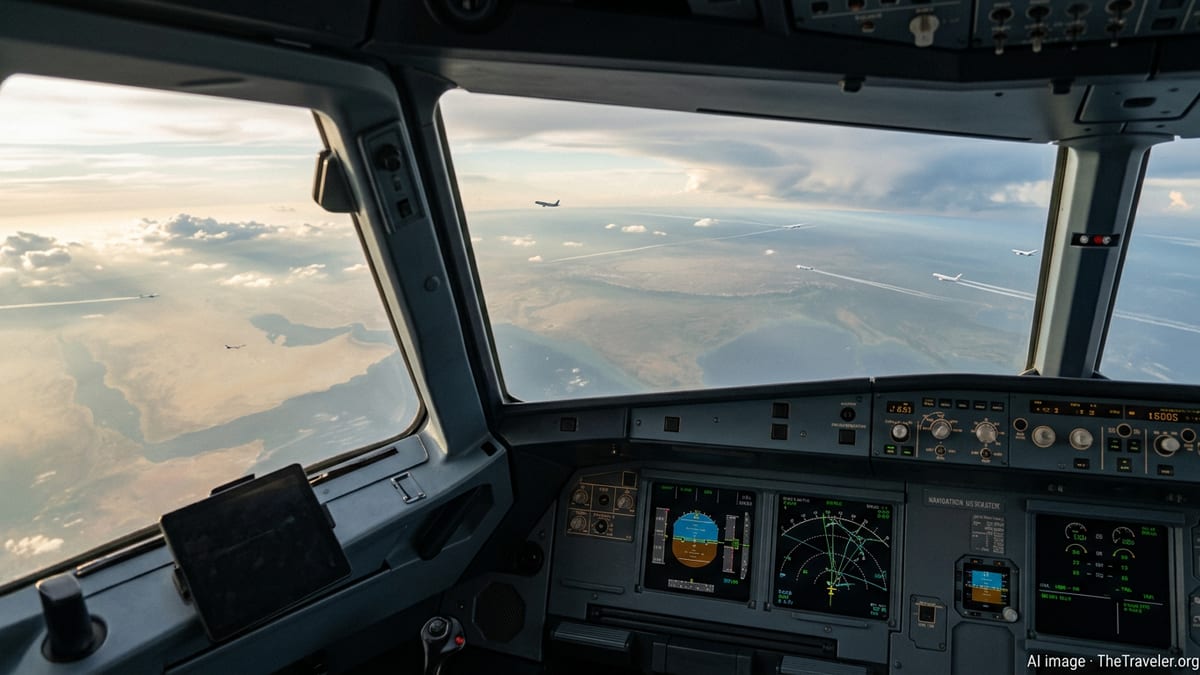
EASA Conflict Warnings Turn Key Corridors Into No-Fly Zones
The latest wave of disruption began after the European Union Aviation Safety Agency issued a fresh conflict-zone bulletin cautioning of a high risk to civilian aircraft over Iran and neighboring regions following intense strikes and retaliatory attacks. European regulators have urged airlines to avoid Iranian and adjoining airspace at all altitudes, effectively closing one of the most direct corridors between India and Europe.
For IndiGo, which has aggressively expanded into Europe via Istanbul and Middle Eastern gateways, those warnings have come on top of national airspace closures across the Gulf. Authorities in Iran, Israel and several Gulf states have temporarily shut large parts of their skies or imposed tight restrictions, crippling the hub-and-spoke networks that normally connect Indian cities with Europe, Africa and North America.
Aviation analysts say the war has created a vast hole in international airspace across the wider Middle East, forcing long detours through Central Asia or around the Arabian Peninsula. For some European routes, alternative paths are technically possible but commercially unviable once extra fuel, crew duty limits and insurance costs are factored in, pushing airlines toward mass cancellations rather than complex reroutes.
Insurers and safety regulators have also hardened their stance as missile and drone activity intensifies, raising the threshold for what is considered an acceptable level of risk. That has left airlines dependent on fast-changing advisories and nighttime notices from authorities, with schedules repeatedly redrawn at a few hours’ notice.
Pakistan Airspace Ban Leaves IndiGo With Nowhere To Turn
The crisis has been amplified for Indian carriers by Pakistan’s continuing prohibition on Indian aircraft, first imposed during the 2025 India–Pakistan standoff and later extended by aviation authorities into 2026. The ban blocks the most direct westbound corridor from Delhi and other northern Indian hubs toward Europe and the Middle East, forcing airlines to dogleg around Pakistani territory even in normal times.
In recent months, Indian flights have already been operating longer routings over the Arabian Sea or via Central Asia to avoid Pakistani skies. With Iran and large parts of the Gulf now off-limits as well, the remaining pathways narrow dramatically. For IndiGo, that has effectively shut the door on viable non-stop or one-stop connections between India and many European destinations.
Industry estimates suggest that even modest detours can add up to three hours to certain India–Europe sectors, consuming fuel reserves and pushing pilots and cabin crew beyond strict duty-time rules. When multiplied across dozens of daily rotations, the scheduling strain becomes severe, limiting how many flights an airline can realistically operate with its existing fleet.
The combined effect of the Iran-Israel conflict zone, Gulf airspace closures and Pakistan’s ban is a patchwork of blocked routes that leaves planners with few safe, legal and economically sensible options. Faced with that reality, IndiGo has chosen to ground many of its Europe-bound services altogether, rather than attempt marginal workarounds.
IndiGo Grounds Europe Flights And Slashes Middle East Schedule
In recent days, IndiGo has canceled over a hundred international flights on single days, including a large share of its services linking India with the Gulf and onward European connections. Istanbul and several Middle Eastern points that normally act as stepping stones to Europe have seen sustained suspensions, while some Central Asian routes previously used as alternative corridors have also been pulled as airspace options shrank.
The airline has announced temporary halts to flights serving key Gulf hubs where airports remain closed or heavily curtailed, and it has warned passengers that Europe services are subject to rolling cancellations as long as the conflict and airspace lockdowns persist. Travel trade groups in India report a surge in cancellations, rebookings and refund requests on itineraries involving the Middle East and Europe.
Financially, the disruption is expected to bite into IndiGo’s profitability this quarter, with analysts warning of a noticeable hit to revenue if the suspensions extend through March. Wide-body and partner-operated connections that fed passenger traffic into IndiGo’s India network have also been affected, reducing inbound tourism flows and business travel at the start of the busy spring season.
Other Indian airlines, including Air India and several low-cost rivals, have similarly axed or rerouted flights, but IndiGo’s sheer scale means its decisions are being felt more acutely by the market. With limited spare long-haul capacity, the carrier has little room to simply redeploy aircraft to unaffected routes, making outright cancellations an unavoidable part of its strategy for now.
Passengers Confront Chaos, Confusion And Skyrocketing Journey Times
For travelers, the operational decisions have translated into crowded terminals, long queues at airline counters and hours on hold with call centers as passengers scramble to salvage trips. India’s main international gateways in Delhi and Mumbai have seen waves of stranded Europe-bound passengers as IndiGo and other carriers repeatedly update schedules in response to overnight airspace notices.
Some passengers have been offered seats on longer, circuitous routings via Southeast Asia or Central Asia, with total journey times stretching well beyond 20 hours for what are normally eight or nine-hour flights. Others have opted for full refunds or travel vouchers, choosing to postpone journeys until there is greater clarity on the conflict and airspace situation.
Online travel agencies and booking apps have issued their own alerts, advising customers to reconfirm departure times before leaving for the airport and warning that conditions can change rapidly throughout the day. Tour operators in India, particularly those specializing in Europe and religious or labor travel to the Gulf, say they are grappling with a wave of last-minute changes and a sharp spike in customer anxiety.
Consumer advocates have reminded passengers that they are entitled to rebooking or refunds when flights are canceled, although compensation rules vary by jurisdiction and airline policy. For many travelers, however, the more immediate concern is simply getting home, with thousands still stuck in third-country transit hubs after their onward sectors were abruptly scrubbed.
Global Aviation Braces For Prolonged Turbulence
While IndiGo’s Europe pullback is among the most visible impacts for Indian travelers, the disruption is reverberating across the global aviation system. Major Gulf carriers that normally funnel India–Europe traffic through Dubai, Doha and Abu Dhabi have also canceled or severely curtailed schedules, removing key alternatives just as Indian airlines scale back.
Air traffic maps now show a conspicuous void over much of the Middle East, with transcontinental flights forced to skirt a broad arc of closed or restricted airspace. That has added pressure on secondary corridors over Central Asia, the eastern Mediterranean and the Red Sea, raising concerns about congestion and new bottlenecks as traffic is funneled into fewer lanes.
Industry bodies and safety regulators are meeting frequently to reassess risk levels and share intelligence, but most experts caution that airlines must plan for an extended period of operational uncertainty. Until there is a durable deescalation in the Iran-Israel war and a relaxation of conflict-zone advisories, carriers like IndiGo will remain constrained in how quickly they can restore Europe and Gulf services.
For now, the message to travelers is one of caution and flexibility: expect last-minute changes, leave extra time for connections, and be prepared for longer, more expensive journeys between India and Europe. With multiple geopolitical flashpoints converging over some of the world’s busiest air corridors, global aviation is entering one of its most challenging chapters since the pandemic era.