

More news on this day
Air travel around the world is being squeezed by the escalating Iran–Israel war, as jet fuel prices rocket to multi-year highs and tens of thousands of flights across the Middle East are cancelled, rerouted or abruptly suspended, sending shockwaves through airline schedules and passenger plans far beyond the region.
Get the latest news straight to your inbox!
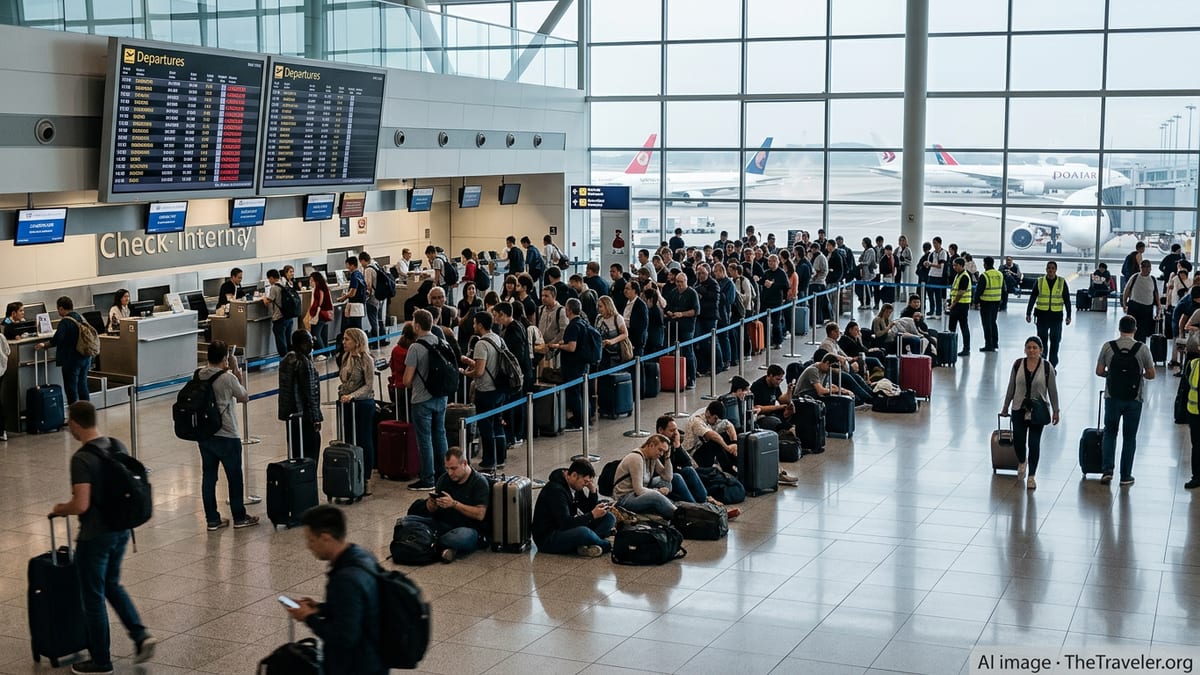
Jet Fuel Prices Soar To New Highs As Oil Tops 100 Dollars
The opening weeks of the conflict have transformed the global fuel market in a matter of days. Brent crude has surged back above 100 dollars a barrel, reviving memories of previous energy shocks and instantly feeding through to aviation costs. With the war centered around the Strait of Hormuz, a vital artery for oil exports, traders are now pricing in prolonged disruption rather than a brief flare-up.
Industry benchmarks show just how abrupt the spike has been. The Argus US Jet Fuel Index has leapt from around 2.50 dollars to nearly 3.90 dollars a gallon within a week, while international assessments of jet fuel indicate a jump of more than 50 percent week on week to well over 150 dollars a barrel. For airlines that typically budget months ahead on the basis of relatively stable fuel curves, the new levels are forcing rapid revisions to their 2026 financial outlooks.
Because fuel is often the single largest expense for carriers, accounting for a quarter to nearly a third of operating costs, analysts warn that the sudden increase could erase much of the profit recovery the industry had been counting on this year. Executives at several global airlines have already signaled that higher fares and new or expanded fuel surcharges are now inevitable if current prices persist.
Some airlines had hedged a portion of their fuel exposure, but those protections only cover part of their needs and are time limited. As contracts roll off into the higher-price environment, carriers that were already grappling with wage inflation and aircraft delivery delays are confronting a fresh hit to margins, with investors marking down airline stocks sharply in recent days.
Middle East Airspace Closures Drive Mass Cancellations
While fuel costs rise worldwide, the most acute travel turmoil is unfolding above the Middle East itself. A patchwork of airspace closures and military risk zones spanning Iran, Israel, Iraq, Kuwait, Qatar, Bahrain and parts of the Gulf has forced airlines into sweeping schedule cuts. Aviation analytics firms report that more than 46,000 flights in and out of the broader Middle East region were cancelled between late February and mid March as the war intensified.
Flag carriers and low-cost airlines alike have suspended or sharply reduced services to key hubs such as Tehran, Doha, Kuwait City and select airports in Saudi Arabia after missile and drone strikes were reported near civilian infrastructure. Some terminals and runways have sustained damage, while other airports remain operational but subject to sudden ground stops and lengthy security checks, making reliable scheduling nearly impossible.
Even where airports stay open, air traffic controllers are imposing wide buffer zones around active conflict areas, pushing commercial jets onto longer, more congested routes. Flights that once crossed Iranian or Iraqi airspace on direct great-circle tracks between Europe and Asia are now being rerouted via Turkey, Central Asia or the Arabian Sea, adding flight time, fuel burn and operational complexity.
For passengers, the impact is being felt in a wave of last-minute cancellations, missed connections and extended layovers. Travellers connecting through major Gulf hubs have found themselves stranded as airlines consolidate or cancel multi-leg journeys, while local residents face shrinking options for regional travel as carriers temporarily pull down their networks across affected cities.
Global Ripple Effects: Longer Routes, Higher Fares And Thinner Networks
The immediate disruption remains concentrated in the Middle East, but the knock-on effects are now radiating across global aviation. Airlines in Europe, Asia-Pacific and North America that do not fly to Iran or Israel directly are nevertheless being squeezed by higher fuel bills and altered routings that lengthen long-haul flights. Reduced overflight options in the region are also constraining the number of commercially viable corridors between Europe and South or Southeast Asia.
Route planners are responding with a mix of temporary suspensions and permanent cuts on marginal services. Flights that had been operating at thin profit margins are under renewed scrutiny, with older, less fuel-efficient aircraft among the first to be grounded. Some carriers are prioritising their densest and most profitable trunk routes, trimming frequencies to secondary cities in order to free up aircraft and crews where demand and yields are strongest.
Travelers are beginning to see the results in booking engines. Economy tickets on certain Europe–Asia and transpacific routes that require detours away from conflict airspace have risen sharply in recent days, with premium cabins climbing even faster as airlines try to offset cost pressures. Corporate travel managers are reworking budgets and itineraries, while leisure travelers who locked in trips months ago are finding that rebooking around disrupted routes often means paying much higher current fares.
At the same time, some alternative hubs are experiencing a surge in traffic. Airports in countries whose airspace remains open but relatively close to the conflict zones, such as Oman and parts of Central Asia, are emerging as key pivot points for relief and diversion flights. That shift is likely to reshape travel patterns at least temporarily, as airlines test new connection banks and travelers grow familiar with unfamiliar stopover cities.
What Airlines Are Saying And How They Are Responding
Airline leaders have moved quickly to prepare passengers and investors for a period of sustained volatility. Executives at major United States carriers have warned that higher airfares could arrive sooner rather than later if jet fuel prices remain near current highs. Some have already introduced modest across-the-board surcharges on domestic tickets, with steeper increases on long-haul international routes where fuel accounts for a larger share of operating expenses.
In Europe and Asia, several full-service airlines have extended suspensions of flights to Riyadh, Doha and other Gulf destinations by at least another week, citing evolving security assessments. Carriers in Australia and New Zealand have raised base fares on both domestic and international sectors to help offset the fuel surge, while also signaling that certain network and schedule adjustments are likely if conflict-driven costs persist.
Low-cost carriers, which typically operate with thinner financial buffers and rely on high aircraft utilisation, may be among the hardest hit if the current environment drags on. Analysts note that budget airlines have less room to pass on sharp cost increases without dampening demand from price-sensitive travelers. Some have already begun trimming frequency on leisure routes and postponing planned capacity growth for the northern summer season.
Behind the scenes, operations teams are working through increasingly complex contingency plans. Dispatchers are building extra fuel reserves into flight plans to account for potential diversions, while crew schedulers juggle the impact of longer duty days and unplanned overnights when routes shift mid-flight. Industry groups are lobbying regulators for flexibility on slot rules and service obligations, arguing that the extraordinary geopolitical environment warrants temporary relief similar to measures adopted during the pandemic.
Guidance For Travelers Caught In The Turmoil
For travelers with upcoming trips touching the Middle East or using the region as a connecting point, the single most important piece of advice from travel experts is to stay flexible. Schedules are changing rapidly as airlines react to shifting security guidance and fuel costs, and even flights that appear confirmed can be retimed or rerouted at short notice.
Passengers are being urged to monitor their airline’s app and email alerts closely in the days and hours before departure, rather than relying on static itinerary PDFs. Where possible, booking nonstop flights or connections that avoid conflict-adjacent hubs can reduce exposure to cascading disruptions. Travel agents recommend allowing longer connection times than usual, especially on itineraries that still require Middle East overflights or stopovers in nearby countries.
Those yet to purchase tickets may want to prepare for higher prices throughout the northern spring and potentially into the summer if the war continues to pressure energy markets. Flexible or refundable fares, while more expensive up front, can provide valuable protection in an environment where routes may be suspended or rescheduled repeatedly. Comprehensive travel insurance that clearly covers war-related disruptions remains difficult to obtain, but policies that include missed connection and delay benefits can still soften the financial impact of disruption.
Despite the chaos, global skies remain open, and many popular tourism regions are still accessible with careful planning. However, as the Iran–Israel war continues to roil oil markets, jet fuel prices and airspace access, travelers should expect that long-haul flying in 2026 will be more expensive, more circuitous and more prone to last-minute change than it has been in years.