

More news on this day
A 4.1 magnitude earthquake that struck west of the southern Iranian port city of Bandar Abbas on Saturday, March 7, 2026, has prompted renewed travel warnings as the country grapples with heightened regional tensions and a noticeable uptick in seismic activity along its Persian Gulf coast.
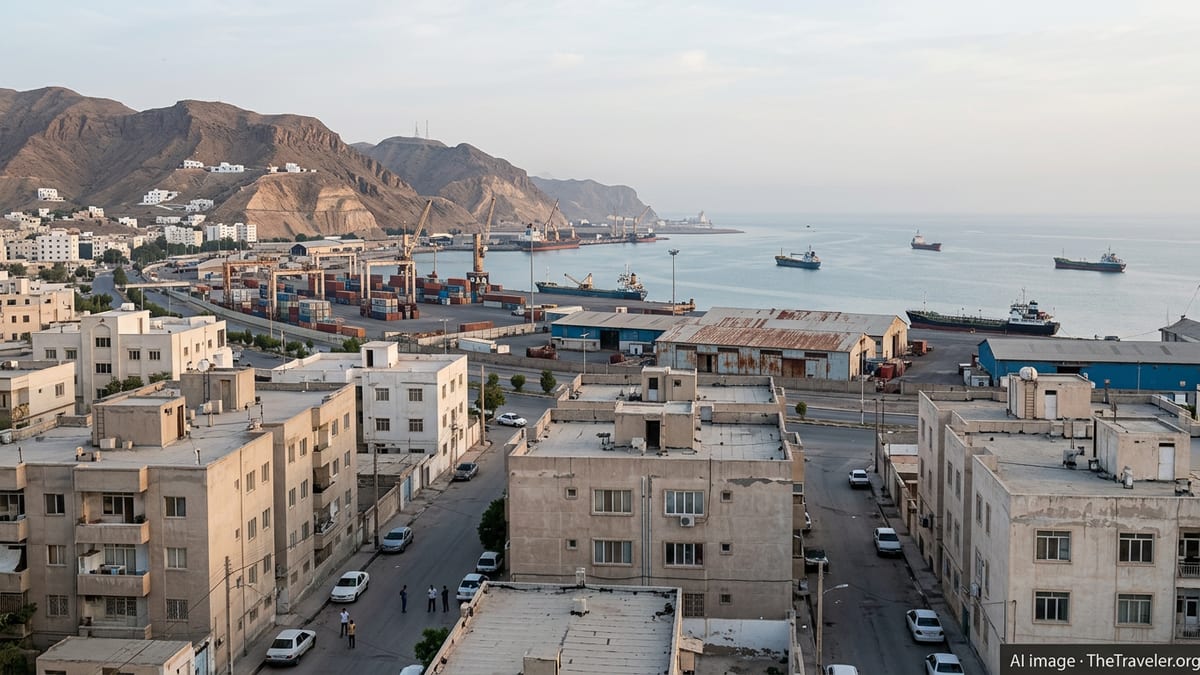
Fresh Tremor Near Strategic Port Raises Safety Concerns
According to preliminary data from international seismological agencies, the earthquake was recorded at magnitude 4.1 with an epicenter west of Bandar Abbas in Hormozgan Province, a region that sits along several active fault lines and has a long history of moderate to strong quakes. Local and regional media reported the tremor in the early hours of Saturday, with shaking felt in nearby coastal communities that line the Strait of Hormuz.
Early reports from Iranian outlets and regional news partners indicated no immediate casualties or major structural damage, and there were no official announcements of port closures on Saturday linked directly to the quake. However, residents described a sharp jolt followed by several seconds of vibration, enough to send people briefly outdoors and to raise anxiety in a city already living under the shadow of war and economic strain.
The latest tremor follows a pattern of light to moderate seismic events around Hormozgan in recent years, many clustered around Bandar Abbas and neighboring Bandar Khamir and Bandar Lengeh. Seismologists note that while quakes around magnitude 4 are generally classified as light, they can unsettle older or poorly reinforced buildings and serve as a reminder of the region’s vulnerability to larger seismic shocks.
Bandar Abbas is also home to the country’s largest container port and major naval facilities, making any disruption there particularly sensitive at a time when commercial shipping through the Strait of Hormuz has already been curtailed by the ongoing military confrontation involving Iran, the United States and Israel.
Travel Warnings Intensify Amid War and Airspace Disruptions
The earthquake struck at a moment when many Western governments, including the United States, have been escalating their warnings about travel to Iran and the wider Middle East. In the past week, the US State Department has renewed calls for its citizens to avoid or depart Iran and more than a dozen neighboring countries, citing serious safety risks tied to the expanding regional conflict and to missile and drone attacks affecting key transport hubs.
Those advisories follow coordinated United States and Israeli strikes on Iranian targets in late February, which were met with retaliatory attacks across the Gulf that have affected airports and airspace in multiple states. Civil aviation authorities in the region have restricted or suspended certain routes, and major international carriers have trimmed schedules or temporarily halted flights to affected capitals and port cities.
For travelers, the result has been a patchwork of rapidly shifting rules, from rerouted long-haul flights to last-minute cancellations and extended layovers in safer hubs outside the Gulf. Even before the latest quake near Bandar Abbas, industry analysts were warning that the conflict had turned much of the northern Persian Gulf into a high-risk zone for both commercial aviation and maritime operations, with insurance costs and security protocols climbing in step.
In this context, the earthquake, even at a relatively modest magnitude, is being viewed by travel risk consultants as an added stress factor for an already fragile situation. They note that any further damage to infrastructure, port logistics or power supplies in southern Iran could complicate evacuation plans and overland travel for those still in the country.
Bandar Abbas at the Crossroads of Conflict and Geology
Bandar Abbas occupies a uniquely exposed position at the narrow mouth of the Persian Gulf, directly overlooking the Strait of Hormuz, one of the world’s most important chokepoints for oil and gas shipments. The city’s port complex, including the large Shahid Rajaee terminal, has undergone rapid expansion over the past decade, adding industrial zones, refineries and logistics hubs along a coastline framed by steep, faulted mountains.
That geography is part of a wider tectonic collision between the Arabian and Eurasian plates, which has produced some of Iran’s deadliest earthquakes. Historical records show damaging quakes in and around Hormozgan Province, including events that have destroyed villages, damaged port infrastructure and triggered landslides in nearby hills. Urban growth and heavier industrial use of the coastline have only increased potential exposure.
In recent years, coastal authorities have been under pressure to upgrade building codes and retrofit older structures, particularly in working-class neighborhoods and informal settlements where enforcement can be inconsistent. While newer port facilities, hotels and office towers tend to meet stricter standards, many residential areas of Bandar Abbas consist of low-rise concrete or masonry buildings that could fare poorly in a stronger event.
The current security environment adds another layer of complexity. With the Strait of Hormuz partially closed to routine commercial traffic and naval deployments increased across the region, emergency planners must account for the possibility that a moderate or major earthquake could coincide with military escalation, complicating both local response and international assistance.
Rising Seismic Activity Adds to Traveler Risk Calculus
Saturday’s quake west of Bandar Abbas comes after a series of light to moderate tremors recorded across Hormozgan and southern Iran over the past year, several in the magnitude 3.5 to 4.6 range. While geologists caution that such sequences do not automatically signal an imminent large earthquake, the clustering of events has been enough to keep local authorities on alert and to reinforce recommendations for preparedness measures.
For travelers, especially those drawn to Iran’s coastal landscapes, historic trading ports and nearby islands, this pattern of seismic activity is a reminder to check not only security advisories but also practical safety planning. International organizations that monitor natural hazards are advising visitors to familiarize themselves with evacuation routes in hotels and guesthouses, to avoid staying in visibly cracked or poorly maintained buildings, and to keep basic emergency supplies close at hand.
Risk specialists stress that the recent quakes have not shut down tourism outright, but they argue that in combination with regional conflict they raise the bar for what constitutes an acceptable level of risk. Some travel insurers have already tightened coverage terms related to both war and earthquakes in Iran, leading tour operators to delay departures or pivot itineraries to alternative destinations in the Caucasus, Central Asia or the eastern Mediterranean.
Independent travelers, meanwhile, are being urged to adopt a more conservative approach, including registering with their embassies where possible, maintaining flexible onward tickets and monitoring local Persian-language media for real-time updates on both security incidents and seismic events.
What Travelers Should Know Before Heading to Iran Now
For those still considering travel to Iran in the coming weeks, experts recommend weighing several overlapping factors. The first is the evolving security picture linked to the conflict between Iran, the United States and Israel, which has resulted in periodic strikes on infrastructure, heightened military alert levels and protests in major cities. The second is the volatility of regional airspace and maritime routes, which can disrupt both arrival and departure plans with little warning.
The third factor is environmental and geological risk, highlighted by the latest earthquake near Bandar Abbas and by the broader seismic history of the country. Travelers should understand that many of Iran’s cultural and natural highlights, from ancient cities to dramatic mountain and desert landscapes, lie within zones of elevated earthquake hazard, where building standards and emergency services may vary considerably from one province to another.
Seasoned travel planners suggest that anyone proceeding with a trip to Iran at this time should work with operators experienced in crisis management, keep itineraries relatively simple and avoid nonessential detours into sensitive border regions or heavily militarized coastal areas. They also advise reviewing the fine print of travel insurance to confirm coverage for both conflict-related disruptions and natural disasters.
Ultimately, while the 4.1 magnitude quake near Bandar Abbas has not yet been linked to serious damage, its timing, against a backdrop of war, closed shipping lanes and a noticeable uptick in regional seismicity, underscores how quickly conditions can shift. For prospective visitors, staying informed and erring on the side of caution has rarely been more important when it comes to travel in and around Iran.