

More news on this day
Escalating attacks on energy infrastructure and explicit threats against global tourism sites linked to Iran are reshaping security calculations from the Persian Gulf to major travel hubs worldwide, as United States forces reposition for what analysts describe as a potential strategic showdown.
Get the latest news straight to your inbox!
Energy Infrastructure Becomes a Central Battlefield
Recent reporting indicates that Iran and its allies have sharply expanded strikes on critical oil, gas and power assets across the Middle East, turning energy infrastructure into a primary front in the conflict. Analysis by multiple monitoring groups describes a pattern of missile and drone attacks on export terminals, refineries and storage hubs in Gulf Arab states, as well as retaliatory fire on Iranian and Israeli facilities. The result has been disrupted production, precautionary shutdowns and heightened concern over the security of global fuel supplies.
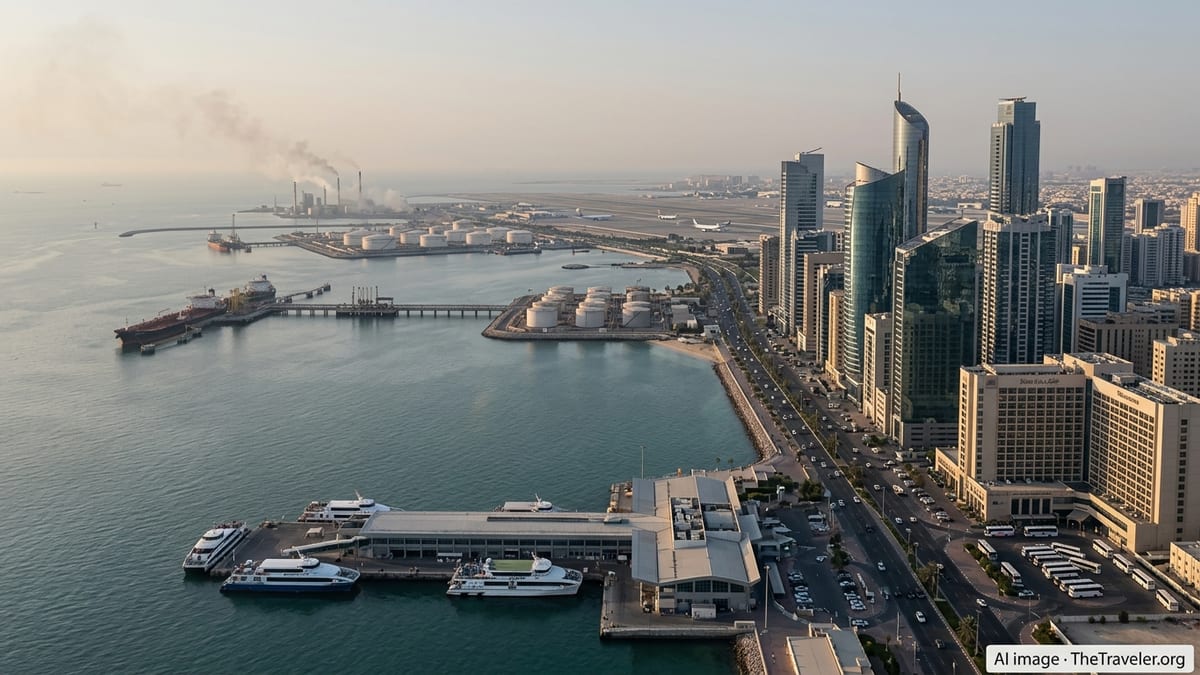
One focal point has been the wider Gulf region, where public reporting describes Iranian drones and missiles hitting ports and terminals that handle crude oil, liquefied natural gas and refined products. Facilities in Oman and the United Arab Emirates, including major transshipment and bunkering hubs, have been damaged or forced to suspend operations after recent barrages. Maritime security digests note that these locations serve both commercial shipping and U.S. military logistics, making them strategically significant beyond their economic role.
The shockwaves have extended to Qatar and Iran’s own neighborhood. Coverage of the March attack on Iran’s South Pars gas field and associated infrastructure describes it as a critical blow to one of the world’s most important natural gas complexes, prompting Iranian retaliatory strikes on energy facilities in neighboring states and adding another layer of risk to already volatile markets. Industry and policy analysts warn that repeated strikes on such nodes could reverberate through Europe, Asia and Africa via higher prices and supply disruptions.
Rights and watchdog organizations have highlighted the civilian and environmental stakes of this emerging “infrastructure war.” Publicly available statements from humanitarian groups argue that attacks on power plants, desalination facilities and related energy sites carry a substantial risk of cutting off electricity, heating and safe water for millions of people, with fires and contamination potentially causing long-term damage.
Global Tourism Under New Threat
Alongside the energy campaign, Iran-linked messaging has widened the target set rhetorically to include tourism and leisure sites far beyond the immediate combat zone. According to recent wire-service coverage, Iranian leaders and affiliated media have warned that parks, recreational areas and tourist destinations associated with perceived adversaries may no longer be considered safe. These declarations have been interpreted by regional officials and security analysts as an attempt to project reach and raise the psychological cost of the confrontation.
Travel and aviation data show that key hubs already feel the strain. Major international airports across the Gulf, including facilities that handled tens of millions of passengers in recent years, have experienced airspace restrictions, temporary diversions and heightened security measures as missiles and drones traverse nearby skies. Even where physical damage has been limited, the perception of vulnerability around airports, seaside promenades and resort districts has prompted some travelers and tour operators to reconsider itineraries.
Security assessments compiled by think tanks tracking the conflict describe an evolving pattern in which attacks are designed to pressure adversaries not only militarily but also economically, by targeting sectors like tourism that are central to diversification efforts in Gulf states. Cities that promote themselves as safe transit points and leisure destinations now find themselves in proximity to missile and drone flight paths, complicating marketing campaigns and insurance calculations.
Industry observers note that past conflicts in the region tended to focus on border areas, military bases or offshore energy platforms, while coastal skylines, shopping districts and heritage attractions remained relatively insulated. The current rhetoric about threatening global tourist spaces, combined with the geographic spread of strikes into areas with dense civilian and visitor traffic, is seen as a qualitative shift that could reshape risk maps used by airlines, cruise lines and hotel groups.
U.S. Military Posture Signals Strategic Showdown
As Iran’s attacks on energy and potential tourism-related targets multiply, the United States military posture across the broader Middle East has hardened. Recent news coverage details fresh deployments of U.S. troops and assets to the region, with officials framing the moves as part of collective self-defense in support of partners and the safeguarding of critical sea lanes such as those near the Strait of Hormuz. Publicly available information indicates that access agreements with allied states, including the use of bases in Europe and the Gulf, have been activated or expanded to enable air and naval operations.
Analysts describe this buildup as a signal that Washington is preparing for a sustained confrontation if Iranian strikes continue to threaten energy flows and international shipping. Maritime security reports emphasize that U.S. planners appear focused on protecting ports, logistics hubs and communications nodes that underpin both commercial trade and military maneuvering. The concentration of Iranian attacks on such infrastructure is seen as an effort to complicate any long-term U.S. presence and to raise the cost of supporting regional partners.
The United States has also coordinated closely with Israel in recent operations targeting Iranian military and energy-linked sites, including high-profile strikes on gas fields and logistics facilities. Strategic studies institutes note that these joint actions have, in turn, prompted Iran to widen its retaliatory campaign across multiple Arab states, drawing in additional actors and increasing the likelihood of miscalculation. The dynamic has created what some analysts characterize as a feedback loop: each new strike invites a broader and more symbolically significant response.
Commentary in policy journals suggests that Washington’s leaders are balancing several objectives simultaneously: deterring further Iranian attacks on U.S. forces and infrastructure, reassuring partners dependent on secure energy exports, and avoiding a direct, full-scale regional war. The deployment of missile defenses, carrier strike groups and additional air assets is interpreted as part of an effort to preserve escalation dominance while still keeping channels for de-escalation open.
Travel Industry Braces for Prolonged Instability
The overlapping campaigns against energy infrastructure and threatened tourism sites have left the global travel sector bracing for what many executives fear could be a prolonged period of instability. Airlines and cruise companies with routes through the Gulf and eastern Mediterranean are reviewing contingency plans, adjusting flight paths and, in some cases, announcing temporary route suspensions or capacity cuts. Insurers are reassessing war-risk premiums for aviation and maritime traffic in affected corridors, costs that could ultimately filter down to travelers.
Destination marketing agencies in the wider region are recalibrating their messaging, emphasizing inland attractions, cultural events and perceived safe corridors instead of heavily exposed coastal facilities. Analysts following booking patterns report that some travelers are shifting holidays away from the most directly affected countries toward alternative destinations in Europe, Asia and the Americas, while others postpone long-haul trips altogether amid rising airfares and uncertainty.
Global tourism bodies warn that a sustained perception of danger in or near historically popular hubs, including those that function as intercontinental transit points, could slow the recovery of international travel that had gained momentum after the pandemic-era downturn. For economies that rely simultaneously on hydrocarbon exports and tourism revenue, continued attacks on refineries, ports and the mere threat of strikes on leisure sites represent a double shock that could weigh on employment and public finances.
At the same time, some regional stakeholders are exploring resilience measures, from hardening key attractions and transport nodes to diversifying source markets and investing in domestic tourism. Analysts caution, however, that such steps can only partially offset the chilling effect of the current conflict. As Iran’s campaign against energy and symbolic targets continues and U.S. forces prepare for a drawn-out contest over access and deterrence, the outlook for both regional stability and the global travel economy remains highly uncertain.