

More news on this day
A fresh wave of Iranian attacks targeting energy infrastructure in the United Arab Emirates, including operations around the Habshan gas hub, is intensifying concerns over global fuel supplies and triggering new turbulence for aviation and tourism networks spanning the Middle East and Asia.
Get the latest news straight to your inbox!
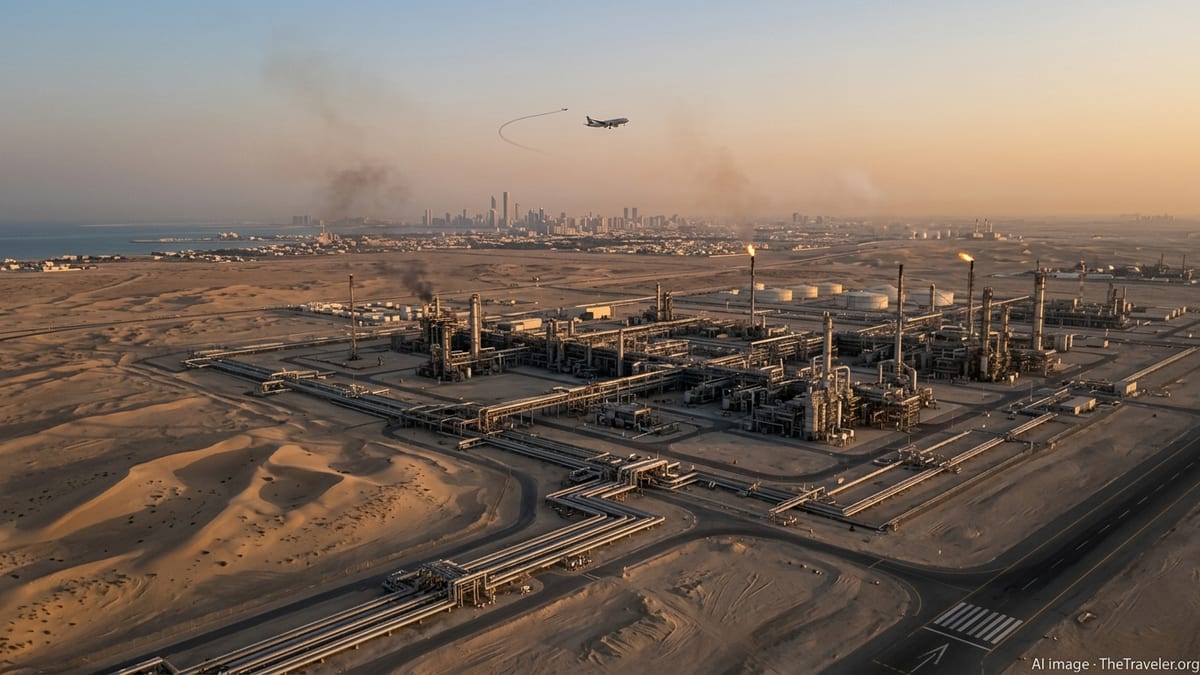
Escalating Energy Strikes Put Habshan and Gulf Supply in the Spotlight
Iran’s campaign against Gulf energy infrastructure has entered a more dangerous phase, with Abu Dhabi’s Habshan gas operations and the nearby Bab field forced offline after overnight missile and drone strikes. Publicly available information describes the shutdown as a major escalation, hitting a core part of the UAE’s gas system just as regional supply is already stretched by earlier attacks on facilities in Qatar and Kuwait.
The latest incident follows the widely reported strike on Iran’s own South Pars gas field and related installations at Asaluyeh, an attack that analysts say prompted Tehran to carry out retaliatory strikes on Gulf oil and gas assets. Fires and temporary shutdowns at Qatari liquefied natural gas plants, refinery damage in Kuwait, and renewed strikes on UAE export infrastructure at Fujairah have collectively tightened an already fragile energy market.
Energy market commentary shows benchmark crude prices holding well above 100 dollars a barrel after weeks of conflict, with traders increasingly pricing in the risk of extended disruption to Gulf export capacity. Consultancy and shipping advisories point to sharply reduced tanker movements through or near the Strait of Hormuz, as owners reroute vessels or hold them at anchor amid missile and drone alerts.
Within the Gulf, operators are attempting to keep critical gas supplies flowing to domestic power plants and industries, but production cuts and temporary suspensions at key facilities have become more frequent. For tourism and aviation stakeholders, the energy shock is feeding directly into higher jet fuel costs and raising fresh uncertainty over the stability of regional hubs that depend on reliable fuel and airport operations.
Gulf States Tighten Airspace as Missiles Target UAE, Qatar and Neighbors
In parallel with the strikes on energy facilities, a patchwork of airspace closures and restrictions has emerged across the Gulf. Reports on the 2026 Iran war’s broader economic impact describe large sections of airspace above Iran, Iraq, Kuwait, parts of Saudi Arabia, and the UAE as subject to severe limitations or outright closure, forcing airlines to abandon traditional east–west corridors.
Earlier in the conflict, Qatar closed its airspace after strikes on gas terminals at Ras Laffan and Mesaieed, allowing only restricted emergency and evacuation flights. That move triggered widespread disruption at Doha’s Hamad International Airport and pushed more traffic onto remaining Gulf routes. Subsequent Iranian strikes on the UAE, including hundreds of missiles and drones directed at targets across the country since late February, have now drawn Abu Dhabi and Dubai more fully into the aviation turmoil.
Travel and risk advisories issued in recent days depict a region in which several Gulf and Levant states, including the UAE, Qatar, Saudi Arabia, Oman, Bahrain, Kuwait and Lebanon, are either partially closing airspace, imposing altitude and routing constraints, or limiting civilian operations around key hubs. Airlines are publishing rolling schedule changes, while some national carriers in the region have temporarily suspended services to nearby conflict-affected airports.
For passengers, the result is a surge in long-haul rerouting over Central Asia, Africa and southern maritime corridors. Industry analyses highlight sharply longer flight times between Europe and Asia, higher operating costs, and a reduction in frequencies to some secondary destinations. The UAE’s role as a crossroads for east–west travel means any sustained threat to its airspace, even if limited in scope, has outsized implications for global connectivity.
Tourism Hubs from Dubai to Doha Feel the Strain
The Middle East’s status as one of the world’s fastest-growing tourism regions is now colliding with the realities of war-related disruptions. Data on the economic impact of the conflict indicates that travel and tourism represent a significant share of Gulf output when direct and indirect effects are combined, with Dubai, Abu Dhabi, Doha and Riyadh positioned as flagship destinations and transit gateways.
Travel advisories compiled this month describe heavily disrupted operations at major airports across the region. Dubai International and Abu Dhabi have both experienced interruptions linked to nearby interceptions of missiles and drones, while hubs in Kuwait and Saudi Arabia have seen periods of grounded aircraft and reduced arrivals. Even where physical damage has been contained, heightened security measures and air-traffic control bottlenecks have curtailed capacity.
Large-scale cultural and sporting events, a key pillar of Gulf tourism strategies, are also under pressure. Coverage of the wider economic fallout notes that the 2026 Dubai World Cup Night is still scheduled but has already recorded withdrawals by international participants citing air travel disruption and security concerns. Similar uncertainties surround conferences, exhibitions and entertainment events that rely on seamless international access and confidence in the region’s safety.
Hotels, airlines and tour operators are responding with flexible booking policies, re-accommodation offers and efforts to redirect visitors to alternative routings or dates. However, publicly available assessments from industry bodies suggest that short-term booking momentum has weakened, especially for discretionary leisure travel and high-spend segments that are sensitive to perceived geopolitical risk.
Ripple Effects Across Asia’s Airlines and Destinations
The shockwaves from the Gulf are radiating across Asia, particularly for carriers and destinations that depend on Middle East hubs for connectivity. Commentary on regional aviation trends points out that many South Asian and Southeast Asian cities rely on multiple daily flights through Dubai, Abu Dhabi and Doha to reach Europe, Africa and North America. With those corridors constrained, schedules have been thinned and journey times have lengthened significantly.
Indian carriers are facing a double squeeze, as the Iran war compounds existing challenges linked to Pakistani airspace restrictions that have already forced detours on some Europe-bound routes. Reports indicate that the combination of Gulf closures and South Asian overflight constraints has pushed airlines to adopt circuitous routings via Central Asia or the far south of the Arabian Sea, adding hours to flights and raising fuel bills.
For tourism destinations in South and Southeast Asia, especially beach and cultural hotspots in countries such as Sri Lanka, Thailand, the Maldives and Nepal, the reduction in convenient one-stop connections from Europe and the Americas is a growing concern. Travel agents and tourism boards cited in regional coverage warn that high-yield, long-haul visitor segments may postpone or rethink trips if uncertainty around transit hubs persists into the peak summer season.
At the same time, some Asian airlines are exploring opportunities to capture displaced traffic by scaling up non-stop services where aircraft range and fleet availability allow. Analysts caution, however, that any such gains are likely to be tempered by elevated fuel costs and insurance premiums, which are rising in line with broader energy market volatility.
Uncertain Outlook for Fuel Prices and Regional Travel
Looking ahead, the trajectory of both energy prices and tourism flows hinges on whether strikes on facilities such as Habshan abate or intensify. Market reports point to traders weighing two competing scenarios: a prolonged campaign against Gulf oil and gas sites that keeps supply tight and prices elevated, or a negotiated de-escalation that allows tanker and air traffic to normalize over the coming months.
Economic analyses of the conflict already describe the shock as the worst energy-related disruption since the 1970s by some measures, with output cuts across Kuwait, Iraq, Saudi Arabia and the UAE running into the millions of barrels per day. In that context, any additional damage to gas infrastructure in the UAE or neighboring states risks deepening concerns about power generation, desalination and industrial output, all of which underpin the region’s tourism infrastructure.
For now, travel experts advise passengers to build in extra time for connections, monitor airline notices closely and consider flexible tickets where possible. Tourism operators across the Middle East and Asia are recalibrating forecasts, shifting marketing spend and, in some cases, pivoting more heavily toward domestic and short-haul visitors who are less exposed to long-haul aviation bottlenecks.
Whether the UAE and its neighbors can sustain their role as resilient global travel hubs through this crisis will depend on the security of assets like the Habshan gas complex, the stability of regional airspace agreements, and the speed with which confidence can be restored among travelers and investors watching developments in the Gulf with increasing unease.