

More news on this day
Iran’s widening campaign of strikes on Israeli and Gulf energy infrastructure, including a recent missile attack on the Haifa oil refinery, is rapidly reshaping travel and tourism across the Middle East, driving airspace closures, surging airfares and renewed concern over global energy security.
Get the latest news straight to your inbox!
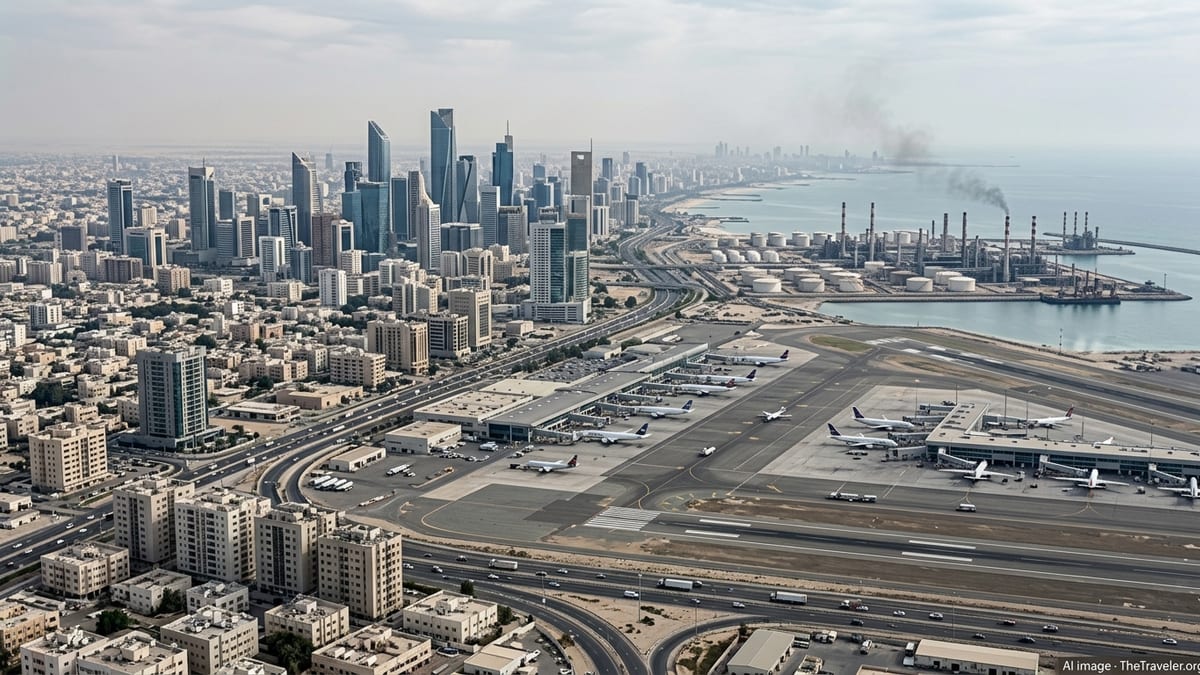
Iran’s Energy Strikes Reach Israel’s Haifa Refinery
Published coverage of the 2026 Iran war indicates that Iran has expanded its target set to include key Israeli infrastructure, with a missile attack on the Haifa oil refinery in northern Israel briefly disrupting power and damaging parts of the local grid. Reports describe the incident as causing limited physical damage but underscoring the vulnerability of critical energy assets even in areas distant from the Gulf frontline.
The attack on Haifa followed Israeli strikes on Iran’s South Pars natural gas field and associated oil and petrochemical facilities, which analysts describe as a cornerstone of Iran’s energy economy. Observers note that Tehran’s response has included not only direct fire at Israeli cities such as Tel Aviv and Haifa, but also a widening series of attacks across the Gulf that are increasingly entangled with global energy and transport flows.
Energy specialists cited in recent analyses characterize the conflict as the most serious challenge to global energy security in decades, with the Haifa strike viewed as a symbolic warning that oil and gas infrastructure across the region is now in play. For airlines and travelers, the implication is a more unpredictable risk landscape that extends well beyond conventional conflict zones.
Gulf States Hit as Iran Targets Qatar, Saudi Arabia, UAE and Kuwait
Across the Gulf, Iran’s retaliatory campaign has focused heavily on energy and industrial hubs in Qatar, Saudi Arabia, the United Arab Emirates and Kuwait. International reporting points to repeated missile and drone strikes on facilities in Qatar’s Ras Laffan and Mesaieed industrial areas, which together anchor the country’s liquefied natural gas export system. QatarEnergy has declared force majeure on LNG shipments and temporarily halted production, reverberating through global gas markets.
Similar patterns are reported in Saudi Arabia and the UAE, where attacks on refineries, gas fields and export terminals have forced production cuts and emergency shutdowns. Facilities in Saudi Arabia’s Eastern Province and in the UAE’s onshore and coastal energy zones have been singled out in recent strikes, adding to concerns about long term damage and the cost of repair.
Regional monitoring shows that Kuwait and Bahrain have also experienced strikes on oil infrastructure, ports and, in some cases, utilities such as desalination plants. While many incoming missiles and drones are reported as intercepted, even partial damage to refineries and terminals is feeding a perception that no major producer in the northern Gulf is immune from disruption.
Airspace Closures, Route Diversions and a Sudden Airfare Surge
The security fallout from these attacks has cascaded quickly into commercial aviation. According to widely cited travel advisories and aviation data, Israel, Qatar, the UAE, Kuwait, Bahrain, Syria and several other states have imposed at least temporary airspace closures or severe restrictions since late February, following the initial U.S. and Israeli strikes on Iran and subsequent Iranian retaliation.
These closures have forced airlines to reroute long haul services between Europe, Asia and Africa, adding hours to some journeys and compressing available capacity on remaining corridors. Industry reporting shows thousands of flight cancellations and diversions, with major carriers suspending services to affected hubs in Tel Aviv, Doha, Abu Dhabi and Dubai at various points in March.
Rising jet fuel costs on the back of spiking Brent crude prices, combined with longer flight times and disrupted schedules, are feeding directly into fares. Regional newspapers and airline statements referenced in financial coverage describe a wave of ticket price increases, including broad surcharges on Middle East routes and selective hikes on transcontinental services that previously relied on Gulf stopovers.
Travel risk assessments circulating in the sector highlight an unusually volatile operating environment, where routing decisions may change with little notice, and where insurers are reassessing war risk premiums for both aircraft and crew transiting the broader Middle East.
Inbound Tourism Collapses Across Conflict-Affected Markets
The tourism fallout has been swift for Israel and its Gulf neighbors. Visitor arrivals to Israel had already softened amid pre war tensions, but the onset of large scale missile exchanges and the strike on Haifa’s refinery have effectively frozen leisure demand. Tour operators and travel platforms tracking bookings report a wave of cancellations across city breaks, religious tourism and cruise calls to Israeli ports.
In Qatar, Saudi Arabia, the UAE and Kuwait, the shift is more subtle but equally severe. These countries have spent years cultivating an image as secure hubs for aviation, business and events, anchored by modern airports and energy backed infrastructure. The new pattern of strikes on industrial zones, refineries and export terminals has shaken that narrative, leading conference organizers and high end leisure travelers to delay or relocate trips.
Hotel and hospitality operators surveyed in Gulf press reporting describe sharply lower occupancy and forward bookings since the first week of March, particularly in coastal cities close to key energy facilities. Some governments have mounted public campaigns to reassure travelers, but travel advisories issued in major source markets emphasize heightened security risks and the possibility of further attacks on economic infrastructure.
Specialists in destination marketing note that reputational damage tends to outlast the immediate security crisis. Even if hostilities ease in the coming weeks, the imagery of missiles striking near airports, refineries and industrial skylines may deter risk averse tourists and international event planners for seasons to come.
Energy Security Shock Fuels Global Economic and Travel Uncertainty
Beyond regional tourism, the conflict is increasingly framed as a global energy security shock. Analysts at international agencies and private consultancies quoted in recent coverage warn that disruptions in the Strait of Hormuz, through which a substantial share of the world’s seaborne oil and gas flows, are tightening supplies and driving price volatility on an almost daily basis.
Estimates circulating in market commentary suggest that several million barrels per day of crude and condensate output from Iraq, Saudi Arabia, the UAE and Kuwait are effectively stranded by shipping risks or precautionary shut ins, while Qatar’s halt in LNG exports removes a significant slice of global gas trade. These combined pressures are feeding through to higher fuel costs, headline inflation and renewed strain on energy importing economies.
For the travel sector, this energy shock compounds the direct security and connectivity issues. Higher operating costs, higher fares and weaker consumer confidence risk depressing international travel demand at the same time that airlines and tourism boards are grappling with route disruptions and safety concerns. Industry observers argue that the Middle East’s role as a global aviation crossroads means that instability there has an outsized impact on networks reaching far beyond the region itself.
As Iran continues to target oil and gas infrastructure from Haifa to the Gulf and as retaliatory strikes hit back at Iranian assets, the prospect of a quick normalization in air travel and inbound tourism remains distant. Travel planners and energy analysts alike are now treating the crisis as a medium term structural shock rather than a short, self contained flare up, with consequences likely to ripple through global mobility and fuel markets well into the year.