

More news on this day
A sudden wave of Iranian missile and drone strikes across the Gulf has upended one of the world’s fastest-growing tourism regions, turning Kuwait, the United Arab Emirates and Saudi Arabia into high-risk destinations as governments close airspace, issue sweeping travel warnings and scramble to evacuate visitors.
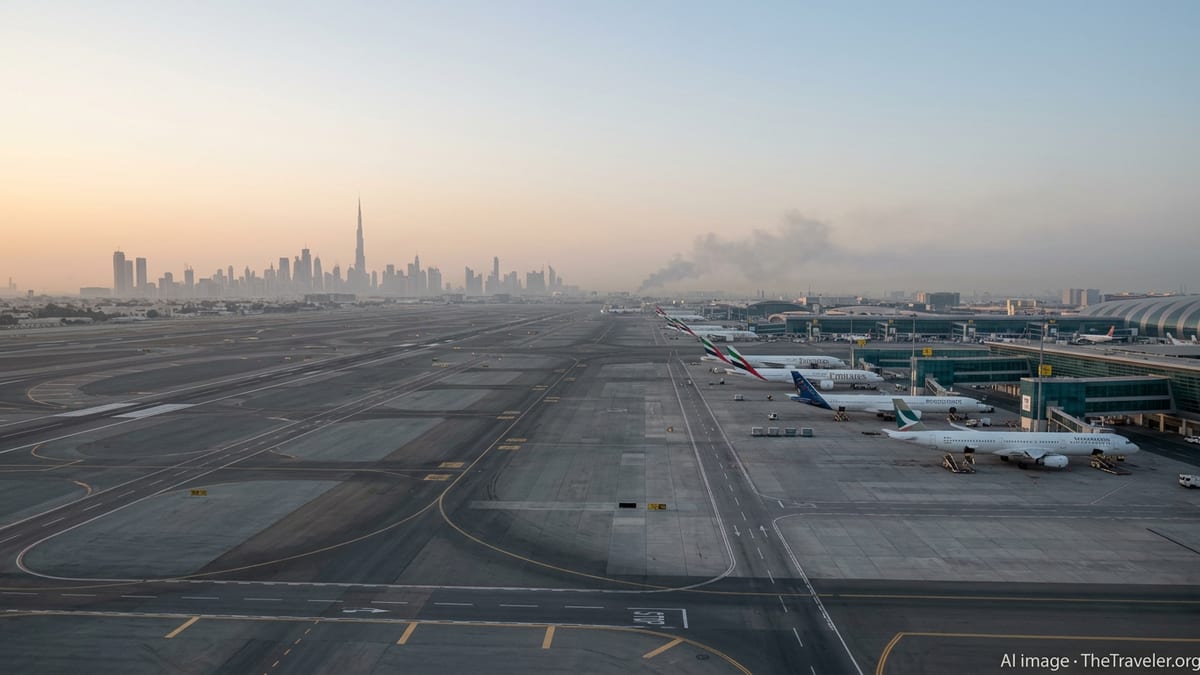
Escalating Conflict Puts Gulf Tourism in the Crosshairs
The conflict erupted on February 28 after coordinated United States and Israeli strikes on Iranian targets prompted a rapid and forceful response from Tehran. Within hours, Iran began launching missiles and drones not only at Israel and US military sites, but also at infrastructure across Gulf Cooperation Council states including Kuwait, the UAE and Saudi Arabia. Those same states had spent the past decade positioning themselves as safe, modern gateways for global tourism and aviation.
In the UAE, hundreds of drones and ballistic missiles have reportedly been fired at or toward major cities and industrial zones, with debris and intercepted projectiles falling near key tourism districts in Dubai and Abu Dhabi. Local authorities say air defenses have intercepted the vast majority of threats, yet images of smoke rising near residential towers, highways and coastal resorts have quickly eroded the perception of the Emirates as a secure, insulated hub for stopovers and luxury getaways.
Saudi Arabia, similarly, has faced multiple strikes around strategic energy and military facilities, including eastern oil infrastructure that sits not far from airports and coastal developments the kingdom has heavily promoted to international visitors. Kuwait, home to US military assets and critical aviation links, has reported missile and drone activity close to Kuwait International Airport and key government sites, further underlining the vulnerability of civilian corridors.
Regional analysts note that this is the first time in decades that all core Gulf states have come under near-simultaneous fire from Iran. For travelers, the distinction between targeted military infrastructure and nearby civilian and tourist zones has been lost amid images of burning refineries, damaged airport facilities and hurried evacuations from hotels that were, until days ago, marketed as urban playgrounds and desert sanctuaries.
Flight Cancellations, Airspace Closures and Stranded Tourists
The most immediate blow to tourism has come from the skies. In response to the strikes, multiple Gulf countries have partially or fully closed airspace, forcing airlines to suspend or reroute flights across a wide arc of the Middle East. Emirates, Etihad, Saudia, Kuwait Airways and other regional carriers have slashed schedules, while a growing list of international airlines have halted services to Dubai, Riyadh, Jeddah, Dammam and Kuwait City.
Industry trackers report thousands of flights canceled or diverted in the first week of the crisis, with long-haul routes between Europe or North America and Asia among the hardest hit. Major hubs in the UAE and Saudi Arabia, which had relied on seamless 24-hour operations to feed connecting traffic, have endured extended shutdowns, intermittent reopenings and heavy backlogs as aviation authorities weigh security risks after each new barrage.
For tourists already in the region, the result has been confusion and prolonged uncertainty. Stranded travelers describe hours-long queues at airline desks, sudden hotel evacuations, and repeatedly rescheduled departure times that are then scrubbed from departure boards as fresh missile alerts sound. Relief and repatriation flights have begun operating on a limited basis, but capacity remains far below demand, especially for travelers hoping to avoid transiting other nearby hotspots.
Even when airports partially reopen, many carriers and travel management companies are now advising clients to avoid routings through Kuwait, the UAE or Saudi Arabia altogether. The practical effect is to treat the three states as off-limits air corridors for leisure and corporate travel, severing a connectivity web that has underpinned the Gulf’s rise as a global crossroads.
From Boom to Freefall: Tourism Revenues at Risk
The timing of the escalation is particularly painful for Gulf tourism. In 2025 the wider region welcomed around 100 million international visitors, driven by aggressive investment in mega-resorts, cultural attractions, cruise terminals and events. Forecasts for 2026 had anticipated another year of robust expansion, with Dubai, Abu Dhabi and Riyadh among the most prominent winners.
Those projections are now being rapidly rewritten. Independent economic assessments suggest the Middle East could forfeit tens of billions of dollars in visitor spending this year if the conflict persists, with the sharpest declines expected in the Gulf’s most aviation-dependent markets. The UAE and Saudi Arabia, which have built entire urban districts and giga-projects around anticipated tourism flows, face not just a short-term shock but a deeper question about how quickly confidence can be rebuilt once missiles have fallen within sight of runways and resort skylines.
Hotel operators across Dubai and other Gulf cities are reporting occupancy plunging from near sold-out levels to fractions of capacity within days, as group bookings evaporate and leisure travelers cancel or rebook to alternative destinations. Travel agencies in Europe and Asia say “Gulf stopovers” are now one of the first elements clients ask to remove from itineraries, often replacing them with hubs in southern Europe or Southeast Asia that feel substantively removed from the conflict zone.
The knock-on effects extend far beyond five-star beachfronts. Event organizers, conference planners, restaurateurs and tour operators are confronting widespread postponements and outright cancellations. For countries that have framed tourism as a central pillar of diversification away from oil, the sudden collapse of visitor flows raises the risk of job losses, shelved investments and delayed construction on ambitious new attractions that were expected to open over the next two to five years.
Government Warnings Turn “Optional” Caution Into Red Lines
Travel advisories from Western governments have quickly hardened as the strikes expanded. The United States State Department, citing “serious safety risks” from the widening war, has urged American citizens to leave multiple Middle Eastern countries, explicitly including Kuwait, Saudi Arabia and the UAE. Similar warnings from European and Asian governments advise against all non-essential travel to the Gulf, with some suggesting that travelers reconsider even essential business trips.
These advisories carry significant weight for insurers, corporate security teams and global tour operators. Once destinations are tagged as high risk, many travel insurance policies will not cover leisure trips, and companies are often obliged by internal protocols to suspend employee travel. For large cruise lines, package tour providers and online agencies, that shift effectively turns the Gulf into a no-go region for mainstream customers, regardless of how local authorities characterize conditions on the ground.
Gulf governments, for their part, are attempting to project calm while acknowledging the severity of the moment. Tourism and economy ministries in the UAE and Saudi Arabia have stressed that core services are functioning under heightened security and that any reopening of attractions or flights is coordinated with defense and civil aviation authorities. Kuwait has highlighted its interception capabilities and emergency response plans around critical sites such as airports and desalination facilities.
Yet as images of missile interceptions over Dubai and reports of strikes near Saudi and Kuwaiti infrastructure circulate globally, official reassurances are struggling to compete with travelers’ instincts. For many prospective visitors, particularly families and older travelers, the combination of hard government warnings and vivid footage of explosions is decisive. The question has quickly shifted from “Is it safe enough?” to “Why take the risk at all when alternatives are plentiful?”
What This Means for Travelers and the Future of Gulf Tourism
For travelers planning trips in the coming weeks and months, the message from security experts is unusually blunt. Until there is a clear and sustained de-escalation between Iran and its adversaries, itineraries that include Kuwait, the UAE or Saudi Arabia are likely to encounter significant disruption, ranging from sudden airspace closures to curfews, heightened checkpoints and temporary shutdowns of major attractions. Even transiting through Gulf hubs, once considered routine, now carries a risk of becoming unexpectedly stranded if hostilities flare.
Corporate travel managers are reviewing routing policies and contingency plans, steering staff away from Gulf cities except where operations are critical and supported by robust security arrangements. Large tour operators are reprogramming winter 2026 and early 2027 brochures, quietly rebalancing capacity toward destinations seen as politically stable and geographically removed from the current conflict. The ripple effects are already evident in booking data, with alternative long-haul gateways in Asia and Europe seeing an uptick in interest.
In the medium term, the crisis may redraw the map of how travelers perceive the Gulf. The region has invested heavily in branding itself as a polished playground of theme parks, galleries, skyscrapers and desert escapes, far from the conflicts that have scarred other parts of the Middle East. Iran’s strikes have punctured that narrative, demonstrating that even the most fortified skylines and technologically advanced airports are not beyond reach.
Whether and how quickly confidence returns will depend on the trajectory of the war, the durability of cease-fires and the ability of Kuwait, the UAE and Saudi Arabia to convince visitors that the latest barrage was an exceptional shock rather than a new normal. For now, however, the combination of live missile threats, sweeping travel advisories and unprecedented aviation disruption has effectively placed the Gulf’s tourism crown jewels on the global no-go list.