

More news on this day
Oman has become the latest country to feel the shockwaves of Iran’s expanding missile and drone campaign, as regional airspace closures, disrupted flight paths, and port strikes ripple across the Gulf and into the Caucasus, reshaping how travelers and cargo move through one of the world’s most critical corridors.
Get the latest news straight to your inbox!
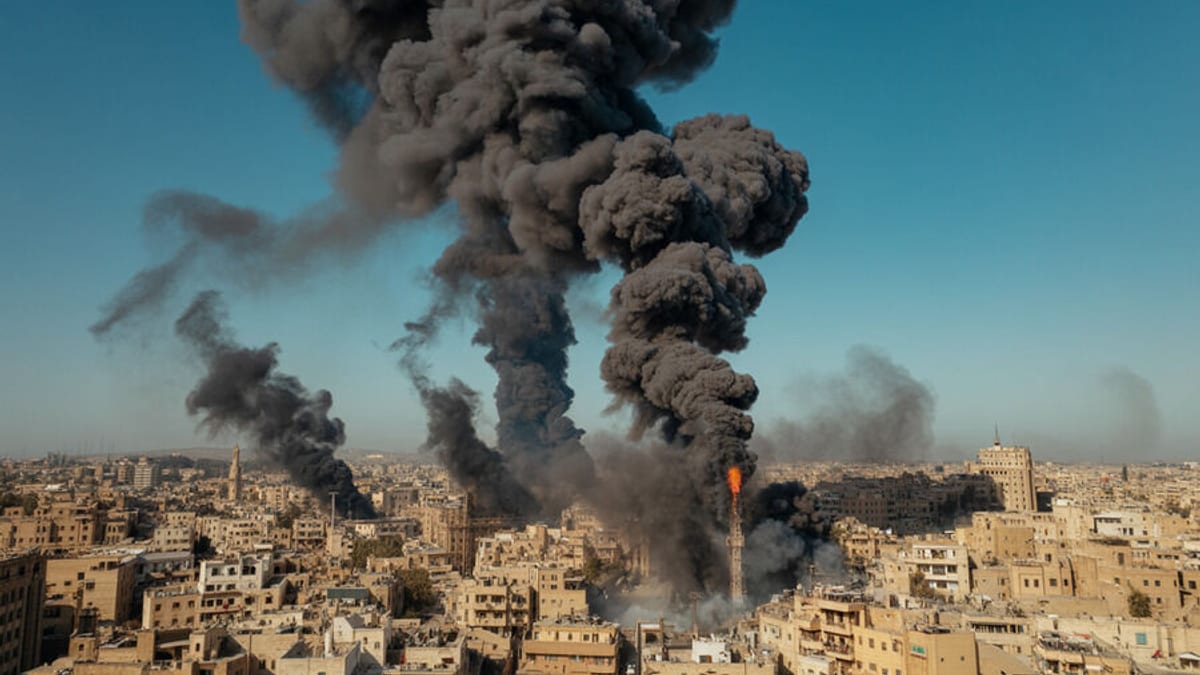
Image by Latest International / Global Travel News, Breaking World Travel News
Oman Shifts From Safe Bypass To Frontline Pressure Valve
Publicly available information shows that Iran’s March drone strikes on Omani port infrastructure, including reported hits on facilities at Salalah and Duqm, have pulled the Sultanate more directly into a fast-evolving regional conflict. Those ports, long promoted as neutral logistics hubs outside the Strait of Hormuz chokepoint, are now managing both physical damage and a reappraisal of risk by airlines, cruise operators, and freight carriers.
Port advisories and corporate travel briefings indicate that Oman’s national airspace remains formally open, but that the country is absorbing intense overflow from neighboring states that temporarily shut or restricted their skies after the first wave of strikes in late February and early March. Carriers have diverted east–west routes through Muscat to avoid higher-risk airspace over Qatar and parts of the United Arab Emirates, placing acute strain on Oman’s air traffic management system and ground infrastructure.
Industry analyses released in recent weeks describe mounting congestion at Muscat International Airport as airlines compress schedules into narrower operating windows, building in longer routings to skirt perceived danger zones. Travel management firms report delays, missed connections, and crew-rotation complications, particularly for long-haul services linking Europe and North America with South and Southeast Asia.
The shift is particularly striking given Oman’s recent investments in airspace modernization, which were intended to accommodate steady growth through the end of the decade. Instead, the upgrades are being tested in crisis conditions, as Muscat juggles its traditional role as quiet mediator with the practical realities of becoming a primary diversion and refueling hub in a region under sustained aerial attack.
Gulf Aviation Hubs Grapple With Missile Threats And Ground Chaos
The latest phase of Iranian retaliation has hit the Gulf’s aviation and travel infrastructure at its core. According to published coverage by international news agencies and regional outlets, ballistic missiles and drones have been launched at or near key hubs in the United Arab Emirates, Qatar, Kuwait, Bahrain, and Saudi Arabia since late February, prompting emergency air defense operations and intermittent airspace shutdowns.
Reports indicate that Dubai International Airport and its surrounding logistics zone have suffered debris impacts, fires, and precautionary ground stops as missiles were intercepted overhead or in nearby desert approaches. In Abu Dhabi, interceptions near major industrial and economic zones have triggered temporary closures and heightened security protocols, slowing passenger throughput and disrupting cargo timelines even when runways technically remained open.
Qatar has faced some of the heaviest airspace constraints. Travel advisories compiled by risk consultancies describe Qatar’s skies as temporarily closed at several points this month, with all regular passenger flights suspended for periods while authorities assessed damage and the risk of follow-on strikes. With Doha Hamad International Airport sidelined at key moments, premium long-haul traffic has had to re-route through Riyadh, Jeddah, Muscat, and secondary regional airports that were never designed to handle such volumes.
Saudi Arabia’s role as the principal remaining east–west aviation corridor has also created its own bottlenecks. While reports suggest that the kingdom has tried to keep airspace broadly open, missile and drone strikes on military facilities, including the high-profile attack on Prince Sultan Air Base, have injected new uncertainty into commercial operations. Airlines have layered additional fuel reserves, diversions, and crew rest time into their planning, eroding schedule reliability across the network.
From Strait Of Hormuz To Salalah: Ports, Pipelines, And Sea Lanes Under Strain
The crisis is not confined to the skies. Maritime and port circulars show that Iranian threats to close or restrict the Strait of Hormuz, coupled with intermittent missile and drone activity around Gulf ports, have pushed shipping companies to reconsider routing and insurance exposure across Oman’s southern coastline and beyond.
Industry bulletins reviewed by travel and logistics analysts describe how a suspected Iranian drone strike on fuel tanks at Salalah contributed to fires and localized shutdowns, temporarily constraining bunkering and cargo operations at one of the Arabian Sea’s most important transshipment hubs. Even relatively modest damage has forced shipping lines to juggle port calls, skip scheduled stops, or reposition vessels to alternative terminals from Sohar in northern Oman to ports along the Red Sea.
At the same time, the war’s expansion to include Iran-allied forces in Yemen has reintroduced elevated risk to the Bab el-Mandeb Strait, a vital passage for container and energy traffic linking the Indian Ocean to the Suez Canal. Travel-security assessments warn that any sustained campaign targeting vessels here, layered on top of uncertainty in Hormuz, could reroute global shipping and raise costs for passengers and tour operators who rely on cruise and ferry services transiting both chokepoints.
For Oman, the dual pressures are profound. The country has marketed Duqm and Salalah as safe alternatives for cargo and ship repair, attracting billions in industrial and tourism investment. Now, operators are recalibrating, weighing Omani stability and diplomatic neutrality against the newfound reality that its ports and coastlines can be reached by the same drones and missiles that have darkened skies across the Gulf.
Azerbaijan, The Caucasus, And The Wider Arc Of Disruption
While missile and drone fire has so far centered on the Gulf and Levant, the strategic fallout reaches far wider. Analysts note that Azerbaijan and other states along the Caspian and in Central Asia are increasingly woven into the narrative, whether as potential alternative corridors for energy exports or as regions that could face environmental and health spillovers if strikes on Iranian nuclear and industrial sites trigger contamination.
Expert commentary highlighted in recent coverage points to the geographic spread of concern, with scenarios in which radiation or chemical plumes from damaged facilities could extend across borders into countries such as Azerbaijan, Turkmenistan, Afghanistan, Pakistan, Oman, the United Arab Emirates, Saudi Arabia, Kuwait, and Syria, depending on winds and the intensity of attacks. Even without such worst-case outcomes, civil aviation regulators in the wider region are monitoring high-altitude airflows and adjusting flight levels and routings around sensitive areas inside Iran.
There is also an economic and diplomatic dimension to the northern arc. With pipeline and rail projects already in place or under development between the Gulf, the Caucasus, and Europe, any perception that Iranian territory or adjacent airspace is unsafe for transit could accelerate investment in alternative overland routes. That, in turn, may reshape how travelers move between Europe, the Middle East, and Asia over the long term, elevating the status of airports and rail hubs in the Caucasus that until now have occupied niche roles.
For global travelers, the result is a patchwork of advisories and reroutings that increasingly blur traditional geographic boundaries. A conflict that began as a series of strikes and counterstrikes around the Gulf is now influencing aviation charts, cruise itineraries, rail schedules, and tour planning decisions from Muscat and Doha to Baku and Istanbul.
Travelers Face A New Era Of Volatility Across The Region
Travel-management companies and corporate security firms are characterizing the current environment as one of rolling, rather than discrete, disruption. Flight schedules are being rewritten day by day as carriers respond to changing threat assessments, missile interception patterns, and pressure on air traffic control systems in Oman, Saudi Arabia, and the wider Gulf.
For individual travelers, this has translated into longer journeys, sudden overnight layovers, and frequent last-minute aircraft changes. Airlines serving Muscat, Dubai, Abu Dhabi, Doha, Riyadh, Jeddah, Kuwait City, and Manama are building in additional contingency time, while some carriers have suspended specific routes into the highest-risk areas, replacing them with indirect connections that rely on secondary hubs on the periphery of the conflict zone.
Travel advisers recommend that passengers heading anywhere in the broader region, including Oman and the Caucasus, build flexible buffers into itineraries, monitor airline notifications closely, and avoid tight self-made connections between separate tickets. Cruise, ferry, and tour operators are likewise adjusting, with some itineraries quietly dropping planned stops in ports viewed as exposed to drone or missile activity.
With Iran’s campaign showing no clear sign of imminent resolution, Oman’s experience illustrates how rapidly a perceived safe harbor can be drawn into a wider storm. As missile arcs lengthen and airspace maps grow more complex, the line between frontline states such as Qatar, Saudi Arabia, and the United Arab Emirates and their traditional neutral neighbors is increasingly blurred for airlines, shipping lines, and travelers alike.