

More news on this day
Iran’s intensifying missile and drone attacks across the Middle East are rippling through global aviation, with Oman now joining the United Arab Emirates, Qatar, Saudi Arabia, Azerbaijan and other states in facing severe disruption to airspace, airports and critical travel infrastructure.
Get the latest news straight to your inbox!
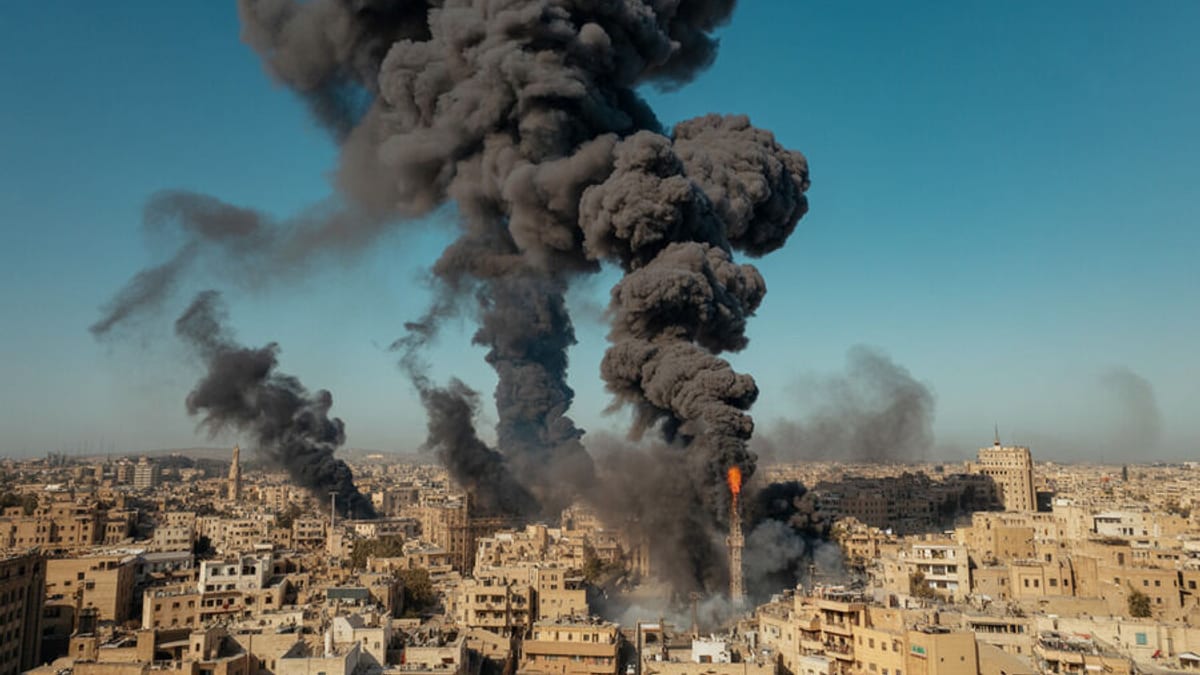
Image by Global Travel Alerts, Advisories, International Travel Alerts
From Targeted Strikes to a Regional Aviation Crisis
The current wave of instability traces back to late February 2026, when coordinated strikes by the United States and Israel hit Iranian military and nuclear-linked facilities. Iran’s response has evolved into a sustained campaign of missile and drone attacks against installations across the Gulf, including bases and infrastructure in the United Arab Emirates, Qatar, Saudi Arabia, Oman and other neighboring states. Published coverage indicates that these attacks are aimed at military and logistical sites but are increasingly spilling over into civilian travel networks.
Across the Gulf, air defense systems in countries such as the UAE and Saudi Arabia have intercepted hundreds of ballistic missiles and drones in recent weeks. According to publicly available reporting, these interceptions have not prevented all damage. Incidents at or near major airports, fuel depots and ports have forced precautionary shutdowns, rolling airspace restrictions and sudden suspensions of flights that have cascaded through global airline schedules.
Security advisories compiled in early and mid March describe the most far-reaching travel disruption the region has seen since the coronavirus pandemic. Analysts tracking the crisis point to an unprecedented overlap of risks: active missile and drone threats, constrained maritime routes through the Strait of Hormuz and Red Sea, and intermittent closures of some of the world’s busiest aviation hubs on which long-haul traffic between Europe, Asia and Africa relies.
Oman Feels the Strain as Partial Closures Multiply
Oman initially appeared less directly affected than some of its neighbors, but the situation has shifted as Iranian drones and missiles have targeted ports and logistics sites linked to United States operations. Publicly available information points to strikes and attempted strikes on facilities at Duqm and Salalah, as well as reported attempts against aviation infrastructure. While damage in Oman has generally been more limited than in Qatar or the UAE, the psychological and operational impact on carriers has been significant.
Port and travel advisories issued in early March described Oman’s airspace as technically open but under strain, with multiple international airlines cancelling or curtailing services to Muscat and Salalah. The combination of route diversions, crew duty-time limitations and insurance restrictions has led to widespread delays and ad hoc cancellations. Travelers have reported last-minute changes, with flights re-routed via alternative hubs or consolidated to reduce exposure in higher-risk time windows.
As the conflict has deepened, airlines and corporate travel managers have increasingly treated Oman as part of a wider risk corridor running from the Arabian Sea through the Gulf. This shift in perception has prompted some companies to restrict nonessential travel to Omani destinations, even when airports remain operational. The result is a patchwork of schedule cuts, reduced frequencies and longer minimum connection times, complicating planning for both leisure and business trips.
UAE, Qatar and Saudi Arabia Confront Rolling Airport Disruptions
In the United Arab Emirates, the volume and intensity of reported Iranian fire has been among the highest in the region. Public reports describe hundreds of drones and missiles intercepted over Emirati territory since late February, with at least one incident at Dubai International Airport reportedly involving a drone strike on fuel infrastructure that triggered a temporary shutdown. At the height of the disruption, aviation observers noted that a large share of Dubai’s flight schedule was cancelled or heavily delayed, with knock-on effects across airline networks worldwide.
Qatar, whose Hamad International Airport serves as a major global hub for east-west connections, has also faced direct disruption. Reporting from early March highlighted attempted strikes on the airport and gas facilities, followed by the closure of Qatari airspace for commercial traffic. Travel and shipping advisories referenced a full suspension of air travel at one point, forcing Qatar Airways to cancel or reroute flights and sending spillover traffic to secondary hubs already under pressure from their own security constraints.
Saudi Arabia, for its part, has experienced both direct attacks and the burden of rerouted flows. Recent coverage of a missile strike on Prince Sultan Air Base described damage to military aircraft and injuries to U.S. personnel, underlining the continued vulnerability of key installations. Saudi carriers have temporarily suspended routes to neighboring capitals during intense phases of the escalation, while some international airlines have reduced operations to Riyadh and Jeddah to manage safety and insurance concerns.
Azerbaijan Emerges as a Crowded Detour Corridor
With airspace repeatedly restricted or closed across swaths of the Gulf, long-haul carriers have sought alternative paths between Europe and Asia. One of the main beneficiaries has been the corridor over the South Caucasus, particularly routes transiting or skirting Azerbaijan. Industry commentary and travel-industry coverage note that some airlines have increased their use of Baku and neighboring airspace to avoid higher-risk zones over the Gulf and parts of the Levant.
The sudden concentration of traffic has brought its own challenges. Airlines already navigating restrictions linked to the conflict in Ukraine and other regional tensions are now funneled through narrower bands of safe airspace. This has contributed to congestion, longer routings and elevated fuel burn, adding operational costs at a time when oil prices are already volatile due to fears over shipping and energy infrastructure in the Gulf.
For travelers, the emerging Azerbaijan detour means longer flight times, more frequent fuel stops and a greater likelihood of missed connections as tightly timed schedules unravel. Some carriers are proactively padding block times and connection windows, while others are publishing schedule changes with minimal notice as security conditions and regulatory guidance evolve from day to day.
Travelers Face Higher Costs, Longer Journeys and Persistent Uncertainty
Beyond the immediate safety concerns, the Iranian strikes and resulting airspace disruptions are reshaping the economics of travel across a vast region. Estimates cited in recent travel-industry analysis suggest that the broader Middle East tourism sector is losing hundreds of millions of dollars per day in foregone visitor spending. Higher fuel consumption due to detours, increased insurance premiums and the need for flexible crewing patterns are all exerting upward pressure on fares.
Major global carriers and Gulf-based airlines alike are signaling that elevated operating costs could soon be reflected in ticket prices, particularly on routes that must repeatedly circumnavigate closed or high-risk airspace. Travelers are already reporting steep price swings, unpredictable availability and a sharp decline in the number of nonstop options linking Europe, Asia, Africa and Oceania via Gulf hubs.
Risk advisories aimed at corporate and leisure travelers now commonly recommend avoiding nonessential trips through the most affected airports, encouraging the use of alternative routings via Southern Europe, Central Asia or parts of Africa where feasible. However, these alternatives often entail longer total travel times and additional connections, inflating both cost and complexity. With negotiations to de-escalate the conflict still fragile, aviation analysts caution that volatility in schedules and routings is likely to persist for weeks, if not longer, leaving passengers to navigate a constantly shifting landscape of closures, diversions and renewed openings.