

More news on this day
Iran’s latest retaliatory strikes and ensuing airspace closures have plunged the United Arab Emirates, Bahrain, Saudi Arabia, Kuwait, Qatar, Jordan and neighboring states into aviation chaos, crippling major hubs, stranding hundreds of thousands of travelers and raising urgent questions over the stability of one of the world’s most critical travel corridors.
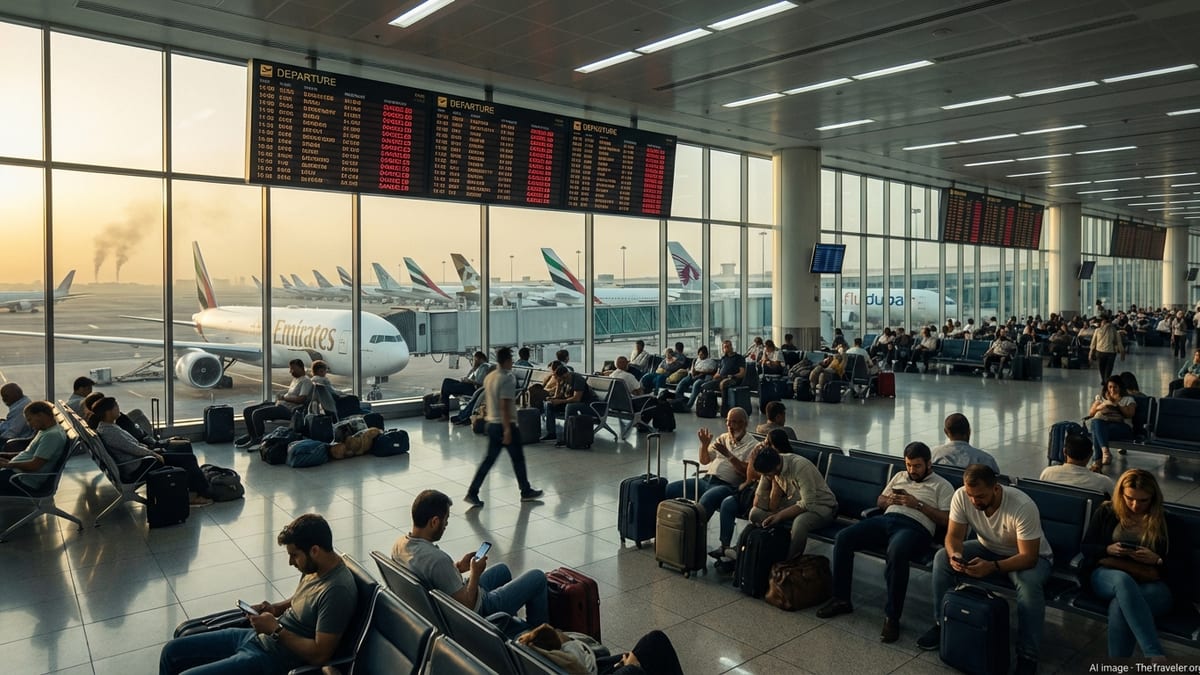
Airspace Closures Cripple Gulf Aviation Network
What began as targeted Iranian missile and drone attacks has swiftly cascaded into one of the most disruptive aviation crises the Middle East has seen in decades. In the wake of strikes that followed United States and Israeli attacks on Iran on February 28, 2026, governments across the Gulf moved to shut or severely restrict their skies, effectively severing a primary artery of global air travel between Europe, Africa and Asia.
The United Arab Emirates announced a temporary and partial closure of its airspace, prompting Dubai International Airport and Al Maktoum International Airport to suspend all flights. Abu Dhabi’s Zayed International Airport halted most operations, with authorities warning of delays, diversions and large-scale cancellations. Parallel restrictions by Qatar, Bahrain, Kuwait and Oman compounded the shock, while Iraq and Iran itself kept civilian traffic out of key corridors.
For airlines, the region’s once reliable hubs have turned into choke points. Emirates, Etihad Airways and Qatar Airways, normally handling about 90,000 passengers a day through Dubai, Abu Dhabi and Doha, have suspended the vast majority of services in and out of their home bases. European, North American and Asian carriers have joined them in pulling flights or flying lengthy detours around closed skies, stretching crew rosters and aircraft utilization to breaking point.
Flight-tracking data indicates that more than three thousand flights have already been canceled across principal regional airports within days, with thousands more delayed or forced into last minute rerouting. As airspace over Iran, Iraq, Qatar and large parts of the Gulf remains restricted, the global network is struggling to absorb the shock.
Stranded Passengers and Collapsing Itineraries
The human impact of the closures and strikes is visible in crowded terminals and makeshift queues from Dubai to Amman. Passengers describe hours-long waits at check in counters and information desks, only to be told that their flights have been canceled indefinitely or rerouted via distant cities such as Istanbul, Rome or Athens, subject to seat availability.
In Dubai, one of the world’s busiest international airports, travelers have been urged by authorities to stay away from terminals unless explicitly directed by airlines. Many who were already in transit have had no choice but to sleep on terminal floors or in packed gate areas as hotels near major hubs quickly filled. Similar scenes are playing out in Doha, Abu Dhabi, Manama and Kuwait City, where incoming long haul flights have been diverted, turned back mid route or converted into so called flights to nowhere that return to their points of origin.
Even airports outside the immediate conflict zone, including in India and Europe, are feeling the knock on effects as arriving and departing flights connected to Gulf routes are delayed or scrubbed. In Hyderabad, dozens of services to Dubai, Doha, Abu Dhabi and Muscat were canceled over the weekend, while carriers in Europe and North America have reported ripple effects across their wider schedules as aircraft and crews are stranded out of position.
The disruption has left families separated, workers unable to reach jobs across the Gulf and leisure travelers abruptly cut off from popular winter sun destinations. Governments including the United Kingdom are preparing large scale evacuation and repatriation operations for citizens stuck in the region, underscoring how an aviation crisis in the Gulf can rapidly become a global consular challenge.
Tourism and Hospitality Sectors Under Sudden Strain
Beyond the immediate aviation shock, the strikes and closures threaten to derail peak season tourism across the Gulf and wider Middle East. The UAE, Saudi Arabia, Qatar, Bahrain, Kuwait and Jordan have collectively poured billions into diversifying their economies through tourism, positioning cities such as Dubai, Abu Dhabi, Riyadh, Doha and Amman as year round leisure and business destinations.
In the UAE, which relies heavily on transit passengers who extend their trips into stopover stays, the effective shutdown of its main airports has translated directly into vacant hotel rooms and abruptly canceled excursions. Travel agencies report a wave of refund and rebooking requests for itineraries involving Dubai and Abu Dhabi, from desert safaris and cultural tours to large scale meetings, incentives, conferences and exhibitions.
Saudi Arabia’s fast growing tourism sector, centered on religious pilgrimages to Mecca and Medina along with emerging leisure projects on the Red Sea coast, is also exposed. While many domestic flights continue, international access has become unpredictable as foreign carriers suspend routes and travelers reconsider plans amid images of airstrikes and damaged infrastructure elsewhere in the region.
In Qatar, Bahrain, Kuwait and Jordan, where tourism strategies emphasize boutique city breaks, heritage sites and regional connectivity, the sudden loss of dependable air links is undermining recent gains. Industry analysts warn that even if airspace restrictions are eased in the coming days, the reputational shock, heightened insurance costs and lingering perception of risk could weigh on visitor numbers well into the year.
Security Fears Grow After Airport and Urban Strikes
The travel disruption is inextricably linked to wider security fears following the Iranian response to strikes on its territory. Drone and missile attacks have hit or threatened infrastructure in and around key travel hubs, including Dubai and Abu Dhabi, where blasts and intercepts have unsettled residents and visitors alike. Reports of casualties at Zayed International Airport and damage near Dubai’s coastline have deepened anxiety over whether airports and tourist landmarks are being treated as high value targets.
Across Bahrain, Kuwait, Qatar and Jordan, air raid sirens, intercepts and televised images of missile launches have reinforced a sense that traditional assumptions about the safety of Gulf cities are under strain. Security services are on heightened alert around airports, hotels and shopping malls, with additional checkpoints and patrols visible in central districts popular with tourists and expatriate communities.
Travel advisories from Western governments have shifted rapidly, with several states now urging citizens to avoid non essential travel to parts of the region or to leave while commercial options still exist. The result is a sharp divergence from the pre crisis narrative that positioned the Gulf as a relatively insulated, stable staging ground amid wider regional turmoil.
Industry executives warn that rebuilding traveler confidence will not depend solely on reopening runways. Airlines, airport operators and tourism boards will need to demonstrate visible enhancements to physical security, crisis communication and contingency planning before many visitors feel comfortable returning to pre crisis travel patterns.
Global Airlines Scramble to Reroute and Reassure
As Gulf gateways falter, airlines worldwide are racing to redesign their route maps on the fly. Carriers from Europe, North America and Asia have suspended flights to multiple cities in the UAE, Saudi Arabia, Qatar, Bahrain, Kuwait and Jordan, while those still operating are avoiding the airspace of Iran, Iraq, Qatar and parts of the Gulf, adding hours to some long haul journeys.
Major European airlines including British Airways, Air France, KLM and Lufthansa Group carriers have halted services to affected Gulf destinations or extended earlier suspensions tied to the Israel Iran confrontation. Budget airlines with fast growing Gulf networks, such as Wizz Air and Norwegian, have also pulled back, while Indian and Pakistani carriers have canceled services to Dubai, Doha, Abu Dhabi, Kuwait and other hubs perceived to be at higher risk.
On board flights that do operate, passengers are encountering longer routings, fuel stops and sudden change of course messages from pilots as routes are adjusted mid air to comply with evolving notices to airmen. Cabin crews have been briefed to manage heightened anxiety, while call centers and social media teams are inundated with requests for rebooking, refunds and safety assurances.
Aviation analysts say that with Russian airspace already restricted for many Western airlines because of the Ukraine war, the loss of key Gulf corridors magnifies an existing structural challenge. Longer routes translate into higher fuel burn, lower aircraft productivity and thinner profit margins, raising the prospect of fare increases if the crisis persists. For now, carriers are focused primarily on safety and basic continuity of service, even as they acknowledge that a swift return to normality is far from guaranteed.