

More news on this day
Global travel risk assessments are being rapidly rewritten after new Iranian military threats explicitly naming parks, recreational areas and tourist destinations worldwide, adding a chilling civilian dimension to the escalating 2026 Middle East war.
Get the latest news straight to your inbox!
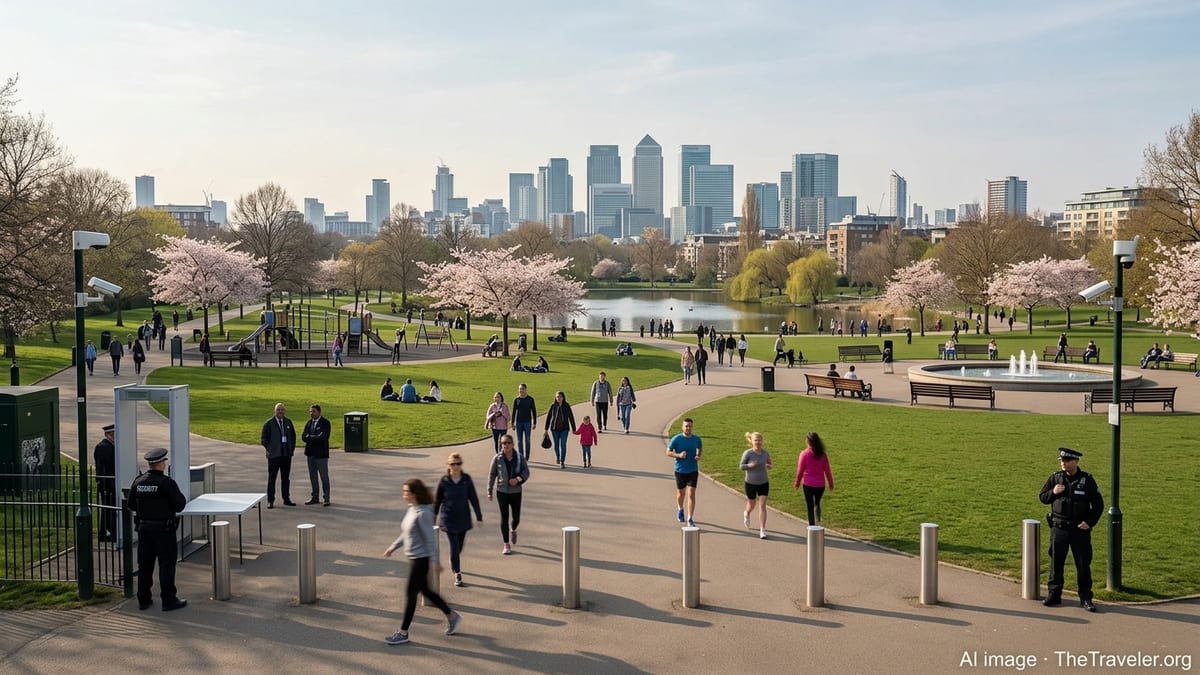
New Threats Target Leisure Spaces Far Beyond the Front Line
According to publicly available coverage of recent Tehran briefings, a senior Iranian military spokesman stated that, based on information Iran claims to hold on its adversaries, "parks, recreational areas and tourist destinations anywhere in the world" would no longer be considered safe. The wording, directed at perceived enemies including the United States and Israel, appears to broaden the potential battlefield to locations traditionally regarded as off limits in conventional conflict.
Reports indicate that the statement came as Iran continued to respond to large-scale United States and Israeli strikes launched on 28 February 2026 against targets across Iran, a campaign that various analyses describe as the opening phase of the 2026 Iran war. The conflict has already triggered missile and drone exchanges across the Gulf and wider region, alongside attacks on critical infrastructure such as refineries and desalination plants.
Open-source monitoring of international media suggests that the new rhetoric is being interpreted by many security analysts as a deterrent signal aimed at Western and regional governments. However, the explicit reference to civilian leisure spaces is also resonating strongly with the travel industry, which is facing renewed questions about the safety of tourists far removed from recognised war zones.
Commentary in regional outlets and on travel risk bulletins notes that even if such threats are never acted upon, the psychological impact on prospective travellers and event organisers could be significant. The idea that amusement parks, waterfront promenades, city parks or resort districts might be framed as legitimate targets is introducing an additional layer of uncertainty to trip-planning decisions.
Airspace Closures and Detours Strain Global Travel Networks
Even before the latest threats to parks and tourist areas, the 2026 Iran war had badly disrupted aviation and transit corridors linking Europe, Africa and Asia. Research briefings and travel security advisories describe widespread restrictions and intermittent closures affecting key Middle East airspace, including over the Gulf and near the Strait of Hormuz, a vital maritime and aviation chokepoint.
Published economic assessments highlight that major hubs in the Gulf, such as Dubai and Doha, have experienced damage to aviation infrastructure alongside temporary suspensions of passenger and cargo flights. Several analyses compare the scale of the disruption to past shocks that reshaped global airline route maps, pointing to grounded aircraft, complex rerouting via longer paths and significantly higher fuel and insurance costs.
Tourism impact studies released this month estimate that the broader Middle East is losing hundreds of millions of dollars per day in visitor spending as travellers defer or cancel trips. Beyond point-to-point tourism to countries directly affected by hostilities, the region’s role as a transfer hub means that disruptions are rippling into safaris in East Africa, holidays in the Indian Ocean and business travel across South and Southeast Asia.
Travel management companies and corporate risk teams cited in industry reports are increasingly steering itineraries away from traditional Gulf transit points where feasible, even when official advisories allow travel. The new Iranian threats to leisure venues are expected to accelerate internal reviews of acceptable stopovers, especially for high-profile events and group travel.
Tourist Destinations Worldwide Reassess Security Posture
From North American city parks to European theme parks and Asian waterfront promenades, operators are quietly reassessing security plans in light of the latest rhetoric from Tehran. Publicly available commentary from security consultancies notes that most high-traffic attractions already maintain counterterrorism protocols, but the explicit mention of parks and tourist sites in wartime messaging is prompting scenario planning for more politically motivated threats.
Travel risk analysts point out that previous global crises have shown how fast sentiment can shift once leisure spaces are perceived as potential targets. Even statistically low-probability risks can result in heightened screening at entrances, increased visible patrols and closer coordination with private security in shopping streets, museums and major parks.
Some recent advisories encourage destination management organisations to refresh crisis communication plans, ensuring they can rapidly provide clear, factual updates to visitors if regional tensions flare further. This includes having pre-agreed language for temporary closures of public spaces, crowd control at festivals and redirection of visitors during major international events.
While no specific city or attraction outside the Middle East has been publicly named in the threats so far, global tourism boards are closely watching developments. The possibility that an attack or attempted attack on a symbolic leisure venue could occur far from the Middle East is now part of mainstream risk modelling for large-scale events scheduled over the coming year.
Travelers Face Complex Decisions Amid Heightened Geopolitical Risk
For individual travellers, the combination of kinetic warfare in the Middle East, higher energy prices and explicit threats referencing tourist destinations worldwide is creating an unusually complex decision-making environment. Public guidance from several governments already urges citizens to exercise increased caution when travelling anywhere in the region, and to closely monitor route changes and security information when transiting nearby hubs.
Travel insurers and airline policies tracked in recent industry coverage show a mixed picture. In some cases, standard policies do not automatically cover cancellations based solely on fear of travel without an updated formal advisory, leaving travellers to weigh personal risk tolerance against financial loss. The new Iranian statements about parks and tourist sites may not immediately trigger policy changes, but they are likely to influence how future exclusions and war-risk provisions are framed.
Travel advisors report, through trade publications, a growing number of clients asking whether they should avoid large public gatherings, stadiums, waterfront parks or amusement parks, even in countries far removed from the Middle East war. Many guidance notes currently focus on situational awareness, local media monitoring and flexibility in itineraries rather than blanket avoidance of popular attractions.
At the same time, booking data discussed in recent market analyses suggests a gradual redirection of leisure demand toward destinations perceived as politically stable and geographically distant from the Gulf. Mediterranean and Red Sea resorts are seeing increased scrutiny from risk-conscious travellers, while long-haul trips to parts of the Americas and East Asia are benefiting from a search for perceived safety.
Industry Braces for Prolonged Uncertainty in 2026
Economic studies on the 2026 Iran war suggest that, even if direct hostilities ease in the coming months, the effects on global tourism could be long-lasting. The combination of disrupted air and sea routes, elevated energy prices and lingering security concerns around symbolic public spaces is expected to weigh on recovery timelines for airlines, hotels and destination marketing organisations.
Analysts drawing on previous conflicts in the region note that travel rebounds tend to occur in stages, with domestic and regional tourism usually returning first, followed by long-haul and group travel. However, the latest Iranian threats which blur lines between frontline and civilian leisure spaces may lengthen the period during which some travellers and corporate travel managers remain wary of certain transit points and destinations.
Looking ahead through 2026, publicly available forecasts anticipate that travel patterns will continue to adapt, with more resilient point-to-point routes, diversified hub strategies and increased investment in security and crisis response at high-profile parks and attractions worldwide. For now, the tourism sector is entering the busy northern hemisphere spring and summer seasons with an acute awareness that geopolitical decisions in the Gulf could quickly reshape visitor flows to city parks and beachfront promenades oceans away.