

More news on this day
Iran’s latest warning that “parks, recreational areas and tourist destinations” worldwide may no longer be safe for its enemies is reverberating through the travel industry, fueling fears of a broader campaign against civilian leisure spaces just as global tourism struggles to maintain its post‑pandemic recovery amid a widening Iran–U.S.–Israel conflict.
Get the latest news straight to your inbox!
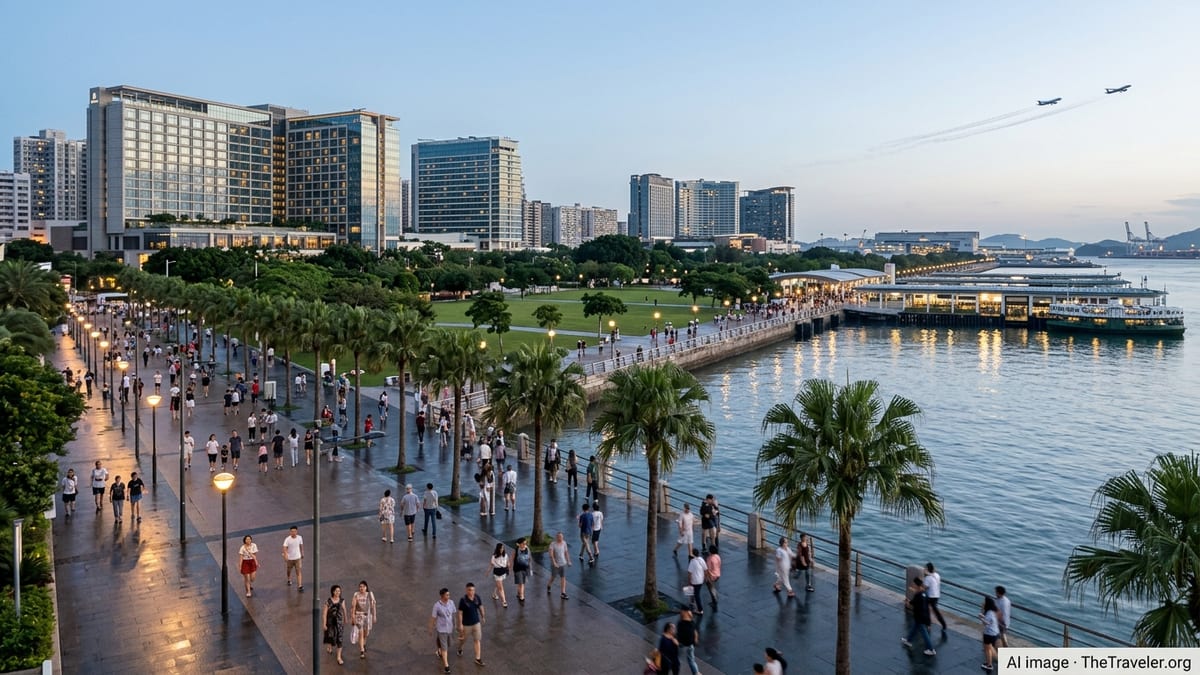
A Chilling Message Aimed Far Beyond the Battlefield
The threat emerged as senior Iranian military figures reacted publicly to ongoing attacks on Iranian territory and infrastructure during the rapidly escalating 2026 Iran war. Published coverage of Iranian state media and international reporting indicates that a key spokesperson warned that recreational and tourist locations “anywhere in the world” could now be considered potential targets for retaliation, specifically in reference to adversaries such as the United States and Israel.
Analysts note that the language goes beyond traditional military signaling. Rather than focusing solely on bases, energy facilities or diplomatic compounds, the wording explicitly places civilian leisure environments in the frame. Publicly available commentary suggests that the statement has been interpreted by many observers as a deliberate attempt to instill psychological pressure, raising uncertainty about the safety of everyday spaces associated with tourism and recreation.
The warning comes against the backdrop of a conflict that has already spilled into civilian-adjacent territory. Reports from the Gulf region in recent weeks describe Iranian drone and missile strikes hitting airports, ports and at least one major hotel in Bahrain, prompting evacuations of travelers and staff. While these locations have strategic value due to their military and logistical roles, they also serve as critical hubs for international tourism and business travel.
For tourism stakeholders, the shift in rhetoric is especially troubling because it blurs the line between combat zones and spaces that, until now, were largely treated as off-limits in formal statements, even when tensions were high. Industry experts warn that even without a specific attack on a tourist attraction, the perception of risk alone can be enough to reshape travel demand on a global scale.
Tourism Infrastructure Already Strained by Regional Attacks
In the weeks preceding Iran’s global warning, the conflict had already disrupted some of the world’s most important travel and transit corridors. Drone and missile attacks linked to Iran or its forces have been reported against airports and ports in Bahrain, Oman and the United Arab Emirates, including facilities that host both commercial flights and cruise or cargo operations. Regional media coverage describes temporary closures, fires and emergency responses that have affected passengers and workers.
At the same time, retaliatory strikes on Iranian territory by the United States and Israel have targeted strategic islands, energy hubs and industrial zones, concentrating around Kharg Island, the South Pars gas field and other infrastructure critical to global oil and gas flows. These actions have already pushed up energy prices and introduced new volatility for airlines and cruise operators, for whom fuel costs and route stability are key planning variables.
Airspace closures and reroutings across parts of Iran, Israel and neighboring states have prompted widespread flight cancellations and diversions in recent days, according to travel advisories and aviation tracking data summarized by industry observers. Travel alerts circulating among airlines, tour operators and online travel agencies urge passengers to monitor itineraries closely, expect schedule changes and avoid non‑essential travel to directly affected countries.
While the conflict theater remains centered in and around the Middle East, the latest Iranian rhetoric suggests that the indirect damage could extend much further. Travel industry analysts note that global tourism is highly sensitive to perceptions of terrorism risk, particularly when warnings implicate airports, hotels, cruise terminals or urban attractions that serve as gateways for leisure travel worldwide.
Psychological Impact on Travelers and Destinations
Historically, explicit threats against tourist sites have had an outsized impact on traveler behavior even when follow‑through has been limited. Past incidents involving attacks on hotels, beachfront resorts and heritage attractions in regions such as North Africa and Southeast Asia produced immediate booking declines across entire countries and, at times, neighboring destinations that were never directly targeted.
The specific mention of “parks” and “recreational areas” in the recent Iranian message is particularly unsettling to security specialists, as it conjures images of families, school groups and casual visitors rather than hardened government or military assets. Specialists point out that this type of language appears designed to exploit a core vulnerability of global tourism: its reliance on a sense of carefree movement and the assumption that public spaces are fundamentally safe.
Destination marketing organizations and tourism boards in regions far from the conflict are now evaluating whether they need to adjust messaging or safety information. So far, there is no evidence of a coordinated campaign of attacks on leisure sites outside the Middle East linked to the current war, but travel data providers note that search patterns for trips to major hubs in Europe and Asia are showing early signs of caution, with increased interest in perceived low‑risk, nature‑focused destinations.
For cities that rely on large parks, waterfront promenades and cultural districts as anchor attractions, the risk is that a generalized fear of public gathering spaces could undermine urban tourism just as many locations were finally approaching or surpassing pre‑pandemic visitor numbers. Security experts caution that even a single incident involving a high‑profile tourist venue could rapidly shift global sentiment.
Government Advisories and Insurance Markets Respond
In response to the deteriorating security environment, a growing number of governments have updated travel advisories covering Iran and parts of the wider Middle East, warning citizens to avoid non‑essential trips and to maintain heightened awareness around crowded public locations and transportation hubs. Some advisories explicitly reference the risk of missile and drone activity, while others emphasize the unpredictability of the situation and the possibility of further escalation.
Insurance providers are also reassessing exposure. Industry briefings indicate that underwriters are reevaluating war and terrorism exclusions for destinations previously considered relatively stable, particularly key transit nodes and popular stopover cities. This reassessment can translate into higher costs or reduced coverage for airlines, cruise operators, hotel chains and large event organizers, which in turn may influence route planning, capacity decisions and the viability of certain markets.
For individual travelers, the shifting risk calculus is likely to manifest in stricter policy language around cancellations and emergency assistance. Travel management companies are advising corporate clients to track employee movements more closely, especially for trips involving major global hubs or multinational conferences, while leisure travelers are being encouraged to read fine print carefully and to register trips with consular services where possible.
The cumulative impact of these measures may be to make spontaneous, long‑haul travel less attractive in the near term, as trip planning requires more contingency thinking and cost buffers. For destinations heavily dependent on international arrivals, such as Gulf city‑states and major European and Asian transit hubs, even a modest slowdown could have measurable economic consequences.
Scenario Planning for a Tourism Sector on Edge
Tourism economists and security analysts are now mapping potential scenarios should Iran or aligned groups act on the broad warning against recreational and tourist sites. A low‑impact scenario involves continued rhetoric and cyber or information operations designed primarily to intimidate, without major physical attacks beyond the existing conflict zone. In this case, travel demand might soften but remain resilient, with travelers selectively avoiding the most affected countries.
More severe scenarios examine the possibility of isolated but high‑profile incidents targeting hotels, entertainment districts or landmark attractions well outside the Middle East. Even one such event, if credibly linked to the current confrontation, could trigger a wave of cancellations, shifts to domestic or regional travel, and renewed calls for visible security at tourist hotspots worldwide.
Industry groups stress that destination resilience will depend partly on transparent communication and visible protective measures that reassure visitors without creating an atmosphere of fear. Airports, cruise terminals, theme parks and urban parks may face pressure to enhance screening, surveillance and response capabilities in ways that are both effective and minimally disruptive to the visitor experience.
For now, tourism operators and travelers find themselves in an uneasy holding pattern. The war in and around Iran continues to evolve, energy and aviation markets remain volatile, and the threat against global recreational sites hangs as a reminder that in an era of far‑reaching conflicts, even the most ordinary spaces of leisure can be pulled into the realm of geopolitical risk.