

More news on this day
Iran’s tourism sector has been plunged into crisis after coordinated US-Israel strikes on February 28 triggered sweeping airspace shutdowns, mass flight cancellations and an abrupt collapse in visitor traffic to major destinations including Tehran, Qom, Isfahan and Mashhad.
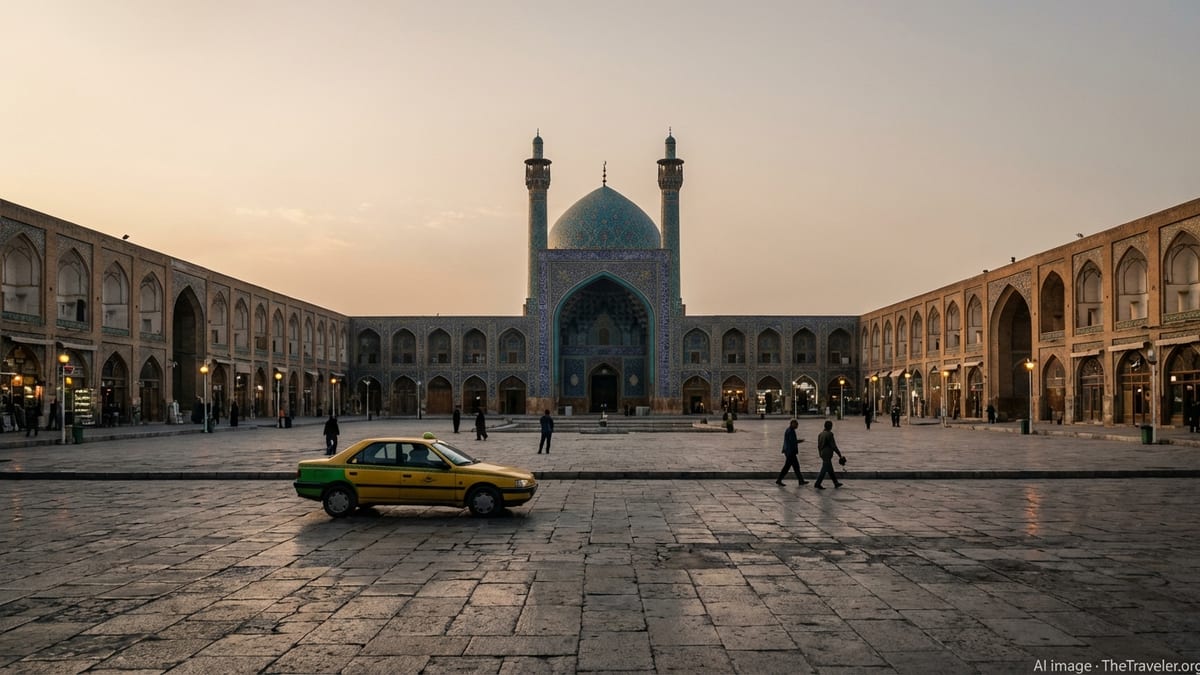
Airspace Lockdowns Paralyse Access to Iran
In the hours after the joint strikes on Iran, a cascading series of airspace closures across the Middle East effectively sealed off much of the region to commercial aviation. Iran, Iraq, Israel, Kuwait, Qatar, Syria, Bahrain and the United Arab Emirates all moved to close their skies to civilian traffic, forcing hundreds of aircraft to divert and grounding many more on the tarmac. Aviation tracking data and airline announcements indicated more than 1,800 flights were cancelled within the first 24 hours, with hundreds of thousands of passengers stranded or rerouted across Europe, Asia and the Gulf.
For Iran’s tourism sector, already operating under strict Western travel advisories and long-running sanctions, the sudden interruption of air links was devastating. Tehran’s Imam Khomeini International Airport, the country’s primary international gateway, saw inbound tourist flows collapse virtually overnight as foreign carriers halted services and regional hubs in Dubai, Abu Dhabi and Doha went offline or sharply reduced operations. Even where Iranian airspace technically remained available for limited operations, most major airlines chose to avoid the Tehran flight information region altogether, citing security and liability concerns.
Aviation risk monitors now classify Iranian airspace at the highest danger level, warning of the possibility of further short-notice closures and the threat of misidentification by air defence systems in an active conflict zone. That assessment has hardened carrier decisions to suspend routes, turning what began as a crisis in air traffic control into a broader shutdown of Iran’s international connectivity.
Tourism Freefall in Tehran, Isfahan, Qom and Mashhad
The abrupt loss of air access has translated into an immediate tourism shock in Iran’s key cities. In Tehran, hoteliers report that international bookings have been wiped out for the next several weeks, with tour operators scrambling to cancel or reroute itineraries that had included the capital’s museums, bazaars and contemporary cultural attractions. Industry representatives say occupancy in some central hotels has dropped to single digits, driven almost entirely by domestic or long-stay business guests rather than foreign visitors.
Heritage destinations such as Isfahan, renowned for its Safavid-era squares, mosques and bridges, have also emptied of foreign tourists. Local guides who just months ago were reporting a tentative uptick in European and Asian bookings now face mass cancellations, as group tours abandon overland extensions into Iran and cruise-based shore excursions are withdrawn. Craft markets, carpet workshops and small guesthouses that depend heavily on international spending are among the first to feel the pinch.
In the religious hubs of Qom and Mashhad, pilgrimage travel has been similarly disrupted. While some regional pilgrims can still reach the shrines by road from neighbouring countries, large-scale air-borne religious tourism from the Gulf, South Asia and beyond has largely halted as airlines suspend flights and transit hubs struggle with their own operational crises. Airport authorities in Mashhad, which only last year celebrated the resumption of services to multiple international destinations after a previous conflict-related closure, now face another wave of cancellations and uncertain timelines for recovery.
Travel agents in Tehran say enquiries for trips into Iran have “fallen off a cliff” since the strikes, with almost all communication instead focused on emergency changes, refunds and insurance claims. Several report that even adventurous independent travellers, who in past years continued to visit during periods of tension, are postponing or cancelling visits in light of the scale of the current military confrontation.
Global Flight Cancellations Reshape Long-Haul Routes
The impact of the crisis extends well beyond Iran’s borders, redrawing global aviation routes that traditionally rely on the Middle East as a central corridor between Europe and Asia. The simultaneous closure or partial shutdown of multiple airspaces, from Iran to Israel and parts of the Gulf, has forced airlines to implement large-scale cancellations and significant rerouting across three continents. Preliminary industry data suggest that nearly a quarter of all scheduled flights to the wider Middle East were cancelled on the day of the strikes, with some key markets such as Israel experiencing cancellation rates approaching 40 percent.
Carriers including Emirates, Etihad, Qatar Airways, Turkish Airlines, Lufthansa, Air France and British Airways have either suspended or sharply curtailed services to destinations such as Tehran, Dubai, Tel Aviv, Amman and Beirut. Etihad temporarily halted all departures from Abu Dhabi’s main airport, while Emirates and flydubai paused operations from Dubai as airspace restrictions took hold. With Russian and Ukrainian skies already closed to many Western airlines due to the ongoing war there, the loss of safe, efficient routing through Iran and its neighbours has left carriers with few viable alternatives.
Many long-haul flights are now being pushed north or south, lengthening journey times, increasing fuel burn and placing additional strain on already crowded corridors over Saudi Arabia, Central Asia and the eastern Mediterranean. Aviation analysts warn that these operational pressures could feed through to higher ticket prices and reduced capacity on some routes for months to come, further discouraging discretionary leisure travel to and through the region, including to Iran’s once-aspirational cultural and religious destinations.
Mounting Economic Pain for Iran’s Travel Sector
Inside Iran, the unfolding tourism collapse is compounding broader economic stress. Travel and hospitality had been one of the few sectors able to generate foreign currency inflows despite sanctions, with religious pilgrimage and cultural tourism providing steady demand in cities like Mashhad, Shiraz, Isfahan and Tehran. Local industry figures estimate that tens of thousands of jobs are directly at risk across hotels, restaurants, transport firms and guiding services if the current airspace restrictions and conflict conditions persist into the peak spring travel season.
Small, family-run businesses are particularly vulnerable. Guesthouse owners in Isfahan and Kashan report that deposits paid for Nowruz holiday stays have already been refunded in full to foreign guests, while domestic travellers growing wary of the security situation are also beginning to cancel. In Mashhad’s hospitality sector, where occupancy depends heavily on regional pilgrims arriving by air, operators are warning of cash-flow crises within weeks if international arrivals remain close to zero.
The latest turmoil comes on top of a long-standing “do not travel” advisory on Iran issued by the United States and similarly severe warnings from several European governments, which cite risks including terrorism, arbitrary detention and civil unrest. Those advisories had already pushed down Western visitor numbers and limited the reach of organised tours. The new phase of open conflict and airspace disruption risks pushing the remaining trickle of foreign leisure visitors to essentially none, leaving the sector reliant almost entirely on domestic tourism at a time when Iranians themselves face rising economic hardship and inflation.
Uncertain Outlook Amid Escalating Conflict
How long Iran’s tourism freefall will last now depends largely on developments far beyond the control of the country’s travel providers. The death of Supreme Leader Ayatollah Ali Khamenei in the initial US-Israel strikes has plunged Iran into a period of profound political uncertainty, while retaliatory missile and drone attacks across the region have prompted fresh warnings of further escalation. Regional governments and international mediators are calling for restraint, but military planners and aviation safety experts alike are working on the assumption that airspace volatility will continue.
Airlines are currently adopting a rolling approach to cancellations, extending suspensions of flights to Iran and neighbouring conflict-affected states in blocks of several days or weeks, and signalling that full restoration of pre-crisis schedules is unlikely in the near term. Even if some limited traffic resumes, operators may continue to route aircraft around Iranian skies for an extended period, both to manage risk and to comply with guidance from insurers and national aviation regulators.
For travel businesses in Tehran, Qom, Isfahan, Mashhad and other popular destinations, that means planning for a prolonged downturn. Industry associations are quietly pressing authorities in Tehran for targeted support such as tax relief, soft loans and marketing assistance aimed at sustaining domestic tourism once basic security conditions allow. For now, however, tour guides, hoteliers and transport operators across Iran describe a sector in limbo, cut off from the international market and waiting anxiously to see whether the latest conflict marks a temporary shock or a lasting rupture in the country’s fragile tourism revival.