

Escalating tensions between Iran and the United States are rippling through global aviation, forcing major carriers including IndiGo, Air India, Emirates, Lufthansa, Air France and KLM to ground or reroute flights and leaving thousands of passengers scrambling to rebook, reroute or abandon long‑planned trips.
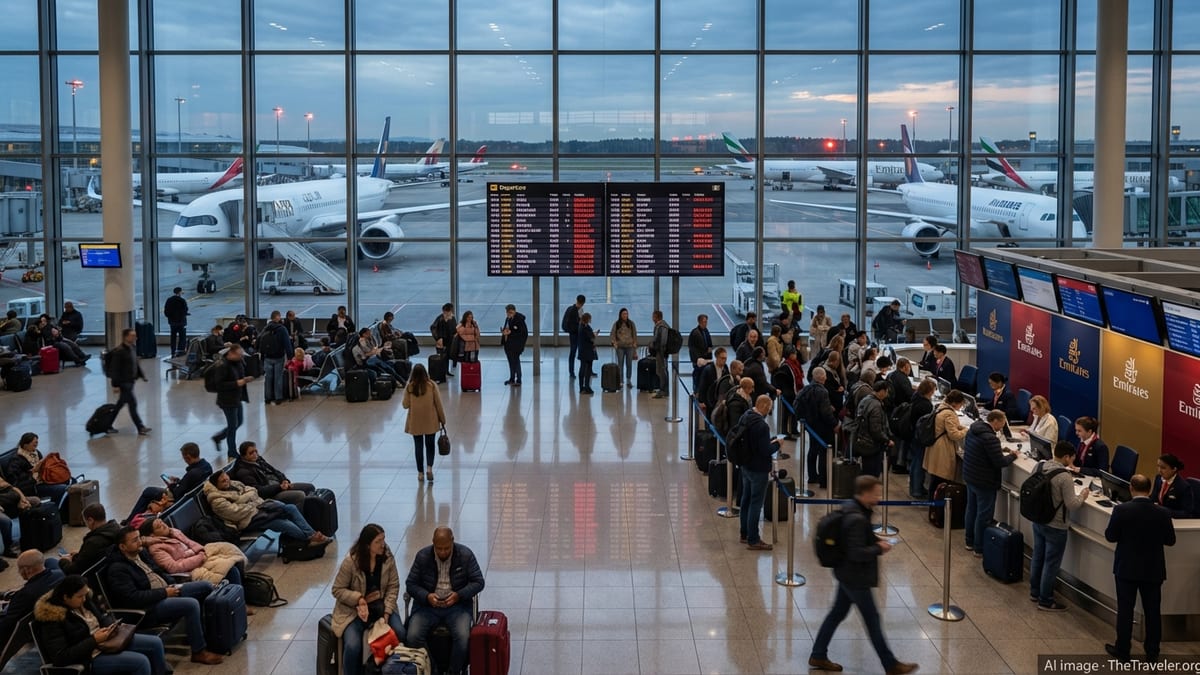
Major Carriers Slash Routes Across the Middle East and Beyond
In recent weeks, a tightening web of security advisories, insurance restrictions and airspace warnings linked to the Iran–US crisis has pushed leading airlines to curtail services across the broader Middle East and Central Asia. IndiGo, Air India, Emirates, Lufthansa, Air France and KLM are among the most prominent names now trimming schedules, suspending specific city pairs or diverting aircraft around sensitive corridors.
For IndiGo and Air India, the immediate impact is felt on routes that would normally overfly Iranian airspace to reach the Caucasus and Central Asia. Flights that once took the most direct path are now being rerouted along longer arcs or pulled from schedules altogether, compounding the operational strain already facing Indian aviation after last year’s massive scheduling disruption at IndiGo and a broader capacity squeeze during the peak wedding and holiday season.
European giants Lufthansa, Air France and KLM have been scaling back exposure to the region as well, after a succession of notices to air missions and security bulletins highlighted elevated risks for civilian aircraft transiting skies near Iran and the Gulf. Services to Tehran remain suspended or under review for several of these carriers, while flights to hubs such as Dubai, Abu Dhabi and Doha are being retimed or flown on more circuitous routings to avoid designated risk zones.
For Gulf heavyweight Emirates, whose model is built on funnelling traffic through Dubai from every corner of the globe, the instability is particularly sensitive. The carrier has already pared services to Iran amid civil unrest and safety concerns, and is contending with a shifting pattern of demand as nervous travelers hesitate over itineraries that transit the region.
IndiGo and Air India Hit Key Links to Tbilisi, Almaty, Baku and Tashkent
Indian low cost leader IndiGo has been among the most aggressive in scrubbing routes, extending a wide swath of cancellations on services to Tbilisi, Almaty, Baku and Tashkent until late March. The airline has framed the move squarely in the context of heightened Iran–US tensions and the associated airspace risks and regulatory uncertainty that come with them.
These cities have become increasingly popular with Indian leisure travelers, digital nomads and medical tourists, in part because of more relaxed visa policies and attractive package deals. The suspensions therefore strike directly at a fast growing segment of outbound Indian tourism, forcing would be travelers to cobble together multi airline routings via the Gulf or Europe or to postpone trips entirely.
Air India, which has been rebuilding its long haul network under new ownership, is taking a more cautious stance on some of its own Middle East and Central Asia operations. While the flag carrier continues to operate to major Gulf destinations, planners are re evaluating the economics and risk profile of routes that rely on corridors now classified as higher threat. The result is a quieter but still significant thinning of frequencies, aircraft swaps and time consuming detours that lengthen flight times and raise fuel burn.
For both IndiGo and Air India, the disruptions intersect with domestic capacity constraints and recent regulatory scrutiny. After last year’s crew scheduling crisis at IndiGo triggered thousands of cancellations within India, regulators have insisted that airlines demonstrate more conservative planning assumptions, limiting their ability to flex up capacity to cover new international routings as traditional paths via Iranian airspace are curtailed.
European Hubs Feel the Shockwaves as Lufthansa, Air France and KLM Adjust
The ripple effects are also being felt sharply in Europe, where Lufthansa, Air France and KLM have long marketed themselves as reliable bridges between North America, Europe, the Middle East and Asia. Each of these carriers now faces a complex calculus: how to maintain connectivity to key markets while avoiding airspace deemed unsafe or politically volatile.
Lufthansa has repeatedly delayed and reassessed the return of its Tehran services amid a combination of security alerts, anti government protests in Iran and now the broader confrontation with the United States. Austrian Airlines, a group partner, has similarly cancelled flights on the Vienna–Tehran route, underscoring the level of caution among European network carriers serving Iran.
Air France and KLM, both experienced in navigating conflict related airspace closures after previous crises over Ukraine and the Middle East, have adjusted routings on flights to Gulf and South Asian destinations, sometimes adding up to an hour of extra flying to avoid specific danger zones. That increases operating costs and, in some cases, leads to marginal routes being reduced or paused entirely when profitability can no longer be justified under the new constraints.
For passengers traveling via Paris, Amsterdam or Frankfurt, the changes show up as longer block times, reduced daily frequencies and, in some instances, sudden schedule changes as airlines respond in real time to new government advisories. Frequent flyers accustomed to seamless transits through European hubs now face missed connections, overnight layovers and a maze of rebooking challenges as airline call centers struggle to keep up.
Emirates and Gulf Hubs Battle to Retain Traveler Confidence
The Gulf’s super connectors are caught in a delicate balancing act. Emirates, based in Dubai, sits at the intersection of many of the world’s most important east west traffic flows. Tensions involving Iran and the United States directly influence perceptions of safety in nearby skies, as well as insurer appetite for underwriting flights that transit the Gulf region.
Emirates has already suspended and curtailed services to multiple Iranian cities in response to both political unrest and security threats. More recently, it has had to navigate an evolving patchwork of airspace restrictions around Iran and its neighbors. Those measures have compelled the airline to reroute some long haul services farther south or north than usual, adding flying time and squeezing aircraft utilization.
Regional peers in Abu Dhabi and Doha are facing similar challenges. Collectively, the Gulf carriers have seen surging inquiries from nervous travelers seeking clarity about whether they can still safely connect through the region. Travel agents report that corporate clients in North America and Europe are asking for alternative itineraries that avoid tighter choke points, even at the expense of convenience or cost.
While aviation regulators stress that routes still in operation meet international safety standards, even a small number of high profile diversions or emergency re routings can dent confidence. For a hub and spoke system built on the promise of predictable connectivity, the psychological impact of the Iran–US stand off may linger well after airspace is fully reopened.
Stranded Tourists Turn to Land Borders, Buses and Trains
For travelers already on the road when flight cancellations hit, the geopolitical drama is playing out in painfully practical ways. When airspace closures and suspended services followed missile exchanges and military escalations between Iran and its rivals last year, thousands of travelers in Turkey, the Caucasus and the Gulf suddenly found themselves without a flight home.
Scenes that unfolded then are resurfacing in new forms now. Long lines of passengers with luggage spilling out of small travel agency offices have become emblematic images of the crisis. From eastern Turkey’s border posts to road crossings between Iraq and its neighbors, stranded tourists and migrant workers alike are piecing together overland journeys that can stretch into days.
For some Iranians who had flown to nearby countries for shopping, tourism or family visits, the only viable option when flights were cut was to charter buses back to the border, navigate lengthy queues and cross on foot. Others have opted to wait in place for airlines to resume services, only to watch tentative restart dates pushed back as the Iran–US standoff shows little sign of rapid resolution.
Travel insurance policies, often purchased as an afterthought, are being tested in ways many leisure travelers never considered. Not all cover geopolitical disruptions or blanket airspace closures, leaving some passengers to shoulder the full cost of extra hotel nights, rebooked tickets on alternative airlines and expensive last minute land transport across multiple frontiers.
Rerouted Flight Paths Mean Longer Journeys and Higher Costs
Even for flights that are still operating, the map of the skies between Europe, the Middle East and Asia has been redrawn. Aviation authorities in multiple regions have advised airlines to avoid large swathes of Iranian airspace, replicating earlier patterns seen during previous flare ups in the region. The result is a series of detours that bend north over the Caucasus or south over the Arabian Sea to keep aircraft well clear of potential flashpoints.
These changes come with a clear price tag. Longer routes burn more fuel, cut into available payload and can force airlines to adjust departure times in order to avoid violating crew duty limits. Marginal routes that were barely profitable before the crisis may no longer make financial sense when an extra 30 to 90 minutes of flying is added to every leg.
For passengers, the impact shows up as longer total journey times, fewer nonstop options and, over time, higher fares. Airlines facing escalating costs and thinning yields may pass on some of the burden to travelers, particularly in premium cabins and on business heavy routes where demand is less sensitive to price. Leisure travelers, by contrast, may respond by postponing or redirecting trips to destinations perceived as safer or easier to reach.
Low cost carriers that had been eyeing ambitious expansions into Central Asia and the Caucasus now face a more uncertain landscape. Their business models depend heavily on tight aircraft utilization and minimal schedule padding, both of which are harder to sustain when geopolitical tensions regularly upend airspace access.
What Travelers Should Do If Their Flight Is Affected
For those with upcoming trips on IndiGo, Air India, Emirates, Lufthansa, Air France or KLM, the first step is to carefully monitor booking details and airline notifications. Many carriers have introduced limited time flexibility policies, allowing affected passengers to rebook without change fees, shift travel to alternative destinations in the same region or receive credit vouchers for future use.
Passengers booked through online travel agencies or third party platforms often face an extra layer of complexity, as changes must typically be processed by the issuing agent. In these cases, experts recommend confirming whether the airline has formally cancelled or significantly retimed the flight, which can strengthen a traveler’s case for a refund or complimentary rebooking rather than a partial credit.
Travelers considering new bookings to destinations that rely on air corridors near Iran or the Gulf are being urged to factor flexibility into their plans. Choosing fares that allow at least one free change, confirming that travel insurance includes coverage for airspace closures or government travel warnings, and building in additional buffer time around key events, such as cruises or tours, can all reduce the risk of costly disruptions.
Above all, aviation analysts say, travelers should expect continued volatility as long as Iran–US tensions remain high. Flight schedules are likely to stay fluid, with airlines announcing rolling waves of adjustments rather than one off timetable overhauls. Flexibility, patience and a willingness to consider alternative routings will be essential tools for anyone planning to cross this part of the world in the coming months.