

More news on this day
As the Iran war enters its fourth week, the conflict’s impact is rippling far beyond the battlefield, unsettling travelers’ plans from Turkey to Iraq, Syria and the wider Middle East. Airlines are scrapping routes, tour operators are refunding spring and summer trips, and governments are revising travel advisories in real time, creating a fast-moving landscape that anyone planning to visit the region now has to navigate with care.
Get the latest news straight to your inbox!
Airspace Closures And A Sudden Wave Of Flight Disruptions
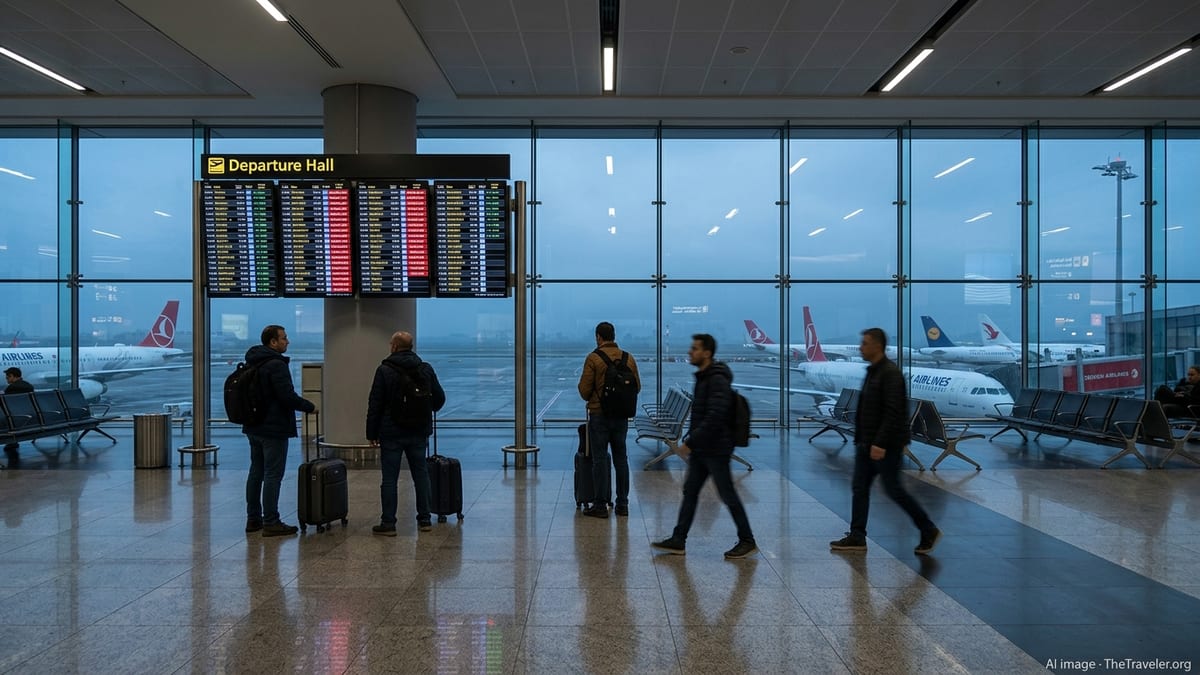
The sharpest immediate shock to tourism has come from airspace closures across parts of the Middle East since military action against Iran began on February 28, 2026. Flight tracking data, airline statements and airport notices show that airspace over Iran and much of Iraq has been heavily restricted or shut at various points, forcing carriers to suspend services or adopt lengthy detours that add cost and complexity.
Advisories compiled in early March report that large numbers of flights to and over the region have been canceled, with a particular concentration on routes touching Iran, Iraq, Syria, Lebanon and Gulf hubs. Aviation monitoring firms cited in international coverage describe a sharp drop in operations into the Middle East on peak disruption days, as airlines choose to avoid conflict-adjacent airspace even where it technically remains open.
Carriers based in Europe, Asia and the Gulf have been among the most affected. Publicly available information indicates that some European airlines are still avoiding Iranian and Iraqi airspace altogether, even when authorities declare it open, preferring to route long-haul services over alternative corridors to mitigate perceived risk. This pattern, first observed after earlier rounds of tension, has intensified with the onset of open war.
The cumulative effect for travelers is a patchwork of suspensions, rolling delays and last-minute reroutings that can strand passengers in transit or force wholesale trip cancellations. Travelers bound for nearby but technically unaffected destinations such as Turkey or Cyprus are also feeling the knock-on impact as aircraft and crews are repositioned and schedules reshuffled around the closed corridors.
Turkey: Open For Tourism, But Hit By Spillover Cancellations
Turkey has not been drawn directly into the Iran conflict, and its main tourist centers, from Istanbul to Cappadocia and the Aegean coast, remain physically untouched. Travel forums, booking platforms and regional news coverage consistently describe daily life in these destinations as normal, with major attractions operating and hotels welcoming guests.
Even so, Turkey’s position bordering conflict-affected airspace means it has experienced its own wave of disruptions. Turkish Airlines and other carriers have issued commercial policies allowing passengers to change or cancel tickets on routes involving Iran, Iraq, Jordan, Lebanon, Syria and several Gulf states for travel dates from late February through March 2026, reflecting widespread uncertainty about flight viability. Many of those bookings involve itineraries that combine Turkey with neighboring countries on multi-stop trips.
Tourism operators report that some visitors, particularly from Europe, North America and East Asia, are now choosing to limit their travel to Turkey alone rather than continue into adjoining states, while others are postponing the region entirely. Online discussions among travelers point to heightened anxiety following reports that missiles linked to the conflict briefly entered Turkish-controlled airspace over the Mediterranean, even though there has been no strike on Turkish soil.
For travelers still considering trips to Turkey in the coming weeks, the emerging pattern is a decoupling of air safety concerns from conditions on the ground. Domestic flights and internal tourism infrastructure are largely unaffected, but itineraries that rely on regional connections or cross-border overland routes face a much higher risk of disruption.
Iraq, Syria And The Wider Levant: High Risk, Heavy Cancellations
Iraq and Syria, already fragile tourism markets before this conflict, have seen some of the most pronounced declines in bookings. Published travel advisories from multiple governments now classify large parts of both countries as areas to avoid due to the combination of active hostilities, militia activity and limited consular support. Airlines have scrambled to adjust, with several Gulf and European carriers suspending services to Baghdad, Erbil and Damascus during the height of the airspace shutdown.
Regional reporting on Lebanon and Jordan shows a similar pattern of volatility, though with more variation by city and date. In early March, carriers serving Beirut canceled multiple rotations after widespread regional airspace restrictions disrupted standard approach routes. Industry data shared in the media indicated that roughly a quarter of scheduled services to the broader Middle East were canceled on some peak days, a proportion that has eased but not fully normalized.
Tour operators serving cultural and religious tourism circuits that span Iraq, Syria, Lebanon and Jordan describe a flood of cancellations since March 6, particularly from European and Russian clients. Trade press in Russia, for example, cites industry groups estimating multimillion-dollar losses in just the first ten days of the war, with travelers pulling out of spring trips across the Middle East, not only to Iran itself.
For independent travelers, the picture is even starker. Overland routes that once linked Turkey to Iraqi Kurdistan, northern Syria or onward to Jordan have become increasingly difficult or inadvisable, as border regimes tighten and security incidents proliferate along key highways. Those considering such journeys now face intersecting risks linked to active conflict, infrastructure strain and limited evacuation options.
Neighboring Hubs: From Gulf Mega-Airports To Eastern Mediterranean Islands
Beyond the immediate conflict states, traditional transit and tourism hubs are also contending with fallout. Dubai and Doha, two of the world’s busiest connecting airports, have both faced disruptions linked to missile and drone incidents and to the broader closure of Iranian and Iraqi skies. Travel advisories issued in early March describe partial suspensions of operations at Dubai International Airport, followed by gradual resumptions as airspace assessments evolve.
Coverage of Iranian strikes on Gulf states notes that luxury hotels in cities such as Dubai have reacted by cutting prices and promoting domestic staycations to fill rooms left empty by wary international visitors. While these cities remain major transit points, the perception of risk, combined with practical issues like flight cancellations and missed connections, is dampening demand among holidaymakers who can easily rebook to Southern Europe or Southeast Asia.
The Eastern Mediterranean offers a parallel case. In Cyprus, for example, analysis of the 2026 drone strikes on British bases on the island links the incident to a measurable drop in tourism performance, with hotel cancellations reportedly reaching up to 25 to 30 percent in some coastal districts and occupancy rates falling well below seasonal norms. Although Cyprus is not a party to the Iran war, travelers appear to be lumping much of the region into a single perceived risk zone.
Similar substitution patterns are emerging elsewhere, as travelers from Europe and Russia switch bookings from Middle Eastern and Eastern Mediterranean destinations toward the western Mediterranean, the Canary Islands or domestic seaside resorts. This behavior suggests that even limited security incidents tied to the Iran war can prompt broader rethinking of where people are comfortable spending their holidays.
What Travelers Need To Know Before Booking Or Canceling
For would-be visitors to Turkey, Iraq, Syria and neighboring countries, the fast-changing situation calls for a more strategic approach to planning. Standard advice from travel risk consultancies now emphasizes monitoring multiple sources: government advisories for your nationality, airline and airport notices, and reputable international media that track airspace and security developments across the region.
On the practical side, travelers are increasingly encouraged to prioritize flexible bookings. Many airlines and tour operators have introduced temporary change and cancellation policies for tickets issued before the outbreak of the war and scheduled for travel through March 2026, often allowing fee-free date changes or route alterations. However, these waivers tend to be tightly defined by travel dates and destinations, and may not apply to new bookings made after the conflict began.
Insurance is another key variable. Some comprehensive policies include coverage for trip interruption or cancellation linked to unforeseen conflict, while others explicitly exclude war-related events. Consumer advocates recommend reading policy wording closely and seeking products that treat government travel bans, widespread flight suspensions or sudden airspace closures as covered reasons for canceling or cutting short a journey.
Finally, travelers are weighing not only personal safety but also the possibility of becoming stuck. The experience of recent weeks, with passengers stranded in third countries after onward segments through the Gulf or Levant were canceled, has underlined the importance of contingency planning. For many, that now means favoring itineraries with straightforward rerouting options, opting for destinations well clear of active conflict zones, or postponing complex multi-country Middle East trips until the trajectory of the Iran war becomes clearer.