

More news on this day
Thousands of travellers are stranded in airports across the United Arab Emirates, Qatar and the wider Middle East after the escalating Iran conflict triggered sweeping airspace closures and mass flight cancellations on key transcontinental routes.
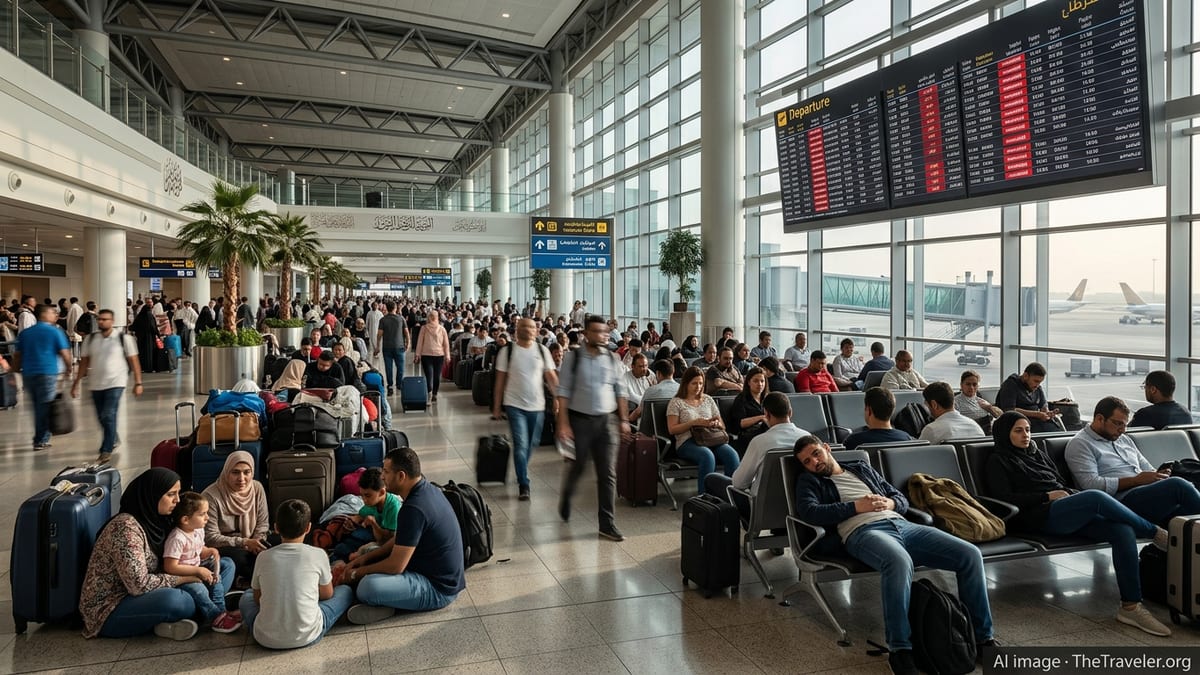
Airspace Closures Ripple Through Global Flight Networks
What began as targeted strikes between the United States, Israel and Iran at the end of February has rapidly morphed into one of the most disruptive aviation crises in recent years, with Gulf airspace at the epicentre. Authorities in the UAE, Qatar, Bahrain, Kuwait and other states sharply curtailed or closed sections of their skies after Iranian missiles and drones struck infrastructure and strategic locations across the region.
By the end of this week, aviation analytics firms estimated more than 23,000 flights had been cancelled since February 28, affecting roughly 4 to 5 million seats worldwide as carriers rerouted, turned back or grounded aircraft. The vital east–west corridors that normally funnel traffic through Dubai, Abu Dhabi and Doha have been particularly hard hit, leaving long-haul routes between Europe, Asia and Australasia in disarray.
Major Gulf carriers including Emirates, Etihad and Qatar Airways temporarily suspended most operations as the conflict intensified, before cautiously resuming limited services on selected routes once partial air corridors reopened. International airlines from Europe, India and East Asia have also halted or reduced flights into the region, extending suspensions on services to cities such as Dubai, Abu Dhabi, Doha, Dammam, Riyadh, Tehran, Tel Aviv and Beirut through mid to late March.
The result is a patchwork of constantly changing schedules. Some flights now arc north over Turkey and the Caucasus, or south over the Arabian Sea, adding four to six hours of flying time and significantly higher fuel burn. Others have been scrubbed altogether, leaving passengers queued at departure boards that update more with red cancellations than green departures.
Travellers Stranded in Gulf Hubs Face Long Waits
The abrupt shutdown of key hubs has left terminal buildings transformed into makeshift dormitories. At Dubai International and Abu Dhabi’s Zayed International Airport, rows of stranded passengers have been photographed sleeping on luggage, using jackets as pillows and phone screens as night lights as they wait for information on replacement flights.
In Doha, officials acknowledged that thousands of people on connecting itineraries have been unable to leave due to grounded Qatar Airways services and tight restrictions on regional overflights. The Qatari government has stepped in to fund hotel accommodation and extend visas for many of those stuck in transit, while the airline has begun operating limited repatriation flights to major European capitals.
Scenes are similar in other regional gateways. Travellers with itineraries linking Asia and Europe via the Gulf describe days of uncertainty, repeated rebookings and abrupt cancellations as conflict-related airspace notices are updated. Some long-haul flights bound for Doha or Dubai turned back mid‑journey earlier in the crisis, landing back at their origin airports after more than a dozen hours in the air without ever reaching their destination.
For many, the most frustrating aspect has been the lack of clear communication. Airport loudspeakers crackle with rolling announcements, but airline help desks and call centres are overwhelmed. Travellers report waiting in customer service lines for six hours or more, only to receive seat requests on oversubscribed rescue flights or vague assurances to “monitor email for updates”.
Emergency Measures: Visa Extensions and Repatriation Flights
Recognising the scale of the disruption, governments in the Gulf have begun implementing emergency measures to prevent stranded visitors from falling foul of immigration rules. Authorities in the UAE, Qatar and Kuwait have introduced temporary visa extensions and pledged to waive overstay fines for tourists unable to depart because of cancelled flights.
Diplomatic missions have also moved to assist their citizens. Several European and Asia-Pacific countries have arranged charter or military evacuation flights from Dubai, Abu Dhabi and Doha, prioritising vulnerable travellers and those with urgent medical needs. These services are operating whenever security conditions and available air corridors allow, often on short notice.
Airlines are adding ad hoc sectors where possible, redeploying wide‑body aircraft to shuttle passengers between secondary hubs that remain open and safer routings to Europe, India and Southeast Asia. However, capacity is far short of demand. Industry data shows evacuation and relief flights account for only a fraction of the seats lost to cancellations since the war began, leaving many travellers with no guaranteed way out for several days.
Consular officials and travel agents are urging passengers to stay in close contact with both their airline and embassy, to register with national traveller advisory programs, and to avoid heading to airports without confirmed bookings. In some cases, authorities have asked people to remain in hotels rather than crowding terminals until they receive specific instructions about onward travel.
Unequal Escape: Charter Jets for the Few, Chaos for the Many
The crisis has underscored stark inequalities in global mobility. As commercial networks seized up, demand for private and charter flights from Dubai, Abu Dhabi and Doha surged, with reports of wealthy travellers paying up to hundreds of thousands of dollars for last‑minute long‑range jets to Europe and Asia. Charter brokers say inquiries have risen several‑fold since the first wave of missile strikes.
For most travellers, however, such options are out of reach. Families on holiday, migrant workers returning from home visits, business travellers and students are left to compete for scarce seats on oversubscribed commercial and government-organised flights. Many have already exhausted travel budgets on extra hotel nights, meals and replacement tickets while waiting out the shutdowns.
Some passengers have chosen roundabout escape routes, piecing together complex journeys via still‑open hubs in South Asia, East Africa or Southern Europe. These itineraries can involve two or three additional connections and long layovers, adding days and significant expense to trips that were originally designed around seamless one‑stop transfers through the Gulf.
Others are simply staying put, reassessing whether to proceed with future journeys at all. Travel advisers say corporate clients are postponing nonessential trips into the region and rerouting staff away from potential flashpoints, while leisure travellers are cancelling or deferring holidays that would rely on transits through Gulf airports.
What Travellers Should Do Now
With the security situation still volatile and airspace notices changing frequently, travel experts stress that flexibility and patience are essential for anyone currently in, or planning to transit through, the Middle East. They recommend that travellers avoid speculative bookings, keep itineraries as simple as possible and be prepared for last‑minute changes in routing or departure times.
Passengers whose flights have been cancelled are advised to work directly with airlines or the travel agency that issued the original ticket, rather than purchasing new itineraries independently wherever feasible. Many carriers are offering date changes, re-routing or travel vouchers without additional fees on affected routes, although policy details vary and may shift as the crisis evolves.
Governments including the United States, Australia and several European states have issued strong advisories warning against nonessential travel to conflict‑adjacent countries and urging their citizens already in the region to depart while commercial options remain available. Travellers are being encouraged to monitor official travel alerts closely, ensure their contact details are updated with embassies, and keep important documents and essential medications readily accessible in case a rapid departure opportunity arises.
For now, there is no clear timeline for a full restoration of regular schedules. Aviation authorities and airlines are reviewing risk assessments on a daily basis, weighing the reopening of additional air corridors against the possibility of further strikes. Until there is a sustained de‑escalation in the Iran conflict, the Middle East’s role as a global transit crossroads will remain severely constrained, and travellers should brace for an extended period of disrupted journeys.