

More news on this day
Thousands of holidaymakers on the Indonesian resort island of Bali have been stranded after the Iran war triggered widespread airspace closures, forcing major Gulf carriers to ground or reroute planes that normally connect Southeast Asia with Europe and the Middle East.
Get the latest news straight to your inbox!
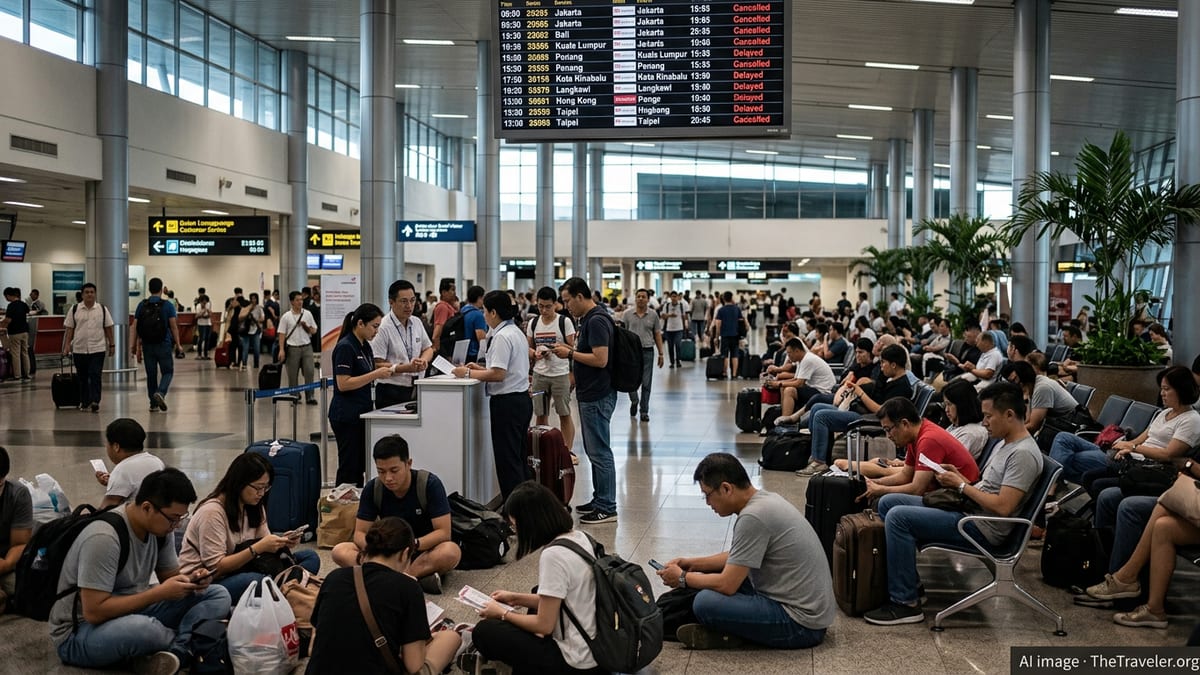
Resort Paradise Turned Waiting Room
Travelers heading home from Bali in recent days have discovered that one of Asia’s busiest tourist islands has become an unexpected bottleneck in the global aviation system. Reports from regional newspapers and airport bulletins indicate that long-haul routes linking Bali to Europe, the Middle East and parts of Africa have been heavily disrupted as the Iran war spills into international air travel.
Much of Bali’s long-distance connectivity relies on hub-and-spoke networks through Dubai, Doha and Abu Dhabi. With Iranian and adjacent airspace restricted and missile and drone attacks reported around the Strait of Hormuz, many flights that would normally overfly the region have either been canceled entirely or forced into lengthy diversions that reduce capacity and throw schedules into disarray.
Publicly available flight-tracking data cited in international coverage shows clusters of grounded widebody aircraft in Gulf hubs and even at storage airports in Europe, highlighting how the conflict has rippled far beyond the Middle East. For Bali’s trapped visitors, that has translated into repeated cancellations, last-minute rebookings and long queues at airline service desks.
Indonesian media coverage and images from Ngurah Rai International Airport show departure halls crowded with passengers camping out on the floor or perched on luggage trolleys, as airport staff struggle to reassign scarce seats on remaining services that can avoid closed airspace.
Airspace Closures Choke Southeast Asia’s Long-Haul Links
In the weeks since coordinated strikes involving Iran, the United States and Israel escalated into a broader regional conflict, multiple governments have imposed tight restrictions on civilian overflights. Published notices to airmen and airline advisories show that portions of the skies above Iran, Iraq, Israel and Jordan remain effectively off limits to many carriers, forcing them to redraw their route maps.
Travel industry analyses note that for years, the Gulf has served as a crucial bridge between Europe and fast-growing tourism markets such as Indonesia, Thailand and Vietnam. When that bridge is severed, Southeast Asia’s resort destinations are among the first to feel the effects. Regional carriers can still operate within Asia, but long-haul passengers who depended on Gulf connections have far fewer options and face much longer journeys.
Reports from tour operators in Vietnam, Thailand and other nearby countries describe similar patterns, with travelers unable to reach or leave their destinations because transit flights via Gulf hubs have been suspended. However, Bali’s status as a magnet for European and Middle Eastern holidaymakers has made the Indonesian island a particularly visible symbol of the wider disruption.
While some airlines have introduced emergency reroutings via Central Asia, China or northern Europe, these alternatives often involve limited capacity and higher operating costs. That leaves a backlog of travelers in Southeast Asian resort areas waiting for a seat on any aircraft capable of bypassing the conflict zone.
Stranded Travellers Face Mounting Costs and Uncertainty
Accounts gathered from social media posts, local broadcasters and travel forums suggest that many stranded passengers on Bali have already exceeded their planned stays by several days, and in some cases longer. With hotel rates on the island rising during peak season, families and solo travelers alike are being forced to dip into savings to cover extra accommodation, food and local transport.
Some tour companies and airlines are offering partial assistance, such as discounted hotel nights or meal vouchers, but publicly available information indicates that policies vary widely. Budget travelers who booked separate legs on low-cost carriers through Gulf hubs appear to be among the hardest hit, because they often lack comprehensive travel insurance and are not always covered by the rebooking promises of larger network airlines.
Travel advisers following the crisis recommend that passengers keep all receipts for unplanned expenses, as some insurers may reimburse costs incurred due to airspace closures or government-imposed restrictions. However, insurance terms differ between countries, and many policies exclude war-related disruption, creating further uncertainty about who will ultimately bear the financial burden.
Local businesses in Bali’s main tourist districts report a mixed picture. Some hotels and guesthouses are benefiting from extended stays by stranded visitors, while others have seen new arrivals cancel at the last minute because their inbound flights via the Gulf have been scrapped. The result is a distorted high season in which occupancy rates fluctuate sharply from one week to the next.
Governments and Airlines Scramble to Repatriate Citizens
As the conflict and related airspace shutdowns drag on, several governments have begun organizing special arrangements to move their nationals around the bottleneck created by the Iran war. Public statements from officials in India and Southeast Asian countries describe a patchwork of contingency routes using alternative hubs in Central Asia, southern Europe and North Africa to circumvent the affected skies.
According to published coverage, some long-haul carriers are operating limited relief flights that route far north of Iran or south over the Indian Ocean, accepting longer flight times in order to bring stranded travelers home. In a few cases, charter services have been deployed to pick up large groups left behind when scheduled flights were grounded, though these operations remain the exception rather than the rule.
For passengers stuck on Bali, this means carefully watching airline announcements for opportunities to rebook onto rare seats that open up on these alternative routes. Consular advisories urge travelers to register their contact details, monitor official alerts and remain flexible about routings, dates and even final arrival airports.
Despite these efforts, transport experts quoted in international analysis warn that capacity constraints and the sheer geographical scale of the disruption make a rapid return to normal patterns unlikely. Until overflight restrictions are eased and Gulf hubs can fully resume their role as global crossroads, resort destinations like Bali are expected to remain exposed to sudden shifts in connectivity.
What Travellers Should Know Before Heading to Bali
With the Iran war continuing to affect flight paths across a wide swathe of the Middle East and Western Asia, travel specialists are advising would-be visitors to Bali and other Southeast Asian resort islands to plan with unusual caution. Public information from airlines and booking platforms shows frequent schedule changes, last-minute cancellations and longer connection times on routes that previously ran smoothly through Gulf hubs.
Prospective travelers are being encouraged in media and industry guidance to book flexible tickets where possible, closely monitor the status of transit airports, and consider itineraries that use alternative hubs in East Asia or Europe. Even then, knock-on delays can occur as airlines attempt to juggle aircraft and crews around closed or congested airspace.
Observers of the aviation sector note that this crisis underscores how dependent global tourism has become on a handful of strategic corridors. When one of those corridors is disrupted by conflict, destinations thousands of kilometers away, such as Bali, can find themselves suddenly cut off from key markets. For now, thousands of stranded passengers on the island are living that reality, waiting for an opening in the skies that will allow their planes to finally depart.