

More news on this day
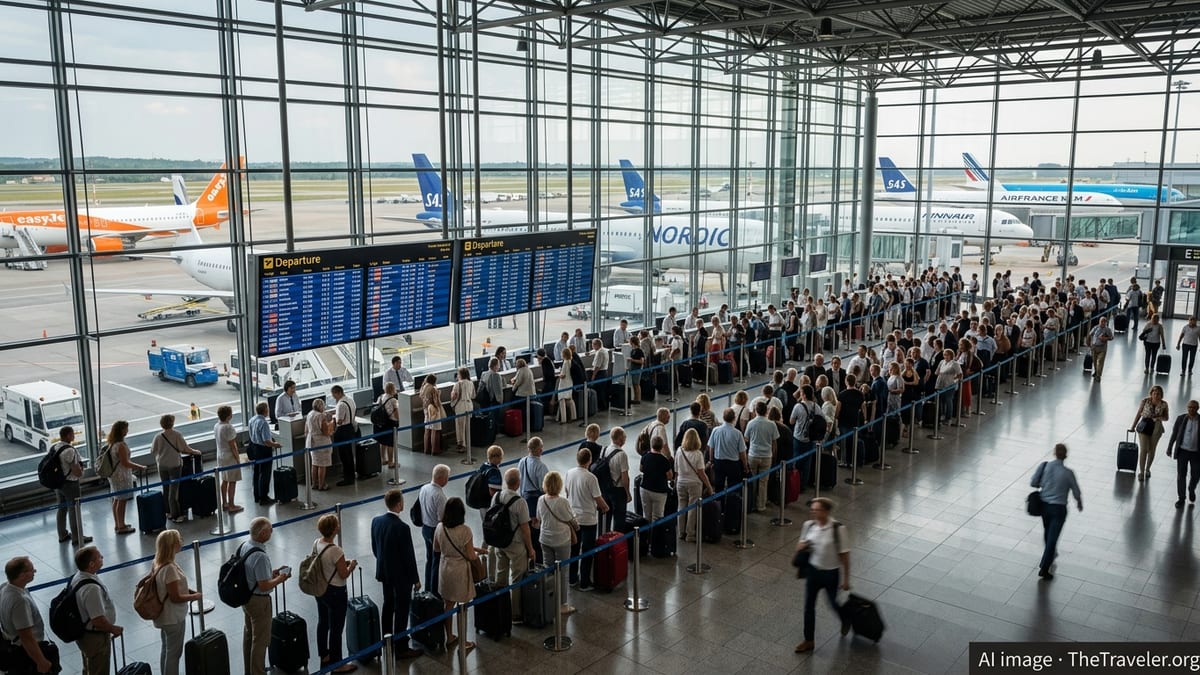
Europe-bound travelers face an expensive summer as surging oil prices, war-related airspace closures and tight airline capacity converge, with analysts warning that fares on carriers such as easyJet, Air France KLM, SAS and Finnair are set to climb sharply in the months ahead.
Get the latest news straight to your inbox!
Oil Shock From US–Iran War Hits Airline Costs
The military conflict involving the United States and Iran has triggered a rapid spike in global energy prices, with Brent crude climbing well above 100 dollars a barrel and jet fuel costs following suit. Publicly available energy market data and recent coverage in major financial outlets indicate that oil benchmarks briefly approached levels not seen since the early 2020s, driven by fears over long-lasting disruption in the Strait of Hormuz, a vital chokepoint for global oil flows.
Jet fuel is typically one of the largest single expenses for airlines, often accounting for around a quarter of operating costs. Recent reporting from international news agencies shows fuel bills rising by hundreds of millions of dollars across the industry as the war drags on, forcing carriers to reassess their pricing models ahead of the peak summer season. For European operators with already tight margins, even small percentage increases in fuel costs can translate into noticeably higher ticket prices.
Industry forecasts published by the International Air Transport Association before the latest escalation had already warned that higher input costs, combined with regulatory and infrastructure pressures, would limit the scope for further airfare reductions in 2026. The sudden oil shock linked to the Iran war has effectively reversed that outlook, with analysts now expecting additional fare rises layered on top of the modest increases that were previously projected for this year.
Europe’s Big Networks Brace for Higher Summer Fares
For Europe’s full service giants such as Air France KLM and Finnair, the new geopolitical backdrop arrives just as they were stabilising balance sheets after the pandemic and earlier conflicts. According to published company updates and financial commentaries, both groups entered 2026 with strong transatlantic and intra European demand, supported by business travel recovery and resilient leisure bookings. The combination of robust appetite for travel and higher fuel costs gives these carriers significant scope to pass on increases to passengers.
Route maps for Europe to Asia and the Middle East have already been redrawn over the past month as airspace closures ripple outward from the Gulf region. Flights that previously crossed Iran or neighbouring corridors now face longer routings, extra fuel burn and tight slot constraints at alternative hubs. Publicly available flight tracking data and aviation analyses show detours adding up to an hour or more on some services between northern Europe and South or Southeast Asia, a change that further lifts operating costs.
Observers expect Air France KLM, Finnair and other network operators to deploy a mix of moderate fare hikes, higher surcharges and targeted capacity reductions on lower yielding routes. With aircraft and crews in short supply after years of deferred investment, airlines can prioritise seats on the most profitable city pairs. For travellers, that likely means that the cheapest promotional fares to popular European gateways will be scarcer and sell out earlier, especially during July and early August.
Low Cost Players Like easyJet Lose Some Price Advantage
The price shock is also narrowing the traditional gap between low cost and legacy carriers. easyJet, one of Europe’s largest budget airlines, typically competes aggressively on fares by maintaining high aircraft utilisation, dense seating and lean operations. However, industry data and financial disclosures over the past year have highlighted that fuel still represents a substantial share of costs even for ultra efficient operators. When oil spikes suddenly, the absolute increase in cost per seat can be similar across the sector.
Aviation analysts note that low cost airlines face particular pressure when input costs jump at the same time as demand remains strong, because their customer base is highly price sensitive. easyJet and its rivals can raise fares, but they risk eroding the very value proposition that underpins their success. Early summer fare searches conducted by independent travel research firms already point to double digit percentage increases on some of the busiest leisure routes linking the United Kingdom, France, Spain and Italy compared with the same period last year.
At the same time, the conflict has disrupted some of the affordable connecting itineraries that Europeans relied on to reach long haul destinations via Middle Eastern hubs. With fewer ultra cheap options to pair with low cost European feeder flights, the overall trip price rises sharply. This dynamic indirectly supports higher point to point pricing within Europe, because travellers who might once have chosen complex, low fare routings now have fewer alternatives.
Nordic Carriers SAS and Finnair Navigate Dual Pressures
Scandinavian operator SAS and Finland’s flag carrier Finnair face an especially complicated backdrop. Both airlines have spent recent years reshaping networks in response to the closure of Russian airspace, which removed once lucrative shortcuts between Europe and Asia. Publicly available route analyses show that many of their long haul services already operate on extended trajectories that increase fuel consumption compared with pre 2022 paths.
The new wave of disruptions tied to the US–Iran war piles further cost pressure onto these already lengthened routes. For Finnair in particular, services to destinations in South and Southeast Asia now have to navigate a patchwork of restricted corridors, pushing flight times and fuel burn higher. Analysts expect this to feed directly into fare structures, with premium cabins shouldering a significant portion of the cost but economy tickets also edging upward.
SAS, which has been working through financial restructuring and ownership changes, has limited room to absorb higher fuel bills without adjusting prices. Nordic travellers could see noticeably steeper fares on key routes to southern European holiday hotspots this summer, especially during school vacation periods. Given the relatively high dependence on air travel in sparsely populated northern regions, any significant rise in ticket prices may also feed into broader debates about connectivity and transport affordability.
What Summer 2026 Could Look Like for European Travelers
Despite the gathering headwinds, travel demand across Europe remains robust. IATA data for early 2026 point to continued growth in passenger volumes, and recent corporate updates from major US and European carriers report record forward bookings even as jet fuel costs climb. This pattern echoes earlier episodes when strong consumer appetite for travel allowed airlines to lift fares without triggering a collapse in demand.
For passengers, the practical effect is likely to be fewer bargains and a higher baseline price for popular summer journeys. Industry specialists who track ticketing trends say that shoulder season months such as May, June and late August may still offer relatively better value, whereas peak weeks in July are on track to be among the most expensive on record for many intra European routes. Ancillary fees for baggage, seat selection and schedule flexibility may also creep higher as airlines search for additional revenue.
Travel planning advice circulating among consumer groups and comparison sites now consistently stresses early booking, flexible travel dates and consideration of alternative airports as ways to blunt the impact of rising fares. While no single carrier can be said to be “leading” a coordinated price surge, the combined moves of easyJet, Air France KLM, SAS, Finnair and other European airlines in response to the US–Iran war and the oil shock are set to define the cost of flying in and around Europe this summer.