

More news on this day
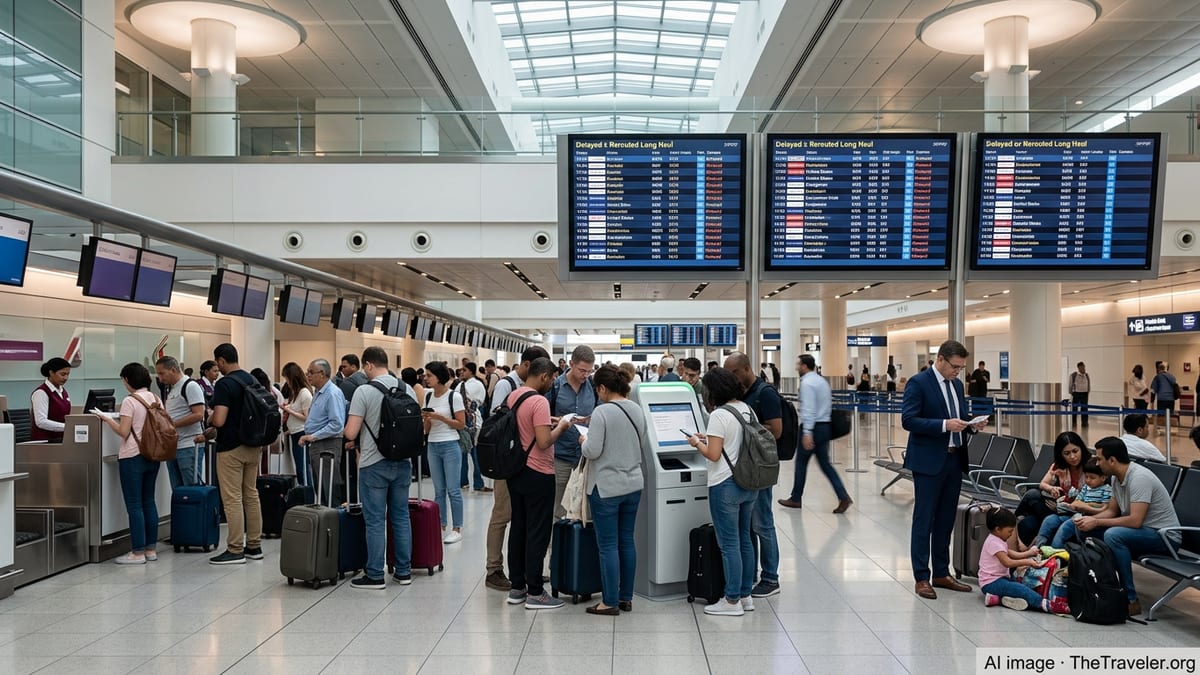
Long-haul flight prices for Easter and the peak summer 2026 season are climbing sharply as the war involving Iran disrupts key air corridors, forces lengthy detours between Europe, the United States and Asia, and sends fuel and insurance costs higher for airlines already struggling to rebuild capacity.
Middle East Conflict Collides With Peak Holiday Demand
The joint U.S.-Israeli war against Iran, which escalated at the end of February 2026, has abruptly collided with one of the busiest periods in the global travel calendar. Airspace closures across Iran and much of the Gulf, together with military activity around the Strait of Hormuz, are reshaping how airlines move people between continents just as families in Europe and North America plan Easter getaways and book summer vacations.
Industry analysts say carriers are scrambling to reprice tickets for the March–April Easter window and the core June–August 2026 high season. Many routes were already seeing solid demand growth at the start of the year; the International Air Transport Association reported global passenger traffic rising in January compared with 2025. The sudden geopolitical shock has upended those forecasts, adding a new layer of uncertainty to already tight long-haul capacity.
For travelers, the result is a fast-changing marketplace. Fares that looked relatively stable as recently as mid-February have begun to spike on routes most exposed to the Middle East corridor, while prices elsewhere are creeping higher as airlines shift aircraft away from the Gulf and surrounding region and redeploy them on alternative long-haul links.
Rerouted Flights and Longer Journeys Drive Up Costs
One of the most immediate impacts of the conflict has been the effective closure or severe restriction of airspace across Iran and several neighboring states. Europe–Asia services that once relied on efficient overflight rights now face detours of two to five hours or more, threading through narrow corridors north of the Black Sea or hugging airspace over Egypt and the eastern Mediterranean.
Every extra hour in the air translates into higher operating costs. Airlines must burn significantly more jet fuel and keep pilots and cabin crew on duty for longer, which can trigger additional pay and scheduling constraints. Carriers are also loading heavier fuel reserves to account for unpredictable routings and potential holding patterns around congested diversion points, further weighing on efficiency.
Those expenses do not remain on airline balance sheets for long. Revenue managers are pushing through higher base fares and adding emergency fuel and war-risk surcharges, particularly on Europe–Asia itineraries and journeys that previously connected via Gulf hubs such as Dubai and Doha. Travel agencies in major markets report double-digit percentage increases on some Easter departures and are warning clients that summer prices are being recalculated almost weekly.
Fuel, Insurance and the Strait of Hormuz Shock
The conflict’s concentration around the Strait of Hormuz, a chokepoint for roughly a quarter of global seaborne oil trade, has fed a sharp spike in crude prices. Jet fuel, which already accounted for close to a third of airline operating costs before the war, has become more expensive and more volatile in recent days as refiners and traders contend with disrupted supply chains.
Aviation economists note that fuel costs were already edging higher in early 2026, but the closure of key shipping lanes and the rerouting of tankers have accelerated the trend. For long-haul operations, where fuel burn is the single largest expense, even modest increases in per-barrel prices can quickly force airlines to rethink their fare structures for the rest of the year.
At the same time, war-risk insurance premiums for airlines flying anywhere near the conflict zone have risen sharply. Underwriters are reassessing the risk profile of corridors linking Europe, the Middle East and Asia, while some carriers face additional charges simply for overflying adjacent regions. Combined with elevated security costs and contingency planning, these financial pressures are feeding directly into the price of tickets available now for the Easter period and for peak summer holidays.
Winners and Losers on Key Long-Haul Routes
The pricing fallout is far from uniform. Routes most dependent on Middle Eastern hubs are experiencing the steepest increases, with some last-minute economy fares between London and Southeast Asia reportedly surging to several times their usual levels as capacity tightens. Passengers who previously relied on competitive one-stop itineraries via the Gulf are finding fewer options and higher prices as airlines cancel or consolidate services.
By contrast, carriers able to operate long-haul flights that bypass the Gulf entirely are seeing a surge in demand. European airlines with direct connections to East and South Asia, and Asian carriers serving Europe over northern routes, are repositioning aircraft to capture passengers no longer willing or able to transit through the Middle East. That shift is already lifting fares on transcontinental routes that cross Russia-adjacent corridors or skirt the eastern Mediterranean.
Across the Atlantic, the picture is mixed. Direct flights between Europe and the United States do not traverse the conflict zone, but they are indirectly affected by higher fuel prices and aircraft scheduling changes. Some transatlantic markets are absorbing additional widebody capacity that would otherwise have been deployed to Gulf or South Asian destinations, which may temper price rises in the short term. Even so, major online travel agencies are reporting that average economy fares for key Europe–US city pairs for July and August 2026 are trending above last year’s levels.
Travelers Face Tough Choices for Easter and Summer 2026
For holidaymakers and long-haul business travelers, the timing of the Iran war could hardly be worse. Many families typically lock in Easter and summer flights between late January and early March. This year, the conflict has forced thousands of travelers to reassess plans just as schools in Europe and North America head into the spring break period.
With fares rising and routing options shrinking, travel advisors recommend flexibility on both dates and destinations. Shifting Easter trips from Asia to closer European or domestic locations, or moving long-haul journeys into shoulder months outside the June–August peak, may help soften the blow of higher ticket prices. Travelers still intent on visiting Asia from Europe or the United States are being urged to book quickly, prioritize routes that avoid multiple connections, and prepare for longer flight times.
Much now depends on the trajectory of the conflict and how long airspace restrictions and shipping disruptions persist. If tensions ease and key corridors reopen before the core northern summer season, airlines could gradually restore more efficient routings and moderate some of the steepest surcharges. If hostilities and closures drag on, however, Easter 2026 may prove only an early warning of an exceptionally expensive year for long-haul travel.