

More news on this day
Escalating military confrontation with Iran is colliding head-on with the global travel economy, as the United States, Turkey, Israel, Greece, Cyprus and other destinations confront unprecedented flight cancellations, collapsing bookings and mounting economic losses.
Get the latest news straight to your inbox!
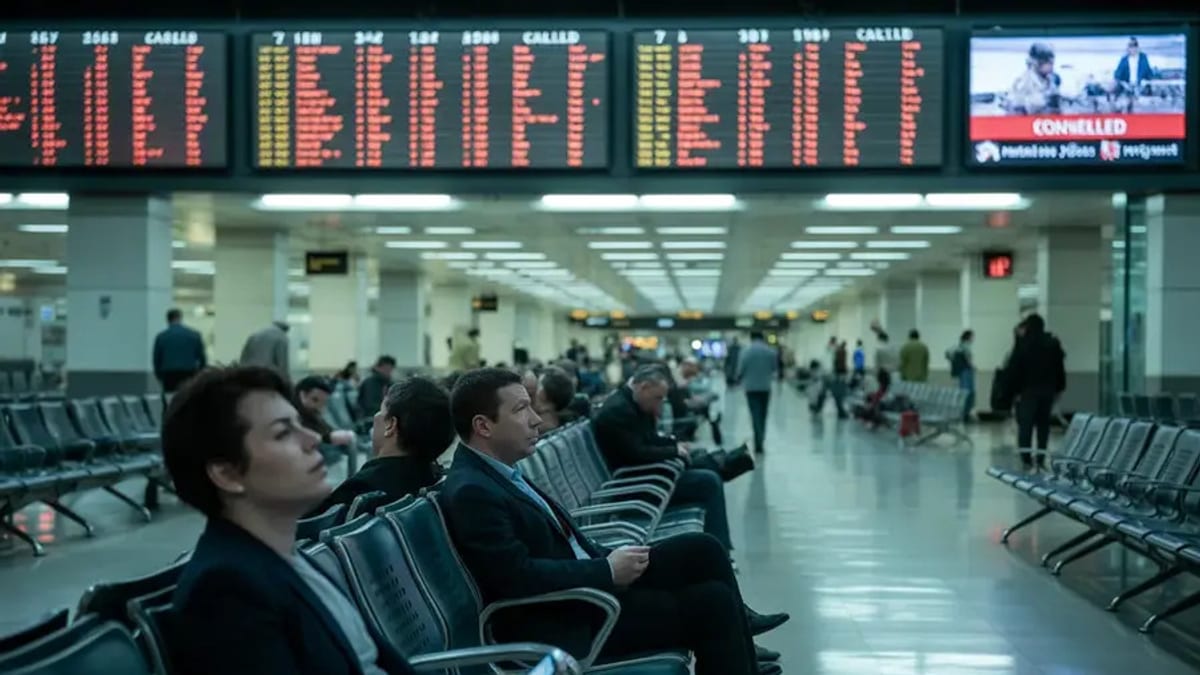
Image by Latest International / Global Travel News, Breaking World Travel News
Airspace Closures Push Global Aviation to Breaking Point
The latest phase of the Iran war has rapidly transformed from a regional security crisis into one of the most disruptive shocks to civilian aviation since the early stages of the pandemic. Publicly available air-traffic data and industry briefings show that large sections of Middle Eastern airspace have been periodically closed or heavily restricted as the conflict has intensified.
Airspace over Iran has been largely emptied of commercial traffic following coordinated strikes and retaliatory attacks, while neighboring states including Israel, Iraq, Syria, Qatar, Kuwait, Bahrain and the United Arab Emirates have imposed temporary closures or severe routing constraints at various points in recent weeks. Airlines operating long-haul services between Europe, Asia, Africa and North America have been forced to divert around the conflict zone, resulting in longer flight times, higher fuel burn and severe scheduling complications.
Analysts tracking global flight operations report that thousands of services have been canceled outright as carriers struggle to reconfigure networks, crew rotations and aircraft utilization. Routes that traditionally rely on major Gulf or Levant hubs as connective waypoints have been hit especially hard, affecting passengers far beyond the immediate war zone, including travelers from the United States and Europe heading to leisure destinations in the Mediterranean, Indian Ocean and East Africa.
Travel-insurance advisories and risk bulletins indicate that war-related disruptions are now a central concern for airlines and passengers alike. Some policies exclude coverage for conflict-related cancellations, leaving travelers to absorb losses when flights are scrapped or radically rescheduled, further undermining consumer confidence in long-haul travel plans.
Cyprus, Greece and Turkey See Holiday Bookings Crater
Cyprus has emerged as one of the most exposed tourism markets in Europe. Following drone activity and strikes linked to the wider Iran war, the island’s proximity to the conflict and its role as a strategic hub have pushed it into what regional observers describe as a perceived risk zone for holidaymakers. Industry figures cited in local coverage point to double-digit cancellation rates at key coastal resorts, with parts of the island reporting hotel occupancy sliding far below seasonal norms.
Tour operators in major source markets such as the United Kingdom and northern Europe are reportedly redirecting some capacity away from Cyprus toward destinations in the western Mediterranean, as travelers opt for locations seen as more distant from the expanding missile and drone envelope. Airlines serving Larnaca and Paphos have adjusted schedules in response to softer demand and rising no-show rates, while local authorities study contingency measures to support tourism businesses facing cash-flow strains so early in the season.
Neighboring Greece, a cornerstone of Mediterranean tourism, is also feeling the shock, though to a lesser degree. Public discussion within the Greek travel sector highlights a sharp divergence between perception and physical risk. Core destinations on the mainland and islands remain far from active fronts, yet some long-haul visitors are reconsidering or delaying trips because of worries about potential airspace disruptions, higher fares and general instability in the wider region.
Turkey, which straddles key transit corridors and hosts critical NATO and allied infrastructure, sits at a delicate intersection of geopolitics and tourism. While major cities and coastal resorts continue to operate, the country’s positioning near potential military and naval assets has injected an extra layer of uncertainty for some international travelers. Tour operators report a more cautious booking pace from certain long-haul markets, even as domestic tourism and regional visitors attempt to fill some of the gap.
Israel’s Tourism Lifeline Severed by Security Measures
For Israel, the conflict has attacked tourism from multiple directions at once. Missile and drone strikes, air-defense activity and security alerts have led to heavy restrictions on passenger flows through Ben Gurion Airport outside Tel Aviv, a vital gateway for both leisure and business travel. According to published coverage, authorities have sharply limited the number of travelers departing on long-haul routes, especially to the United States and Europe, to keep airport operations within what is considered a manageable security envelope.
International carriers have drastically reduced or temporarily suspended services into Israel at various points since the conflict escalated, cutting the inflow of foreign visitors and making outbound travel for Israelis more complicated and expensive. Major cruise lines also appear to be re-evaluating Eastern Mediterranean itineraries that include Israeli ports, either trimming calls or shifting deployments further west to avoid uncertainty.
The immediate effect has been a sudden halt in one of Israel’s strongest post-pandemic recovery stories. Before the latest escalation, inbound tourism had been gradually rebuilding, with city breaks, religious travel and high-tech business trips driving hotel occupancy and short-haul air traffic. Now, sector analysts warn that even a relatively short conflict could depress arrivals for several seasons, as tour operators and conference organizers look elsewhere for predictability and lower perceived risk.
Local tourism businesses, from small guesthouses and restaurants to large convention centers, are already confronting a collapse in forward bookings and a spike in cancellations. Industry groups are beginning to tally early losses and lobby for targeted financial support as the outlook darkens.
Global Travel Disruption Hits US Travelers and the Wider Economy
The United States is experiencing the fallout from the Iran war primarily through its citizens’ disrupted travel plans and the broader economic reverberations coursing through aviation, energy and tourism markets. While US domestic leisure demand remains comparatively resilient, outbound travelers face a maze of schedule changes, reroutings and price surges on itineraries that previously connected smoothly via Middle Eastern hubs.
Reports from travel agencies and online booking platforms suggest a clear pattern of last-minute cancellations and deferrals for trips involving Israel, the Gulf, the Eastern Mediterranean and parts of North Africa. Americans planning multi-stop itineraries through Europe and onward to Asia or Africa are being forced to rebook via alternative hubs in Europe or North America, adding cost and complexity and, in some cases, prompting decisions to postpone or abandon trips entirely.
The economic impact reaches far beyond individual holidays. Aviation analysts note that fuel prices have climbed sharply amid renewed instability around the Strait of Hormuz, directly increasing operating costs for airlines worldwide. Carriers are responding with higher fares, reduced capacity on marginal routes and tighter control of promotional inventories, all of which weigh on discretionary travel demand and squeeze tourism-dependent economies.
Financial commentators highlight tourism and travel as one of the most immediately visible channels through which the Iran war is testing global economic resilience. Lost visitor spending across the Middle East and Eastern Mediterranean is reverberating through hotel chains, airlines, cruise operators, travel agencies and gig-economy service providers, while investors reassess exposure to regions most vulnerable to a prolonged conflict.
A Multi-Region Tourism Crisis With No Clear End Date
What is emerging is not a localized tourism slump but a multi-region crisis that simultaneously affects source markets, transit hubs and destination countries. The Middle East’s major aviation centers, which had become indispensable bridges between continents, are now vulnerable chokepoints. When their airspace closes or is restricted, travel flows between Asia, Europe, Africa and the Americas are instantly disrupted, regardless of whether end destinations are directly involved in the conflict.
Destinations like Cyprus, Greece, Turkey and Israel are confronting both real security concerns and a powerful psychological spillover as travelers conflate proximity to the conflict with personal risk. Even countries far removed from the fighting, from southern Europe to East Africa, report slower booking trends and heightened traveler anxiety linked to headlines about missiles, drones and airspace shutdowns.
Industry bodies warn that if hostilities continue or expand, the damage to global tourism could deepen into a structural setback, similar in scale but different in nature to the shock of the pandemic. Unlike a health emergency, however, this crisis is entwined with energy markets, shipping routes and defense postures, limiting the ability of tourism actors alone to mitigate the fallout.
For now, travel companies are focused on operational firefighting: rerouting flights, adjusting cruise itineraries, revising safety guidance and trying to reassure nervous clients. Yet the longer the Iran war drags on, the more likely it becomes that the cancellations, empty hotel rooms and shuttered tours seen in March 2026 will be remembered not as a temporary shock, but as the opening phase of a new era of geopolitical turbulence for global tourism.