

More news on this day
The Iran war is sending shockwaves through global tourism as airspace closures, security fears and fast-changing travel advisories drive unprecedented cancellations from the United States to key Mediterranean destinations including Turkey, Israel, Greece and Cyprus.
Get the latest news straight to your inbox!
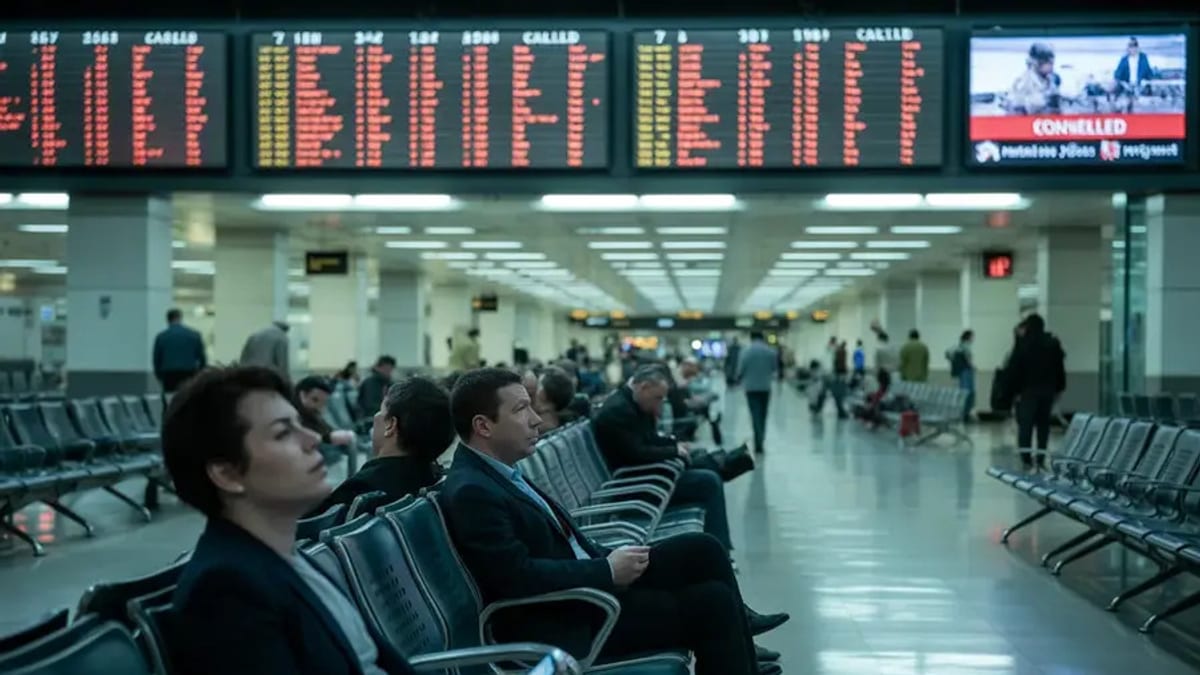
Image by Global Travel Alerts, Advisories, International Travel Alerts
Airspace Closures and Flight Chaos Hit Global Travel Networks
Joint United States and Israeli strikes on Iran on 28 February 2026, followed by Iranian missile and drone retaliation, have triggered one of the most extensive aviation disruptions since the pandemic. Large sections of Middle Eastern airspace, including Iran and several neighboring states, have been restricted or closed, forcing airlines to divert or cancel thousands of flights worldwide.
Published coverage on the conflict indicates that Bahrain, Iraq, Israel, Kuwait, Qatar, Syria and the United Arab Emirates have all imposed significant airspace restrictions. For carriers serving Europe, North America and Asia, the sudden loss of these key corridors has meant longer routes, higher fuel costs and rapidly changing schedules. Major hubs that usually act as bridges between continents have seen operations cut back or temporarily halted.
Travel insurers and aviation risk advisers describe a sharp rise in disruption-related claims and inquiries. Publicly available advisories from international insurers note that many policies exclude war-related events, leaving some travelers facing out-of-pocket costs when flights are rerouted or cancelled due to security measures linked to the Iran war.
Industry analysts compare the pattern of disruption to early 2020, when the first wave of pandemic restrictions fractured global connectivity. This time, rather than health controls, it is conflict-driven airspace closures and the perceived risk of escalation that are eroding confidence in cross-border travel.
US Travel Warnings and Tourism Industry on the Defensive
The United States has moved quickly to caution its citizens about the deteriorating security environment. Publicly available information shows that Washington has issued broad travel cautions tied to the Iran conflict, alongside more targeted guidance regarding Israel and nearby territories. While these notices fall short of blanket bans, they are influencing booking patterns and pushing many Americans to reconsider long-haul trips.
US airlines with routes across the Middle East and Eastern Mediterranean have adjusted schedules, rerouted flights to avoid higher-risk airspace and, in some cases, temporarily suspended services. Travel search platforms and agency data cited in media coverage show a pivot in demand toward Western Europe, the Caribbean and domestic US destinations as travelers seek to avoid perceived conflict zones.
Tour operators that specialize in pilgrimages, cultural tours and cruise extensions involving Israel, Jordan and Gulf gateways report a surge in postponements and refund requests. Industry commentary suggests that some operators are attempting to salvage revenue by rebooking clients to alternative itineraries in Spain, Portugal or Italy, but margins are coming under pressure as costs rise and consumers demand greater flexibility.
Economic analysts warn that if elevated tensions persist into the peak summer season, US outbound travel to the broader Middle East and Eastern Mediterranean could suffer a significant downturn, with knock-on effects for airlines, hotels and service providers dependent on American visitors.
Cyprus and Greece Confront Wave of Cancellations
Among European destinations, Cyprus and Greece are emerging as particularly exposed to the fallout from the Iran war. Cyprus, situated close to regional flashpoints and hosting foreign military facilities, has seen a sharp, early reaction in its tourism sector. According to recent reporting on the aftermath of drone strikes near British bases on the island, Larnaca experienced booking cancellations estimated at around 15 to 20 percent, with hotel occupancy dropping well below typical March levels.
Further coastal areas such as Paphos and parts of Famagusta are described as facing even higher cancellation rates, in some cases approaching 25 to 30 percent as nervous holidaymakers from northern Europe and the United Kingdom seek alternative destinations. Tour operators have reportedly shifted capacity to western Mediterranean resorts, capitalizing on demand from travelers who still want sun holidays but prefer to avoid the eastern flank of the European Union while the conflict continues.
In Greece, the picture is more mixed. Athens and popular islands remain open and functioning, and many travel forums and booking platforms continue to highlight the country as a viable option. However, publicly discussed concerns about nearby military installations and the proximity of some islands to contested airspace have led to a measurable uptick in inquiries about safety and insurance and a modest but noticeable rise in last-minute booking changes.
Greek tourism businesses, already accustomed to navigating geopolitical headwinds, are monitoring developments closely. Some hoteliers and local operators are reportedly preparing contingency discounts and flexible booking policies to reassure hesitant visitors if the conflict drags into the Orthodox Easter and summer periods.
Israel, Turkey and Regional Hubs Face Deep Tourism Slump
Israel, which had already seen tourism weakened by the Gaza war and earlier security crises, now faces an even more severe downturn. Following the escalation with Iran, many international airlines scaled back or suspended services into Israeli airports, leading to a collapse in new bookings and widespread cancellations of existing leisure and pilgrimage trips.
Travel industry assessments suggest that inbound tourism to Israel could fall to a fraction of pre-crisis levels if hostilities and missile threats persist. Hotels that had begun to see a gradual recovery are again reporting low occupancy, with business travel, conferences and religious tourism all under significant strain.
Turkey, historically one of the most visited destinations for Russian, European and Middle Eastern tourists, is also feeling the impact. While its major resorts remain open, Turkish tourism has been affected by the broader regional perception of risk and the disruption of air routes that often funnel travelers through nearby conflict-affected corridors. Analysts tracking Russian and European tour operators report substantial losses tied to nervous customers deferring or cancelling package holidays to the Turkish coast.
Further east, Gulf aviation and tourism hubs are experiencing what some observers describe as the largest war-related disruption in decades. With portions of regional airspace closed and long-haul services rerouted, key airports and shopping districts have seen traffic fall, and hotel operators have begun to pivot back towards domestic and regional markets to offset the loss of high-spending international visitors.
From Pandemic Shock to Conflict Risk: A Tourism Sector Under Strain
The Iran war arrives at a moment when global tourism is still consolidating its recovery from the COVID-19 pandemic. The World Tourism Organization has previously documented how international arrivals fell by well over half during the height of health restrictions, erasing hundreds of billions of dollars in revenue. Although many destinations recorded a strong rebound in 2023 and 2024, the sector remained vulnerable to external shocks.
Current economic commentary on the conflict emphasizes that the new disruption is qualitatively different from the pandemic but potentially comparable in scale for certain regions. Instead of border closures driven by health protocols, the market now contends with volatile energy prices, heightened security concerns and the possibility of sudden airspace shutdowns that can strand travelers and invalidate itineraries overnight.
European research into crisis impacts on tourism notes that repeated geopolitical shocks, from the war in Ukraine to unrest across the Middle East, have already reshaped traveler perceptions of safety. The Iran war is accelerating that trend, encouraging some tourists, particularly from North America, to concentrate their trips in destinations perceived as insulated from conflict, even if those destinations come at a higher price.
For countries such as the United States, Turkey, Israel, Greece and Cyprus, the challenge now is to manage immediate cancellations while also preserving long-term appeal. Governments and industry bodies are beginning to explore enhanced crisis communication, more resilient flight networks and clearer insurance frameworks as they seek to reassure travelers that, even in a volatile security environment, cross-border tourism can adapt and endure.