

More news on this day
Dubai’s tourism engine, which recently celebrated record visitor numbers, is facing a sudden and severe reversal as the Iran war spills across the Gulf, disrupting flights, rattling investor confidence, and emptying some of the United Arab Emirates’ best-known hotels and beachfront resorts.
Get the latest news straight to your inbox!
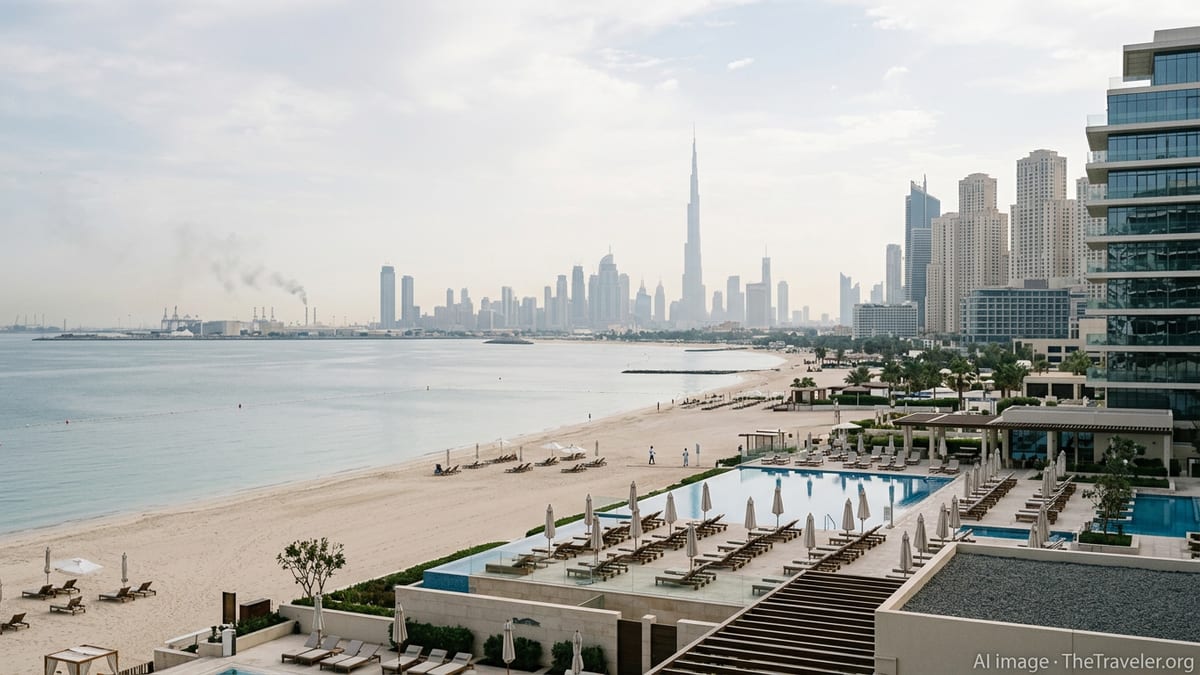
From Record Highs to Sudden Shock in Visitor Numbers
Only weeks ago, Dubai was highlighting three consecutive years of record-breaking tourism, with official data pointing to nearly 20 million international visitors in 2024 and strong momentum into early 2026. Publicly available figures from the Dubai Department of Economy and Tourism described a sector driving economic diversification and feeding a growing pipeline of new hotels, attractions, and retail projects.
The escalation of the Iran war since late February 2026 has abruptly altered that trajectory. Regional economic commentary and aviation data suggest an immediate double-digit drop in passenger arrivals to Gulf hubs, with analysts estimating an 11 percent decline in inbound traffic to the wider GCC for 2026, and a sharper near-term shock concentrated in March as travelers cancel or defer trips.
Industry assessments of the broader Middle East travel sector describe regional losses of hundreds of millions of dollars per day in visitor spending, with Dubai singled out as particularly exposed because of its hub status for connecting flights. Hotels that had been operating at near-peak occupancy through the winter now report a visible thinning of international guests, especially from Europe and East Asia.
While Dubai authorities continue to emphasize the city’s resilience and diversified economy, published commentary from regional economists now frames tourism as one of the most immediate pressure points, alongside aviation and retail, should the conflict continue into the traditionally busy spring and early-summer travel periods.
Iconic Landmarks Under Strain as Security Concerns Rise
Dubai’s skyline and engineered attractions, from the Burj Khalifa area to the Palm Jumeirah, have long been marketed as symbols of stability and security amid wider regional volatility. That perception has been shaken by a series of Iranian missile and drone strikes across the UAE since 28 February, which international coverage identifies as part of the broader 2026 Iran war.
Historical overviews and current reporting note that Dubai itself has sustained limited but high-profile impacts, including damage to commercial and financial facilities and at least one tower fire in the Dubai Creek Harbour area after a reported drone strike. Images carried by global news wires this weekend show smoke, shattered glass, and temporary closures around affected blocks, though the core tourist districts remain structurally intact and many attractions continue operating with heightened security.
Risk advisories issued in early March describe repeated interceptions of missiles and drones over the UAE, with smoke and debris reported near Dubai International Airport on several occasions. Even where physical damage has been contained, the visibility of air defense activity has unsettled visitors and raised the perceived risk of being caught in a cross-border escalation.
For travelers, this translates into more rigorous screening at key sites, occasional localized cordons, and the possibility of sudden area closures if new incidents occur. Travel analysts caution that even brief, isolated strikes near high-profile landmarks can have an outsized psychological impact, prompting tour operators and cruise lines to reconsider port calls and day excursions into the city.
Luxury Hotels and Beachfront Resorts Face Empty Rooms
Before the latest conflict, Dubai’s top-tier hotels were riding a multi-year surge in demand that pushed room rates to historic highs. As the Iran war has intensified, publicly available commentary on the UAE economy notes that hotels in Dubai are now abruptly discounting rooms, pivoting to staycation deals for residents, and trimming non-essential services to keep occupancy above critical thresholds.
Economic impact analyses of the war describe tourism in the UAE as “paralyzed” in early March, with international bookings plummeting across key properties. Beachfront resorts on the Palm Jumeirah and Jumeirah Beach, normally busy with European winter sunseekers, have seen a significant wave of cancellations as government advisories in multiple source markets urge travelers to reconsider non-essential trips to the region.
Regional business media report that some luxury brands are temporarily consolidating operations, closing off floors or wings while maintaining core services for remaining guests. Conference and events calendars, a major revenue driver for upscale hotels, have been severely disrupted as corporate clients move meetings online or relocate them to alternative hubs perceived as safer.
In parallel, online travel forums and social media posts from residents suggest a growing shift toward domestic and regional guests, including long-term residents choosing short breaks in city hotels now priced below last year’s peak season levels. This local demand offers some support, but analysts warn it is unlikely to fully offset the loss of high-spending international visitors if the conflict persists.
Air Travel Disruptions and New Travel Advisories
Air connectivity has been central to Dubai’s rise as a tourism powerhouse. The Iran war has challenged that advantage, with multiple international carriers rerouting or temporarily suspending flights through certain Iranian and Gulf air corridors, lengthening travel times and increasing operating costs.
Regional travel advisories published in early March highlight intermittent disruption at Dubai International Airport due to airspace restrictions and defensive operations. Notices describe smoke and debris incidents near the airport after intercepts, as well as temporary pauses in departures and arrivals while safety checks are completed. Airport authorities continue to emphasize that runways and terminal infrastructure remain operational, but travelers are being urged to monitor flight status closely and allow extra time for check-in and security.
Many foreign ministries now advise citizens to reconsider non-essential travel to parts of the Gulf, including the UAE, citing the risk of further missile or drone attacks. Insurers and corporate travel managers are reviewing policy coverage language around war and conflict-related disruptions, which may affect how easily travelers can claim refunds or rebook if their plans are interrupted.
Analysts note that Dubai’s role as a transfer hub magnifies the impact of even limited disruption. With a large share of passengers using the city as a stopover between Europe, Asia, and Africa, the knock-on effects of canceled or delayed flights ripple across global networks, making some travelers more likely to route through alternative hubs in the short term.
What Travelers Need to Know Before Booking Dubai
For would-be visitors, the picture is not one of outright shutdown, but of heightened uncertainty and rapidly changing conditions. Most of Dubai’s major attractions, malls, and beaches remain open, and many hotels are operating with stricter security protocols. However, travelers face elevated geopolitical risk, potential air travel disruption, and the possibility of localized security incidents as long as the Iran war continues.
Specialists in risk and security advise monitoring multiple information sources, including official travel advisories from home governments and real-time updates from airlines. Prospective visitors are encouraged to examine travel insurance policies carefully, checking how they address war, terrorism, and government advisories, and to consider flexible booking options that allow changes without heavy penalties.
Publicly available guidance from corporate security firms recommends that those who do travel to Dubai maintain a low profile, stay informed about developments across the Gulf, and be prepared for sudden changes in flight schedules or temporary restrictions around sensitive sites. Many suggest registering with consular services when possible and keeping digital copies of passports and key documents in secure cloud storage.
For now, Dubai’s future as a tourism hub hinges on whether the conflict eases or broadens. If the Iran war de-escalates in the coming weeks, analysts expect a gradual return of visitors attracted by lower prices and pent-up demand. If it drags on or intensifies, the recent images of empty hotel lobbies, quiet beachfronts, and smoke on the skyline may come to define one of the city’s most serious tourism crises in decades.