

More news on this day
Ripples from the Iran war are radiating far beyond the battlefield, upending air routes and triggering a sharp slowdown in tourism across Cyprus, Greece, Turkey, Egypt and Thailand as airlines rework schedules and travelers reassess safety risks.
Get the latest news straight to your inbox!
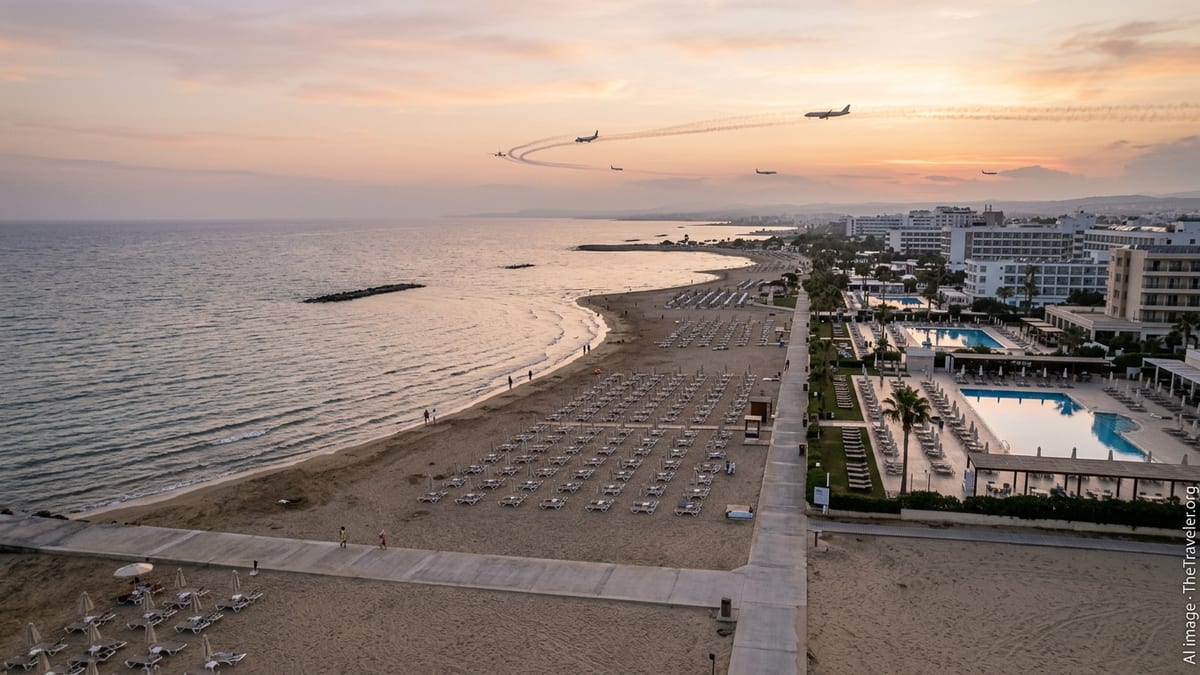
Airspace Closures Send Shockwaves Through Key Holiday Corridors
The conflict that erupted on February 28, 2026, has rapidly reshaped global aviation, with closures and restrictions in the skies over Iran and neighboring states disrupting some of the world’s most important east west travel corridors. Publicly available information shows that airspace shutdowns and damage at major Gulf hubs have forced thousands of cancellations and diversions, severing links between Europe, the Middle East and Asia at the height of spring booking season.
Analysts tracking aviation flows describe a system under acute strain, as carriers reroute around restricted zones and build in longer flying times to avoid perceived risk. Extra fuel, crew duty limits and scarce alternative routings are combining to reduce frequencies or suspend services outright on routes that underpin leisure travel to the eastern Mediterranean and Southeast Asia.
The World Travel and Tourism Council has estimated that the war is costing the wider Middle East travel sector hundreds of millions of dollars per day in lost international visitor spending. That shock is not confined to frontline states: destinations that rely on Middle Eastern hubs to feed long haul traffic, including Thailand, are also facing a sudden loss of high spending guests from Europe and North America.
Global travel advisories, including a Worldwide Caution from the United States issued at the start of March, have added to a climate of uncertainty. Tour operators report that many travelers are now delaying decisions or shifting to perceived safe bet destinations within their own regions rather than risk complex itineraries that depend on volatile airspace.
Cyprus and Greece Grapple With Booking Drops and Perception Risks
Among European destinations, Cyprus appears particularly exposed. The island’s location close to the Levant and recent reports of drone strikes on British military facilities have pushed it into what some tourism analysts describe as a perceived risk zone. Local hoteliers cited in regional coverage speak of an abrupt change in sentiment, with cancellations from both western and eastern markets arriving only weeks before the main summer season.
Early figures indicate a double hit: outright cancellations from travelers wary of flying near active conflict, and a pronounced softening in new inquiries. Civil society groups on the island have also staged demonstrations against military activity, reflecting domestic unease that could further complicate the image of Cyprus as a carefree sun destination.
Greece, which has marketed itself aggressively as a stable alternative to destinations in the eastern Mediterranean and Middle East, is in a more complex position. Travel intelligence firms tracking search and preliminary booking data for summer 2026 report rising interest for Greek islands and mainland resorts, suggesting some tourism is being diverted away from more exposed parts of the region.
At the same time, Greek airports and carriers are navigating the same rerouting pressures as their European peers, and any prolonged instability risks undermining confidence. Travel discussion forums are filled with questions from prospective visitors weighing whether proximity to the conflict could derail flights or strand them mid journey, underscoring how quickly perception can shift even for destinations not directly involved in the war.
Turkey and Egypt Face Pressure on Airlines and Beach Resorts
Turkey and Egypt, long regarded as price competitive mass market holiday options for European travelers, are both wrestling with fallout from the war. Analysts note that both countries sit on the edge of the affected air corridors and are heavily dependent on charter and low cost carrier capacity that can be highly reactive to risk assessments and insurance costs.
In Turkey’s case, the combination of its geography and wider regional tensions has prompted warnings from some commentators that further escalation could put parts of the country closer to active conflict zones. That perception has already begun to filter through to demand for Mediterranean and Aegean resorts, where early season bookings are viewed by local tourism officials as softer than expected despite a weak local currency that would usually draw in bargain hunters.
Egyptian tourism, still in the midst of a fragile recovery after the pandemic and previous security incidents, is once again under pressure. Industry research cited by regional business outlets suggests the country could face significant yield compression as tour operators discount to keep capacity filled, even as some travelers bypass the Red Sea in favor of destinations further from the conflict arc.
Major international hotel brands with extensive portfolios across Turkey and Egypt, including Marriott and Hilton, are closely linked to these trends. Publicly available data points, such as stock market commentary and sector research, indicate investors are watching for signs of weaker occupancy and average daily rates at resort properties, particularly if airlift remains constrained into key coastal gateways.
EasyJet, Aegean and Global Carriers Cut and Reroute Capacity
On the aviation side, European short and medium haul carriers such as EasyJet and Aegean Airlines are on the front line of operational disruption. Flight tracking and schedule data show broad adjustments to networks serving destinations in Cyprus, Greece and Turkey as airlines seek to avoid closed or unstable airspace and cope with longer routings around the conflict zone.
Reports in European business media highlight how carriers are rebalancing capacity for the upcoming summer, with some planning higher fares on remaining frequencies to offset increased fuel and insurance costs linked to the war. EasyJet, which has a major presence in Mediterranean leisure markets, has publicly acknowledged that regional instability is influencing its pricing and capacity strategies for the warmer months.
Aegean Airlines, Greece’s largest carrier, is meanwhile navigating the challenge of maintaining vital connectivity to islands and regional hubs while also managing exposure to volatile international routes that traditionally feed high spending visitors from the Gulf and Asia. Industry observers suggest that, if airspace constraints persist into peak season, the airline may prioritize core European markets over riskier long haul links.
Beyond Europe, Gulf superconnectors and Asian airlines are also trimming or rerouting services, eroding the network of one stop options that has long underpinned tourism flows to Thailand and other Southeast Asian destinations. This tightening of capacity is feeding directly into reduced availability and higher prices for long haul leisure travelers, further dampening demand at a sensitive time.
Thailand Feels the Pinch as Europe Asia Flows Falter
Thailand, which relies heavily on visitors from Europe who typically transit through Middle Eastern hubs, has emerged as an unexpected casualty of the Iran war. Travel trade coverage from Southeast Asia notes that the closure and restriction of key transit airports, combined with traveler reluctance to fly over or change planes near the conflict, is hurting arrivals across major Thai destinations including Bangkok, Phuket and Koh Samui.
Tourism economists in the region warn that while domestic demand and regional travel from neighboring countries remain resilient, long haul arrivals are crucial for sustaining higher end hotel segments and extended winter stays. As flights through the Gulf are reduced or rerouted, some Europeans are shelving plans for long haul holidays entirely, opting instead for closer to home options in the Mediterranean or North Africa that can be reached without transiting affected airspace.
Hoteliers and resort operators in Thailand are responding with a mix of tactical discounts and promotional packages aimed at shoring up occupancy through the shoulder season. However, many acknowledge in public commentary that pricing power has weakened, and that the broader perception of instability along preferred flight paths is beyond their control.
Travel agents in Europe and Asia are also advocating greater flexibility in booking conditions, with refundable fares, relaxed cancellation policies and the possibility of last minute destination switches becoming more common. That shift reflects a broader recalibration of risk in international leisure travel, where the ripple effects of a distant conflict can quickly reach even the most carefully curated holiday plans.