

More news on this day
Escalating conflict involving Iran is rippling across global aviation networks, disrupting access to key sun-and-sea destinations from the Eastern Mediterranean to Southeast Asia and triggering a sharp drop in bookings for airlines and hotel giants that depend on carefree holiday travel.
Get the latest news straight to your inbox!
Airspace Closures Turn Middle East Hubs into Chokepoints
The coordinated strikes by the United States and Israel on Iran on February 28, 2026, and subsequent retaliatory actions have led to rolling airspace closures across the Gulf, transforming major Middle Eastern hubs into chokepoints for global travel. Public advisories and insurer briefings describe closures or heavy restrictions affecting Dubai, Doha and Abu Dhabi, where long-haul carriers normally funnel passengers between Europe, Asia and Africa.
Coverage from regional and international outlets indicates that Emirates, Etihad and other Gulf carriers have adopted partial or heavily reduced schedules, while many foreign airlines have rerouted or suspended services through the region. Flights that once crossed Iranian and adjacent airspace now face lengthy detours or outright cancellations, adding hours of flying time and substantial fuel costs. Passengers en route to leisure destinations in Cyprus, Greece, Turkey, Egypt and onwards to Thailand are among those stranded or forced to rebook.
Industry assessments suggest the economic damage is mounting quickly. Analysis cited by Egypt-based reporting from the World Travel and Tourism Council estimates the Iran war is costing the broader Middle East travel sector at least hundreds of millions of dollars per day in lost international visitor spending. This disruption is now spilling over into countries that are not directly party to the conflict but rely on the same crowded skies and transit hubs.
Cyprus, Greece and Turkey Face Nervous Holidaymakers
In Cyprus, anxiety over proximity to regional flashpoints has intensified following past drone incidents near British bases and repeated threats linked to the island’s strategic role. Tourism bodies and local media report that British and northern European travelers are increasingly questioning summer plans, with some operators noting a noticeable swing in demand from the Eastern to the Western Mediterranean as risk perceptions shift.
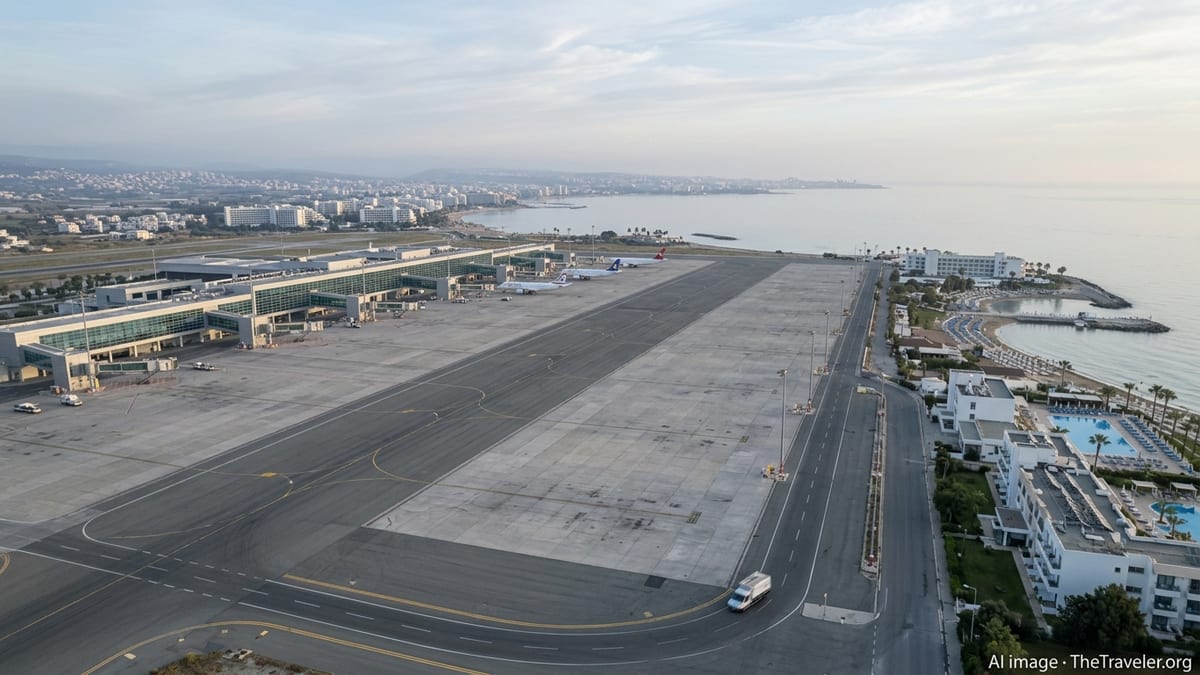
According to Cyprus-based aviation coverage, airlines serving Larnaca and Paphos have been forced to juggle schedules in response to wider Middle Eastern airspace turbulence. While direct leisure routes from core European markets remain open, many itineraries that relied on connections via Dubai or other Gulf hubs have been curtailed, making it harder and more expensive for long-haul tourists to reach the island at short notice.
In Greece, the immediate impact has been concentrated on regional routes. Publicly available information shows that Aegean Airlines, the country’s largest carrier, has extended suspensions on flights to Tel Aviv, Beirut, Amman, Erbil and Baghdad into late April and late May 2026, describing these routes as a small but notable share of its network. At the same time, rising fuel prices tied to the conflict have prompted modest fare increases on surviving services, raising costs for inbound visitors.
Turkey, another heavyweight of Eastern Mediterranean tourism, entered 2026 with already volatile arrival statistics. Data platforms tracking foreign visitor flows show that Turkey experienced double-digit percentage drops in some months of 2025 compared with the previous year, particularly from major European markets. Analysts link part of this softness to security jitters and shifting travel patterns following successive regional crises, now compounded by the Iran war and the flight disruptions it has unleashed.
Egypt’s Recovery Stalls as Carriers Cut Routes
Egypt, which had been working to solidify a fragile tourism recovery after years of security concerns and the pandemic, is again facing headwinds. Reporting from Cairo notes that EgyptAir has activated an emergency operations mode and indefinitely suspended flights on several regional routes in response to the evolving conflict environment and associated airspace risks.
These suspensions affect connectivity between Cairo and a cluster of Middle Eastern capitals that function both as source markets and as connecting nodes for travelers from Europe and Asia. Each canceled regional flight removes potential feed into Red Sea resorts such as Sharm el Sheikh and Hurghada, where hotel operators rely heavily on package deals built around predictable airlift.
Broader tourism analyses of the Eastern and Southern Mediterranean highlight how quickly security scares can unwind visitor numbers. Prior episodes, including earlier conflicts and high-profile attacks, triggered abrupt drops in bookings to Egypt, only partially offset by discounts and aggressive marketing. Observers now warn that a prolonged Iran war and continued aviation disruptions could once again push sun-seeking travelers toward destinations perceived as more insulated from regional conflict zones.
EasyJet Reroutes and Capacity Strains Hit European Leisure Flows
European low-cost carriers, including EasyJet, sit at the center of the unfolding turbulence because they connect price-sensitive holidaymakers to Cyprus, Greek islands, Turkey’s resorts and Egypt’s beach destinations. Flight disruption briefings and risk bulletins detailing Middle Eastern airspace restrictions note that European airlines have canceled or rerouted services when overflight risks rise, with budget operators particularly exposed to fuel and time penalties on lengthened routings.
Specialist aviation analyses from late 2024 and 2025, updated as the Iran crisis widened, show that EasyJet and peers periodically suspended operations to Tel Aviv and nearby high-risk airports, while also trimming seasonal capacity into parts of the Eastern Mediterranean when insurance premiums and operational uncertainties spiked. The current conflict has revived those patterns, with airlines prioritizing core, shorter-haul routes that can be operated without complex overflights.
For resort economies, the implications are immediate. Tour operators report that when low-cost flights are canceled or sharply reduced, package sales collapse within days, leading hotels to confront sudden gaps in occupancy. In markets such as Cyprus and some Greek islands that depend heavily on British, German and Scandinavian visitors flying point-to-point on budget carriers, even a modest percentage cut in seat capacity can translate into steep short-term revenue losses.
Thailand Tourism Feels the Shock From Europe’s Side
The fallout from the Iran war is not confined to the Mediterranean. Southeast Asia’s tourism sector, and Thailand in particular, is also feeling the effects as disrupted Gulf transit hubs sever or complicate links to European source markets. A recent report from Vietnamese and Thai media describes how closures and restrictions at Middle Eastern airports have made it significantly harder for Europeans to reach beach destinations in Thailand that traditionally depend on one-stop connections via Dubai, Doha or Abu Dhabi.
According to publicly available estimates cited by Thai and regional outlets, Thai officials fear the country could lose close to 600,000 visitors and more than 40 billion baht in revenue if the conflict and associated flight disruptions last beyond an eight-week period. Provinces heavily exposed to European winter sun traffic have already reported sharp slowdowns, with local hotel associations warning of falling occupancy and rising cancellations as tour operators struggle to reroute clients.
Bangkok-based commentary also notes that the Iran war has coincided with elevated fuel prices and rising airfares on remaining long-haul routes, compounding the affordability problem for would-be travelers. In combination, scarce flight capacity, longer journey times and safety concerns about transiting the region are pushing some Europeans to postpone trips to Thailand or switch to closer alternatives, undercutting what had been a robust post-pandemic rebound.
Global Hotel Giants Brace for a Volatile Summer
International hotel groups such as Marriott and Hilton, which operate extensive portfolios across Greece, Turkey, Egypt and Thailand, are closely tied to these shifting travel flows. Company disclosures and analyst commentary in recent quarters have highlighted strong demand for resort properties in the Eastern Mediterranean and Asia as a key growth driver, but have also flagged geopolitical risks and airlift disruptions as material threats to occupancy and revenue per available room.
With airlines cutting or reshaping schedules and travel insurance policies scrutinizing war-related claims, investment research notes that large hotel brands could face uneven performance across their networks. Properties in Western Mediterranean or Caribbean markets may benefit from diverted demand, while resorts in Cyprus, parts of Greece, Turkey’s southern coast, the Red Sea and Thailand’s Andaman shore may experience softer-than-expected peak seasons if flight cancellations and safety concerns persist.
Sector analysts emphasize that the situation remains fluid. If regional airspace stabilizes and carriers like EasyJet and Aegean restore full schedules in time for the northern summer, much of the lost demand could be recaptured through late bookings and price promotions. However, if the Iran war drags on and Gulf hubs remain periodically constrained, the current wave of cancellations and booking hesitancy could harden into a more sustained tourism downturn for some of the world’s most travel-dependent destinations.