

More news on this day
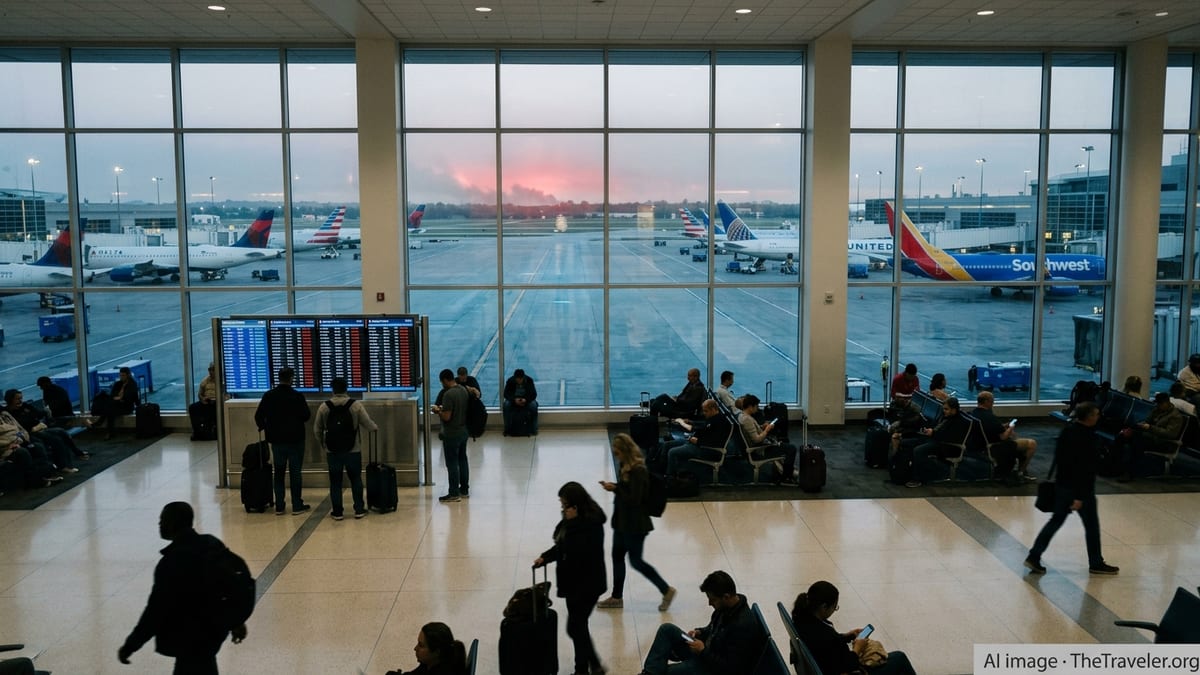
Delta Air Lines and rivals American, United and Southwest are being swept into a new phase of aviation turbulence as the Iran war drives up jet fuel prices, disrupts key Middle East air corridors and pushes already elevated ticket prices even higher, creating fresh anxiety for travelers and a revenue windfall for major US carriers.
Get the latest news straight to your inbox!
War Shock Pushes Fuel and Fares to New Highs
The latest escalation of the Iran conflict at the end of February 2026 has sent oil markets into turmoil, with repeated missile exchanges around the Gulf region and fresh attacks on energy infrastructure helping to propel crude and jet fuel prices sharply higher. Jet fuel costs, a core expense for airlines, have climbed to levels not seen since before the pandemic recovery, intensifying pressure on carriers that had only recently rebuilt their balance sheets.
Publicly available industry data and recent coverage indicate jet fuel prices jumped above 4 dollars per gallon in mid March, compared with roughly 2.50 dollars before hostilities flared. The surge is closely linked to reduced shipping and aviation activity around the Strait of Hormuz, the narrow corridor that normally handles around one fifth of global oil flows, as commercial operators divert or delay movements in response to rising risk.
For Delta, American, United and Southwest, the fuel spike comes on top of higher labor and maintenance costs and leaves limited room to absorb additional shocks. Analysts note that fuel often represents about a quarter of an airline’s operating costs, meaning even relatively small price moves can quickly translate into hundreds of millions of dollars in extra expense across a single quarter.
With demand for air travel still strong after the post pandemic rebound, the immediate response from large US carriers has been to tighten capacity, adjust schedules where necessary and lift fares, particularly on routes with constrained supply. Airfare tracking data and recent consumer reporting show broad based increases on long haul itineraries and peak summer departures, and travel advisers warn that further price rises are likely if the conflict persists.
Record Bookings and Revenue Resilience for Big Four Carriers
Despite the geopolitical shock, publicly available commentary from airline earnings outlooks and investor presentations suggests that the largest US carriers entered 2026 with unusually strong demand. Delta, American and United have all reported record or near record bookings this year, while Southwest continues to benefit from a loyal domestic customer base, robust leisure traffic and expanding ancillary revenue streams.
The combination of strong demand and constrained capacity has allowed carriers to raise fares and preserve profitability in the face of rising fuel bills. Investor focused research notes that Delta generated record revenue in 2025 and entered 2026 with solid free cash flow and reduced debt, putting the airline in a comparatively strong position to navigate a period of elevated operating costs and route volatility.
Similar themes are emerging at American and United, which have leaned heavily on transatlantic and premium cabin demand to offset higher expenses. United in particular has positioned itself as a long haul specialist, and while rerouting away from closed or restricted Middle East airspace adds time and fuel burn to some flights, the airline continues to benefit from steady corporate and international leisure demand.
Southwest, which has a more domestic network and a long history of disciplined cost control, faces less direct exposure to long haul detours but still confronts significantly higher fuel prices and soft spots in US consumer confidence. Longer term financial analysis points to Southwest’s revenue growth in recent years as evidence of its continued resilience, even as it now contends with the same fuel headwinds pressuring its larger network peers.
Airspace Closures and Rerouting Disrupt Global Travel Flows
The Iran conflict is reshaping global flight paths across the Middle East and beyond. Several Gulf and Levant states have temporarily closed or restricted their airspace at different points since the fighting intensified, including Qatar, Bahrain, Israel and the United Arab Emirates. These measures, combined with intermittent missile and drone activity, have forced widespread cancellations, diversions and lengthy detours for flights between Europe, Asia and Africa.
Travel operations reports and regional aviation advisories describe a patchwork of restrictions that have slowed traffic through hubs such as Doha, Dubai and other Gulf gateways, with ripple effects felt across European and North American networks. In some cases, flights must loop far to the south over the Arabian Sea or north through Turkey to avoid high risk zones, adding significant flight time and fuel consumption.
For US travelers, the disruption is most immediately visible in longer journeys and fewer options for connecting itineraries that rely on Middle East hubs. While Delta, American, United and Southwest generally operate limited direct service to the region compared with their European or Gulf counterparts, they are heavily exposed to the downstream consequences of schedule instability, missed connections and equipment imbalances as partner airlines adjust their operations.
Industry analysts warn that if airspace restrictions remain in place or expand, airlines will be under continual pressure to optimize networks in real time. This could mean more last minute schedule changes, aircraft swaps and capacity cuts on marginal routes, and would likely reinforce the upward trajectory of fares on remaining services.
Panic Booking, Price Anxiety and Shifting Leisure Demand
For individual travelers, the most tangible impact of the crisis is at the search screen. Fare comparisons in the weeks since the conflict erupted show steep increases on many summer travel dates, especially on transatlantic routes and popular vacation periods in June and July. Consumer travel outlets report a rush of “book now” advice as travelers scramble to lock in prices before further spikes, adding an element of panic buying to an already tight market.
The war has also altered destination preferences. Economic impact assessments point to a sharp decline in tourism demand across parts of the eastern Mediterranean and the broader Middle East, with some travelers pivoting to alternative destinations in Southern Europe, Southeast Asia and the Americas. That shift is likely to concentrate demand on already busy corridors, further constraining capacity and reinforcing higher prices on routes far from the conflict zone.
At the same time, travel search and booking data indicate that many consumers remain determined to travel despite the cost and uncertainty. Pent up demand from previous years, combined with flexible work arrangements, appears to be sustaining bookings even as household budgets come under pressure from broader inflation and energy costs linked to the conflict.
For US airlines, this mix of price sensitivity and persistent demand presents both an opportunity and a reputational risk. Revenue management strategies that aggressively chase yield could deepen perceptions of “sky high” fares and feed public frustration, particularly if disruptions mount. Airlines that balance pricing power with selective promotions and transparent fee policies may be better placed to maintain customer loyalty through a volatile period.
Investors Weigh Profits Against Geopolitical Risk
Financial markets have reacted nervously to the Iran war, with airline stocks swinging sharply as investors reassess the sector’s exposure to elevated fuel prices and geopolitical risk. Research notes from equity analysts describe a “tailspin” in the first weeks of March, as rapid fuel cost escalation and renewed uncertainty over global growth overshadowed solid underlying demand trends.
Delta has become a focal point for this debate. Some investment research highlights the carrier’s strong 2025 financial performance, premium cabin strength and loyalty revenue as reasons to view recent share price weakness as an opportunity. Others emphasize the cyclical nature of airline earnings and caution that extended conflict, continued energy volatility or a downturn in consumer spending could quickly erode margins despite robust top line growth.
American, United and Southwest face similarly mixed assessments. On one hand, they appear poised to benefit from an “unstoppable” near term revenue surge driven by high fares, packed flights and constrained capacity. On the other, their limited fuel hedging and exposure to macroeconomic swings leave them vulnerable if oil prices remain elevated or if travelers eventually pull back in response to rising costs and broader economic uncertainty.
For now, publicly available reporting suggests that the big four US carriers are leaning on flexible scheduling, route diversification and tight control of non fuel expenses to navigate the crisis. The longer the conflict persists and the higher fuel prices remain, the more these strategies will be tested, and the more closely travelers and investors alike will scrutinize how airlines balance profitability with reliability and affordability in a turbulent new phase for global aviation.