

More news on this day
Travelers across Iraq faced mounting disruption on March 7 as at least 28 flights to and from Baghdad and Erbil were cancelled by a roster of major carriers including Pegasus Airlines, Royal Jordanian, EgyptAir, Qatar Airways and Emirates, highlighting how regional airspace closures continue to paralyze key travel corridors.
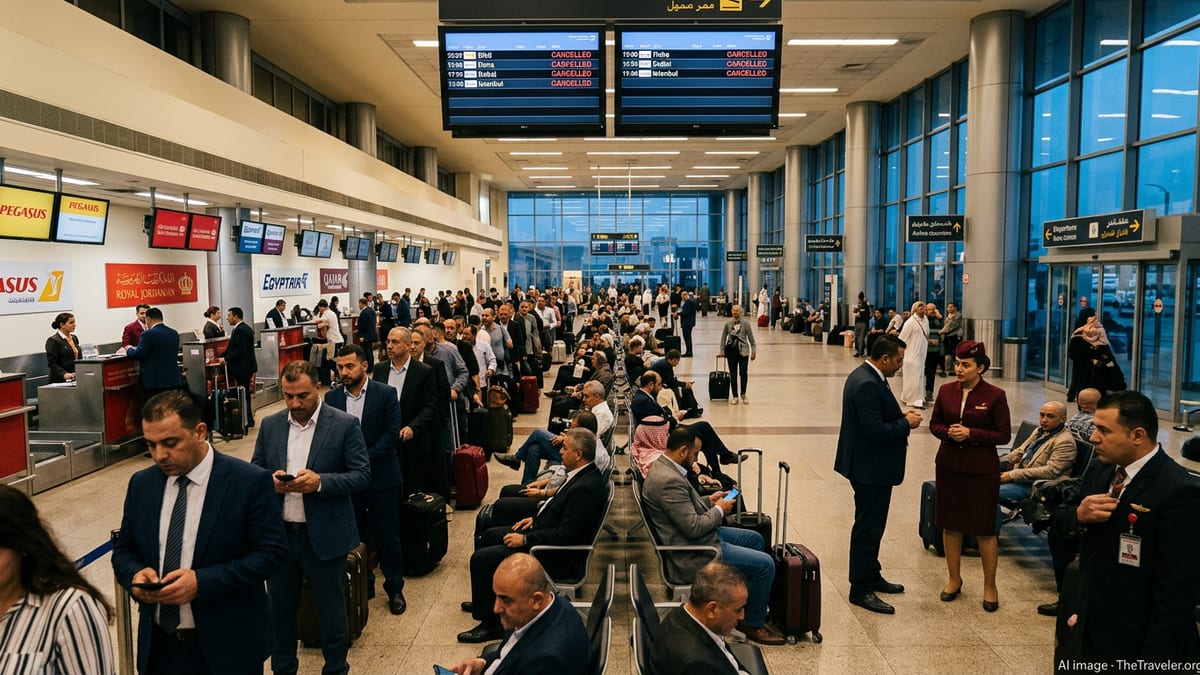
Regional Security Crisis Cascades Into Iraqi Skies
The latest round of cancellations comes in the wake of a widening regional security crisis that has triggered rolling airspace closures across parts of the Middle East. Iraq, already at the heart of recent tensions, has repeatedly restricted its skies in coordination with neighboring states, forcing airlines to reroute or ground services at short notice.
Baghdad and Erbil, Iraq’s two primary international gateways, have been particularly hard hit. Flight tracking data and airport operations summaries indicated that at least 28 departures and arrivals linked to these airports were withdrawn over a 24 hour period, contributing to a broader pattern of disruption that has built steadily since the end of February.
The cancellations announced on March 7 add to a mounting tally over recent days, with industry reports suggesting that more than 20 flights were scrubbed just a day earlier across Baghdad, Erbil, Basra and Najaf as carriers struggled to navigate shifting operational restrictions. For Iraq-bound travelers, that has translated into queues at ticket counters, unexpected overnight stays and a scramble for scarce alternative routes.
Aviation analysts say the situation remains highly fluid, with airspace notices and security advisories being updated multiple times a day. Airlines, already operating on thin margins and tight schedules, have had to balance safety and regulatory compliance with the need to preserve connectivity to a geopolitically critical market.
Major Carriers Pull Back From Baghdad and Erbil
Among the most affected on Saturday were airlines with strong regional networks into Iraq. Low cost operator Pegasus Airlines, which typically funnels passengers from Iraqi cities through its Turkish hubs into Europe, cancelled multiple rotations linking Erbil and Baghdad, cutting an important budget option for migrant workers and visiting families.
Royal Jordanian, a key connector between Iraq and the Levant via Amman, also scrubbed flights as it adjusted schedules to reflect airspace constraints and reduced transit flows. Its Baghdad and Erbil services are commonly used by business travelers and expatriates who rely on short connections to reach Europe and North America, magnifying the knock on impact of each lost frequency.
EgyptAir further pared back its regional operations after earlier moves to suspend or limit services to several destinations affected by airspace closures. Flights between Cairo and both Baghdad and Erbil, normally busy with medical travelers, students and religious visitors, were among those most exposed to last minute operational calls.
Premium Gulf carriers were not spared. Qatar Airways and Emirates, which market Iraq as part of their extensive global networks, cancelled additional services into Baghdad and Erbil amid continuing restrictions along their usual flight paths. Their absence has narrowed long haul options from Iraq, particularly for passengers heading to North America, Asia and Australia who rely heavily on Doha and Dubai as transit hubs.
Passengers Stranded as Rebooking Options Narrow
For travelers on the ground, the immediate effect of the 28 cancelled flights has been a struggle to secure new itineraries in a market suddenly short on seats. Airline desks at Baghdad International Airport and Erbil International Airport reported high volumes of rebooking requests as passengers attempted to reroute via alternative hubs still operating limited services.
Some carriers have introduced temporary flexibility policies, allowing free date changes or refunds for tickets covering the affected period. However, with many neighboring states also maintaining partial closures or capacity caps, replacement flights are not always available within the timeframes travelers need, especially for urgent trips linked to work, family emergencies or expiring visas.
Travel agents in Baghdad and Erbil say they are fielding constant calls from Iraqis abroad who are unsure whether to start journeys back home, as well as from residents who fear that booking new tickets could lead to another round of cancellations. The uncertainty is particularly acute for those planning onward connections from Iraq, who risk losing multiple segments if a first leg is cancelled.
Airports themselves have remained open but are operating on reduced schedules, with departure boards showing a patchwork of cancellations, delays and a smaller number of on time flights. Staff have been advising passengers to arrive early and remain in close contact with their airline, as schedule changes are often confirmed only hours before departure.
Broader Middle East Network Disruptions Ripple Into Iraq
The turmoil in Iraqi air travel forms part of a wider web of cancellations across the Middle East that has built since late February. Multiple international and regional airlines have trimmed or suspended services to cities such as Amman, Dubai, Doha, Riyadh, Tel Aviv and Beirut in response to airspace closures and evolving security assessments, creating cascading effects for Iraq, which relies heavily on those hubs for global connectivity.
Recent updates from carriers including Aegean Airlines, Oman Air and others show Baghdad and Erbil appearing alongside other regional capitals on lists of suspended or reduced routes extending well into March. For Iraqi travelers, that means not only fewer direct flights, but also shrinking options for indirect journeys that typically involve a single stop in the Gulf, Jordan or Turkey.
Aviation consultancies note that the network disruptions are hitting both leisure and business travel at the start of what is usually a busy spring season for regional movement. Conference organizers, multinational firms and humanitarian organizations all depend on predictable links into Baghdad and Erbil, and are now reassessing travel plans, sometimes shifting meetings online or relocating them to cities with more stable air access.
Tourism operators focused on Iraq’s cultural and religious sites are also bracing for cancellations and postponements from foreign visitors who no longer feel confident that they can reach the country or depart on schedule. That raises concerns about short term revenue losses in sectors that have only recently begun recovering from earlier periods of instability.
Uncertain Outlook as Authorities and Airlines Weigh Next Steps
Iraqi aviation authorities have indicated that safety considerations will remain paramount in any decision to reopen airspace fully or restore regular traffic flows. Officials are closely monitoring regional developments and coordinating with neighboring countries and international partners before issuing updated guidance to airlines.
Industry observers say that, even once airspace restrictions begin to ease, it may take days or weeks for schedules to normalize. Airlines will need to reposition aircraft and crew, rebuild disrupted rosters and gauge demand before committing to previous frequencies on routes to Baghdad and Erbil. Some cautiously expect a phased restoration, with a limited number of flights returning first and further additions only as conditions stabilize.
In the meantime, travel experts are urging passengers with upcoming trips to Iraq to monitor airline announcements frequently, consider building in longer connection times where possible and be prepared for last minute changes. Flexible tickets and comprehensive travel insurance, they say, have shifted from optional extras to near essentials for anyone planning to move through the region in the coming weeks.
With 28 cancellations in a single day underscoring the fragility of current operations, Iraq’s role as a regional air hub faces an uncertain short term outlook. The severity and duration of the wider Middle East security crisis will likely determine how quickly Baghdad and Erbil can resume their efforts to reconnect with the world after yet another jolt to their aviation lifelines.