

More news on this day
Air travel across Iraq faced a new wave of disruption on March 8 as at least 20 flights to and from Baghdad, Erbil, Sulaymaniyah and Kirkuk were cancelled and one was delayed, with carriers including Iraqi Airways, Flynas, Emirates and Qatar Airways adjusting their schedules in response to fast moving security and airspace restrictions across the wider Middle East.
Regional Tensions Ripple Across Iraqi Skies
The latest cancellations come in the wake of widespread airspace closures and restrictions that swept across the Middle East from February 28, after a sharp escalation in regional tensions prompted Iran, Iraq and several Gulf states to restrict overflights. Carriers have been forced to reroute or suspend services, leaving Iraq’s four key airports dealing with a patchwork of last minute operational decisions.
According to airport and industry sources, the 20 cancellations and single delay affecting Baghdad, Erbil, Sulaymaniyah and Kirkuk on Sunday are part of a broader pattern of rolling schedule changes that has hit connections between Iraq and major hubs such as Dubai and Doha. While some flights have resumed on limited or altered routings, airlines remain cautious, citing evolving risk assessments and regulatory approvals.
The Iraqi civil aviation authorities have been coordinating with neighboring countries and international airlines on airspace corridors and altitude restrictions, but operators say the security situation and the need to avoid specific zones have significantly reduced flexibility. That has particularly affected transit traffic, as many carriers use Iraqi airspace as a bridge between Europe, the Gulf and South Asia.
For Iraqi travelers and foreign nationals relying on these routes, the practical impact has been immediate, with stranded passengers, missed connections and unexpected overnight stays becoming increasingly common since the end of February.
Major Carriers Trim Schedules to and from Iraq
Iraqi Airways, the national carrier, has been among the most affected operators, as a combination of regional overflight constraints and airport specific security assessments forced it to pull multiple rotations from Sunday’s schedule. Flights linking Baghdad and Erbil with regional hubs were heavily targeted, with crews and aircraft reassigned or kept on standby pending clearer guidance for the days ahead.
Gulf based airlines that serve Iraq have also adjusted their operations. Emirates and Qatar Airways, both key connectors for Iraqi passengers heading to Europe, North America and Asia, cancelled several services while maintaining a small number of carefully timed flights that can operate along authorized corridors. Industry analysts say these carriers are weighing the commercial imperative to keep critical links open against heightened insurance costs and crew safety considerations.
Saudi low cost carrier Flynas, which has expanded into the Iraqi market in recent years with services from cities such as Riyadh and Jeddah to destinations including Baghdad and Erbil, joined the list of airlines cancelling flights on Sunday. Some of its Iraq bound services were grounded outright, while others were delayed or consolidated as the carrier waited for updated airspace assessments along its regular routings.
Other regional airlines are expected to follow a similar pattern, cutting frequencies and consolidating flights until there is more clarity on the duration and scope of current airspace restrictions. Travel data firms tracking operations across the Middle East report that Iraq related cancellations have surged since the end of February and are likely to remain elevated in the short term.
Multiple Airports Face Operational Strain
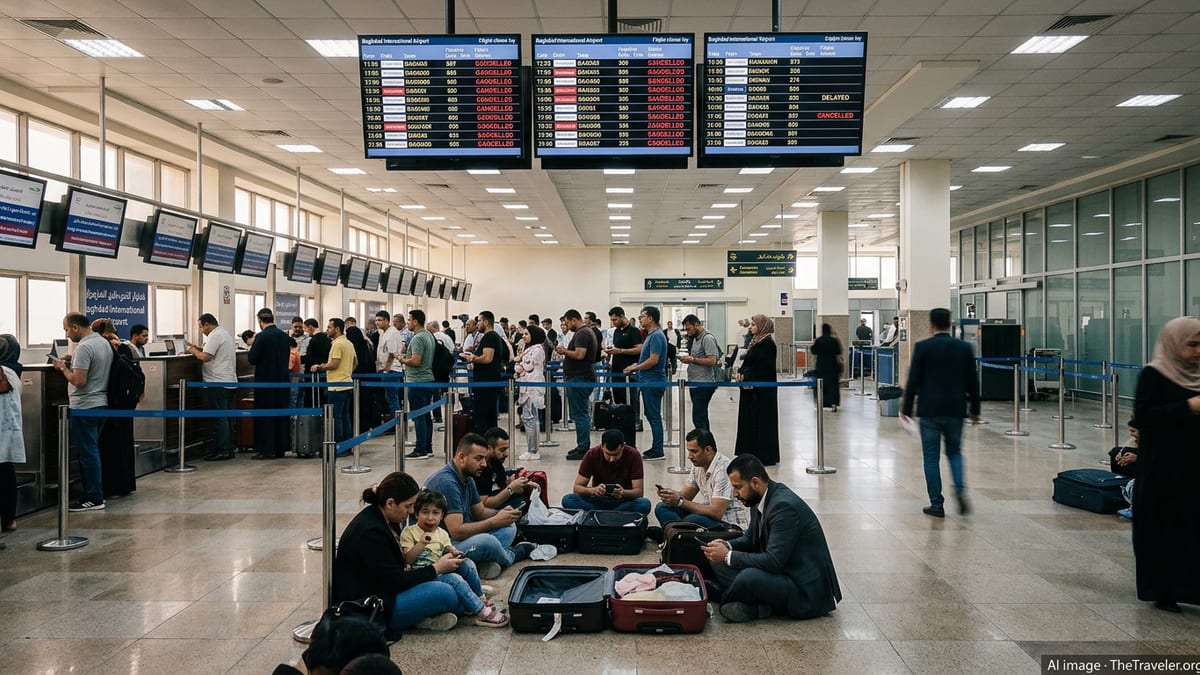
Baghdad International Airport, Iraq’s busiest gateway, has borne the brunt of the disruption, with departures boards showing clusters of cancellations for Sunday morning and afternoon departures to regional hubs. Airport staff have been tasked with handling large numbers of passengers seeking rebooking options, refunds or alternative routings through airports that still have relatively stable schedules.
In the Kurdistan Region, Erbil and Sulaymaniyah airports have faced their own challenges. Erbil International Airport, already under heightened scrutiny after recent security incidents in northern Iraq, has seen airlines reassess their exposure, with some foreign carriers suspending services for days at a time and others opting for ad hoc, one off flights when conditions permit. Sulaymaniyah, a smaller but strategically important gateway, has recorded cancellations that further isolate parts of the country’s northeast.
Kirkuk International Airport, which has been working to build up its civilian route network, is also affected by the wave of schedule changes. While it handles fewer international services than Baghdad or Erbil, even a small number of cancellations can significantly disrupt local travelers, many of whom rely on a limited selection of weekly flights to reach regional hubs for onward connections.
Ground handlers and airport service providers across all four cities report mounting operational strain, citing frequent last minute adjustments as airlines and regulators issue rolling advisories. Staff have been redeployed to passenger information desks and call centers as queries spike from travelers inside Iraq and abroad.
Passengers Confront Uncertainty and Rebooking Challenges
For passengers, the 20 cancellations and single delay registered on Sunday translate into hours spent in terminals and on hold with airline call centers. Travelers interviewed at Baghdad and Erbil airports described long lines for rebooking desks, with many facing additional complications such as expiring visas, missed medical appointments and lost hotel reservations.
One of the main challenges has been the knock on effect on connecting itineraries. With flights from Iraq into major Gulf hubs reduced or irregular, passengers risk missing onward long haul services. Airlines including Iraqi Airways, Emirates and Qatar Airways have introduced more flexible rebooking policies, allowing changes without additional fees in many cases, but limited seat availability on remaining flights means some travelers are being rebooked days later than planned.
Travel agents in Baghdad and Erbil say they have been inundated with requests from customers looking for alternative routings through airports that still have relatively stable operations, such as Istanbul or certain European gateways. However, the broader regional airspace disruptions mean that even these alternatives are subject to sudden changes, and agents caution that what is available today may not be an option tomorrow.
Industry observers recommend that passengers with upcoming travel plans to or from Iraq closely monitor airline communications and, where possible, register contact details for real time updates. They also advise allowing extra time for connections, purchasing travel insurance that covers disruption related expenses and considering more flexible itineraries that can be adjusted at short notice.
Outlook: Gradual Adjustments Amid Ongoing Volatility
While some regional carriers have begun cautiously reinstating a portion of their schedules, aviation analysts expect a prolonged period of volatility for flights touching Iraqi airspace. The pattern of 20 cancellations and intermittent delays seen on Sunday could repeat in the coming days, particularly if security assessments shift or if additional countries introduce new flight restrictions.
Airlines are likely to continue operating a reduced but adaptable network to and from Iraq, adding or removing flights at short notice as conditions evolve. That approach allows them to maintain a basic level of connectivity for essential travel, while limiting exposure to sudden route closures and minimizing the risk of aircraft and crews becoming stranded.
For Iraq’s aviation and tourism sectors, the timing is especially challenging. The country has been working to attract more visitors to cultural and religious sites in cities such as Baghdad, Najaf and Erbil, as well as to develop business links tied to reconstruction and energy projects. Prolonged uncertainty in the airspace will make it harder to sustain that momentum, at least in the near term.
Travel industry experts say the speed at which flight schedules stabilize will depend largely on political and security developments beyond Iraq’s control. Until a clearer picture emerges, passengers and airlines alike are bracing for a complex operating environment in which flexibility and real time information remain essential for anyone planning to travel through Baghdad, Erbil, Sulaymaniyah or Kirkuk.