

More news on this day
Canada’s sweeping cuts to international student visas are reverberating across Europe’s education and travel sectors, with Ireland now joining Switzerland, Denmark, Poland, Germany, Finland and Portugal in grappling with weaker long-haul student demand, shifting booking patterns and growing uncertainty over future visa-dependent travel flows.
Canada’s Student Visa Clampdown Resets Global Study Travel
Ottawa’s decision to impose strict caps on new international study permits has rapidly transformed one of the world’s largest education destinations and sent shockwaves through the wider student mobility market. Canada introduced a two-year national intake cap from 2024, targeting a roughly 35 percent reduction in new study visas compared with 2023, after years of record immigration and mounting pressure on housing and public services.
While the initial cap set a target of 364,000 new permits for 2024, actual approvals fell dramatically short. Government data and sector analyses show just under 270,000 new study permits were issued in 2024, close to 100,000 below the cap and nearly half the volume of the previous year, as approval rates slumped and application numbers dropped. Early 2025 figures point to an even steeper contraction, with some estimates suggesting new study permits issued could be down by more than 60 percent from 2024 levels.
In its latest immigration plan, Canada has signalled that restrictions are not a short-term correction but a structural reset. New multi-year targets cut the foreign enrolment ceiling for 2026 to around 155,000 new study permits, roughly half the previously projected level, with similar limits pencilled in for 2027 and 2028. For education agents, airlines and destination rivals in Europe, the message is clear: the era of Canada as a reliably expanding, high-volume study market has ended, at least for now.
Ireland Scrambles to Capture Displaced Demand
Ireland has emerged as one of the most active European contenders seeking to absorb students squeezed out of Canada’s tightened system. Irish institutions have stepped up recruitment in key source markets such as India and Nigeria, promoting relatively high visa approval rates that recent advisory data place in the mid-90 percent range for well-documented applicants. Agents report that students disappointed by Canadian refusals are increasingly turning to Irish universities and institutes of technology as a second choice or rapid pivot.
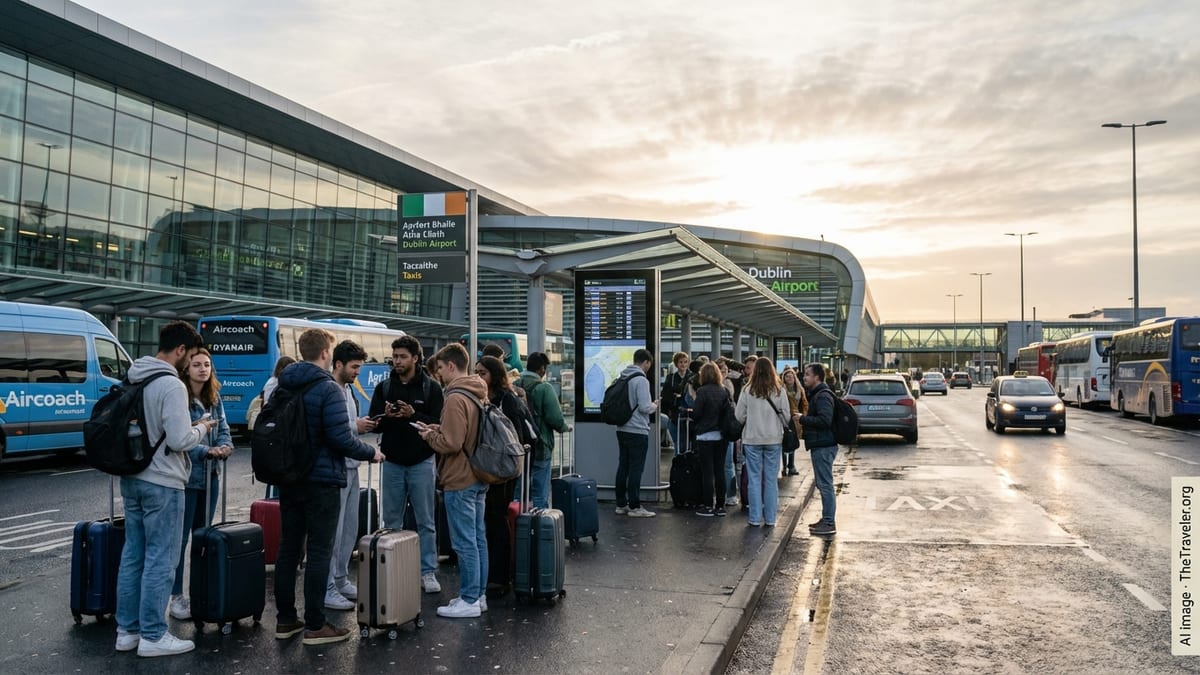
This pivot is already reshaping travel patterns into Dublin, Cork and regional gateways. Airlines and tour operators serving the student segment report stronger interest in autumn and January intakes for Irish campuses, alongside higher demand for medium-term accommodation and ancillary travel within Europe. However, the sudden influx is testing Ireland’s own capacity, particularly in student housing, where shortages in major cities mirror some of the pressures that prompted Canada’s clampdown.
Tourism and education officials in Ireland warn that while the country is benefiting from diverted demand, it faces a delicate balancing act. Growing numbers of international students support regional airports, hospitality jobs and year-round hotel and hostel occupancy, but they also strain rental markets that are already under stress. Policymakers are under pressure to avoid repeating Canada’s experience of rapid growth outpacing infrastructure, even as they court students now reconsidering North America.
European Study Hubs Feel the Ripple Effect
Beyond Ireland, other European destinations are recalibrating strategies in light of Canada’s sharp pullback. Switzerland, Denmark, Germany, Finland and Portugal, all of which position themselves as high-quality, relatively affordable alternatives to traditional English-speaking destinations, are reporting increased enquiries from students who had originally planned to study in Canada. Many institutions highlight more predictable visa regimes and, in continental Europe, the attraction of lower tuition fees.
Germany and Finland, with strong public university systems and popular English-taught programmes, are seeing particular interest from engineering and technology students. Portugal and Poland have become magnets for those seeking lower living costs alongside Schengen travel access, with international offices noting that questions about Canadian visa refusals and housing shortages now feature prominently in recruitment fairs and virtual counselling sessions.
Yet the opportunity comes with operational challenges. Universities across these countries must scale international offices, residence capacity and support services at a time when their own governments are tightening migration rules and scrutinising the economic impact of incoming students. Travel providers, from regional airlines to long-stay hotel brands, also need to adjust inventory and pricing in markets where booking windows and demand curves are shifting away from Canada-focused routes.
Travel and Aviation Confront Shifting Long-Haul Flows
The Canadian cap is not only an education story; it is also a travel and aviation story. For years, international students have underpinned long-haul demand to Canadian cities, filling economy cabins during shoulder seasons and generating repeat traffic as friends and family visited. With new student arrivals falling sharply, carriers serving Toronto, Vancouver and Montreal are reassessing capacity and fare strategies, while watching how much traffic can be retained via tourism and business segments.
At the same time, European airlines and hubs are vying to capture rerouted student flows destined instead for Dublin, Zurich, Copenhagen, Berlin, Helsinki, Warsaw, Lisbon and Porto. Network planners are analysing where student-heavy origin markets in Asia, the Middle East and Africa are redirecting applications and adjusting schedules, marketing campaigns and group fare products accordingly. Some carriers have already refocused student promotions around Europe’s education cities rather than Canada, highlighting flexible change policies and connections to secondary university towns.
Travel agents specialising in study abroad packages say itineraries are becoming more complex as students combine initial campus arrivals with onward tourism in Europe’s Schengen zone or the British Isles. This multilayered travel, while positive for European visitor numbers, also introduces new visa and documentation hurdles, particularly where students or their families had initially prepared for Canada’s entry requirements rather than the patchwork of European regimes.
Uncertain Outlook for Students and Destinations Alike
For prospective students, the result is a more fragmented and unpredictable landscape. Canada’s policy shift, introduced to curb housing pressures and address abuses in parts of the private college sector, has made entry far harder, with approval rates in some segments dropping into the 30 percent range and many applicants now facing multiple refusals. Competing destinations must decide how aggressively to capitalise on Canada’s retreat without importing the same structural strains.
In Ireland and across Switzerland, Denmark, Poland, Germany, Finland and Portugal, university leaders and tourism bodies are calling for clearer long-term strategies that link education recruitment with travel infrastructure and housing policy. They argue that international students play a crucial role not just in tuition revenue but in air connectivity, regional development and the year-round viability of tourism businesses that rely on steady rather than purely seasonal demand.
What is becoming evident across Europe is that study travel can no longer be treated as a niche sub-sector separate from mainstream tourism and migration planning. Canada’s sharp turn from open-door powerhouse to tightly capped market has exposed how quickly global student flows, airline route maps and local travel economies can shift when a single major destination changes course. For Ireland and its European peers, the challenge now is to manage the incoming wave of interest in a way that keeps campuses attractive, borders open and travel systems sustainable.