

More news on this day
Rising global uncertainty, higher long-haul costs and changing attitudes to climate and safety are steering more Irish residents toward holidays at home, while positioning Ireland itself as an emerging alternative for international travelers seeking cooler, calmer breaks.
Get the latest news straight to your inbox!
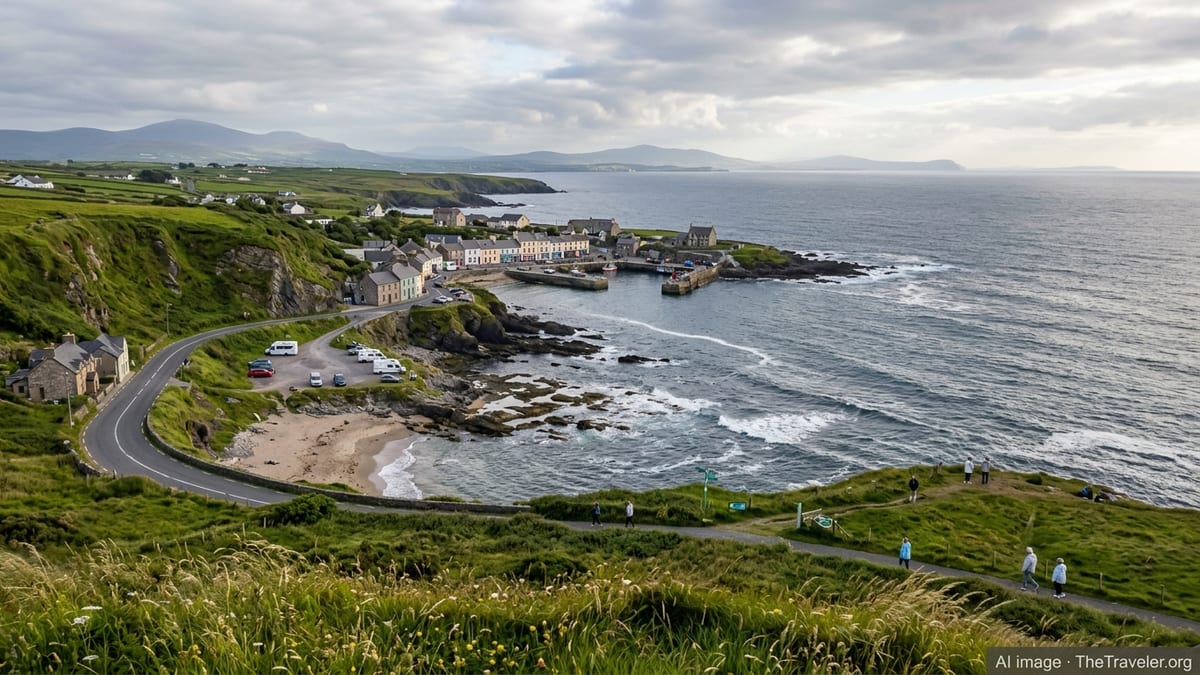
Domestic Trips Surge as Consumers Rethink Holiday Value
Recent tourism and economic assessments indicate that Irish residents are traveling within the country in greater numbers, making domestic tourism an increasingly important pillar of the wider visitor economy. National policy documents and banking sector monitors estimate that Irish residents took well over 13 million domestic overnight trips in 2024, with spending on travel at home climbing by more than 15 percent year on year. Industry bodies describe 2024 as a notably strong year for the home-holiday market, even as inbound visitor numbers remained under pressure.
Household travel data for 2024 suggest that growth in domestic trips outpaced outbound travel, pointing to a shift in how people allocate their holiday budgets. While Irish residents still value sunshine breaks abroad, surveys and commentary from tourism analysts highlight a sharper focus on perceived value for money, flexibility and shorter, more frequent getaways. These preferences tend to favor domestic destinations where travel times are shorter and costs can be more tightly controlled.
Banking and business federations tracking tourism trends report that domestic demand now plays a bigger role in smoothing seasonal volatility. Spending by Irish residents on home holidays is helping accommodation providers, attractions and restaurants to offset weaker shoulder-season demand from overseas markets. This buffer effect has become more pronounced as global economic conditions remain uncertain and exchange rate movements influence the affordability of trips abroad.
At the same time, Irish policymakers have begun to frame domestic tourism as a strategic tool for regional development. National tourism policy statements emphasize the potential of home holidays to support smaller towns, coastal communities and rural areas where hospitality and experience-based businesses are central employers. As a result, investment priorities are increasingly geared toward dispersing visitors across the Wild Atlantic Way, Ireland’s Ancient East and Hidden Heartlands, rather than concentrating activity solely in Dublin and other major urban centers.
Global Conflict and Cost Pressures Reshape Travel Decisions
Global conflicts and geopolitical tensions are adding a new layer of caution to holiday planning in Ireland and beyond. International coverage of war in Ukraine and unrest across parts of the Middle East has contributed to a sense of unease around certain traditional long-haul and sun destinations. Travel trend reports note that some consumers are choosing to delay or downsize large overseas trips, instead opting for shorter, familiar journeys that feel more predictable and secure.
Parallel to these security concerns, persistent cost-of-living pressures are reshaping how households plan and prioritize travel. Inflation in airfares, accommodation and dining has made many long-haul trips significantly more expensive than before the pandemic. Irish and European consumer surveys conducted through 2024 and early 2025 point to widespread price sensitivity, with households scrutinizing overall trip costs and seeking more transparent value. This environment has encouraged more people to compare a week abroad with a series of shorter domestic breaks spread through the year.
Within Ireland, tourism and hospitality businesses are contending with some of the highest operating costs in the European Union, from energy and insurance to labor and taxation. Industry reviews acknowledge that these pressures have driven room rates higher and contributed to perceptions that Ireland can be expensive, particularly for overseas guests. Nevertheless, the same reports underline that Irish residents are still prepared to spend on leisure when value is clear, especially on experiences that feel distinctive, high quality and close to nature.
Analysts suggest that the combined effect of global instability and rising costs has created a “rebalancing moment” for travel habits. Rather than abandoning international holidays altogether, many consumers are adopting hybrid patterns, alternating a major overseas trip with one or two domestic breaks. Ireland, with its compact geography and strong regional air and rail links, is well placed to benefit from this move toward more flexible, layered leisure time.
From Staycations to ‘Coolcations’: Ireland’s International Appeal Evolves
While domestic tourism is buoyant, Ireland’s standing on the global tourism stage is also being reshaped by climate and comfort considerations. Recent research for Tourism Ireland reported in national media indicates that more than a third of overseas consumers are reconsidering some traditional sun destinations due to extreme heat, wildfire risks and climate-related disruption. In this context, Ireland is emerging as a competitive “coolcation” option within Northern Europe, with its temperate summers and green landscapes seen as a welcome contrast to scorching conditions further south.
Survey findings from the British market, Ireland’s largest source of overseas visitors, show mixed perceptions. Barely half of potential holidaymakers in Britain currently view Ireland as good value for money, yet the country still ranks competitively among northern European destinations for those actively seeking cooler climates and nature-rich escapes. Tourism commentators argue that Ireland’s edge lies in combining coastal and countryside experiences with compact, walkable cities and a strong cultural calendar.
International tourism data indicate that overall overseas arrivals remain below pre-pandemic highs, even as North American visitor spending has recovered strongly in recent years. Analysts warn that Ireland’s dependence on high-spending transatlantic travelers leaves the sector exposed to any downturn in US demand. This risk is contributing to greater emphasis on market diversification, including targeting European visitors who may be drawn to Ireland’s milder summers, and reinforcing the role of domestic tourism as a stabilizer when international flows fluctuate.
The growing prominence of “coolcation” narratives also intersects with sustainability concerns. Travelers who are wary of extreme weather and long-haul flights are showing increased interest in destinations that offer outdoor activities, shorter flight times within Europe and opportunities to travel by rail or ferry. Ireland’s Atlantic coastline, national parks and expanding network of greenways and walking trails position the country as a natural fit for this shift, provided price and capacity challenges can be managed.
Rural Regions and Smaller Cities Capture New Domestic Demand
The rise in home holidays is not confined to familiar hotspots. Regional statistics and tourism industry commentary suggest that smaller cities and rural counties are attracting a greater share of domestic trips, as Irish residents look beyond traditional seaside towns and city breaks. Routes such as the Wild Atlantic Way and the broader Atlantic seaboard, together with touring regions in Ireland’s Ancient East, continue to draw substantial interest, but travelers are spreading out into lesser-known areas and shoulder seasons.
Local development agencies highlight the contribution that domestic visitors make to sustaining employment in hospitality, outdoor adventure, food and cultural enterprises outside Dublin. Towns that serve as gateways to mountain ranges, lakelands and coastal trails report higher demand for guesthouses, self-catering accommodation and campsite facilities, particularly during school holidays and long weekends. This dispersion supports long-term policy goals aimed at easing pressure on urban infrastructure while reviving main streets and village centers.
Investment priorities are increasingly tied to improving the quality and consistency of the visitor experience across the country. Publicly available strategy documents outline plans for enhanced trail networks, better wayfinding, upgraded public transport links to key attractions and incentives for sustainable tourism businesses. These measures are intended to make it easier for Irish residents to explore their own country without relying on private cars, and to present a more seamless experience for overseas visitors venturing beyond the main gateways.
However, capacity constraints remain a concern in several regions, particularly at peak times. Studies produced for the national tourism development authority point to a shortage of mid-range hotel rooms and the impact of non-tourism uses of existing stock in some urban centers. Balancing rising domestic demand with efforts to attract more international visitors will require careful planning, not only in terms of bed numbers but also in managing transport, environmental impacts and the character of local communities.
Ireland’s Next Chapter as a Leisure Destination
Looking ahead, government policy statements and industry forecasts frame domestic tourism as a structural, not temporary, feature of Ireland’s travel landscape. Projections suggest that while international arrivals are expected to recover further in 2026 and beyond, the volume and value of Irish residents’ trips at home will remain elevated compared with the pre-pandemic era. This dual-track growth model is seen as vital to smoothing future shocks, whether from economic cycles, geopolitical tensions or shifts in airline capacity.
For international audiences, Ireland’s evolving proposition is likely to center on contrast rather than competition with traditional beach destinations. Cooler summer temperatures, expansive coastal scenery and a dense patchwork of cultural sites offer a distinctly different type of leisure time, one that aligns with travelers seeking rest, authenticity and outdoor space. Industry analysts argue that positioning Ireland as a place to slow down, explore on foot and enjoy temperate weather could resonate strongly with visitors who are reprioritizing comfort and climate in their holiday choices.
At the same time, questions around affordability will remain at the heart of Ireland’s tourism debate. Business surveys consistently highlight high input costs, while consumer research underscores sensitivity to price. Efforts to add value through quality, service and distinctive experiences, rather than aggressive discounting, are viewed as the most sustainable path for both domestic and inbound markets. This includes developing shoulder-season offerings, deepening food and cultural tourism, and supporting smaller operators who can deliver highly local, character-rich stays.
Taken together, the surge in domestic travel interest and the gradual repositioning of Ireland as a cooler, calmer leisure destination signal the contours of a new era. As global conflict, climate concerns and cost pressures continue to influence where and how people take their holidays, Ireland’s mix of homegrown demand and renewed international curiosity may prove to be one of its most durable tourism assets.