

More news on this day
Thousands of Irish holidaymakers and expatriates have been left stranded across the Gulf after flights between Dublin and key Middle Eastern hubs collapsed, prompting the Irish government to activate emergency protocols and issue a rare shelter in place alert for citizens in the region.
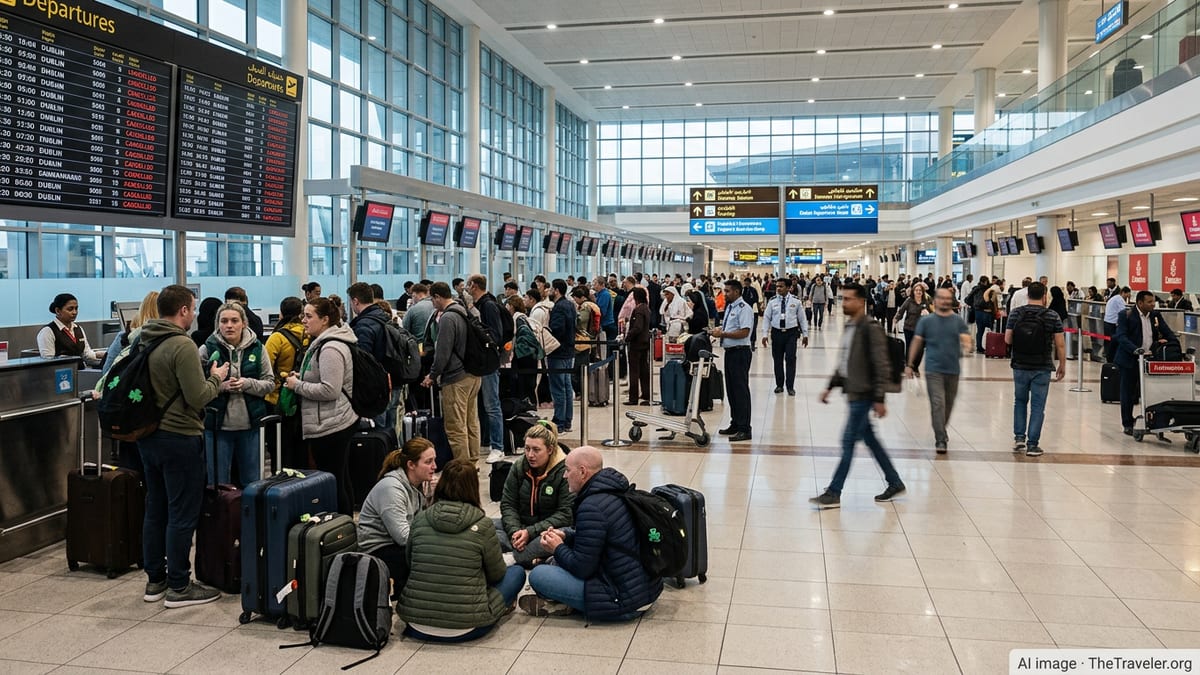
Dublin–Dubai Route Falls Silent as Conflict Closes Gulf Skies
On March 3, Dublin Airport confirmed a fresh wave of cancellations to and from the Middle East, including all scheduled services to Dubai, Doha and Abu Dhabi. The disruption follows the near-complete shutdown of airspace across much of the region after coordinated United States and Israeli strikes on Iran and subsequent retaliatory attacks on Gulf states.
Airport officials in Dublin warned that at least 16 flights to Middle Eastern destinations were scrapped on Tuesday, with further disruption described as likely in the coming days as the regional security situation remains volatile. Airlines including Emirates, Qatar Airways and Etihad Airways have either suspended regular services or are operating only limited evacuation-style rotations out of the United Arab Emirates.
The shutdown of the Dublin–Dubai corridor has severed one of Ireland’s most important long-haul links. Dubai has long served as a critical transit hub for Irish travelers heading onward to Asia, Australia and Africa, amplifying the knock-on impact for passengers who are now stranded both in Ireland and in third countries across multiple continents.
While some long-haul carriers based in the UAE have begun operating tightly controlled windows of flights for stranded passengers, these are largely focused on repatriation from Abu Dhabi and other Gulf airports, with no immediate clarity on when normal schedules between Dublin and Dubai might resume.
Government Issues Emergency Shelter in Place Alert
Responding to the rapidly deteriorating security and aviation environment, Ireland’s Department of Foreign Affairs has issued a stark advisory to citizens across the Middle East to remain indoors, avoid all non-essential movement and closely follow local guidance. Officials have stressed that the primary instruction is to shelter in place while commercial and potential chartered evacuation options are assessed.
Foreign Affairs Minister Helen McEntee acknowledged that the advice is difficult for worried families to hear, noting that many Irish nationals “want to do more” to get out. However, she said authorities in Dublin are clear that moving overland to neighboring states is not recommended, given the unpredictable pattern of strikes, the closure of multiple borders and the risk that alternative airports could also be forced to shut at short notice.
The department has urged all Irish citizens in the region to register their details so officials can build an accurate picture of who is affected. The register is seen as vital for planning any targeted evacuation flights and for pushing out rapid safety updates via social media and consular channels, especially as communications networks in some areas come under strain.
The shelter in place advice echoes warnings issued by other European governments, which have similarly told their nationals in the United Arab Emirates, Qatar, Kuwait, Bahrain and Saudi Arabia to stay indoors, keep travel documents ready and wait for official instructions on possible departure corridors.
Up to 22,000 Irish Citizens Affected Across the Region
Irish officials estimate that as many as 22,000 Irish citizens live, work or travel across the wider Middle East, with a particularly high concentration in the Gulf states. Thousands more are believed to have been transiting through hubs such as Dubai, Abu Dhabi and Doha over the past week for holidays, business trips or onward long-haul connections.
The sudden closure of airports and suspension of flights has left tourists and longer-term residents facing an open-ended stay in hotels, short-term rentals and staff accommodation blocks. Some local authorities in the UAE have moved to extend hotel stays at government expense for travelers unable to leave, while international airlines have introduced limited meal and lodging support for stranded passengers where security conditions allow.
Irish nationals on the ground describe repeated alerts from local governments and employers instructing them to move away from windows, stock basic supplies and stay tuned to official channels for updates on missile and drone activity. For many, the psychological toll is being compounded by the uncertainty over when they will next be able to fly and which routes will be considered safe when a phased reopening eventually begins.
Relatives in Ireland, meanwhile, are grappling with disrupted communication, canceled itineraries and opaque rebooking policies. Travel agents in Dublin and other major cities report being inundated with calls from families trying to reach loved ones in the Gulf and from customers who were due to depart for holidays or business trips that are now indefinitely on hold.
Emergency Flight Plans and Limited Exit Windows Under Review
With normal commercial links severely curtailed, the Irish government is weighing up options for chartered evacuation flights in coordination with European partners. Officials in Dublin have said that advance planning is under way for scenarios in which secure air corridors can be established from selected Gulf airports, though any such missions would depend on rapid shifts in the security picture and on agreements with host states.
Elsewhere, a handful of carefully managed departures have begun to operate from Abu Dhabi and other locations, primarily to move stranded travelers to major European and Asian gateways such as Paris, Amsterdam, Islamabad and Mumbai. These flights remain extremely limited, and airlines have indicated that passengers with existing bookings will have priority over new reservations, further constraining options for those trying to leave.
For Irish travelers currently in the UAE, the advice is not to head to the airport unless specifically instructed by an airline or local authority. Queues outside terminals in previous days have prompted concerns among security planners, who fear that large crowds at key infrastructure sites could become vulnerable if further strikes occur.
Diplomats caution that any broader evacuation program would likely be staged over several days or weeks, prioritizing the most vulnerable, including unaccompanied minors, medical cases and those stranded in high-risk areas. In the interim, consular teams are working remotely and, where possible, on the ground to map where Irish citizens are located and what immediate support they require.
Travel Industry Braces for Prolonged Shock
The collapse of Dublin–Dubai connectivity is feeding into a wider seismic shock for global aviation, with major Gulf hubs effectively removed from the international network just days before the busy Easter travel period. Airlines, tour operators and corporate travel departments are urgently revising flight plans, rerouting passengers via alternative hubs in Europe, North Africa and South Asia where capacity is available.
Irish tour operators say that package holidays involving stopovers in Dubai and Doha have been heavily affected, with customers offered credits, refunds or alternative itineraries that avoid the region entirely. Some carriers are exploring temporary detours that traverse southern Europe and the Caucasus, though these add hours to flight times and are subject to rapidly changing overflight permissions.
For now, travel industry leaders in Ireland are advising prospective visitors to the Middle East to postpone plans and to monitor government advisories closely. Insurers are also tightening conditions around cover for trips into active conflict zones, which could leave some travelers exposed if they choose to ignore official guidance.
As governments worldwide scramble to extract citizens from a patchwork of closed airports and contested airspace, the fate of thousands of Irish passengers remains bound to the shifting trajectory of the conflict. Until the skies over the Gulf are judged safe enough for regular traffic to resume, the Dublin–Dubai route will stay effectively grounded, leaving Irish tourists and residents alike in an anxious holding pattern.