

More news on this day
Irish holidaymakers travelling to Spain in March 2026 are being urged to closely monitor official weather warnings, as a powerful DANA storm system brings heavy rain, mountain snowfall and hazardous seas to several of the country’s most popular sun destinations.
Get the latest news straight to your inbox!
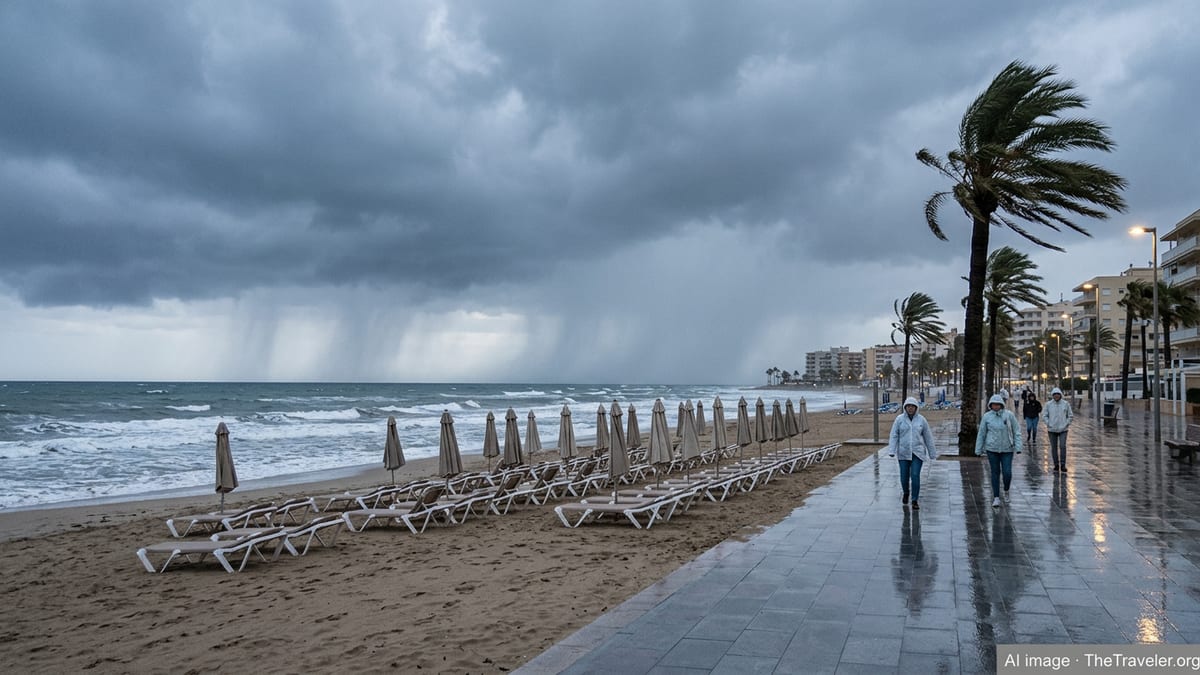
Storm System Disrupts Spring Getaways Across Spain
Spain’s state meteorological agency AEMET has placed multiple regions under yellow and orange alerts this week as an isolated high-altitude depression, known locally as a DANA, disrupts early spring weather across the Iberian Peninsula. The unsettled conditions have arrived just as Irish bookings to Spain surge following a wet start to the year at home, raising concerns about flight delays, road closures and interruptions to resort activities.
On Monday 9 March and Tuesday 10 March 2026, the storm is forecast to bring bands of intense rain, thunderstorms and strong winds to eastern and southern Spain, including coastal areas long favoured by Irish travellers. Local media report that authorities are preparing for short-notice changes to ferry schedules, temporary port closures and difficult driving conditions, particularly on exposed coastal routes and in higher terrain inland.
Travel industry representatives say bookings to Spain, especially to the Canary Islands and Mediterranean coasts, have been robust despite the seasonal volatility. However, they are advising customers departing in the coming days to build extra time into journeys, stay in close contact with airlines and tour operators, and be ready to adjust itineraries if local authorities escalate warnings.
Costa del Sol, Costa Blanca and Andalusia Face Heavy Rain and Snow
Along Spain’s southern coast, AEMET has issued alerts for intense rainfall, strong gusts and rough seas affecting parts of Andalusia, including stretches of the Costa del Sol and Costa de la Luz. Inland and at higher elevations, particularly in provinces such as Granada and Jaen, orange-level warnings for snowfall are in place, with forecasters cautioning that accumulations could disrupt mountain roads and mountain-pass connections used by tour buses and hire cars.
Further east, the Costa Blanca and the wider Valencia and Murcia regions are also under storm alerts tied to the same DANA system. Local reports highlight the risk of short, torrential downpours capable of flooding low-lying streets and underpasses, as well as temporarily closing some promenades and beaches due to pounding surf. Authorities have advised residents and visitors to avoid underground car parks and to heed any instructions from police or civil protection services.
These alerts coincide with a busy period for Irish travellers seeking shoulder-season value in Spain’s southern resorts. While major airports such as Málaga and Alicante are expected to remain open, occasional delays, diversions or ground handling slowdowns are possible during the most intense phases of the storm, particularly if visibility drops or crosswinds strengthen on approach.
Canary and Balearic Islands Hit by Winds, Rough Seas and Downpours
The usually mild Canary Islands, a mainstay of Irish winter-sun travel, are also feeling the impact of the current weather pattern. Forecasts point to strong winds, squally showers and rough Atlantic swells across islands including Tenerife, Gran Canaria and Lanzarote, where yellow warnings are in effect for coastal conditions and gusts. Ferry operators have cautioned that some inter-island sailings may be rescheduled or cancelled at short notice.
In the Balearic Islands, including Mallorca and Ibiza, heavy rain and thunderstorms are expected as the DANA system tracks eastwards across the western Mediterranean. Local bulletins indicate that saturated ground could lead to surface flooding in urban areas and temporary disruption to rural roads, especially smaller routes used for scenic drives and cycling excursions popular with early-season visitors.
Airport operations on the islands typically continue in adverse weather, but arriving passengers may encounter bumpy final approaches and possible delays while storm cells pass. Tourism officials are reassuring visitors that hotels and resorts remain open, but are emphasising the importance of respecting red-flag beach closures and avoiding cliff-top paths and exposed viewpoints during periods of strong winds.
Irish Authorities Urge Close Monitoring of Official Advice
In Dublin, Irish officials and travel bodies are reminding outbound passengers that responsibility for local weather alerts lies with national meteorological services such as AEMET, and that conditions in Spain can change quickly in March. Holidaymakers are being encouraged to consult trusted forecast providers before departure and during their stay, rather than relying solely on long-range app predictions made weeks in advance.
The guidance aligns with broader seasonal safety messaging, which advises Irish travellers to check airline notifications regularly, register for updates where available and keep a close eye on local news updates while abroad. Tour operators say they are updating customers as new bulletins are issued and will assist with rearranging excursions or transfers if particular areas become temporarily inaccessible because of flooding, snow or high winds.
Travel insurers, meanwhile, are reminding customers to review the small print of their policies. Some policies cover delays and missed connections linked to severe weather, while others may exclude foreseeable events once official warnings are in place. Consumers are being advised to retain receipts and documentation for any additional expenses stemming from weather-related disruption.
Practical Tips for Irish Holidaymakers Heading to Spain
For Irish tourists with trips booked over the coming days, experts recommend packing for a wider range of conditions than the typical spring sunshine break. That includes waterproof jackets, closed footwear with good grip, and an extra layer for cooler evenings, particularly in inland cities and higher-altitude resorts where temperatures can fall rapidly after sunset during unsettled spells.
Travellers driving rental cars in mountainous or rural regions are urged to pay particular attention to advisories about snow, ice and fallen branches, and to avoid attempting to cross high passes or minor roads that local authorities have closed. In cities, visitors should expect the possibility of temporary park or garden closures when high winds are forecast, a precaution increasingly adopted to reduce the risk of injuries from falling trees and debris.
Irish tourism analysts stress that, despite the current bout of severe weather, Spain remains a resilient and well-prepared destination, accustomed to handling rapid shifts between sunshine, rain and even late-season snowfall. With careful monitoring of alerts, flexible planning and a willingness to adapt activities day by day, most Irish holidaymakers are still expected to enjoy their breaks, even if pool days occasionally give way to museum visits and tapas bars while the storms pass offshore.