

Connecticut often sits in the shadow of its flashier New England neighbors, squeezed between New York City and Boston and frequently treated as a place to pass through rather than a destination in its own right. Yet recent tourism figures show tens of millions of people choosing to stop and stay, drawn by small coastal towns, historic cities, and quietly beautiful countryside. So is Connecticut really worth visiting, or are you better off heading straight to Cape Cod, Rhode Island’s beaches, or the mountains of Vermont and New Hampshire? This honest guide walks through the state’s genuine highlights, its shortcomings, and who is most likely to enjoy a trip here.
How Connecticut Really Feels as a Destination
Expect a mood closer to lived-in New England than to a postcard-perfect resort state. Much of Connecticut is suburban or semi-rural, threaded with commuter rail lines and highways that feed into New York City and Boston. That practical, everyday backbone means you will encounter working cities, quiet neighborhoods, and strip malls along with historic greens, lighthouses, and sailboats on the Sound. If you come looking only for dramatic mountain scenery or a party-focused coastline, you may be underwhelmed. If you appreciate subtle charm and slower rhythms, the state often exceeds expectations.
Tourism has become a serious part of the economy, with recent state and industry reports indicating tens of billions of dollars in total economic impact and many millions of annual visitors. That growth has encouraged new hotels, revitalized waterfronts, and more attention to arts and food in cities like New Haven, Hartford, and Bridgeport. At the same time, national surveys sometimes rank Connecticut low for “fun” and nightlife, reflecting modest late-night scenes and limited big-ticket attractions compared with Florida, California, or Nevada. Whether the state feels worth visiting largely depends on whether you value low-key authenticity over spectacle.
Connecticut’s strengths emerge most clearly when you give it time. A quick highway stop will show you service plazas and chain stores. A weekend spent walking historic districts in Mystic, hiking in the Litchfield Hills, or exploring college-town neighborhoods in New Haven tells a very different story. The state rewards travelers who are curious, willing to rent a car or ride the train beyond obvious spots, and interested in food, history, nature, and small details rather than bucket-list landmarks.
Coastal Charm: Mystic, The Sound, and Maritime Heritage
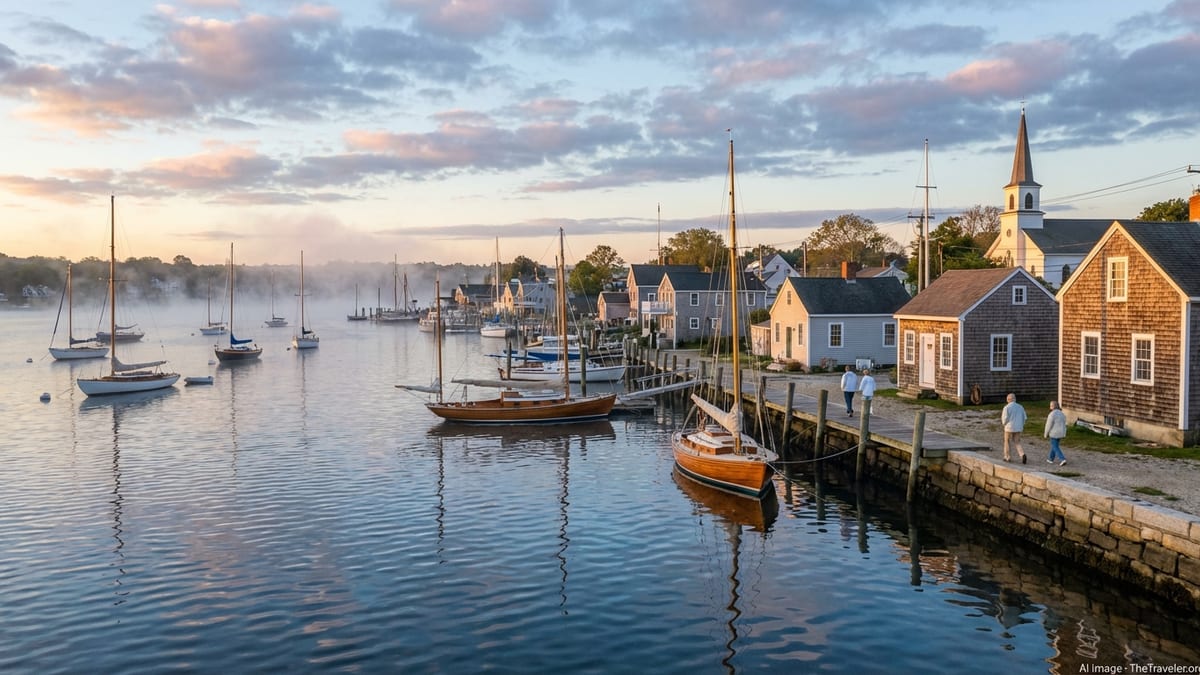
For many visitors, the most persuasive reason to come to Connecticut is the coast. On the eastern shoreline, the village of Mystic has grown from a shipbuilding center into one of the state’s most celebrated small towns. National travel magazines routinely highlight it as a standout New England destination, praising its working harbor, walkable center, and strong food scene. The Mystic Seaport Museum, one of the largest maritime museums in the country, recreates a 19th-century seafaring village with historic ships, shops, and waterfront buildings, offering a rare, immersive look at America’s maritime past.
Beyond the museum, Mystic’s appeal is in the mix of everyday life and leisure. You can watch drawbridges swing open for boats on the Mystic River, grab a casual lobster roll, sample local oysters, or join a small-boat cruise at sunset. Nearby, the Mystic Aquarium draws families with its large marine exhibits. The atmosphere is busy in peak summer and popular fall weekends, but the scale remains village-like rather than overwhelming. Travelers who enjoy coastal walks, maritime history, and seafood often find Mystic alone makes Connecticut worth a stop.
Elsewhere along Long Island Sound, the coastline is gentler and more residential than in some New England states, with a series of modest public beaches, marinas, and harbor towns. Places like Stonington Borough, Niantic, Madison, and Old Saybrook offer small-town main streets, historic homes, and views across sheltered water rather than broad Atlantic surf. Sailing, paddling, and leisurely harbor strolls are more common than surfing or boardwalk-style amusements. If you are seeking intense nightlife or huge resort complexes directly on the sand, the Connecticut shoreline may feel quiet. If you prefer a quieter, lived-in coastal feel and the chance to blend into local routines, it can be ideal.
Small Town New England: Litchfield Hills and Inland Escapes
Drive inland and the mood shifts from maritime to pastoral. Northwestern Connecticut, often called the Litchfield Hills, offers rolling countryside, stone walls, covered bridges, and classic New England town greens framed by white steeples. Towns like Litchfield, Kent, Washington, and Cornwall attract visitors looking for antique shops, galleries, and a countryside weekender atmosphere. The hills here are softer than the high peaks of northern New England but provide pleasing views, especially in late September and October when foliage typically peaks.
This region is particularly appealing for low-intensity outdoor travel. State parks and forests such as Mohawk State Forest, Mount Tom State Park, and Lovers Leap State Park provide accessible hiking with rewarding viewpoints, lakes, and rivers without technical difficulty. Trails like the Mattatuck Trail connect multiple scenic spots, from waterfalls and ledges to fire towers. Lakes including Bantam Lake offer swimming, paddling, and boating in warm months, often with a mix of public access and longtime family camps lining the shore. It is less about wilderness adventure and more about gentle days outside mixed with café stops and farm stands.
Because many of these towns cater to weekend visitors from New York and Boston, lodging can lean toward inns, boutique hotels, and short-term rentals rather than large budget properties. On fall foliage weekends and summer holidays, availability can tighten and prices rise. Travelers on a careful budget may want to schedule visits in shoulder seasons or midweek, when the same small towns feel calmer and more affordable. Still, for travelers looking for an archetypal New England feel without committing to a longer drive into Vermont or New Hampshire, this pocket of Connecticut can be a satisfying substitute.
Cities, Culture, and Food: New Haven, Hartford, and Beyond
Connecticut’s cities surprise many visitors who arrive expecting only quiet towns. New Haven in particular has gained national attention in recent years as a compact, creative city anchored by Yale University. Recent national coverage has framed it as one of the more interesting small cities to visit in the United States, highlighting its mix of historic architecture, galleries, performance spaces, and lively restaurant scene. The city’s version of New Haven–style pizza is almost a pilgrimage item, with long lines forming outside decades-old pizzerias that locals and food writers insist belong on any serious pizza map.
Beyond pizza, New Haven offers a dense cluster of restaurants, bars, and cafés within walking distance of downtown hotels and train stations. The Yale University Art Gallery and Yale Center for British Art, both typically free to the public, host collections that would not be out of place in much larger cities. Live music, theaters, and independent cinemas add to the sense of cultural activity. Travelers comfortable with typical small-city realities such as occasional street noise and patchy streetscapes often find New Haven atmospheric and stimulating for a weekend, especially if they enjoy walking tours and campus architecture.
Hartford, the capital, has a more dispersed feel but rewards visitors interested in history and literature. The Mark Twain House and Museum and the Harriet Beecher Stowe Center sit side by side in a quiet neighborhood, telling the stories of two major American authors who grappled with the culture and politics of their time. Downtown Hartford includes historic buildings, a riverfront park, and a developing food scene, although it still experiences the ebb and flow common to state capitals, with some streets livelier on workdays than weekends.
Bridgeport, New London, and smaller cities along the coast and interior are in various stages of reinvention, with former industrial areas turning into arts districts, breweries, and waterfront parks. Tourism research and local reporting emphasize that recent years have seen new hotels, craft beverage trails, and urban events designed to draw both residents and visitors. Travelers who enjoy seeing places in transition, and who appreciate off-the-beaten-path galleries or music venues more than polished tourist zones, may find these cities an unexpectedly interesting part of a Connecticut trip.
Outdoors, Seasons, and When to Visit
Connecticut’s outdoors are more about variety and accessibility than about extremes. The coastline offers sheltered beaches and salt marshes; inland areas provide lakes, rivers, and low mountains; and the eastern and western edges of the state touch the Appalachian highlands. Hiking, cycling, paddling, and cross-country skiing are all possible in season, often within short drives of towns and cities. State parks and forests are scattered across the map, well used by locals but usually less crowded than national park gateways in other regions.
Seasonality matters a great deal. Summer brings warm weather, beach days on Long Island Sound, and a full calendar of fairs, outdoor concerts, and farm markets. Humidity and traffic can be issues on peak weekends, especially on the main routes between New York and Boston. Autumn is arguably the most beautiful time to visit, when hardwood forests in the Litchfield Hills, river valleys, and even suburban neighborhoods shift to red and gold. Foliage timing varies by year and elevation, but late September through much of October is typically considered prime. Many visitors plan short leaf-peeping road trips that combine hiking with town-hopping.
Winter in Connecticut is colder and quieter, with snowfalls that support skiing at smaller mountains, snowshoeing, and cross-country skiing in state forests. Compared with major ski states, slopes are lower and seasons can be variable, but for families or learners the convenience can outweigh the lack of big vertical drops. Spring can feel drawn out, with some gray days and mud, yet flowering trees, coastal bird migrations, and fewer crowds can appeal to travelers who prioritize low prices and quiet trails over guaranteed sunshine. Overall, there is no single “best” time so much as different trade-offs between comfort, cost, and crowds.
Costs, Logistics, and Who Will Enjoy Connecticut Most
In terms of costs, Connecticut generally reflects its position in the affluent Northeast corridor. Lodging in popular coastal towns, fall foliage regions, and city centers can be relatively expensive, especially on weekends and holidays. Dining ranges widely from casual diners and pizza shops to ambitious farm-to-table restaurants and high-end hotel dining rooms. Compared with nearby major cities, everyday meals and midrange hotels can sometimes feel slightly more affordable, but travelers should not expect bargain-basement prices. Those on tighter budgets often do best by staying slightly inland, traveling midweek, or focusing on day trips from a base in a less touristy town.
Getting around is straightforward but benefits from some planning. Interstate highways run east–west and north–south across the state, making road trips easy but sometimes congested around peak commuting times. Amtrak and regional rail lines connect major cities and some coastal towns, offering car-free access to hubs like New Haven, Hartford, and New London. However, reaching many of the prettiest small towns, hiking areas, and lakes still generally requires a car or rideshare. Distances are short by US standards: crossing the state from New York to Rhode Island can take only a few hours, allowing you to combine several regions in a single visit.
Safety conditions are broadly similar to those in other northeastern states. Cities have neighborhoods that feel polished and busy, as well as areas that are more affected by disinvestment; basic urban awareness and common sense are usually sufficient. Weather-related issues, such as winter storms or summer thunderstorms, are a more likely travel disruption than crime for most visitors. As with any destination, checking local news and official advisories when planning around extreme weather or coastal conditions is prudent.
Ultimately, Connecticut tends to appeal most to certain types of travelers: those who like layered history more than theme parks, who prefer a great slice of pizza or a seafood shack to a formal tasting menu, who enjoy walking in the woods, poking into independent bookstores, and spending a few hours in a small but excellent museum. Families looking for an easy road-trip destination, couples seeking a quiet weekend, and international visitors curious about everyday New England life between its big-name cities often come away pleasantly surprised.
The Takeaway
So, is Connecticut worth visiting? If your ideal trip centers on blockbuster attractions, massive national parks, or round-the-clock nightlife, this may not be your top priority state. Some national rankings place Connecticut low for “fun” and nightlife, and it is true that many towns go quiet early and that there are fewer headline-grabbing experiences than in larger or more tourism-driven states. Travelers who arrive expecting constant spectacle can find the state subdued.
But if you like the idea of a place that blends coastline, countryside, and compact cities within a few hours’ drive, Connecticut offers a depth that is easy to underestimate. Its coastal towns provide genuine maritime character without overwhelming scale. Its inland hills and lakes deliver classic New England scenery in manageable doses. Cities like New Haven and Hartford add serious cultural weight and memorable food. New investments in hotels, craft beverage trails, and downtown revitalization show a state that is slowly but steadily embracing its role as a destination rather than just a corridor.
The answer, then, is that Connecticut is worth visiting for travelers whose tastes align with what the state does best: subtle charm, short travel distances, strong local food, and accessible nature. Plan thoughtfully, lean into the quieter pleasures, and you are likely to find that this small state rewards attention with experiences that feel both grounded and genuinely memorable.
FAQ
Q1. Is Connecticut worth visiting for a first-time US traveler?
Yes, especially if you are already visiting New York or Boston and want to see everyday New England life, coastal towns, and small cities without long extra travel.
Q2. What is the best time of year to visit Connecticut?
Many travelers favor late September through October for fall foliage and comfortable weather, while June through early September works well for beach and lake trips.
Q3. Is Connecticut expensive compared with other New England states?
Prices are generally similar to nearby states, with higher costs in popular coastal and foliage areas. Careful timing and staying slightly inland can help manage budgets.
Q4. Do I need a car to explore Connecticut?
A car is very helpful for reaching small towns, lakes, and trailheads. Trains serve major cities and some coastal towns, but rural areas are difficult to access without driving.
Q5. Are Connecticut’s beaches good for a classic beach holiday?
Connecticut’s beaches tend to be smaller and more sheltered than open-ocean beaches. They are pleasant for swimming and family outings but less suited to surfing or big-boardwalk atmospheres.
Q6. Is Connecticut safe for solo travelers?
Most visitors experience Connecticut as safe. As in any state, it is wise to stay aware in cities, avoid poorly lit areas at night, and follow local advice about weather or coastal conditions.
Q7. What are the must-see places if I only have a weekend?
Many travelers combine Mystic and the eastern shoreline with a stop in New Haven, or pair a Litchfield Hills town with nearby state parks for hiking and countryside views.
Q8. How does Connecticut compare to states like Vermont or Rhode Island?
Connecticut offers a blend of smaller-scale mountains, lakes, and coastline. Vermont is stronger for big mountain scenery, while Rhode Island has more broad, open-ocean beaches.
Q9. Is Connecticut a good destination for families with kids?
Yes. Attractions like maritime and science museums, aquariums, small amusement parks, and gentle beaches make it appealing, especially for road-tripping families.
Q10. Can I visit Connecticut as a day trip from New York City or Boston?
Yes. Cities like New Haven and coastal towns in the western part of the state are realistic day trips by train or car, though an overnight stay allows a more relaxed pace.