

I went to Courtenay in the Comox Valley with pretty high hopes. Friends had described it as a quieter, more livable version of the big-name Vancouver Island destinations, with mountains out one window and ocean out the other. I pictured myself splitting my days between alpine meadows, easy beach walks, and a compact, walkable downtown where I could live on good coffee and seafood.
What I actually found was more complicated. Courtenay has real charms and some memorable experiences I would absolutely repeat, but it also has limitations, frustrations, and a damp, grey reality that glossy brochures tend to skip. If you are debating whether Courtenay is worth a stop or even a base, my honest experience might help set expectations.
First Impressions: A Small City Between Mountains and Sea
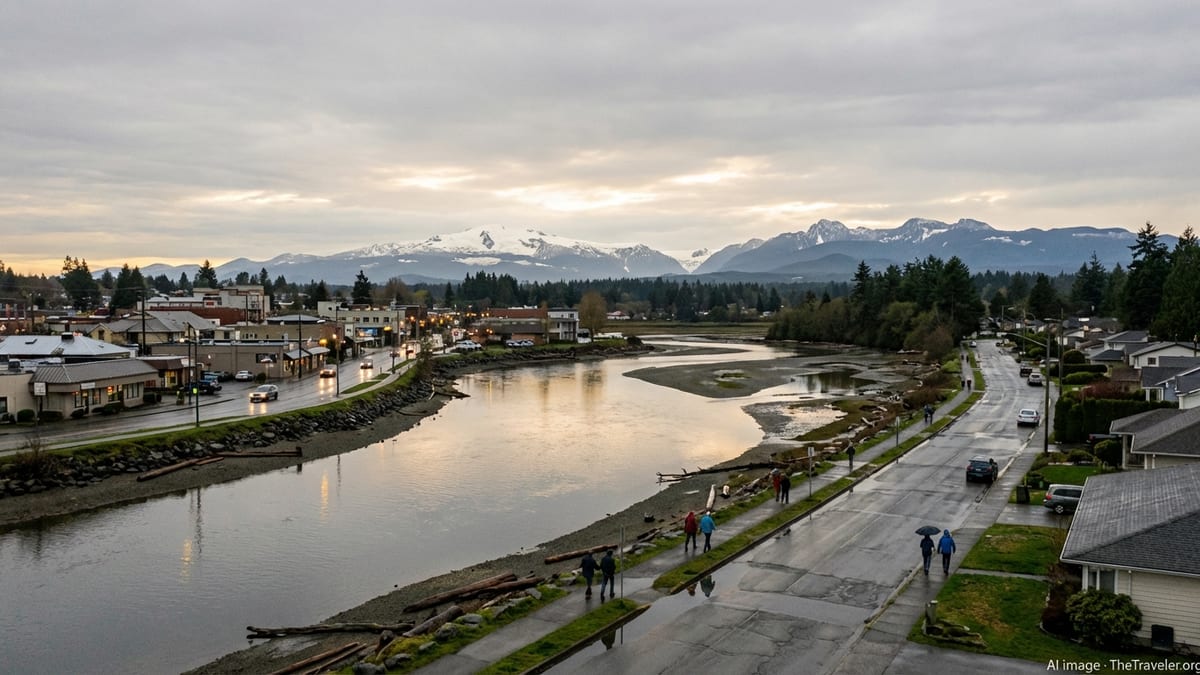
My first impression of Courtenay was that it felt less like a traditional "destination" and more like a regular working town that happens to be parked in a very beautiful place. Driving in, the snowcapped outline of the Comox Glacier and the Beaufort Range loomed in the distance, while the estuary and tidal flats spread out near the mouth of the Courtenay River. It was pretty, but not in a showy, postcard way. There is no dramatic waterfront promenade or iconic skyline greeting you, just big-box stores on the edges and a compact, slightly scruffy downtown core.
That mix set the tone for the rest of my stay. Courtenay does not perform for you the way some tourist-oriented towns do. It does not have a polished resort feel, and I never once forgot that people actually live and work here year-round. Depending on your expectations, that can feel either refreshing or underwhelming. I liked that I could duck into a grocery store and hear everyday conversations about hockey and school pickups rather than constant tourist chatter, but if you are looking for instant "wow" moments the town itself probably will not deliver them.
Weather-wise, my timing made a big difference. I was there in the cool, shoulder-season months when the Comox Valley leans into its reputation for long stretches of cloud and rain. I experienced that fully. There were soft, misty mornings that made the surrounding mountains look wonderfully moody, but there were also days when the low ceiling of grey felt oppressive and it was hard to motivate myself to go do anything outdoors. If you imagine a crisp, snowy winter or a reliably sunny spring, you may be surprised by how damp and mild things can actually be.
My takeaway after those first couple of days was that Courtenay works best if you arrive with realistic expectations: this is a small city with everyday life front and center, framed by some excellent nature. It is not an attraction-driven hub where the town itself is the main event.
Downtown Courtenay: Charming in Pieces, Not a Showstopper
Downtown Courtenay, anchored around 5th Street, was where I spent most of my urban time. I had read about the boutiques and the arts scene, so I arrived expecting something like a mini version of Victoria’s Inner Harbour or a polished historic main street. That is not what I found. The core is a few blocks of low-rise buildings, some nicely maintained, some a bit tired, with an eclectic mix of independent shops, cafes, bookstores, thrift stores, and practical services.
On foot, I appreciated the independent character. I browsed a locally owned bookshop, poked into a couple of home and gift stores, and found a genuinely good coffee. The people behind the counters were friendly in that unforced, island way. It did feel like a place where locals actually shop and hang out, not a fabricated tourist strip. That authenticity mattered to me. At the same time, there were noticeable gaps: empty storefronts here and there, and fewer evening options than I expected. After dark, the downtown thins out quickly, and on a rainy weekday night it felt almost too quiet.
In terms of aesthetics, there were moments I enjoyed, like looking up toward the mountains at the far end of the street or catching murals tucked between buildings. But if I am honest, downtown Courtenay is not especially photogenic compared with some other small British Columbia towns. There is no cohesive heritage district or waterfront boardwalk to anchor it. I ended up using it more as a practical base for coffee, groceries, and the odd meal rather than as an attraction in itself.
Would I stay right in downtown again? For a short visit, yes, mostly because it keeps things walkable and cuts down on driving. But if I came back for longer, I might choose somewhere slightly outside the core, closer to the water or with better views, and treat downtown as somewhere to dip into rather than the centerpiece of my stay.
Nature and Outdoor Access: Where Courtenay Quietly Shines
Where Courtenay truly earns a spot on a travel map is the sheer variety of nature within easy striking distance. Even on a short trip, I was able to shift from ocean shoreline to alpine landscapes in the same day, and that remained the strongest argument in favor of basing myself here. The city itself sits on the Courtenay River estuary, and a simple walk along the Courtenay Riverway trail gave me wide, peaceful views of tidal flats, migrating birds, and, on one clear evening, a sunset that turned the low clouds gold over the water.
Beyond town, things get more compelling. A relatively short drive took me up toward Mount Washington and the gateway to Paradise Meadows in Strathcona Provincial Park. Hiking there, on well-built boardwalks winding through subalpine bogs and lakes, felt like stepping into a totally different world from the damp streets down in Courtenay. The vistas toward the surrounding peaks and the Comox Glacier were exactly the kind of landscapes I had hoped to find on Vancouver Island, and in that sense Courtenay delivered. The only downside was how quickly the weather turned; clouds rolled in, temperatures dropped, and I realized how important it is to pack properly for sudden changes, even if it feels mild in town.
Closer to sea level, I detoured to beaches and provincial parks that people in Courtenay treat almost like an extended backyard. Places along the shoreline east and north of town offered long, pebbly stretches where I could watch driftwood-strewn beaches meet the Strait of Georgia. They were more subtle than spectacular, especially in grey light, but on a calm day I could see the appeal. I never felt crowded, which I appreciated after spending time in busier Vancouver Island destinations.
If there is a catch, it is that Courtenay’s outdoor appeal is very weather dependent and somewhat car dependent. Many of the best hiking areas, lakes, and beaches require at least a short drive, sometimes on roads that are dark and slick during the wetter months. There are public transport options, but they are not practical for most hikers or day-trippers. I sometimes felt that the "easy access" to nature touted in descriptions glossed over the reality that you need wheels, appropriate gear, and a tolerance for rain to get the most out of the area.
Seasonality, Rain, and the Emotional Weather of the Comox Valley
I underestimated how much the climate would shape my experience of Courtenay. On paper, the Comox Valley’s mild winter and temperate climate sound appealing if you are used to harsh cold or heavy snow. In reality, visiting outside the high summer months means embracing a lot of grey, a lot of drizzle, and the kind of damp chill that seeps into your bones if you are not prepared. Even locals talk about how the deep, overcast stretches from roughly November through early spring can feel long.
During my stay, I had several days that never fully brightened. The clouds hung low, mountains disappeared from view, and it rained lightly or heavily for hours at a time. Walks that I had imagined as sweeping scenic outings became more about functional movement: hood up, eyes on the slick pavement, hands cold around a takeaway coffee. When the clouds did part and the sun hit the snow on the distant peaks, the whole valley felt transformed, and those moments were genuinely uplifting. But I had to sit through a fair amount of gloom to get them.
This kind of weather has side effects. It limits how often casual visitors will want to be outside, especially if they are not hardcore hikers. If you are traveling with kids, there may be more cabin fever than you would expect from a "mild" climate, simply because wet playgrounds and muddy trails are less appealing day after day. I also found that many of the photos I had seen of the region highlighted those clear, sunny days, which gave me a subtly skewed expectation of how it would feel on average.
If you crave sun and warmth, I would be cautious about planning a long stay in Courtenay outside late spring to early fall. If you are rain-tolerant, equipped with waterproof clothing, and the kind of person who finds moody skies atmospheric rather than depressing, you may see the same conditions as a feature rather than a bug. For me, it was a mixed bag: at times cozy and atmospheric, at other times a drag that made me wish I had timed my trip differently.
Food, Drink, and Culture: Pleasant but Not a Culinary Pilgrimage
Before arriving, I had loosely imagined Courtenay as having a blossoming food and drink scene to match its natural surroundings. That expectation did not fully pan out. I did find good coffee, friendly pubs, and a handful of solid restaurants, but it was not the kind of place where every meal became a highlight. The options in the compact downtown are serviceable rather than destination-worthy, especially if you are used to the range in bigger cities.
On the plus side, I liked how local many menus felt. I ate fresh seafood that tasted appropriately coastal, sampled locally roasted coffee, and saw regional wines and ciders represented. The service was consistently warm. I never felt rushed or like I was just another tourist to turn over. At the same time, several meals were just fine rather than memorable, and a couple of spots I had read about were closed or operating on limited hours outside of peak season. That is totally understandable for a small city, but it did mean I had fewer options on some evenings than I had expected.
The cultural side of Courtenay felt similar. There is clearly an active local arts and music scene, with galleries, community theater, and events that matter a lot to residents. The museum and paleontology center, with its locally discovered marine reptile fossil, was more interesting than I anticipated and gave a surprising sense of deep time to this seemingly quiet valley. Still, from a visitor’s perspective, this is not a place where you hop from museum to museum or gallery to gallery all day. The scale is small, and the programming is targeted first at locals, which makes sense but can leave a short-term visitor feeling like they have "done" the cultural circuit fairly quickly.
If food and nightlife are top priorities in your travels, Courtenay alone will likely not satisfy you. You may find a couple of standout experiences, but I would frame the overall scene as pleasant support to the outdoors rather than a primary draw.
Getting Around, Costs, and Practical Annoyances
On the practical side, Courtenay impressed me in some ways and frustrated me in others. The positive surprise was that it felt straightforward and relatively low-stress to navigate by car compared with larger centers. Traffic was light, parking was usually easy, and once I got the hang of the main routes it was simple to get from downtown to the highway, the river, or the surrounding communities like Comox and Cumberland.
The flip side is that Courtenay is more car-dependent than I had hoped. On a map, the city looks compact and you might imagine walking most places. In reality, many of the areas you are likely to want to visit as a traveler are spread out, separated by busy roads that are not always pleasant to walk along, especially in poor weather. The bus system exists, but schedules and routes did not line up conveniently with spontaneous exploring. I managed a few nice, self-contained walks, particularly along the river and within the downtown grid, but anytime I wanted to string together activities, I usually needed the car.
Costs were another mixed point. Coming from major Canadian cities, I did notice that some things were relatively reasonable: parking was rarely an issue, everyday coffee and groceries felt normal, and outdoor activities like hiking were essentially free once I reached the trailheads. But accommodation did not feel particularly cheap, especially in peak or near-peak times, and some restaurants were priced in a way that reminded me that this is still a desirable coastal region. Courtenay is not a budget secret; it is simply slightly less expensive and crowded than the most famous British Columbia hotspots.
A final annoyance worth mentioning is that getting on and off Vancouver Island adds an extra logistical and financial layer to any visit. Flights into the nearby regional airport or ferries to the island can be subject to weather and schedules, and delays do happen. I spent more mental energy planning those connections than I would have liked. Once I was on the ground in Courtenay, the pace of life helped offset that slightly, but it is still something to factor in if your time is tight or you are cost sensitive.
Would I Go Back, and What Would I Do Differently?
By the end of my stay, I found myself with a nuanced answer to whether Courtenay is worth visiting. I do not think it is a universal yes. If you are imagining a dazzling seaside resort town or a culinary hotspot with endless nightlife, you will likely be disappointed. If you are hoping for a fully walkable, transit-friendly base where you can ditch the car, you may also find the reality falls short. The rain, the grey, and the car dependence all wore on me at times.
But there are specific scenarios where I would absolutely return. If I wanted a low-key base for hiking in Strathcona Provincial Park, exploring alpine meadows around Mount Washington in summer, or mixing coastal walks with quiet days of reading and coffee, Courtenay would move high up my list. It is less polished, less crowded, and more lived-in than some better-known places, and that can be a strength if you prefer places that are not built entirely around tourism.
If I did it again, I would time my visit differently. I would aim for late spring or early fall to strike a balance between lighter crowds and more reliable weather. I would also plan my days more deliberately around outdoor windows, checking forecasts closely and stacking indoor options like the museum, cafes, or spa time in between. I would budget for a car from the outset, rather than trying to make do without, and be more realistic about driving times to trailheads and beaches.
Most importantly, I would adjust my mental picture. Courtenay is best approached not as a single must-see attraction but as a practical, comfortable hub for experiencing a wider landscape. Once I stopped expecting the town itself to be the star, I enjoyed it more.
The Takeaway
So is Courtenay worth visiting? For me, the answer is yes, but with conditions. It is not the place to fly across the world just to tick off a bucket-list city. It is, however, a very solid and sometimes quietly beautiful base for people who value everyday livability, easy access to varied nature, and a more grounded experience of Vancouver Island than you might get in heavily touristed spots.
You should consider Courtenay if you are an outdoors-oriented traveler who is comfortable driving, packing rain gear, and building your days around weather windows. You will likely appreciate the ability to go from alpine boardwalks to tidal estuaries in a single afternoon, then return to a town where you can find decent food without needing reservations weeks in advance. If you are relocating or slow traveling, its small-city scale and community feel may appeal even more than they do to short-term visitors.
On the other hand, if your ideal trip revolves around nightlife, sophisticated shopping, and reliably sunny days filled with patio hopping, Courtenay will probably feel too subdued and too grey. In that case, I would treat it as a brief stop on a wider Vancouver Island road trip rather than your main destination. A night or two might be enough to walk the river, wander downtown, and sample the local flavors before moving on.
For me, the most memorable moments in Courtenay were not dramatic or flashy: an unexpectedly quiet sunrise over the estuary, the crunch of boardwalk under my boots in a high, misty meadow, the way the mountains suddenly revealed themselves after a day of cloud. Those are not experiences that demand a spotlight, but they are the kind that linger. If that sounds like your kind of reward, Courtenay is worth your time, as long as you meet it on its own terms.
FAQ
Q1. How many days do I really need in Courtenay?
For a focused visit, I found that two to three full days was enough to explore downtown, walk the river, and fit in one or two nearby hikes or beach outings. If you want to use Courtenay as a base for multiple trips into Strathcona Provincial Park or to visit nearby islands and lakes, stretching that to four or five days feels more comfortable.
Q2. Is Courtenay a good base for outdoor activities?
In my experience, yes, as long as you have a car and are prepared for rapidly changing weather. From Courtenay I was able to reach alpine trails, forested walks, beaches, and lakes in relatively short drives, which made it an efficient hub for varied outdoor days.
Q3. Do I need a car to enjoy Courtenay?
Strictly speaking, no, but in practice I found a car almost essential. Downtown and the riverfront are walkable, yet many of the most compelling attractions and trailheads sit outside easy walking range, and public transit schedules are not always convenient for spontaneous day trips.
Q4. When is the best time of year to visit Courtenay?
After dealing with a lot of grey skies and rain, I would personally aim for late spring through early fall. Summer offers the best chance of dry trails and clear mountain views, while late spring and early autumn can balance milder weather with fewer crowds, though you should still plan for rain.
Q5. Is Courtenay suitable for families with kids?
Yes, but with realistic expectations. There are accessible walks, beaches, and parks that work well with children, and the town feels safe and relaxed. On the other hand, long stretches of wet weather and the need to drive to many activities can be challenging for families who are used to walkable urban vacations or who dislike car time.
Q6. How does Courtenay compare to more famous Vancouver Island destinations?
To me, Courtenay felt quieter, less polished, and more lived-in than bigger names like Victoria or some high-profile resort towns. It does not have the same concentration of attractions, nightlife, or historic architecture, but it does offer easier access to certain mountain and forest areas and a calmer day-to-day atmosphere.
Q7. Is Courtenay a budget-friendly place to stay?
Courtenay is not as expensive as major cities or some luxury resort areas, yet it is not a deep-budget destination either. I found mid-range accommodation and meals to be reasonably priced for coastal British Columbia, but ferry or flight costs to reach the island and the need for a car can add up.
Q8. What surprised me most about Courtenay?
The biggest surprise was how ordinary the town itself felt compared with the dramatic landscapes around it. I had expected something more overtly picturesque, but I ended up appreciating the low-key, lived-in feel once I adjusted, especially as a contrast to more touristy places.
Q9. Is Courtenay a good choice for remote work or a longer stay?
From what I experienced, Courtenay could work well for remote workers who value a slower pace, nature access, and a small but functional downtown. You will want reliable accommodation with good internet and a car to reach different corners of the valley, and you should be honest with yourself about how you handle long, grey winters if you stay beyond summer.
Q10. Would I recommend Courtenay to first-time visitors to British Columbia?
If someone only had a short time in British Columbia and wanted iconic urban highlights, I would steer them first toward places like Vancouver and Victoria. I would recommend Courtenay more to repeat visitors or to those who prioritize hiking, quieter coastal landscapes, and a slower, more local feeling over big-city attractions.