

More news on this day
Croatia’s tourism industry, a €15.5 billion engine that has just come off another record year, is heading into the 2026 season facing a nervous mix of weaker demand in key European markets, airline capacity questions and growing pressure on hotel margins from Hilton, Marriott and Valamar.
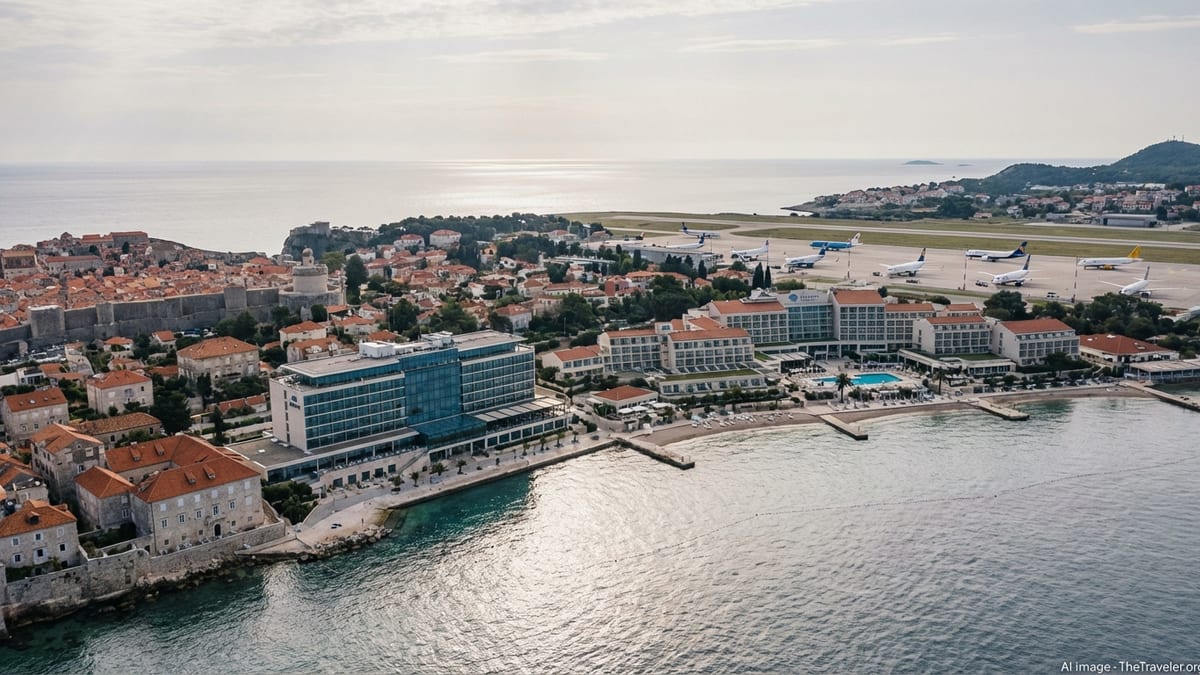
Warning Lights From Germany, UK and Austria
Officials in Zagreb enter 2026 on the back of record visitor numbers and more than 110 million overnight stays in 2025, yet the outlook is clouded by mounting economic and political headwinds in Germany, the United Kingdom and Austria, which together account for a large share of arrivals on the Adriatic. German guests alone generated more than 22 million overnight stays last year, underlining just how exposed Croatia is to any downturn in that market.
Germany’s sluggish growth, higher aviation taxes and a wave of consumer boycotts over prices across Central and Southeast Europe have sharpened concerns that travellers may cut back, trade down or shorten their holidays. In the UK, persistent cost of living pressures and volatile airfares are already reshaping booking patterns toward late deals and lower category accommodation. Austria, another core source market for Istria and Kvarner, is also seeing households tighten spending, raising the risk that some traditional Adriatic regulars stay closer to home this year.
Croatian tourism officials insist the sector is resilient and point to strong interest in early bookings, but they acknowledge that price sensitivity is rising and that any external shock, from airline disruptions to fresh geopolitical tensions, could quickly hit coastal occupancy. The tone has shifted from unbridled optimism a year ago to guarded confidence today.
Airlines Feel the Squeeze as Routes Come Under Review
The aviation picture that underpins Croatia’s tourism boom is also evolving. Zagreb and Dubrovnik airports still boast an impressive roster of carriers, from national airline Croatia Airlines to Lufthansa, Ryanair and British Airways. Frankfurt and Munich remain among the busiest routes from Zagreb, while London Heathrow and London Stansted link the Croatian capital and coast directly with British travellers.
Yet capacity decisions in Germany and the UK are increasingly driven by domestic policy rather than Adriatic demand. Ryanair’s decision to cut capacity at Berlin Brandenburg and its repeated warnings over German aviation taxes have highlighted the vulnerability of leisure routes that depend on tight cost structures. If higher fees or new environmental charges spread to other German airports, point to point links into Croatia could be scaled back or shifted to alternative hubs that offer better economics.
Legacy carriers such as Lufthansa and British Airways are also recalibrating their networks around premium business flows and high yielding long haul traffic. That leaves some seasonal leisure routes to the Adriatic at risk of frequency reductions outside peak weeks, even if they remain profitable during July and August. For Croatia Airlines, which shares many German and Austrian routes with larger partners, defending slots and maintaining year round connectivity is becoming more complex as alliances focus on efficiency.
For now, airport operators stress that Croatia will be served by a record number of airlines this summer, but the balance of power is shifting. The country’s coastal regions are more dependent than ever on a handful of major hubs in Germany, the UK and Austria, creating a narrow funnel for international arrivals at a time when disruption and policy driven route shifts are becoming more frequent.
Hotel Giants Brace for a More Volatile Season
On the ground, global hotel groups Hilton and Marriott and domestic leader Valamar Riviera are preparing for a season in which demand may remain high but less predictable. After several years of aggressive rate increases, particularly in upscale coastal resorts, executives are signaling a pivot toward value, targeted discounts and more flexible packages to keep occupancy solid if German and British bookings soften.
Croatia’s hotel sector has benefited from a post pandemic swing toward quality and all inclusive offerings, allowing operators to lift average daily rates while still filling rooms. However, with key source markets under economic pressure, there is limited room to push prices further without risking a demand shock. Hoteliers are quietly modeling scenarios that include shorter stays, later bookings and a potential shift from full service hotels to private rentals among more budget conscious guests.
Valamar, which dominates many of the largest coastal resorts, has been investing in higher end products aimed at families and affluent Central European travellers. Hilton and Marriott, meanwhile, continue to expand their Croatian footprints, betting on long term appeal and year round business. All three are increasingly reliant on strong air connectivity from Germany, the UK and Austria to sustain occupancy outside the peak summer weeks.
The challenge for 2026 will be to protect profitability if airlines trim capacity or if tourists demand steeper discounts. That could squeeze margins at precisely the moment when operators face higher labour, energy and financing costs, testing the limits of Croatia’s current tourism model.
A €15.5 Billion Engine With Concentrated Risks
Tourism now accounts for a substantial share of Croatia’s gross domestic product, with central bank projections putting revenues in the mid teens of billions of euros and still rising. The sector’s success has supported employment, underpinned public finances and accelerated investment in infrastructure from motorways to new airports. This dependence is also a vulnerability, however, when so much of the inflow is tied to a few nearby economies and a single mode of transport.
German visitors remain the backbone of demand on the Adriatic coast, while Austrians, Slovenians and other Central Europeans fill campsites and family hotels from Istria to Zadar. British arrivals, though smaller in absolute numbers, are crucial for Dubrovnik, Split and city breaks, especially outside the high season. Any downturn, regulatory shift or travel disruption in these markets ripple quickly through Croatian coastal towns, from restaurant takings to seasonal employment.
Economists warn that relying on continuous double digit growth in tourism revenues is unrealistic in a maturing destination facing competitive pressure from cheaper Mediterranean rivals. The key question now is whether Croatia can sustain high value tourism even if volumes from Germany, the UK and Austria plateau or briefly decline. That will require more diversified source markets, stronger domestic tourism and a push to lengthen the season with culture, gastronomy and nature based offerings.
Can Croatia Turn Headwinds Into an Opportunity?
Despite the gathering headwinds, there are reasons for cautious optimism. Domestic tourism has been rising, with surveys showing more Croatians choosing to holiday on their own coast and willing to spend more per trip. New routes announced from secondary European cities, along with plans for additional seasonal services to Dubrovnik and Split, suggest airlines still see strong underlying demand for the destination.
Tourism authorities are stepping up promotion of lesser known inland regions and shoulder season experiences, aiming to reduce the country’s dependence on a few peak summer weeks and a handful of foreign markets. Hoteliers report growing interest from markets such as Poland and the Czech Republic, which could partially offset any softness from Germany or the UK.
For Croatia Airlines, Lufthansa, Ryanair and British Airways, the 2026 season will be a test of how quickly they can adjust capacity without undermining connectivity. For Hilton, Marriott and Valamar, it will be about managing rates, costs and product mix in a more price sensitive environment. Taken together, their decisions will determine whether Croatia’s €15.5 billion tourism engine simply hits a patch of turbulence or faces a more serious loss of thrust.