

More news on this day
The United States has jolted would-be holidaymakers by sharply escalating its travel warning for Cyprus, urging Americans to “reconsider travel” as the widening conflict with Iran and its allies spills into the eastern Mediterranean and stirs fears that a once-stable island could be dragged into regional turmoil.
What the New US Travel Advisory Actually Says
In an updated notice issued on March 3, 2026, the US State Department raised its Cyprus advisory to Level 3, the second-highest warning level in its four-tier system. The move shifts guidance for the popular Mediterranean destination from “exercise normal precautions” to “reconsider travel,” a step usually reserved for countries facing serious security risks.
US officials cite two main concerns: the threat of armed conflict in the broader region and limited embassy assistance for Americans who venture into the Turkish Cypriot administered north of the island. The advisory also notes significant disruption to commercial air travel following the outbreak of hostilities between the United States and Iran on February 28, which has complicated movements across the Middle East and eastern Mediterranean.
Alongside the change in risk level, Washington has authorized the voluntary departure of non-essential US government personnel and their family members from the embassy in Nicosia. While this is not a full evacuation, it is an unmistakable signal that the security calculus has shifted and that the US government wants flexibility to reduce its footprint quickly if the situation deteriorates further.
Cypriot diplomatic sources have stressed that the advisory is precautionary and part of a wider regional response, but the upgrade has nonetheless rattled local tourism operators who had been banking on a strong summer season after several years of recovery.
Regional Conflict Moves Closer to Cyprus
Cyprus has long marketed itself as a safe gateway to the Middle East, a European Union member state sitting just off the coasts of Lebanon, Syria, Israel and Egypt. That proximity, once a selling point for cruise lines and tour operators, now places the island on the edge of an expanding war that pits the United States and Israel against Iran and its regional proxies.
Since late February, US and Israeli airstrikes on Iran have triggered retaliatory missile and drone attacks on American and allied assets across the region. One of the most alarming incidents for Cypriots came on March 1, when a drone believed to be linked to Iran or Hezbollah struck the British Royal Air Force base at Akrotiri on the island’s southern coast, damaging infrastructure and highlighting Cyprus’s role as a key Western military hub.
The presence of British sovereign base areas, as well as other Western military facilities and naval deployments in Cypriot waters, has elevated concerns that strategic sites on and around the island could be targeted again if the conflict escalates. European and Middle Eastern analysts warn that the entire eastern Mediterranean is now part of a broader security theatre, with commercial shipping lanes, energy infrastructure and airspace all under increased strain.
For ordinary travelers, the most immediate impact has been on connectivity rather than day-to-day safety. Flight cancellations, airspace restrictions and last-minute schedule changes have rippled across the region, raising the risk that tourists could find themselves stranded or forced into lengthy detours if tensions spike without warning.
How Safe Is Cyprus Day to Day?
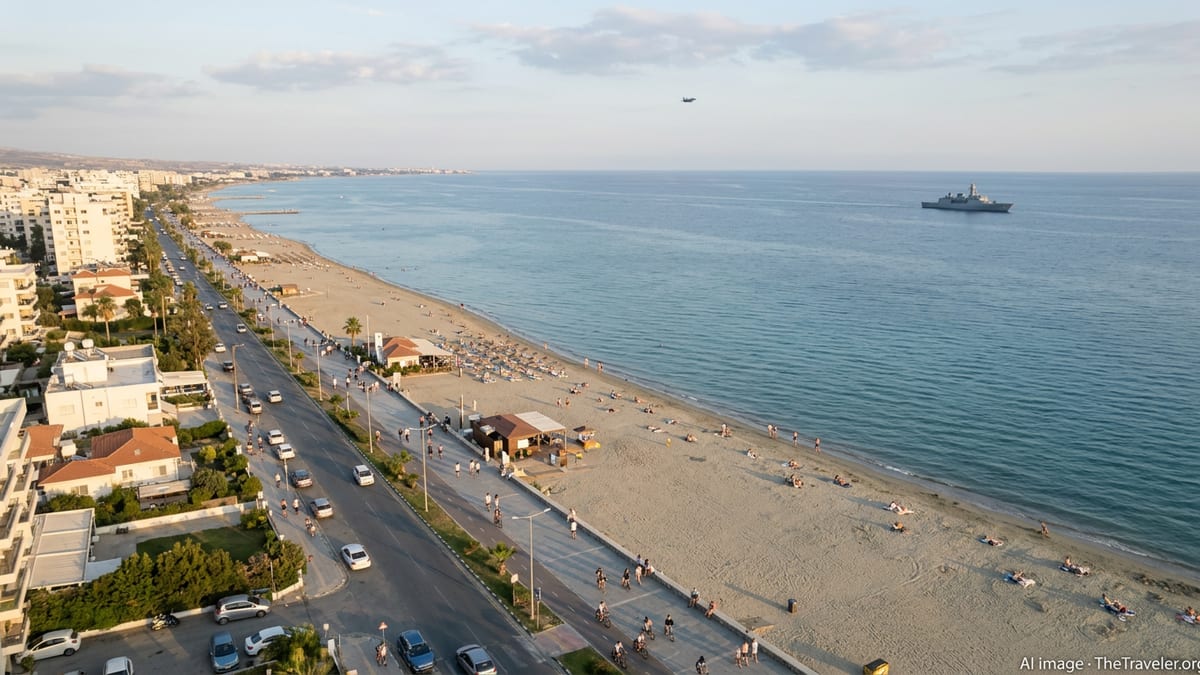
Despite the alarming headlines, security conditions on the ground in most of Cyprus remain calm and broadly orderly. There are no reports of widespread unrest in the government-controlled south, and daily life in major tourist centers such as Limassol, Paphos, Larnaca and Ayia Napa continues largely as normal, with hotels, restaurants and beaches operating.
Local authorities insist there is no immediate domestic threat that would warrant panic. Cypriot officials say they are in constant coordination with European Union partners and allied governments, continuously reviewing contingency plans while maintaining that the island’s internal security environment remains stable.
Travel-risk experts point out that the US advisory is driven less by crime or terrorism inside Cyprus and more by external military dynamics and the risk of rapid deterioration if regional hostilities expand. Put simply, the island is still functioning as a tourist destination, but it sits in a neighborhood that has suddenly become far more volatile than most visitors are used to.
Another complicating factor is the island’s political division. The State Department highlights limited consular access and assistance in the Turkish Cypriot administered north, where the internationally recognized Republic of Cyprus does not exercise effective control. Travelers who cross the internal divide to visit historic sites or resorts in the north may face greater uncertainty if an emergency requires swift evacuation or official help.
What Travelers Need to Consider Right Now
For Americans and other international visitors weighing trips to Cyprus in the coming weeks and months, the new advisory does not amount to an outright ban, but it demands a higher level of caution and preparation. A Level 3 warning signals that the US government sees genuine potential for conditions to worsen quickly, especially in the event of further strikes or retaliation involving forces based on or near the island.
Prospective travelers are being urged by multiple governments to monitor security updates closely, keep flexible itineraries and ensure that travel insurance explicitly covers conflict-related disruptions and evacuations. Airlines serving the region may adjust routes or schedules with little notice, meaning that a smooth arrival does not guarantee an equally smooth departure if regional airspace tightens.
Those who decide to go are advised to stay informed via local media, follow any instructions from Cypriot authorities and avoid sensitive areas such as military installations or demonstrations. Travelers contemplating visits to the north of the island are being warned that consular support may be limited and that they should have robust backup plans that do not depend solely on embassy assistance.
For now, Cyprus remains far safer than frontline states such as Lebanon, Syria or Iran, which carry Level 4 “Do not travel” warnings. Yet the sharp upgrade in the US assessment underscores how quickly risk profiles can change in a region where airstrikes, drone attacks and diplomatic crises have become a near-daily reality. Holidaymakers eyeing the island’s beaches this year are being forced to weigh its enduring appeal against a new, uncomfortable question: how close is too close to a spreading war?