

Delaware is often overlooked on East Coast itineraries, passed at highway speed on the way to Philadelphia, Washington, or the beaches of neighboring states. Yet this small, low-key state quietly attracts tens of millions of visitors each year, drawn by its Atlantic beaches, tax free shopping, historic towns, and easy access from major cities. So is Delaware genuinely worth a dedicated trip, or is it better as a short stop on a longer journey? This honest guide looks at Delaware’s strengths, limitations, and current tourism trends to help you decide if it deserves a spot on your travel plans.
How Delaware Really Feels As A Destination
Delaware is compact, easygoing, and largely free of the big city intensity that defines much of the Northeast corridor. From Wilmington near the Pennsylvania border to the southern beaches along the Atlantic, you can drive the length of the state in around two hours, which makes planning simple and day trips realistic. The overall feel is low key rather than flashy: modest skylines, quiet residential neighborhoods, and small downtowns anchored by independent businesses rather than blockbuster attractions.
The state’s tourism profile skews heavily domestic. Recent figures from the Delaware Tourism Office describe tourism as a multibillion dollar contributor to the state economy, with nearly 10 million overnight visitors and many more day trippers in 2023. At the same time, Delaware remains one of the least visited states among overseas travelers, which means you are unlikely to encounter large international tour groups or heavily commercialized sightseeing zones. For some travelers, that quieter, more local atmosphere is a major part of its appeal.
Delaware is best understood as a collection of specific experiences rather than a single must see icon. There is no equivalent of the Grand Canyon or Times Square here. Instead you will find a string of Atlantic beach towns, a growing craft food and drink scene, historic estates tied to the du Pont family, Underground Railroad heritage sites, wildlife rich wetlands, and a surprisingly strong calendar of sports and events. If you enjoy places where the draw is a mix of scenery, everyday local life, and modest scale attractions, Delaware can be rewarding.
On the downside, the state’s small size and understated branding can leave some visitors underwhelmed if they arrive expecting constant spectacle. Outside of peak summer in the beach towns and weekend events in Wilmington or Dover, evenings can feel quiet. Public transportation is limited once you move beyond main bus corridors, so a car is effectively essential for exploring beyond one city or beach town.
Tourism Today: Who Actually Visits Delaware?
Tourism in Delaware has been in growth mode over the last decade, with state officials reporting record or near record visitation in recent years. Industry data for 2023 points to tourism generating around 4.7 billion dollars in economic activity for the state and supporting tens of thousands of jobs, making it one of Delaware’s key private sector employers. That scale might surprise travelers who still think of Delaware as a simple pass through state.
The pattern of visitation, however, is very regional. The majority of visitors come from nearby states such as Pennsylvania, Maryland, New Jersey, and Virginia, often for beach weekends, outlet shopping, and sports tournaments. Sports tourism alone has become a significant niche, with more than a million people traveling to Delaware for tournaments and events in 2023 and spending hundreds of millions of dollars in hotels, restaurants, and entertainment. New indoor multi sport complexes under construction in places like Millsboro suggest that this trend is likely to continue.
International tourism, by contrast, remains modest. Travel industry analyses show Delaware ranking last nationally for overseas visitation, which further reinforces its character as a regional, almost insider destination. This has practical implications: information and services tend to be geared toward domestic road trippers, and you will not find the same depth of multilingual signage or globally marketed tours that you might in larger cities.
If you are traveling from within the Mid Atlantic or Northeast, Delaware works extremely well as a weekend or long weekend destination, especially if you enjoy beaches or history. For travelers flying in from farther away, Delaware is often best combined with nearby Philadelphia, Baltimore, or Washington, using the state as a relaxed contrast to larger urban centers.
Coastal Delaware: Beaches, Boardwalks, And Beach Town Vibes
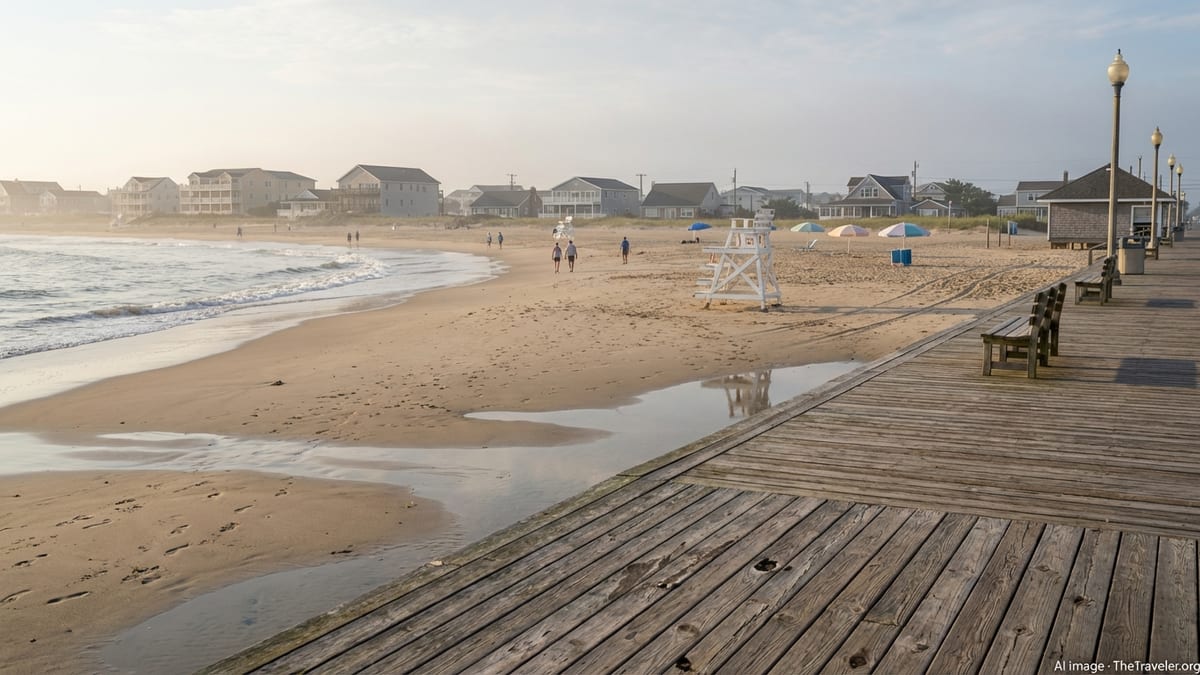
For many visitors the question of whether Delaware is worth visiting boils down to one thing: its beaches. Along the southern coastline, towns such as Lewes, Rehoboth Beach, Dewey Beach, Bethany Beach, and Fenwick Island line the Atlantic, each with its own character. Rehoboth is the most classic boardwalk destination, with a family friendly promenade, amusement rides, arcades, and a wide, guarded beach. Dewey, a few minutes away, leans younger and livelier, known for its nightlife and bayside water sports.
Further south, Bethany Beach and Fenwick Island tend to be quieter and more residential, appealing to families and travelers seeking a slower pace. Nearby, Cape Henlopen State Park protects a stretch of dunes, maritime forest, and wide, relatively undeveloped beach near Lewes. It offers trails, a historic World War II observation tower, and bay and ocean views that feel distinctly different from more built up resort strips. During summer, regular beach buses and ferries help day trippers reach the shore without worrying about downtown parking.
Tourism authorities and local business groups often highlight the state’s “five star” beaches as their anchor attraction, and summer occupancy rates in coastal hotels bear out their popularity. Recent reporting suggests that weekend hotel stays in the beach region have continued to edge upward, even as some visitors adjust budgets post pandemic. At the same time, the very success of the coast brings challenges. Summer traffic jams on routes leading into Rehoboth and Bethany are common, beachfront parking can be tight, and housing costs for seasonal workers remain a hot issue in local debates.
If you visit outside of peak July and August weeks, you gain much of the same seaside charm with fewer crowds and often lower prices. Late May, June, September, and early October can be sweet spots, when water temperatures are still reasonable, many restaurants remain open, and you can actually find space on the sand. In the colder months, expect a much quieter atmosphere, with a mix of full time residents and off season travelers enjoying wide, mostly empty beaches.
Beyond The Sand: Cities, History, And Culture
While the beaches dominate Delaware’s image, the northern half of the state offers a different kind of trip built around history, gardens, and small city culture. Wilmington, the state’s largest city, sits along the Christina and Brandywine rivers and has spent the last two decades reorienting its waterfront. The Riverfront district mixes a riverside promenade with restaurants, minor league baseball, cycling paths, and public art, including sculptures honoring figures from the Underground Railroad. It is not a vast entertainment district, but it provides a pleasant, walkable place to spend an evening if you are staying in the city.
Just outside Wilmington, a string of historic estates and museums linked to the du Pont family provide a strong draw for travelers who enjoy gardens, architecture, and industrial history. Sites such as the Hagley Museum and Library preserve 19th century powder mills along the Brandywine Creek and the family’s first American home, while nearby gardens and mansions showcase formal landscapes, terraces, and historic interiors. Combined with the Delaware Museum of Nature and Science and other cultural institutions, they turn the Brandywine Valley into an easy day or two of gentle exploration.
Farther south in Dover, the state capital, history turns more explicitly to politics and the early United States. The First State Heritage Park stitches together the Old State House, Legislative Hall, archives, and small museums into what is sometimes called a “park without boundaries” across downtown. Walking tours and interpretive centers explain how Delaware became the first state to ratify the U.S. Constitution and trace its evolving role in national events. The compact historic core makes this an easy, walkable way to absorb a slice of American history without the crowds of larger historic cities.
None of these urban areas are large, and visitors who are used to the nonstop energy of New York or Philadelphia may find evenings subdued, particularly midweek in the off season. For many travelers, though, this relatively unhurried pace becomes part of Delaware’s appeal. You can explore museums and heritage sites at a relaxed speed, linger in independent cafes or restaurants, and often find locals willing to chat about the region’s past and present.
Nature, Parks, And Outdoor Experiences
Delaware’s flat profile and modest size make it easy to underestimate its outdoor offerings, but the state has a varied set of landscapes for its size. Along the coast, state parks such as Cape Henlopen and Fenwick Island protect dunes, beaches, and coastal forests that host migratory birds and other wildlife. Kayaking, stand up paddleboarding, and dolphin watching cruises are common summertime activities, and inlets and bays provide more sheltered waters for beginners.
In the north, Brandywine Creek State Park and Alapocas Run State Park preserve stretches of rolling fields, stone walled farm landscapes, and forest along the Brandywine. Trails here range from gentle riverside walks to short, steeper climbs with views of small waterfalls and rock faces. Alapocas Run even offers rock climbing on old quarry walls under the supervision of park programs, which is a novelty in a mostly flat state.
Birders and wildlife watchers tend to gravitate to the marshes and refuges in central and southern Delaware, where coastal wetlands serve as staging grounds for migratory shorebirds. Spring and fall migration can bring impressive numbers of birds to mudflats, beaches, and tidal creeks. While these areas rarely feel crowded, facilities are generally modest and self guided, so a bit of advance planning helps, particularly if you are visiting with limited mobility or traveling with children.
Outdoor infrastructure continues to evolve along with tourism. New sports complexes, expanded trail networks, and multi use waterfront paths are being developed or upgraded in several counties, often with state tourism funds explicitly earmarked for recreation. For visitors, that translates into more options for non beach activities, from tournament travel with families to casual hikes and bike rides that break up driving days.
Food, Drink, Shopping, And Practical Realities
Delaware’s food scene reflects its geography and demographics: a blend of coastal seafood, Mid Atlantic comfort food, and a recent wave of craft breweries and small batch distilleries. In beach towns, menus frequently highlight local crab, seasonal fish, and boardwalk treats such as fries and ice cream. In Wilmington and Newark, you will find a broader mix of cuisines, from upscale contemporary restaurants to casual spots frequented by students and office workers.
One of Delaware’s most tangible tourist perks is tax free shopping. Visitors pay no state sales tax on purchases, which has helped turn outlet centers near Rehoboth Beach into major draws. Shoppers from nearby states often plan day trips around stock up runs, combining hours at the outlets with an evening at the coast. For travelers on a budget, the lack of sales tax can make a noticeable difference on larger purchases or family trips where small expenses add up quickly.
Accommodation options run the full spectrum from chain hotels in highway corridors to independent inns in historic towns and seasonal rentals along the coast. Prices spike in summer near the beaches and during major events such as races or festivals in Dover and Wilmington. Outside of these peak periods, savvy travelers can often find reasonable rates, especially midweek. Because public transit is limited and many attractions lie outside walkable cores, renting a car or driving your own tends to be the most practical choice for exploring more than one region of the state.
Travelers should also be prepared for seasonal contrasts. Summers can be hot and humid, with crowded roads leading to beach towns on Fridays and return traffic clogging routes on Sundays. Shoulder seasons are milder but may see reduced hours in some seasonal businesses. Winters are comparatively quiet, with some coastal establishments closing or shifting to weekend schedules, which can appeal to those seeking solitude but frustrate visitors expecting a full menu of activities.
Who Will Love Delaware, And Who Might Be Disappointed?
Delaware shines for travelers who value ease and understatement over spectacle. If your ideal trip involves relaxed beach days, scenic walks, local history, and simple pleasures like boardwalk snacks or garden strolls, the state offers a satisfying mix. Families often appreciate the scale of the beach towns, where everything from mini golf to casual dining is within a short drive or walk, and the atmosphere generally feels safe and manageable. History enthusiasts can knit together du Pont estates, Underground Railroad sites, and early statehood landmarks into a themed itinerary that still allows time for nature.
The state also works well for regional road trippers who want a change of scene without the logistics of long distance travel. From cities like Philadelphia, Baltimore, or Washington, Delaware’s beaches and Brandywine Valley are close enough for overnight or weekend breaks. Travelers interested in sports tournaments, niche festivals, or birding events increasingly find Delaware on their calendars, often discovering the broader appeal of the area while in town for a specific reason.
On the other hand, Delaware may disappoint visitors seeking around the clock nightlife, extensive high art institutions, or the kind of instantly recognizable landmarks that define bucket list destinations. Nightlife is mostly concentrated in specific pockets such as Dewey Beach in summer and certain Wilmington neighborhoods, and even there the scale is modest compared to major cities. Public transit limitations mean that travelers without cars will find it difficult to sample both the beaches and inland attractions on the same trip.
Expectations are crucial. If you arrive viewing Delaware as a gentle, convenient, and relatively affordable corner of the Mid Atlantic, you are likely to find it rewarding. If you come expecting it to compete with New York, Miami, or national park icons, the experience may feel low key. Matching your plans to what the state does best is the surest way to decide whether it is worth visiting for you personally.
The Takeaway
So, is Delaware worth visiting? For many travelers, the answer is yes, provided you understand what the state offers and what it does not. Delaware excels at relaxed coastal escapes, compact doses of American history, accessible outdoor recreation, and tax free shopping, all within easy reach of major East Coast cities. Its tourism industry has quietly grown into a major pillar of the state economy, even as it remains off the radar for many international visitors.
If you are considering a beach holiday without the intensity of larger resort areas, a gentle road trip through historic estates and small cities, or a practical base for tournaments and events, Delaware deserves a close look. Combine realistic expectations with thoughtful timing and a car to explore, and the First State can be a pleasantly surprising addition to your travel plans.
FAQ
Q1: Is Delaware worth visiting for more than just a beach weekend?
Yes, if you enjoy history, gardens, small city culture, and low key outdoor activities. You can easily fill several days by combining the beaches with Wilmington’s Riverfront, Brandywine Valley estates, and historic Dover.
Q2: When is the best time of year to visit Delaware?
The most popular months are late May through early September for beach weather, but many travelers prefer late spring and early fall for milder temperatures, lower prices, and smaller crowds.
Q3: Do I need a car to explore Delaware?
A car is highly recommended. While there are buses and seasonal beach shuttles, most attractions, parks, and beach towns are spread out, and public transit does not conveniently link all the main sightseeing areas.
Q4: Are Delaware’s beaches crowded?
They can be very busy on summer weekends, especially in Rehoboth Beach and Bethany Beach. Visiting on weekdays, in June or September, or early in the day usually means more space and easier parking.
Q5: Is Delaware expensive compared with neighboring states?
Prices spike in peak summer near the beaches, but the absence of state sales tax helps keep shopping costs down. Outside the highest demand weeks, lodging and dining can be reasonably priced compared with some nearby coastal destinations.
Q6: What is there to do in Delaware in winter?
Winter is quiet, especially at the coast, but you can still visit museums and historic sites in Wilmington and Dover, walk empty beaches on mild days, and enjoy off season rates at many hotels.
Q7: Is Delaware family friendly?
Yes. The beach towns offer guarded swimming areas, boardwalk amusements, mini golf, and family oriented events, while museums, state parks, and historic sites provide educational options suited to school age children.
Q8: How many days should I plan for a first trip to Delaware?
A long weekend allows you to sample one beach town and either Wilmington or Dover. With five to seven days, you can combine multiple beach areas, the Brandywine Valley, and some time in the capital.
Q9: Is Delaware safe for travelers?
Most visitors experience no safety issues. As in any destination, it is wise to stay aware of your surroundings, follow local advice, and use standard precautions in cities at night and in crowded areas.
Q10: Can I visit Delaware without renting a car if I rely on rideshares?
It is possible in a limited way, especially if you base yourself in a single city or beach town, but you will have far more flexibility and lower overall transport costs if you have your own vehicle.