

I first went to Duluth with moderate expectations and a warm jacket, assuming it would be a pleasant but forgettable Great Lakes stop. Instead, I found a gritty, scenic port city with real character, dramatic Lake Superior views, and a surprising mix of outdoor adventure and cultural life. Duluth is not a polished resort town, and that is part of its appeal. Whether it is worth visiting depends a lot on what you value in a trip, when you go, and how you like to spend your time. Here is my honest experience to help you decide.
First Impressions: A Working Port With Big-Lake Drama
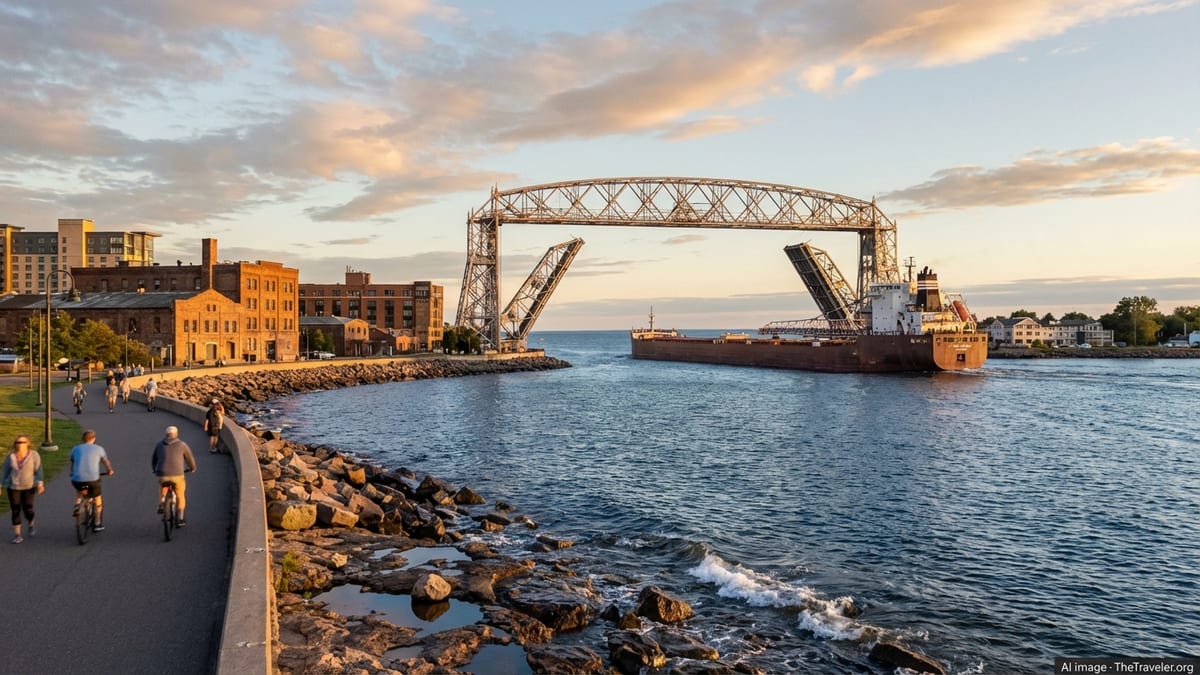
Driving into Duluth from the hilltop approaches, the first thing that hit me was the view. The city spills down a steep hillside toward an enormous sweep of water that looks more like an inland sea than a lake. Rows of houses cling to the slope, industrial docks stretch into the harbor, and ships move in and out beneath the famous Aerial Lift Bridge. It feels more like a North Shore seaport than a typical Midwestern town, and that sense of place is one of the strongest reasons to come.
Duluth is a working port first and a tourist destination second. You see ore docks, grain elevators, rail lines, and tugboats, and there is a constant reminder that commerce is happening all around you. If you prefer your vacations perfectly manicured, that mix of industry and beauty might feel jarring. If you like cities with layers and stories, Duluth’s combination of rough edges, historic brick buildings, and waterfront views is genuinely compelling.
Weather is part of the first impression too. Lake Superior shapes everything here. Skies can change fast, fog can roll in even on summer days, and winter lasts longer than you might expect. I arrived on a cool late-spring afternoon and watched the temperature drop almost instantly as the wind shifted off the lake. It is not a place you visit for guaranteed balmy weather, but if you come prepared, the lake’s moodiness is part of the charm.
Overall, my initial reaction was that Duluth feels authentic. It has touristy zones, especially around Canal Park, but at its core it is still a real, functioning city where people live and work. That authenticity gives the place a different energy than a purpose-built vacation town.
Canal Park, The Lakewalk, and the Waterfront Experience
If you only have a short time in Duluth, you will almost certainly end up in Canal Park and along the Lakewalk. This is the city’s most concentrated cluster of hotels, restaurants, and waterfront attractions, and it is where the tourist side of Duluth is most visible. From here, the Lakewalk stretches for nearly eight miles between Canal Park and Brighton Beach, hugging the shoreline and offering constant views of Lake Superior’s shifting blues and grays.
Walking the Lakewalk was one of my favorite simple pleasures in Duluth. It accommodates both pedestrians and cyclists on a paved trail, with the lake on one side and a mix of parks, public art, and urban views on the other. On calm mornings it feels almost meditative, with waves lapping against the rocks and ships out on the horizon. On windy days, the water can crash against the shoreline in a way that reminds you how powerful this lake really is.
Canal Park itself is busy and at times a little commercial, with brewpubs, casual eateries, and souvenir shops, but the setting keeps it from feeling generic. The Aerial Lift Bridge rises at the end of the district, and watching it raise for a thousand-foot freighter is a quintessential Duluth moment. Nearby, the free Lake Superior Maritime Visitor Center adds context, with exhibits on shipping, storms, and the bridge’s history, and you can stand outside just feet from the ship canal as massive vessels glide by.
For me, the waterfront was the single strongest argument in favor of visiting Duluth. It offers something in every season: open-water sunsets in summer, dramatic waves during fall storms, and ice formations in winter. If you enjoy just being near water and walking or running with a view, Duluth delivers that in a concentrated, easily accessible way.
Iconic Sights and What They Are Really Like
Several Duluth landmarks show up repeatedly in travel guides, and in my experience most of them are genuinely worth your time. The Aerial Lift Bridge is the one everyone photographs, and for good reason. Beyond its striking steel design, the appeal is very much experiential. Standing on the pier as the warning bells ring, hearing the bridge deck rise, and watching a freighter slip through the canal just a short distance away is thrilling in a low-key, maritime way.
Just across the harbor, the Lake Superior Maritime Visitor Center deepens that experience with models, historic cabins, and explanations of how the port operates. It is free to enter, family friendly, and does not take long to explore, which makes it an easy stop before or after a ship passes. I appreciated how it connects the city’s present-day shipping traffic to earlier eras of Great Lakes history.
Further along the shore, Glensheen, the Historic Congdon Estate, offers a different kind of Duluth story. This early 20th century lakeside mansion, with its preserved interiors and formal grounds, feels like stepping into another time. Tours are organized but not overly rigid, so you can move at your own pace, and the lakefront setting adds a scenic backdrop that keeps it from feeling like just another house museum.
For a higher vantage point, Enger Tower and the surrounding park up on the hill give sweeping views over the harbor, the bridges to Superior, and the edge of Lake Superior itself. On a clear day, you can see freighters lining up outside the harbor and trace the curve of the shoreline in both directions. That elevated perspective really helps you understand Duluth’s layout and terrain.
Outdoor Adventures: From Spirit Mountain to the North Shore
One of Duluth’s biggest strengths is how quickly you can go from city blocks to serious outdoor scenery. The hills behind town are laced with trails, rivers drop toward the lake in rocky gorges, and within a short drive you reach state parks and overlooks along the North Shore of Lake Superior. If fresh air and activity are priorities for you, Duluth is a strong contender compared with many Midwestern destinations.
Spirit Mountain, just outside the main part of town, is a four-season recreation area. In winter it draws skiers and snowboarders, with a range of runs and views over the harbor as you ride the lifts. In warmer months, the focus shifts to mountain biking, an alpine coaster, and scenic chairlift rides. It is not a vast Western ski resort, but for a city this size, it is an impressive backyard playground.
Within the city limits, places like Chester Park, Lester Park, and the trails along Skyline Parkway offer accessible hikes and trail runs with views of waterfalls, creeks, and the vast lake below. The Stewart Creek Bridge along Skyline Parkway, built with local stone in the 1920s, adds a touch of historic charm to the landscape. The network of trails means you do not have to leave the city to feel like you are out in nature.
If you have a car, Duluth also serves as the gateway to the North Shore. Within an hour or two you can be at well-known state parks and scenic spots, then return to Duluth in the evening for a meal and a bed. In that sense, the city works well as both a destination and a base camp for exploring farther up the coast.
Culture, Events, and Food: How Much Is There Really?
Duluth is not a huge city, and you should calibrate your expectations accordingly, but there is more culture and nightlife than you might assume from a population of roughly 90,000. The Duluth Entertainment Convention Center complex, including Amsoil Arena and Symphony Hall, brings in concerts, shows, and college hockey. During my visit, I found a calendar heavy on local music, regional touring acts, and community events rather than constant big-name headliners, but that fits the city’s scale.
One major annual event that transforms the city is Grandma’s Marathon, held each June with a course that runs from Two Harbors to Canal Park. Runners fill the hotels, the Lakewalk gets crowded with spectators, and the whole waterfront buzzes with energy. Another signature gathering is the Homegrown Music Festival in late April and early May, a locally focused celebration that spreads performances across venues around town and spotlights regional bands and solo artists.
On the food front, Duluth offers a mix of brewpubs, casual restaurants, coffee shops, and a few more refined spots, many concentrated around Canal Park and downtown. You will not find the sheer volume or diversity of a major metropolitan food scene, but there are enough solid options to keep a long weekend interesting. Fresh Lake Superior fish, local beers, and hearty Midwestern comfort dishes show up frequently on menus, and many places embrace the waterfront setting with patios or harbor views.
For families, attractions like the Great Lakes Aquarium, the Lake Superior Zoo, and indoor activity centers in Canal Park add variety on days when the weather turns or the kids need something more structured. They are not on the scale of big-city museums or major zoos, but they round out a trip nicely, especially if you mix them with time outdoors.
Seasons, Weather, and When Duluth Is Most Worth It
In my experience, deciding whether Duluth is worth visiting depends heavily on when you plan to come. Summer is the most popular season for a reason. Temperatures are generally mild, the lake is open, patios and parks fill with people, and the festival calendar is at its fullest. Long daylight hours make it easy to pack in walks along the Lakewalk, hikes on the hillsides, and evenings watching ships at the canal.
Early fall might be the sweet spot if you can time it right. As the leaves turn, hillsides above the city glow with color, and the combination of crisp air, less crowded attractions, and occasional, dramatic wave action on Lake Superior can be unforgettable. You will want layers, and you might hit rain or wind, but the city feels especially atmospheric at this time of year.
Winter in Duluth is for a specific kind of traveler. Snow, ice, and cold are a given, and storms can be intense. Yet if you enjoy skiing, snowboarding, winter hiking, or simply watching the lake in its more rugged moods, this season has its own magic. Spirit Mountain comes into its own, the city decorates for the holidays, and certain events and light displays add to the mood. You must plan carefully for road conditions and bring serious winter gear, but there is a quiet, almost remote feel to Duluth in midwinter that some people love.
Spring can be a mixed bag. Lake Superior keeps things cooler than inland areas, and snow can linger. On the other hand, lodging rates often dip before summer, trails start to open up, and the city awakens with events like the Homegrown Music Festival. If you visit in shoulder seasons, build in flexibility and be prepared for a range of conditions, from gray drizzle to sparkling clear days.
Practicalities: Cost, Safety, and How Long to Stay
From a practical standpoint, Duluth sits in a moderate price range for a regional U.S. city that draws tourists. Lodging costs climb during peak summer weekends, large events like Grandma’s Marathon, and fall color periods, particularly in and around Canal Park. If you are on a tighter budget, looking slightly away from the immediate waterfront or visiting midweek can make a noticeable difference in price.
Dining and activities cover a range from very affordable to midrange. Walking the Lakewalk, watching ships, and visiting public parks are all essentially free. Attractions like Glensheen, the Great Lakes Aquarium, and seasonal experiences at Spirit Mountain come with admission or ticket costs that add up if you do several in a row, so it can help to prioritize the ones that most interest you. Overall, though, a long weekend in Duluth is unlikely to match the total cost of a trip to a major coastal or resort city.
In terms of safety, Duluth feels generally comfortable to navigate, especially around heavily visited areas like Canal Park, the Lakewalk, and main downtown streets. Like any city, it has neighborhoods that are more residential or industrial, and it is wise to use normal urban common sense, particularly at night. The biggest safety factor most visitors will really notice is weather and terrain: steep, sometimes icy hills in winter, powerful lake waves along the shore, and trails that can become slick after rain or snow.
As for how long to stay, I found that two full days is enough for a good introduction: one day focused on the waterfront, Canal Park, and a few key sights, and another exploring hillsides, parks, or a short North Shore drive. Three to four days let you move at a more relaxed pace, try more restaurants, and add in outdoor adventures. Duluth can also work as a one-night stop on a longer road trip, but you appreciate it more if you give yourself at least a couple of nights.
The Takeaway
So, is Duluth worth visiting? In my honest view, yes, as long as your expectations line up with what the city truly offers. This is not a polished beach resort with predictable sunshine and endless nightlife. Instead, it is a hillside port town on a vast, cold lake, where weather shapes daily life, ships pass within a stone’s throw of the shoreline, and trails lead from city streets into surprisingly wild ravines and ridges.
If you love water, appreciate working harbors, and enjoy walking, hiking, or cycling with big views, Duluth is likely to win you over. The combination of the Lakewalk, the Aerial Lift Bridge, Enger Tower, Glensheen, and nearby parks and ski hills creates a trip that feels varied and grounded in its surroundings. The cultural scene is modest but genuine, with local music, seasonal festivals, college sports, and community events that give the city a sense of life beyond tourism.
On the other hand, if your ideal vacation means guaranteed warm weather, extensive fine dining, or high-end shopping, Duluth might feel limited. Its charm lies more in stone bridges, foggy mornings on the lake, freighters appearing out of the mist, and evenings with a local beer overlooking the harbor than in luxury amenities.
For travelers who value character, scenery, and a bit of unpredictability, Duluth rewards the effort to get there. It is a place that grows on you the longer you stay, and one that lingers in memory long after the wind off Lake Superior has faded.
FAQ
Q1. How many days do you really need in Duluth?
You can see the main highlights in two full days, but three to four days let you explore trails, nearby parks, and more of the food and music scene.
Q2. Is Duluth worth visiting in winter?
Yes, if you enjoy snow, skiing, or winter landscapes. It is cold and often windy, but Spirit Mountain, frozen shorelines, and quieter streets have their own appeal.
Q3. Is Duluth safe for solo travelers?
Generally, yes. Main visitor areas like Canal Park, the Lakewalk, and downtown feel comfortable. Use standard city awareness, especially at night or in unfamiliar neighborhoods.
Q4. What is the best time of year to visit Duluth?
Summer offers the most reliable weather and events, while early fall combines fall color with fewer crowds. Winter and spring can be beautiful but more unpredictable.
Q5. Do you need a car to enjoy Duluth?
You can experience Canal Park, the Lakewalk, and some downtown attractions on foot or with rideshares, but a car helps for hillside parks and North Shore day trips.
Q6. Is Duluth family friendly?
Very much so. The Lakewalk, parks, Great Lakes Aquarium, zoo, indoor play centers, and seasonal events make it a solid choice for families with kids.
Q7. How expensive is Duluth compared with other destinations?
It is generally moderate. Waterfront hotels and peak summer weekends cost more, but there are midrange and budget options and plenty of free outdoor activities.
Q8. What is Duluth most famous for?
It is best known for its Lake Superior setting, the Aerial Lift Bridge, the Lakewalk, its role as a major Great Lakes port, and as the gateway to the North Shore.
Q9. Can you swim in Lake Superior in Duluth?
Yes, but the water is very cold, even in summer. Many visitors prefer short dips or simply enjoy the shoreline rather than long swims.
Q10. Is Duluth a good base for exploring the North Shore?
Yes. Duluth offers more lodging and dining choices than smaller towns along the shore and works well as a base for day trips to nearby state parks and viewpoints.