

Duncan, a compact city in the heart of British Columbia’s Cowichan Valley, often flashes past in a blur of highway signs for travelers driving between Victoria and Nanaimo.
Yet behind that brief glimpse from the Trans Canada Highway is a walkable downtown of totem poles, independent shops, and Indigenous culture, surrounded by vineyards, farms, forests, and rivers.
Whether Duncan is a good stop on a Vancouver Island trip depends less on a checklist of sights and more on the kind of traveler you are, how fast you like to move, and how deeply you want to connect with the Island’s quieter side.
Where Duncan Fits on a Vancouver Island Itinerary
Duncan sits roughly halfway between Victoria and Nanaimo, on the southeastern side of Vancouver Island. The Trans Canada Highway passes just east of the historic downtown, making it an easy pause on any north–south road trip.
For many visitors, Duncan is either a brief coffee stop or a complete oversight, overshadowed by better known coastal names like Victoria, Tofino, or Parksville. Yet its location, right in the fertile Cowichan Valley, gives it a very different personality from the coastal resort towns that dominate many itineraries.
This is a small city with a local population in the tens of thousands, not a major urban hub. That scale works in its favor if you are looking for a break from busier centers. You can park once and explore downtown on foot, or use Duncan as a relaxed base for day trips to nearby lakes, rivers, wineries, and coastal inlets.
The climate in the Cowichan Valley is notably mild by Canadian standards, with relatively warm summers and relatively gentle winters, which lengthens the practical travel season beyond the peak of July and August.
From a logistics standpoint, Duncan works best either as a half‑day cultural stop on a driving day, or as a one or two night stay for travelers who like to mix outdoor time with small‑town culture. It is about an hour from Victoria by car under typical conditions, and less than an hour from Nanaimo, which means you never feel too far from ferry terminals or airports. Public transit links connect Duncan with nearby communities such as Lake Cowichan, Chemainus, and Mill Bay, which can matter if you are trying to travel car‑light.
In the context of a weeklong Vancouver Island trip, Duncan is rarely the main destination. Instead, it is a characterful supporting stop, the kind of place that adds texture and local stories between headline landscapes. If you like the idea of seeing how people actually live on the Island, not just where they go on vacation, Duncan may be more rewarding than you expect.
The City of Totems: Culture and History in a Compact Core
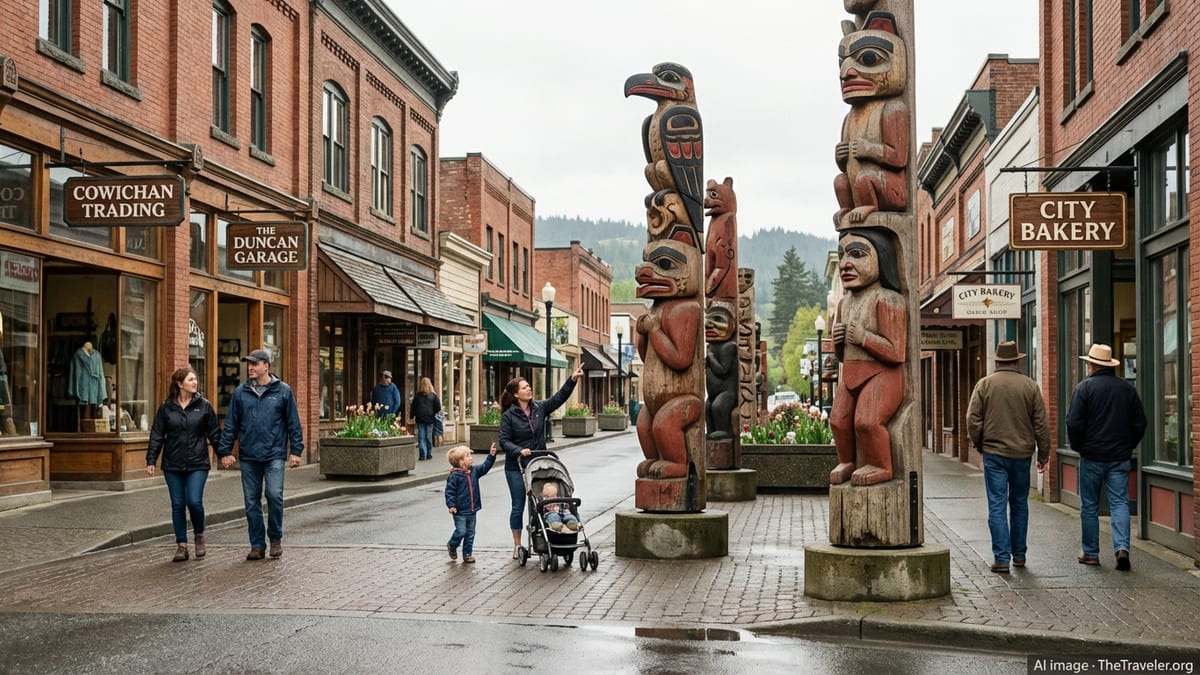
Duncan brands itself as the City of Totems, and this is not just marketing language painted on a welcome sign. The downtown streets are lined with more than 40 contemporary totem poles, many carved by Indigenous artists from local Nations. A self‑guided walking route, marked by painted footprints on the pavement and interpretive signage, lets visitors take in the poles at their own pace while learning about the stories, carvers, and symbolism behind each one. More recently, a digital totem tour has added app‑based content and QR codes on plaques, so you can hear audio and see video as you move through town.
The density of public art makes Duncan unusually rewarding to explore on foot, especially if you have an interest in Indigenous cultures of the Pacific Northwest. Unlike some roadside photo stops, these totems are part of an ongoing cultural conversation. Interpretive panels encourage respectful viewing, acknowledge the artists, and, in some cases, highlight collaborations between the City and the adjacent Cowichan Tribes, the largest First Nation community in British Columbia. For travelers who value cultural context as much as images, this gives Duncan an edge over more generic small towns.
Beyond the totems, Duncan’s cultural institutions are modest in size but strong in local focus. The Cowichan Valley Museum, housed in the historic train station, offers a concise introduction to regional history, from forestry and farming to the stories of Indigenous communities and early settlers. Exhibits can change seasonally, and there is often an emphasis on how colonial histories and modern Cowichan life intersect. A short visit here pairs well with the totem walk, giving depth to what you see outside.
Art‑minded visitors will find small galleries and studios scattered around downtown and the wider valley, including spaces that highlight Indigenous art forms such as carving, weaving, and printmaking. Temporary exhibitions, like those focusing on the evolution of Duncan’s totems from maquettes to finished poles, can reveal how public art in the city continues to evolve. If your Vancouver Island trip has so far been heavy on scenery and light on stories, a few hours in Duncan’s cultural core can rebalance the experience.
Nature Access: Who Benefits From Duncan’s Outdoors
Although Duncan itself sits inland, it is surrounded by outdoor destinations within an easy drive. To the west lies Cowichan Lake, a long, deep freshwater lake framed by forested hills. The main community of Lake Cowichan is roughly half an hour from Duncan by road, making lake swimming, paddling, and lakeside camping feasible day trips if you choose to stay in town. The lake area offers a cooler escape on hot summer afternoons and a more tranquil atmosphere than busier seaside resorts.
South of Duncan, the restored Kinsol Trestle has become one of the Cowichan region’s signature landmarks. This towering wooden railway trestle, among the largest of its kind, crosses the Koksilah River and forms part of a network of multi‑use trails popular with walkers and cyclists. Visitors usually access it via trailheads near Shawnigan Lake, a short drive from Duncan. The approach is on relatively gentle gravel paths, making it suitable for families with older children, travelers with moderate fitness, and anyone who wants a taste of Vancouver Island forest without committing to a strenuous hike.
Closer to town, riverside parks, short forest walks, and viewpoints offer lower‑key nature experiences. The Cowichan River, known among anglers and paddlers, flows west from Cowichan Lake through a corridor of protected areas and recreation sites before heading toward Duncan and the coast. In season, local operators may offer guided tubing or paddling experiences on certain sections of the river, while anglers target salmon and trout under regulated conditions. These kinds of outings appeal to visitors who prefer guided, time‑limited outdoor adventures rather than venturing deep into backcountry on their own.
Overall, Duncan’s nature access best serves travelers who enjoy easy to moderate outdoor activities: walking trestle trails, exploring lakes, cycling converted rail corridors, or picnicking by rivers. Serious backcountry hikers looking for alpine terrain might be better served by regions like Strathcona Provincial Park, but for most road‑trippers, the mix of accessible trails and scenic water is more than enough to justify an overnight stop.
Food, Wine, and the Cowichan Valley Lifestyle
One of the strongest arguments for stopping in Duncan is its position in the heart of the Cowichan Valley, a region that has quietly built a reputation for local food and cool‑climate wine. The valley is home to more than a dozen wineries recognized within British Columbia’s official winemaking landscape, along with cideries, distilleries, and farm‑based producers. Rolling vineyards, small tasting rooms, and relaxed patios give the area a wine‑country feel without the crowds of larger regions.
Guided wine tours operate across the Cowichan Valley, typically visiting three to four wineries in a day, often with a leisurely lunch built in. These tours usually run on a private‑group basis, with transportation, tastings, and driver included, which can simplify logistics if you prefer not to navigate rural roads after tasting flights. For independent travelers, many wineries welcome drop‑in visitors in season, though booking ahead is advisable during summer weekends and holidays. The styles range from crisp whites and sparkling wines to lighter reds, often made from grape varieties that suit the valley’s relatively mild, maritime‑influenced climate.
Within Duncan itself, the food scene leans toward local and informal rather than polished fine dining. Expect cafes showcasing Island roasters, bakeries, and small bistros that use Cowichan ingredients when possible. Farmers markets and farm stands around the valley, particularly in the warmer months, supply seasonal produce, artisan cheeses, and preserves that can be turned into impromptu picnic spreads. Travelers who enjoy planning their days around meals and tastings, rather than around long hikes, will find that Duncan offers enough culinary interest to fill a couple of days.
The lifestyle pace in and around Duncan tends to be unhurried. People linger over coffee, chat with vendors, and take time with tastings. For some travelers, especially those coming from busier urban centers, this slower rhythm is part of the appeal. For others looking for nightlife or a dense cluster of restaurants and bars, Duncan may feel subdued. It is worth being honest with yourself about which side you fall on before committing multiple nights here.
Who Will Enjoy Duncan Most
Duncan rewards travelers who like detail, conversation, and context more than grand spectacles. If your ideal trip includes learning about local Indigenous cultures, exploring small museums, tasting regional wines, and taking easy walks through forest and farmland, you are likely to find Duncan an excellent stop. Couples on self‑drive itineraries, especially in their 30s and older, often appreciate the combination of relaxed touring and comfortable amenities. Retirees traveling outside peak summer months can find Duncan especially pleasant, as the milder Cowichan climate keeps shoulder seasons viable.
Families may also enjoy Duncan, though expectations matter. Younger children often respond well to the visual impact of totem poles on the streets, the novelty of small‑scale museums, and the open spaces in nearby parks. Attractions like the BC Forest Discovery Centre, with its forestry exhibits and heritage trains, can be a highlight for kids who like machinery and outdoor play areas. Easy rail‑trail walks to features such as the Kinsol Trestle provide a sense of adventure without long or technical hikes, which suits mixed‑ability family groups.
Solo travelers who are comfortable exploring small communities can also thrive in Duncan. The compact downtown, accessible transit links, and approachable scale make it a gentle place to slow down. Those who enjoy photography, sketching, or writing may find that the combination of public art, historic buildings, and nearby rivers and forests offers plenty of inspiration without the pressure to rush from one major attraction to the next.
By contrast, visitors looking for nightlife, shopping malls, or high energy resort infrastructure will likely find Duncan quiet. There are restaurants and pubs, but late‑night options are limited, and entertainment tends to be community‑based rather than geared to tourists. Adventure travelers focused on big surf, rugged coastal hikes, or backcountry routes may also prefer to use their time elsewhere, perhaps only stopping in Duncan briefly for supplies or a meal.
How Long to Stay and How to Structure Your Time
For most Vancouver Island itineraries, a one or two night stay in Duncan is enough to appreciate what it offers. If you have only a single afternoon, you can still walk the downtown totem route, visit the Cowichan Valley Museum, browse a few shops and galleries, and enjoy a meal or tasting. Even a quick stop can change your impression of Duncan from “highway blur” to “small city with a distinct identity.”
With a full day, you can add one of the nearby outdoor or food‑focused experiences. Many visitors pair a morning or late‑afternoon walk to the Kinsol Trestle with a midday winery visit or lunch at a rural restaurant. Others head west to Cowichan Lake for swimming, paddling, or a lakeside picnic, then return to Duncan in the evening. Families might devote part of the day to the BC Forest Discovery Centre or to riverfront parks, depending on the interests and ages of the children.
If you have two nights, you can slow the pace significantly. One day could focus on Duncan itself and the totem culture, while the other centers on either wine touring or outdoor trails. This structure particularly suits travelers who dislike one‑night “hotel hopping” and prefer to unpack for a short stretch. Duncan’s central position in the valley means you can fan out in different directions each day without long drives.
For trips of a week or longer on Vancouver Island, Duncan can also serve as a mid‑journey reset point. Breaking up drives between Victoria, Nanaimo, and points further north with a couple of nights in the Cowichan Valley gives you space to do laundry, catch up on planning, and enjoy life at a calmer pace before heading to busier destinations.
Practical Considerations: When to Go and How to Get Around
Duncan is a year‑round community, not a purely seasonal resort town, but visitor experiences vary by time of year. Summer brings the warmest, driest weather and the most reliable conditions for lake days, river tubing, and patio dining. It is also when wineries, attractions, and farm stands typically keep the longest hours, although exact schedules can shift from year to year. Weekends in July and August can feel busy without being overwhelming, especially compared with coastal destinations that draw international tour groups.
Spring and autumn can be rewarding for travelers who prioritize quieter roads and lower accommodation pressure. Vineyards are active, the surrounding hills stay green, and daytime temperatures are often comfortable for walking. Rain is always possible on Vancouver Island outside the high summer window, so packing layers and waterproofs is sensible. Winter sees cooler temperatures and more frequent rain, but the relatively mild climate compared with much of Canada means Duncan remains workable for travelers focused on culture, food, and short walks rather than water‑based recreation.
Most visitors arrive in Duncan by car, whether in a rental from Victoria or Nanaimo, or in their own vehicle brought over by ferry. The Trans Canada Highway provides straightforward access, and within town, drivers will find a mix of street parking and small lots. Having a car makes it easier to reach rural wineries, Cowichan Lake, and trailheads for attractions like the Kinsol Trestle. However, it is technically possible to explore with a combination of intercity buses, local transit, and taxis, especially if you plan to focus on downtown and join organized tours for out‑of‑town excursions.
Accommodation options in and around Duncan range from chain hotels near the highway to smaller motels, bed‑and‑breakfasts, and vacation rentals scattered through the Cowichan Valley. Booking ahead is wise in peak summer and on long weekends, particularly if you have your heart set on a specific style of stay, such as a vineyard‑adjacent inn or a characterful heritage house. As in much of Vancouver Island, pet‑friendly options exist but are not universal, so travelers with animals should double‑check policies before arriving.
The Takeaway
Is Duncan a good stop on a Vancouver Island trip? For many travelers, the answer is yes, provided your expectations align with what this small city actually offers. You will not find sweeping coastal vistas right in town or a long list of major attractions. What you will find is a compact, walkable core rich in Indigenous public art, gateways to forests, lakes, and rivers, and a surrounding valley that produces some of the Island’s most interesting wines and local foods.
Duncan is at its best for visitors who enjoy slowing down, talking with locals, tasting what grows nearby, and learning about the cultural layers that shape this part of Vancouver Island. It suits travelers who prefer one or two well‑chosen experiences in a day over a frantic dash between must‑see sights. If that sounds like you, it is worth planning at least a half‑day, and ideally a night or two, in Duncan as part of a broader Island circuit.
If, however, your limited time on Vancouver Island is focused on dramatic coastal scenery, surf, or alpine hikes, you may decide that a brief lunch stop and totem walk is enough, reserving more days for places like the west coast or central mountains. Duncan does not compete with those regions on scale. Instead, it complements them, offering a grounded, lived‑in counterpoint that many visitors remember fondly precisely because it is not trying to be a blockbuster destination.
In the end, the travelers who enjoy Duncan most are those willing to look a little closer at the places in between. If you are curious enough to turn off the highway and walk among the totems, linger in a tasting room, or follow a riverside trail, Duncan can easily earn its place on your Vancouver Island route.
FAQ
Q1. Is Duncan worth visiting if I only have a few hours while driving between Victoria and Nanaimo?
Yes. In a few hours you can park downtown, follow part of the totem pole walking route, visit the small museum, and enjoy a meal or coffee before continuing your drive.
Q2. How many days should I plan to stay in Duncan on a Vancouver Island trip?
Most travelers find one or two nights sufficient. One night allows a quick taste of the totems and local dining, while two nights give time for a winery visit or an outing to the Kinsol Trestle or Cowichan Lake.
Q3. Is Duncan a good base for exploring the Cowichan Valley wineries?
Yes. Duncan sits near the heart of the valley, within easy driving distance of several vineyards and tasting rooms. You can join a guided wine tour or drive yourself, allowing ample time for tastings and relaxed lunches.
Q4. What kinds of travelers will enjoy Duncan the most?
Duncan especially suits travelers who value Indigenous culture, small‑town character, local food and wine, and easy outdoor activities over nightlife or big‑city attractions.
Q5. Is there enough to do in Duncan for families with children?
Families can combine the totem walk with attractions like the BC Forest Discovery Centre, nearby parks, river or lake outings, and short walks to scenic spots such as the Kinsol Trestle, which many children find memorable.
Q6. Do I need a car to enjoy Duncan and the surrounding area?
A car offers the most flexibility, particularly for reaching wineries, lakes, and trailheads. However, you can still enjoy downtown Duncan, cultural sites, and some tours using public transit, taxis, and organized excursions.
Q7. When is the best time of year to visit Duncan?
Late spring through early autumn is ideal for combining cultural experiences with outdoor activities and winery visits. Winter is quieter but still workable for travelers focused on museums, galleries, and local dining.
Q8. Is Duncan a good alternative to staying in Victoria or Nanaimo?
It can be, if you prefer smaller, quieter communities. Duncan lacks big‑city amenities but offers a more relaxed atmosphere and easy access to the broader Cowichan Valley.
Q9. Are there accessible activities in Duncan for visitors with limited mobility?
Downtown streets, many sections of the totem walk, and several attractions are relatively flat and walkable. Some winery patios and trail viewpoints are also accessible, but it is wise to check specific accessibility details in advance.
Q10. Can I visit Duncan as a day trip from Victoria or Nanaimo?
Yes. Duncan is close enough to both cities for a straightforward day trip, allowing time for the totem walk, lunch, and either a short nature outing or a winery visit before returning in the evening.