

More news on this day
After a run of alarming headlines about near misses, manufacturing flaws and air traffic control problems, many travelers are asking a basic question before booking a ticket: is flying in the United States still safe?
Get the latest news straight to your inbox!
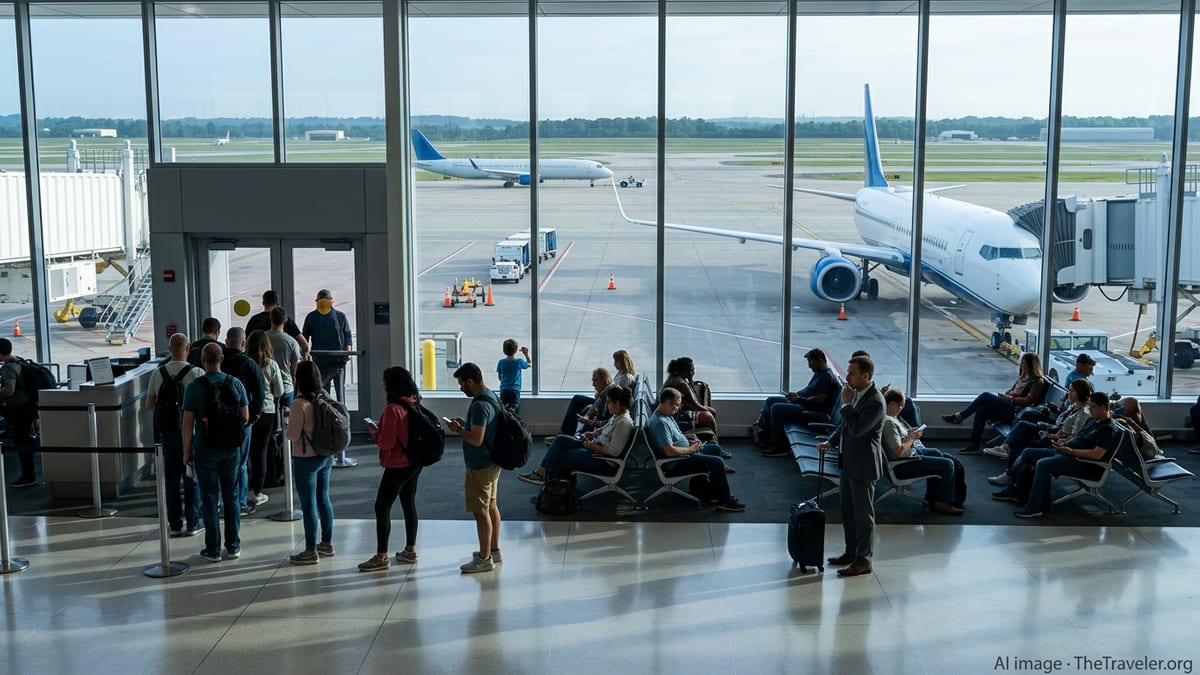
High-Profile Incidents Put Aviation Safety Under the Microscope
Recent aviation events have kept airline safety in the news, from the January 2024 blowout of a door plug on an Alaska Airlines Boeing 737 Max 9 to the January 2025 midair collision over the Potomac River involving an American Eagle regional jet and a U.S. Army helicopter. While both incidents were rare, images of a gaping fuselage panel and reports of a deadly collision have amplified public unease.
Investigators examining the Alaska Airlines incident found that bolts securing the unused exit door plug were not in place during assembly of the aircraft, allowing the panel to separate shortly after takeoff. Publicly available information indicates that manufacturing lapses at Boeing, combined with shortcomings in federal oversight, contributed to the failure. The episode forced the grounding and inspection of Max 9 aircraft and reignited questions about the broader system meant to keep defects out of the sky.
The 2025 Potomac River collision was even more sobering, marking the first major fatal accident involving a U.S. commercial passenger flight in many years. Reporting on the crash notes that the American Eagle jet and a military helicopter collided while the airliner was on approach to Washington, D.C., highlighting concerns about complex airspace, traffic growth and the need for robust air traffic coordination.
These headline-grabbing cases have come against a backdrop of several runway incursions and near misses since early 2023 at busy airports such as Austin, New York and Washington. Public databases compiled by aviation analysts show that the first months of 2023 saw an unusually high rate of serious runway incursions, prompting calls for closer scrutiny of ground operations and controller workload.
What the Numbers Show About Airline Risk
Despite the unsettling nature of individual events, federal statistics and independent analyses continue to describe an extraordinarily safe era for commercial airline travel in the United States. National Safety Council data for 2023 indicate that none of the 327 aviation deaths that year involved a scheduled commercial airline flight, with fatalities instead concentrated in general aviation operations such as private and charter aircraft.
Broader trend analyses by aviation safety organizations show a similar pattern. A compilation of U.S. accident data through 2024 points to a decade in which only a handful of deaths occurred in commercial airline operations, even as carriers handled millions of departures and transported hundreds of millions of passengers. Industry risk models place the chance of a fatal event for a passenger on a large scheduled airline at a fraction of a fatality per million flights, a level of safety that compares favorably with travel by car, motorcycle or even some forms of rail.
Globally, commercial flying has also entered one of its safest periods, even as total traffic approaches or exceeds pre-pandemic levels. International reports for 2023 describe that year as among the safest on record for jetliner operations, with fatal accidents and deaths well below long-term averages. Although worldwide fatalities rose in 2024 and 2025 due to a small number of severe crashes, analysts emphasize that the underlying risk per flight remains very low compared with earlier decades.
Experts who analyze accident data caution that year-to-year swings in fatalities can be misleading because a single large crash can sharply change the numbers. For travelers, they stress that a better indicator is the long-term trend: over the past 20 to 30 years, major commercial airline accidents have become both rarer and less deadly, thanks to improved aircraft design, better training, and sophisticated monitoring of flights and maintenance.
FAA Tightens Oversight After Manufacturing and Runway Concerns
Under pressure from Congress, the traveling public and international regulators, the Federal Aviation Administration has been reshaping its safety oversight in response to recent problems. Following the Alaska Airlines door plug incident in January 2024, the agency ordered inspections, temporarily grounded certain Boeing 737 Max 9 aircraft, and launched targeted audits of Boeing’s manufacturing lines and quality systems. Public statements from the agency describe the actions as part of a broader effort to move from paperwork-focused compliance toward more hands-on surveillance of production.
Separately, the FAA has been working through recommendations from an independent Safety Review Team convened after a series of near misses and runway incursions in 2023. According to agency updates, these steps include a nationwide runway incursion audit, additional reviews of air traffic procedures at busy airports and new guidance on how aircraft should sequence and cross active runways. Preliminary data the FAA has released indicate that the rate of the most serious runway incursions in the first seven months of 2024 fell sharply compared with the same period in 2023.
The agency has also started to address chronic staffing gaps among air traffic controllers, which unions and outside observers have linked to operational strain. Public information on staffing initiatives shows that the FAA has accelerated hiring, streamlined training and allowed some new controllers to report directly to facilities after graduating from approved collegiate programs, rather than routing all of them through a central academy. The agency is also upgrading aging communications and radar systems after a series of outages at major hubs such as Denver and Newark.
Regulators and lawmakers continue to weigh whether additional statutory changes are needed, particularly regarding how much responsibility manufacturers such as Boeing should hold for certifying their own designs and production processes. Current legislative summaries point to ongoing debates over the appropriate balance between delegation to industry and direct federal sign-off on safety-critical changes.
How Travelers Can Interpret the Recent Headlines
For passengers, reconciling frightening images from isolated incidents with reassuring statistics can be difficult. Aviation risk specialists often note that commercial accidents tend to cluster in headlines rather than in everyday experience, which can distort public perception. While general aviation accidents in the United States still number in the hundreds each year, fatal events involving large scheduled passenger jets operating under U.S. rules remain extremely rare, especially compared with the vast number of flights operating daily.
Travel safety organizations advise that a key distinction lies between airline categories. Scheduled commercial carriers operate under stricter maintenance, training and operational rules than many smaller operators, and they are subject to continuous oversight and detailed reporting requirements. Data from independent safety networks show that crash and fatality rates for large airliners have dropped far more steeply than for private or small commercial aircraft, underscoring the benefit of those layered protections.
Published analyses also suggest that the most significant current risks in commercial aviation are systemic rather than random: manufacturing quality lapses, air traffic controller shortfalls, technology outages and potential runway conflicts. Each of these issues has drawn targeted responses from the FAA and industry groups, ranging from production audits and design changes to revised staffing plans and new ground movement procedures. Travelers may not see these efforts directly, but they shape the safety margins built into every flight.
Ultimately, the data show that asking whether flying is “safe” is less helpful than asking how safety is being managed. Commercial aviation in the United States operates with multiple redundant layers of protection, and recent incidents, while serious, have largely reinforced the system’s capacity to detect problems, pause operations when needed and implement corrective actions.
The Outlook for U.S. Air Travel Safety
Looking ahead, aviation analysts view the current moment as a stress test for a maturing safety system rather than a sign of fundamental breakdown. Demand for air travel in the United States has rebounded strongly from the pandemic, putting added pressure on air traffic control facilities, airport infrastructure and aircraft manufacturers. At the same time, the industry is absorbing new technologies such as more automated cockpit systems, satellite-based navigation and data-driven maintenance programs.
International safety reports describe a shift from reacting to accidents toward proactively identifying weak signals, such as upticks in minor incidents or maintenance reports. Federal agencies and airlines now collect vast quantities of operational data, from flight recorder information to pilot and controller reports, and analyze them for patterns that might indicate emerging hazards. This approach has already led to changes such as revised approach procedures at certain airports and adjustments to how airlines schedule flights through congested airspace.
For travelers planning trips in 2026 and beyond, the available evidence indicates that flying on a large commercial airline in the United States remains one of the lowest-risk ways to cover long distances. The rare events that do occur increasingly prompt detailed investigations, public reporting and system-wide changes. While no mode of transportation can be completely free of danger, the combination of rigorous oversight, technological advances and an industry culture that treats every serious incident as a source of lessons keeps pushing aviation safety margins higher.