

Greece has a reputation for sun drenched islands, cliffside sunsets and white washed villages, but also for sky high prices in hot spots like Santorini and Mykonos. With hotel rates, restaurant bills and ferry fares all nudged upward by a tourism boom and recent inflation, many travelers now ask a simple question before booking: is Greece actually expensive in 2026, or can it still be done on a reasonable budget? The answer depends heavily on when you travel, where you go and how you like to spend, but with smart choices Greece can still offer solid value compared with many Western European destinations.
How Expensive Is Greece Compared With Other Destinations?
Greece has seen steady price rises in recent years, especially in sectors closely tied to tourism such as hotels, restaurants and cafes. Official data for late 2025 show that prices in this category have been increasing faster than the general inflation rate, reflecting strong international demand and a longer tourist season. In practical terms, travelers notice this most clearly in popular city centers and on famous islands, where menus and room rates are often calibrated to what visitors from higher income countries are willing to pay.
Even with those increases, Greece still tends to undercut many of Western Europe’s biggest city break destinations. Recent surveys of hotel prices across the continent show that Athens sits on the lower end of the scale for average nightly rates, with nationwide averages for a standard double room remaining well below those in cities such as London, Paris or Zurich. Mainland towns outside the capital and lesser known islands often cost significantly less again, especially outside the July and August peak.
What distorts perceptions is the price profile of a handful of globally famous islands. Santorini and Mykonos, in particular, command premium rates for caldera view suites, beach clubs and upscale dining. On those islands, Greece can absolutely feel expensive, sometimes rivaling top tier destinations elsewhere in Europe. The key is understanding that these hotspots are the exception rather than the rule. Travelers who mix in smaller islands or mainland regions usually find their overall trip cost moderates quickly.
For a broad sense of daily spending, most recent travel budgeting guides put shoestring travel in Greece at roughly 40 to 70 euros per person per day, mid range comfort in the 80 to 150 euro range, and luxury experiences upward of 300 euros daily. These brackets assume typical sightseeing, dining and local transport, and they vary by season and itinerary, but they illustrate that Greece can be either relatively affordable or decidedly premium depending on choices.
Accommodation Costs: From Hostel Dorms to Caldera Suites
Accommodation will almost always be the biggest line item in a Greece travel budget, and it is also where prices vary the most from place to place. On the budget end, hostel dorm beds in Athens and larger islands typically run from around 15 to 30 euros per night, while simple family run guesthouses or basic budget hotels often fall in the 40 to 80 euro range for a double room. Away from the most heavily touristed islands and in smaller mainland towns, rates can be lower, particularly in shoulder or low season.
For travelers seeking more comfort, mid range hotels and well reviewed apartments usually sit between 80 and 150 euros per night in many parts of the country. This range often secures a comfortable room with air conditioning, private bathroom and sometimes breakfast included. In Athens and secondary cities, it can stretch to centrally located boutique properties. On popular islands, the same budget may buy a smaller room or a place set back from the busiest waterfront areas, but still with good access to beaches or nightlife.
Prices climb significantly at the upper end, especially in famous destinations. In Santorini, cliffside suites with caldera views regularly start around a few hundred euros per night in high season and can exceed 600 euros or more at sought after properties. Similar dynamics play out on Mykonos for sea view suites, luxury villas and resort style hotels. Travelers heading to other islands such as Naxos, Paros, Milos or Alonissos often find a more favorable price to quality ratio, with attractive rooms and even sea views available for a fraction of the cost.
Seasonality plays a major role. Rooms that cost upwards of 200 euros per night in July or August may fall by 30 to 50 percent in April, May, late September or October, when demand is softer but weather is still pleasant. Flexible travelers who can visit outside the school holiday rush often find that Greece’s perceived expensiveness drops sharply once summer peak surcharges are removed from the equation.
Food and Drink: Taverna Meals, Street Snacks and Splurges
One of the reasons Greece can still feel like good value is the food. Eating out is woven into local culture, and traditional tavernas, bakeries and casual cafes remain widely accessible in price despite recent pressure on restaurant costs. A simple bakery breakfast of pastries and coffee can often be found for under 5 euros, while a generous gyro or souvlaki wrap typically costs only a few euros in most parts of the country.
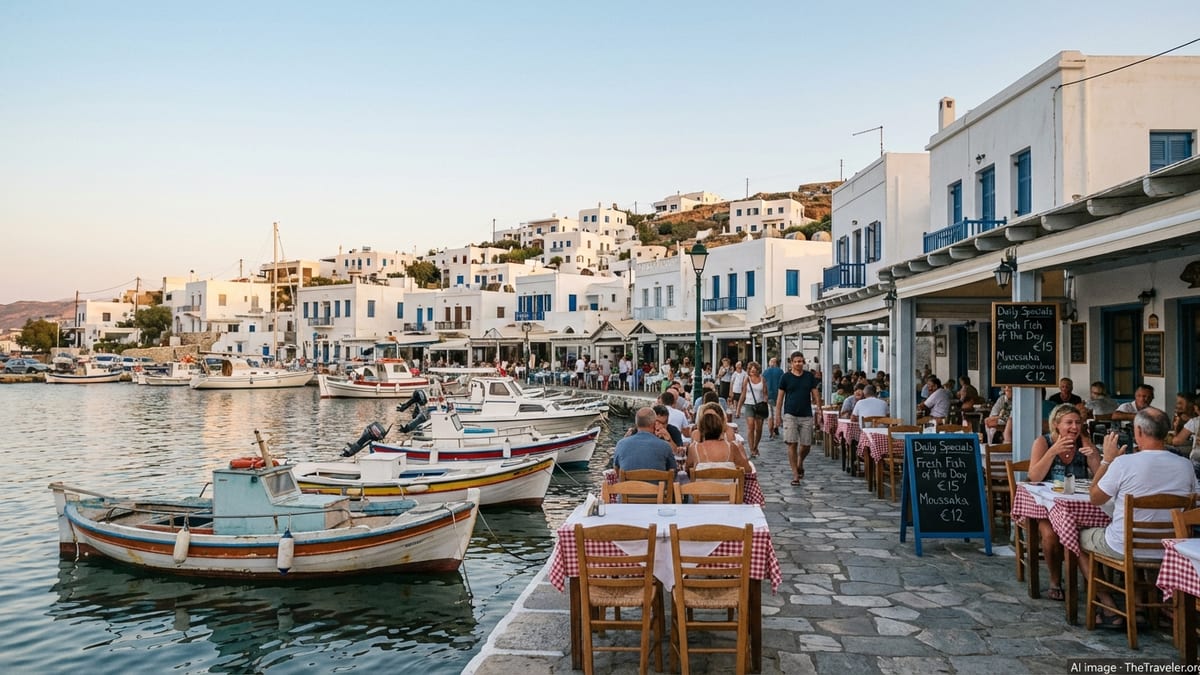
For sit down meals, casual tavernas serving grilled meats, salads and classic dishes like moussaka or vegetable stews usually charge moderate prices, especially away from the most touristy waterfronts. A typical lunch of shared starters and a main, plus house wine, often falls in the low teens per person in many areas. Dinner at a slightly nicer seaside restaurant or contemporary bistro can push that closer to 20 to 35 euros per person, particularly if you add fresh fish, cocktails or dessert.
On the islands that draw international jet set crowds, dining can be a different story. Beach clubs and high profile restaurants in parts of Mykonos or Santorini may ask premium prices for both food and drinks, particularly in peak season and at sunset. Here, it pays to research ahead, check menus before sitting and balance occasional splurge meals with more modest options in local neighborhoods, inland villages or bakeries and cafes popular with residents.
Self catering also offers scope to save. Supermarkets and neighborhood grocers stock plenty of fresh produce, cheese, olives and bread, and many apartments include basic kitchenettes. Putting together simple breakfasts, picnic lunches or a few home cooked dinners during a trip can noticeably reduce daily food spending without diminishing the experience of sampling local specialties in tavernas.
Transport and Getting Around: Ferries, Flights and Local Buses
Transportation costs in Greece are a mix of affordable everyday fares and more expensive inter island journeys. Within cities such as Athens, public transport remains relatively good value, with single tickets for metro, bus or tram rides usually around a little over 1 euro. Day passes and multi day cards bring the cost per ride down further, making it easy to explore main sights without relying heavily on taxis.
For longer distance travel between regions, intercity buses are often the most economical option, particularly on routes not served by trains. Budget minded travelers also watch ferry choices closely, since boat tickets can add up quickly if you are hopping between several islands. Slower conventional ferries with standard deck seating tend to be significantly cheaper than high speed catamarans, although they take longer. Typical one way fares between major islands can range roughly from 20 to 60 euros depending on distance, vessel type and season.
Domestic flights connect Athens with large islands and regional hubs such as Crete, Rhodes or Corfu. When booked well in advance or during sales, one way tickets can sometimes rival fast ferry prices, but in busy periods they can be considerably more. Many travelers combine a flight in one direction with a ferry in the other to balance time and cost. On the islands themselves, buses link main towns and popular beaches at low fares, though schedules may be limited in shoulder and low season.
Renting a car, scooter or ATV becomes a key cost consideration in more rural areas and on islands where public transport is sparse. Daily rental rates for small cars often fall in the roughly 30 to 60 euro bracket, higher in peak season and on the most popular islands. Fuel prices in Greece are relatively high by global standards, so longer drives or road trips across the mainland will add noticeably to a travel budget. Sharing vehicles among friends or family helps dilute costs, while in compact destinations many travelers simply rely on walking combined with occasional taxis.
Sightseeing, Activities and Hidden Costs
Sightseeing and activities in Greece range from entirely free experiences to high ticket excursions, so what you spend here is largely a matter of personal preference. Many of the country’s most memorable moments cost nothing: watching the sunset from a rocky outcrop, swimming at a local beach, wandering old town alleys, or hiking between villages. These kinds of activities make it possible to keep daily budgets in check without feeling deprived.
Entrance fees to major archaeological sites and museums are a more predictable expense. Flagship attractions such as the Acropolis in Athens have ticket prices that reflect their international appeal, with comprehensive passes costing a few tens of euros. Elsewhere, admission to ancient theaters, Byzantine sites or local museums is often more modest. Visitors who plan to tour several sites in one region can look for combined tickets, while students and certain age groups may qualify for discounts or free entry on designated days.
Organized tours, boat trips and specialty experiences can quickly raise overall costs. A half day sailing excursion, a small group food tour or a wine tasting often falls in the tens of euros per person, with private charters and premium yacht outings much higher. Travelers with tighter budgets often choose one or two highlight activities and otherwise explore independently. Paying attention to optional extras such as sunbed rentals, beach club entry, guided photo stops or souvenir shopping also helps keep spending aligned with expectations.
Finally, it is worth accounting for incidental expenses that do not appear in headline price lists. These include airport transfers, city tourist taxes added per room per night, bottled water in high heat, and occasional service charges. None of these is individually massive, but combined over a week or two they can add a meaningful percentage to overall trip costs. Building a small buffer into your budget for these items reduces the risk of unwelcome surprises.
Budget Ranges by Travel Style and Season
To answer whether Greece is expensive, it helps to think in terms of realistic daily budgets rather than isolated prices. For budget travelers willing to stay in hostel dorms or simple guesthouses, rely on public buses, take slower ferries and eat mostly at bakeries, gyros stands and modest tavernas, total daily spending can often be kept in the approximate range of 40 to 70 euros per person. This assumes careful planning, travel outside the very peak weeks and limited paid excursions.
Most visitors, however, fall into a mid range category. They prefer private rooms in comfortable two or three star hotels or well located apartments, mix casual tavernas with the occasional nicer restaurant, and take paid boat trips or guided tours from time to time. For this group, recent guides suggest that a realistic daily budget generally lands somewhere between 80 and 150 euros per person, depending on whether they are in Athens, on famous islands, or in less touristed regions.
At the top end, Greece can easily absorb 300 euros or more per person per day. This level typically involves high season stays in upscale or boutique hotels, frequent dining at trendy restaurants or beach clubs, fast ferries or flexible domestic flights, and a generous mix of organized experiences such as sailing charters, private tours and spa treatments. For honeymooners or travelers marking special occasions, this level of spending may feel justified, but it is far from mandatory for enjoying the country’s main highlights.
Seasonality threads through all of these ranges. July and August, when both foreign visitors and Greeks flock to the coast, are by far the most expensive months for accommodation, transport and some services. Shoulder seasons in late spring and early autumn often deliver a much friendlier balance of price, weather and crowd levels, while winter city breaks in Athens or Thessaloniki can be outright inexpensive compared with summer island stays. Travelers flexible on dates have a powerful tool to make Greece feel more affordable.
Ways to Keep Your Greece Trip Affordable
Greece’s rising popularity has inevitably pushed some prices up, but there are still many ways to keep a trip within a comfortable budget. One of the most effective is to pair one famous destination with several lower key stops. For instance, a short stay in Santorini for its iconic views can be followed by days on a nearby island or mainland coastal town where room rates, restaurant bills and sunbed rentals are substantially lower.
Choosing the right location within each destination also matters. In Athens, staying slightly removed from the busiest tourist streets while remaining close to a metro station can cut hotel costs without sacrificing convenience. On islands, accommodations in inland villages or at a short bus ride from the main harbor often charge less than properties perched on the seafront or caldera edge. Many travelers find that they spend their days exploring anyway, so they are happy to sleep a little off center in exchange for savings.
Food and drink habits offer further room to maneuver. Eating where locals eat rather than at the most photographed waterfront restaurants often leads to better value and more authentic meals. Filling up on bakery goods, market produce and simple taverna dishes, while treating high end spots as occasional indulgences, keeps daily food costs reasonable. Limiting expensive cocktails in favor of house wine, local beer or non alcoholic drinks can also make a noticeable difference over the course of a week.
Finally, transport strategies help control costs. Booking ferries and domestic flights well in advance, comparing the price difference between high speed and conventional boats, and limiting the number of separate island hops can all keep travel days from dominating the budget. On the ground, making full use of public transport, walking where possible, and renting vehicles only for days when they are truly needed allows visitors to enjoy flexibility without overspending.
The Takeaway
So, is Greece expensive? It can be, particularly if you focus solely on its most glamorous islands in the height of summer and opt for top tier resorts, beach clubs and restaurants at every turn. In that scenario, daily expenses will rival or surpass those in many other high profile Mediterranean destinations. For travelers on tighter budgets, the headline prices in Santorini or Mykonos can understandably be off putting.
Look beyond those hotspots, however, and a more nuanced picture emerges. Greece still offers a wide spectrum of prices, from inexpensive mainland towns and low key islands to mid range city stays and countryside guesthouses. Its food culture, public transport and abundance of free outdoor experiences all work in favor of value seeking visitors. While inflation and heavy tourism have raised costs, especially in accommodation and dining sectors, the country remains broadly competitive with, and often cheaper than, other parts of Western and Northern Europe.
In the end, how expensive Greece feels will largely depend on your expectations and planning. Travelers who are flexible with dates, selective about destinations, and thoughtful about where they eat and sleep usually find that they can enjoy the country’s celebrated scenery, history and hospitality without breaking the bank. Those who consciously mix small indulgences with everyday simplicity often discover that Greece delivers rich experiences at a fair overall cost.
FAQ
Q1. Is Greece more expensive than Italy or Spain for travelers?
In many cases Greece is similar in cost or slightly cheaper than Italy and parts of Spain, especially outside peak season and away from the most famous islands.
Q2. How much should I budget per day for a trip to Greece?
As a rough guide, budget travelers often manage on about 40 to 70 euros per person per day, mid range visitors on 80 to 150 euros, and luxury travelers on 300 euros or more.
Q3. Are the Greek islands much more expensive than the mainland?
Well known islands like Santorini and Mykonos are noticeably pricier, especially for accommodation and dining, while many lesser known islands and mainland regions remain relatively affordable.
Q4. When is the cheapest time of year to visit Greece?
Generally the shoulder seasons of April to early June and late September to October offer lower prices on accommodation and transport while still providing pleasant weather.
Q5. Can I visit Greece on a tight backpacker budget?
Yes. By staying in hostels or basic guesthouses, using public buses and slower ferries, and eating at bakeries and simple tavernas, backpackers can keep costs relatively low.
Q6. Are food and drinks expensive in Greece?
Casual meals at local tavernas, gyros stands and bakeries are usually good value, though upscale restaurants, beach clubs and imported drinks can be significantly more expensive.
Q7. How much do ferries between Greek islands cost?
Prices vary by route and vessel, but standard deck tickets on conventional ferries commonly range from around 20 to 60 euros one way, with fast ferries costing more.
Q8. Is Athens an expensive city to stay in?
Athens has seen hotel price increases, yet it still tends to be cheaper than many major Western European capitals, particularly if you book early or avoid the very busiest weeks.
Q9. Will I need to tip in restaurants and for services?
Tipping is appreciated but not as rigidly expected as in some countries. Leaving small change, rounding up the bill or adding around 5 to 10 percent for good service is common practice.
Q10. What is a reasonable budget for a week in Greece for two people?
For a mid range trip with comfortable hotels, regular restaurant meals and a few paid activities, many couples find that a weekly budget in the range of roughly 1,100 to 2,100 euros works well.