

Indiana rarely tops bucket lists in the way California or New York might, yet it quietly welcomes millions of travelers each year seeking lakefront beaches, vibrant city neighborhoods, and surprisingly wild forests. If you are wondering whether Indiana is worth visiting, the answer depends less on flashy attractions and more on what kind of traveler you are. This is a state of subtle rewards: small-city culture instead of big-city spectacle, inland dunes instead of ocean coastlines, and forested hills instead of alpine peaks. Weighing the pros and cons, and knowing where to go, is the key to deciding whether Indiana deserves a spot on your travel calendar.
The Case for Indiana: Why It Can Be Worth the Trip
Indiana’s strongest appeal is how approachable it feels. Distances are manageable, costs tend to be lower than coastal destinations, and major sights are rarely more than a few hours apart by car. For road trippers, the compact geography means you can pair a day on freshwater beaches with an evening in a sports-obsessed capital city, then roll into quiet hill country by the next afternoon. This convenience makes Indiana particularly attractive for long weekends, family vacations that need easy logistics, and travelers based in nearby states who want a change of scenery without long flights.
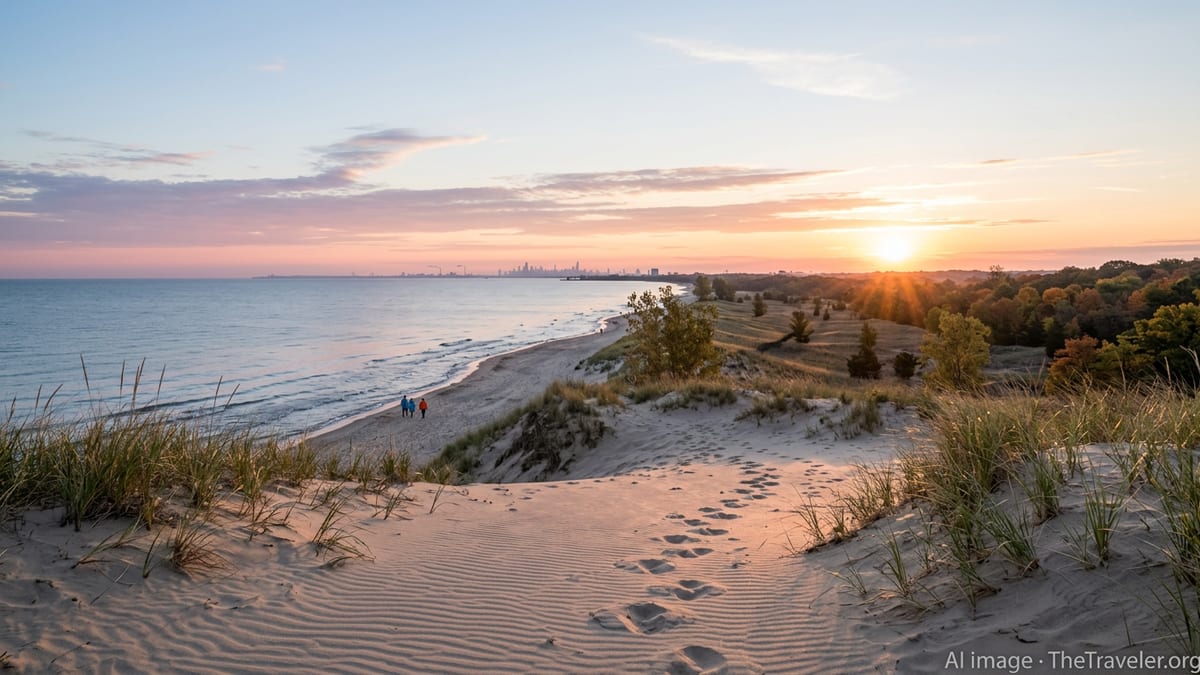
The variety is greater than many first-time visitors expect. In the north, the shore of Lake Michigan is protected in part as Indiana Dunes National Park and Indiana Dunes State Park, where tall dunes, oak savannas and sandy beaches form a rare patch of preserved landscape near one of the Great Lakes. Inland, Indianapolis offers big-league sports, a growing network of cultural districts and museums, and a riverfront urban state park that links trails, art and attractions. Across the south, low wooded hills hide state parks, charming small towns, and scenic drives that come alive during fall foliage season.
Value is another reason Indiana may be worth visiting. While prices in popular spots have risen, many visitors still find that lodging, dining and attractions cost less than in larger coastal cities. Smaller destinations such as Bloomington or Nashville in Brown County often combine a lively local scene with relatively modest day-to-day expenses, especially outside peak autumn and summer weekends. For travelers who prioritize stretching their budget without sacrificing comfort or access to nature, this balance can be a major draw.
Finally, Indiana tends to offer an easier, less stressful travel experience. Traffic exists, especially near Indianapolis and along the Lake Michigan shore on holiday weekends, but for much of the state, congestion is limited. Parking is usually straightforward, and even in the capital you can walk or bike between many of the main sights. That unhurried pace is part of the appeal: for visitors tired of long security lines, packed subways and shoulder-to-shoulder tourist districts, Indiana can feel refreshingly low-key.
The Downsides: When Indiana May Not Be for You
For some travelers, the very qualities that make Indiana pleasant can also be drawbacks. If you crave dramatic mountain landscapes, tropical beaches or a city skyline that never seems to end, Indiana will probably feel subdued. The dunes along Lake Michigan offer real sand and, on clear days, distant views of Chicago, but the shoreline is relatively short compared with Great Lakes coasts in neighboring states. Southern Indiana’s hills are scenic, yet they are gentle rather than rugged, more suited to relaxed hikes and drives than to serious alpine adventures.
Public transit can also be a limitation. Outside of Indianapolis and a handful of college towns, bus networks are limited and rail options are sparse. Even in the capital, many visitors find a car is the most practical way to link neighborhoods, parks and outlying attractions such as the speedway. If you prefer car-free travel, Indiana will require more planning and flexibility, and some rural or natural areas may be effectively out of reach without your own vehicle.
Weather is another important consideration. Summers along Lake Michigan can be sticky and hot, with beaches and parking lots filling quickly on prime weekends. Winter can be cold, cloudy and occasionally icy, especially in the north, which may mute the appeal of outdoor-oriented destinations like the dunes and most state parks. Spring and fall often offer gentler conditions, but shoulder seasons can be unpredictable, with chilly rain one day and warm sunshine the next. Travelers with fixed dates should keep expectations flexible and focus on experiences that are enjoyable in varied conditions, such as museums or scenic drives that still feel rewarding under overcast skies.
Finally, not every town marketed as a quaint getaway will live up to its reputation for every visitor. Some historic centers have seen an influx of more generic shops and higher prices, which can disappoint travelers seeking purely artisan-made goods and quiet streets. Visitor numbers have grown at Indiana Dunes and in certain fall destinations in the south, which means that peak weekends can feel busy. If your ideal trip centers on remote solitude or highly curated shopping districts, you will want to research specific communities and perhaps target weekdays or off-peak months.
Best for Nature Lovers: Indiana Dunes and Lake Michigan
For many travelers, the single most convincing reason to visit Indiana is the stretch of Lake Michigan shoreline protected as Indiana Dunes National Park and adjoining Indiana Dunes State Park. Here you find tall dune ridges, sweeping freshwater beaches, bird-rich wetlands and quiet oak and maple forests packed into a compact crescent of land only about an hour from Chicago by car. The contrast is part of the magic: walk a short trail and you can leave the industrial skyline behind in favor of wind-sculpted sand and rolling waves.
The dunes offer experiences that change with the seasons. In summer, swimming and sunbathing dominate, with lifeguarded sections of beach drawing families and day-trippers in large numbers. On hot weekends and holidays, the area can be very busy, and parking fills early, so arriving in the morning or late afternoon is wise. Spring and fall reveal a different side of the coastline, when migrating birds pass through, wildflowers or fall color brighten the inland trails, and cooler temperatures make dune climbs less strenuous. In winter, hardy visitors sometimes walk the snow-dusted shore and watch ice formations along the lake edge, though conditions can be harsh.
Hikers will find short but varied routes that showcase the landscape’s diversity. Certain loops thread from wetlands to wooded dunes and out to the beach within just a few miles, offering glimpses of multiple habitats and views over the lake. A large nature preserve inside the state park protects particularly dramatic dunes and a network of forested paths, while areas of the national park extend inland to bogs, prairies and wooded ravines. For casual walkers, short boardwalks and level paths make it possible to experience the scenery without tackling steep climbs.
There are trade-offs. This is not a remote wilderness, and visitors share the region with nearby towns, an active rail corridor and, in some views, industrial facilities along the horizon. On peak days, crowding and traffic can detract from the sense of escape. Entrance fees apply at both the national park and the state park, and recent changes to fee structures have caught some day visitors by surprise, so checking current information before you go is important. Still, if you are within driving distance and enjoy shoreline landscapes, the dunes are one of Indiana’s clearest arguments in favor of a visit.
Indianapolis: Sports, Culture and an Easy Urban Getaway
Indianapolis, the state capital, offers a compact city experience that mixes big-event energy with a generally relaxed Midwestern pace. For many visitors, the Indianapolis Motor Speedway is the headline attraction, especially around major race weekends when crowds and prices surge. Outside those peak times, tours and museum exhibits give a sense of the track’s history without the press of race-day throngs. Elsewhere in the city, professional basketball and football, along with minor league baseball, feed a strong sports culture that can make a weekend feel festive even if you never set foot in a stadium.
Beyond sports, Indianapolis has invested heavily in cultural districts and green space. White River State Park, just west of downtown, is a rare urban state park that bundles together major attractions such as museums, a zoo and riverside trails. Nearby, a network of designated cultural areas, including Massachusetts Avenue and Fountain Square, links theaters, galleries, public art, restaurants and bars. A newer extension of the city’s cultural trail is working to connect additional neighborhoods and historic corridors, signaling ongoing growth in walkable, bike-friendly routes that make exploring the city less car dependent, particularly near the center.
Art and history travelers can easily fill a day or more. The Eiteljorg Museum of American Indians and Western Art, the Indiana State Museum, and large art collections at Newfields all provide substantial indoor experiences suitable for both adults and families. Seasonal festivals, including theater, film and food events, further enliven the calendar. In summer, outdoor concerts and riverfront gatherings make use of the park and canal districts, while winter brings indoor programming that softens the impact of cold, gray days.
The main limitations for visitors are similar to those elsewhere in Indiana. Public transit is improving but remains limited, so ride shares, bikes and walking are often the most practical options within central neighborhoods, while a car is helpful if you wish to explore beyond. Downtown has seen the kinds of changes common in many American cities, including some rising hotel and dining prices near major venues, as well as stretches that feel quieter outside event times. Overall, however, Indianapolis works well as a long-weekend city break or as the urban anchor to a broader Indiana road trip.
Southern Hills and College Towns: Bloomington and Brown County
South-central Indiana, anchored by Bloomington and nearby Brown County, offers a very different experience from the lakefront and the capital. Here, low wooded hills and curving backroads create a softer, more intimate landscape, especially appealing in autumn when the forests shift through shades of red, orange and gold. For many Midwestern travelers, this region defines the classic Indiana fall getaway: a cabin or inn tucked into the trees, drives along ridge-top roads, and time spent in small towns and state parks between local restaurants and craft shops.
Bloomington, home to Indiana University, mixes college-town energy with a strong arts and dining scene. Music venues, galleries and independent theaters cluster around a walkable downtown, while the campus itself is known for limestone buildings and leafy quads. The presence of students lends the city a livelier, more international feel than many towns of similar size, and a range of cafes, bars and restaurants reflects that diversity. For visitors, Bloomington can serve as a comfortable base with good amenities, especially for those who want both cultural activity and quick access to nearby lakes and forests.
Brown County, just to the east, has long attracted visitors for its state park and the small town of Nashville. The park is one of Indiana’s largest and most visited, with overlooks, a web of hiking and mountain biking trails, a nature center, and horseback riding. In autumn, the ridgelines and valleys blaze with color, and scenic drives radiate from Nashville into surrounding hills. The town itself has historically marketed itself as an artists’ colony and still features galleries, studios and craft shops, although some visitors now note a mix of traditional artisan goods with more commercial offerings.
Travelers should be aware that this popularity comes with consequences. On peak fall weekends, traffic into Brown County State Park and through Nashville can be heavy, and lodging sells out far in advance. Prices for some accommodations and attractions climb accordingly. A realistic strategy is to either visit on weekdays, aim for the shoulder of the foliage season, or embrace the social aspect of being among many other leaf-peepers. If you prefer quieter trails and lower rates, late winter or early spring bring a more subdued but still appealing palette of bare trees, mossy ravines and early wildflowers.
Small-Town Indiana and Off-the-Beaten-Path Experiences
Beyond the most publicized destinations, Indiana’s personality is often found in smaller communities and quieter corners of the state. Historic river towns, old courthouse squares, and clusters of brick storefronts repurposed as cafes, breweries and local shops offer a chance to ease into the local rhythm. Not every town is a postcard, and many are still working through economic transitions, but for travelers who enjoy seeking out under-the-radar spots, this can be part of the appeal.
In various corners of Indiana, local festivals celebrate everything from covered bridges to regional food specialties, drawing crowds from nearby states without ever making national headlines. County fairs, farmers markets and seasonal events give visitors a sense of how deeply agriculture and small-scale manufacturing still shape daily life. Scenic byways and backroads lead through farmland to rolling forests, covered bridges and lakes, rewarding travelers who are willing to leave the interstate behind and take their time.
That said, expectations should be calibrated. Some once-quiet places have grown crowded and more commercial in response to tourism, while others may feel sleepy or limited in dining and lodging options, especially outside peak season. A town praised by one traveler for unspoiled charm may strike another as lacking in nightlife or amenities. Researching recent traveler reviews and local news before committing to a multi-night stay is sensible, particularly if you are planning a special-occasion trip or traveling with children who need specific services.
For many visitors, the sweet spot lies in combining better-known destinations with spontaneous stops. You might base yourself near a state park or larger city and leave an afternoon or two open to explore nearby towns, stopping wherever a promising coffee shop, antique store or historic sign catches your eye. This approach keeps your core plans reliable while leaving room for discovery, which is often where Indiana’s most personal travel memories are made.
Planning Your Trip: When to Go and How Long to Stay
The best time to visit Indiana depends on your priorities. If beach days at the dunes or warm evenings on outdoor patios are your main goals, late May through early September offers the greatest chance of hot, sunny weather, though it also brings larger crowds and higher humidity. For lakefront trips, June and early September often provide pleasant conditions with fewer peak-holiday bottlenecks, while July and early August tend to be the busiest and warmest.
For fall color in southern Indiana, including Brown County and other hill country parks, mid-October is often the traditional target, although the exact peak can shift by a week or more depending on the year. Early October usually brings gradual color change and somewhat smaller crowds, while late October can deliver either lingering brilliance or a quicker drop of leaves if storms or early cold snaps arrive. If your dates are fixed, it is wise to focus on activities that are rewarding regardless of foliage timing, such as hiking, gallery visits and scenic drives that still showcase the contours of the land even before or after peak color.
Winter can be a quiet but atmospheric time to visit, especially for travelers who enjoy low rates, uncrowded museums and the occasional snow-covered landscape. However, conditions on roads and trails can vary widely, and some outdoor facilities reduce services or close for the season, particularly at campgrounds and marinas. Spring, from late March into May, offers a middle path, with emerging wildflowers, greening fields and milder temperatures, though rain is common and layers are essential.
As for trip length, a focused visit to either the dunes or Indianapolis can work well over a long weekend of three to four days. To combine two major areas, such as Indianapolis and Brown County or the dunes and Bloomington, plan on five to seven days to avoid rushing. A longer road trip of a week or more allows time to loop through several regions, adding in smaller towns and additional state parks along the way. Because driving distances are relatively short compared with larger states, it is easy to adjust your pace as you go, adding an extra hike or museum stop when weather and energy levels cooperate.
The Takeaway
So, is Indiana worth visiting? For travelers seeking high-drama landscapes or hyper-urban spectacle, the answer may be that other regions of the United States better match those specific dreams. Indiana’s natural scenery tends toward the gentle rather than the grand, and its main city, while lively, is more approachable than awe-inspiring. Visitors who expect towering peaks, endless beachfront or towering skylines at every turn may come away feeling they chose the wrong destination.
Yet for many others, Indiana is absolutely worth the trip. Its dunes provide rare access to a Great Lake shoreline with protected natural areas close to a major metropolis. Indianapolis offers sports, culture and green space in a package that is easy to navigate, while the southern hills around Bloomington and Brown County deliver classic Midwestern countryside, especially compelling in the glow of autumn. Layer in modest costs, relatively light traffic and a generally warm welcome, and you have a state that rewards travelers willing to look past clichés and explore at a human scale.
Ultimately, Indiana suits visitors who appreciate subtlety: the way evening light hits dune grass above the lake, the sound of a small-town band playing in a courthouse square, or the quiet of a forested overlook just after sunrise. If you value those quieter moments as much as headline attractions, Indiana can be a memorable and worthwhile addition to your travel plans.
FAQ
Q1. Is Indiana worth visiting for a first-time traveler to the United States?
Indiana can be worthwhile for first-time visitors who are interested in seeing a more everyday slice of American life, with approachable cities, college towns and accessible nature. It is less ideal if your top priorities are globally famous landmarks or dramatic scenery.
Q2. How many days do I need to see the main highlights of Indiana?
A long weekend of three to four days is enough for either Indianapolis or the Indiana Dunes area. To combine a major city with the southern hills or additional state parks, five to seven days allows a more relaxed pace.
Q3. Is it better to visit Indiana in summer or fall?
Summer is best for warm-weather activities at the dunes and outdoor festivals, though it can be hot and crowded. Fall is ideal for southern Indiana’s foliage, cooler hiking conditions and cozy small-town stays, but weather can be changeable.
Q4. Do I need a car to travel around Indiana?
A car is the most practical way to explore Indiana, especially for reaching state parks, small towns and the dunes. In central Indianapolis and some college towns you can walk, bike or use ride shares, but public transit alone will limit where you can comfortably go.
Q5. Are Indiana Dunes National Park and Indiana Dunes State Park both worth visiting?
Yes, many visitors enjoy both. The national park protects a patchwork of shoreline, dunes and inland habitats, while the state park offers a concentrated area of tall dunes, beaches and trails. Together they provide a fuller picture of the landscape.
Q6. Is Indianapolis a good city break on its own?
Indianapolis works well as a stand-alone city break, especially if you enjoy sports, museums and walkable cultural districts. It may feel quieter and more laid-back than larger coastal cities, which some visitors see as an advantage and others as a drawback.
Q7. Is Indiana expensive compared with other U.S. destinations?
In general, Indiana tends to be more affordable than many major coastal destinations, particularly for lodging, dining and everyday expenses. Prices rise in popular areas during peak seasons, so booking early and considering weekdays can help keep costs in check.
Q8. What are the biggest drawbacks of visiting Indiana?
The main drawbacks are relatively modest scenery compared with dramatic mountain or ocean destinations, limited public transit, and sometimes unpredictable weather. Certain popular spots can also feel crowded or commercial at peak times.
Q9. Is Indiana a good destination for families with children?
Indiana can be very family-friendly, with beaches, easy hiking trails, zoos, children’s areas in museums and many budget-conscious accommodation options. Families who rely on public transportation, however, may find the state more challenging to navigate.
Q10. Can I combine Indiana with other nearby states on one trip?
Yes. Indiana pairs naturally with nearby parts of Illinois, Michigan, Ohio and Kentucky. Travelers often fly into a larger hub such as Chicago, Cincinnati or Louisville, then include Indiana’s dunes, cities or hill country as part of a wider regional road trip.