

More news on this day
Widespread airspace closures and conflict across the Gulf and wider Middle East have upended normal flight patterns, pushing Indian travelers to reassess which airlines can still reliably connect them to key Gulf hubs for work, family visits and onward long haul journeys.
Get the latest news straight to your inbox!
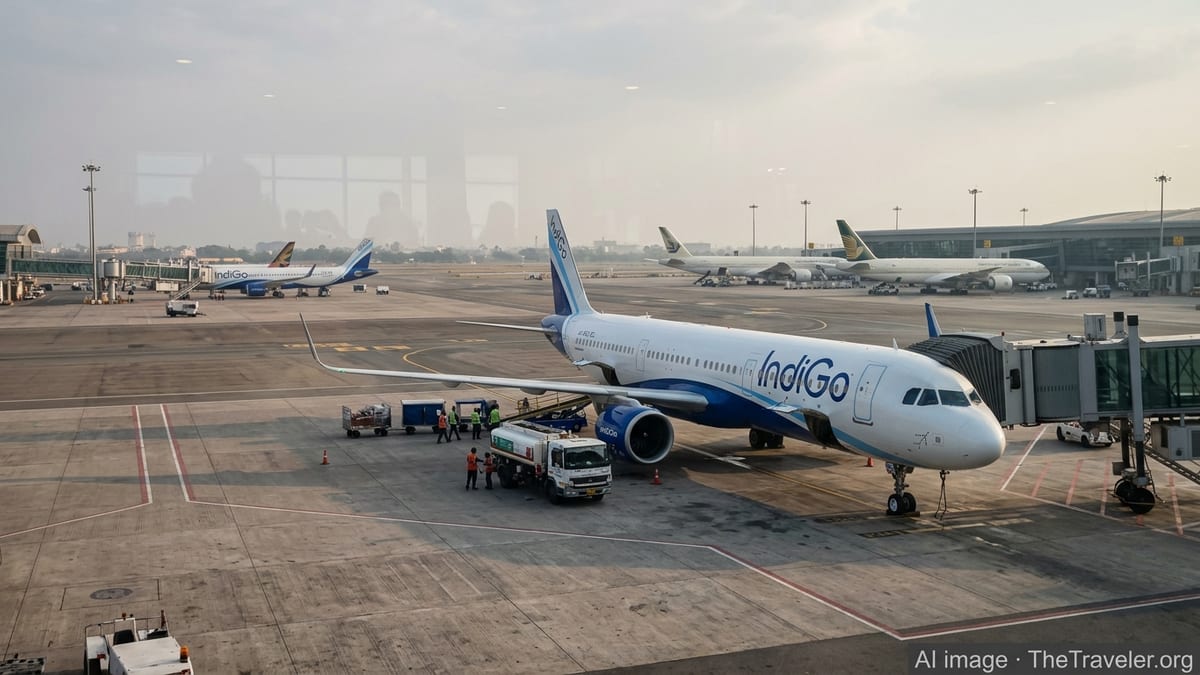
How the Gulf Crisis Is Reshaping Flight Options
The latest escalation in the Middle East, including attacks on Iran and subsequent airspace closures across multiple Gulf states, has caused severe disruption to regional and long haul air travel. Published coverage from global agencies indicates that closures in Iran, Iraq, Kuwait, Bahrain, Qatar and temporary restrictions in the United Arab Emirates forced mass cancellations and diversions, cutting off some of the world’s busiest transit hubs for days at a time.
For Indian travelers, the impact is especially acute. The Gulf region handles large flows of migrant workers, business traffic and connecting passengers from India to Europe, Africa and North America. When hubs such as Dubai, Abu Dhabi and Doha reduce or suspend operations, the ripple effects reach far into India’s aviation market, affecting both full service and low cost carriers.
In this environment, questions have intensified around whether India’s largest airline, IndiGo, can serve as a dependable alternative to the region’s big Gulf carriers or India’s full service competitors when disruption becomes the norm rather than the exception.
IndiGo’s Gulf Footprint Before the Crisis
Before the most recent wave of tensions, IndiGo had spent several years steadily building a sizeable presence in the Gulf. Publicly available route information shows that the airline linked multiple Indian cities to destinations including Dubai’s secondary airports, Abu Dhabi, Dammam, Jeddah, Riyadh, Doha, Kuwait, Muscat, Bahrain and other points in the United Arab Emirates and Saudi Arabia. These routes catered heavily to price sensitive workers and visiting friends-and-relatives traffic.
Industry analyses describe IndiGo as a dominant player on some city pairs such as India to Doha and a major competitor on sectors like India to Muscat and Dammam. The carrier’s dense India domestic network allowed passengers from smaller cities to connect through hubs like Delhi, Mumbai, Chennai or Kochi onto Gulf flights, often undercutting fares from legacy airlines.
IndiGo’s model relies on high aircraft utilisation and quick turnarounds, with a largely single-class narrowbody fleet focused on keeping unit costs low. That structure worked well in a stable environment, providing frequent, relatively affordable options for Gulf-bound travellers, even as bilateral air rights and airport slot constraints limited growth for some competitors at key hubs.
Suspensions, Special Flights and Patchwork Connectivity
The Gulf crisis has exposed both the strengths and vulnerabilities of IndiGo’s approach. Recent coverage in Indian business media and regional outlets indicates that IndiGo temporarily suspended operations to a cluster of Middle East destinations, including Doha, Kuwait, Bahrain, Dammam, Fujairah, Ras Al Khaimah and Sharjah, with some suspensions announced to last until late March 2026. These network cuts affect important labour and leisure corridors, particularly from South India.
At the same time, reports show that the airline has maintained services on select routes such as Muscat and parts of its Saudi network, while progressively reinstating “select flights” to Jeddah and other Gulf cities as airspace corridors reopened. IndiGo has also participated in government-coordinated efforts to repatriate stranded Indian citizens, operating special flights from Gulf points like Jeddah and adjusting schedules at short notice to respond to rapidly changing restrictions.
The result for passengers is a patchwork of connectivity. On certain days and routes, IndiGo continues to offer relatively direct, low cost options between Indian cities and Gulf destinations. On others, planned flights remain suspended or replaced by ad hoc services that may operate only for a limited period. Travelers relying on IndiGo during the crisis are therefore faced with a landscape where availability can change quickly and route planning requires close attention to advisories and updated schedules.
Comparing IndiGo With Other Alternatives
When assessing IndiGo as an alternative during the crisis, Indian passengers are effectively weighing it against three broad groups of competitors: Gulf super-connectors such as Emirates, Qatar Airways and Etihad; Indian full service and hybrid carriers such as Air India, Air India Express, Vistara and SpiceJet; and newer low cost entrants expanding into the region.
Gulf network carriers typically offer greater flexibility for long haul connections, but they have been heavily exposed to hub closures and airspace bans. Published reports show that hundreds of flights at Dubai, Abu Dhabi and Doha were cancelled or diverted during the peak of the crisis, placing significant strain on rebooking systems and accommodation arrangements. Their ability to reroute around closed airspace depends on aircraft range, available corridors and local regulatory decisions that can change rapidly.
Indian full service carriers, meanwhile, have engaged in their own mix of rerouting, selective suspensions and special flights. Public information indicates that Air India and Air India Express have mounted relief operations from the Gulf and restored some scheduled services where airspace is assessed as safe. Other Indian airlines have also applied for additional flights on certain routes to support repatriation and essential travel, sometimes stepping into gaps left by suspended foreign carriers.
In this competitive landscape, IndiGo’s main differentiator remains cost and point-to-point reach from Indian cities, rather than premium service or global connectivity. Where it is still operating in the Gulf, it can function as a practical alternative, especially for passengers whose journeys start and end within India and a single Gulf state. However, for travellers needing complex onward connections beyond the Gulf, especially during volatile periods, relying on a single low cost carrier may mean fewer fallback options if a corridor shuts unexpectedly.
Key Considerations for Travelers Choosing IndiGo
For passengers weighing IndiGo against other options during the Gulf crisis, reliability hinges less on the brand name and more on specific routes and dates. The same airline might be a solid choice on one corridor, such as a currently stable India to Muscat service, and a higher risk on another where suspensions or last-minute changes have been frequent. Observers recommend reviewing recent schedule patterns rather than assuming that pre-crisis frequencies still apply.
IndiGo’s dynamic response, including suspending several destinations while protecting others and mounting special flights, reflects operational caution and cost discipline but also creates uncertainty. Travelers dependent on time-sensitive journeys, such as job renewals or critical family visits, may wish to consider booking options that include flexible change policies, alternative routings through relatively stable hubs, or combining IndiGo with other carriers to build in redundancy.
The broader Gulf crisis has made clear that no single airline can offer complete insulation from geopolitical shocks. IndiGo can be a useful alternative on certain Gulf routes, particularly for cost-conscious passengers with straightforward itineraries, but its value during this period depends on careful route-by-route assessment rather than blanket assumptions of reliability.