

Iowa is often pictured as a quiet Midwestern state of cornfields and friendly small towns, and for many visitors that image holds true. Most trips pass without incident, whether you are exploring Des Moines’ breweries, hiking in a state park, or driving across the prairie on a long road trip. Still, like anywhere in the United States, safety is not something to take for granted. Understanding how crime, weather, and outdoor risks actually look on the ground will help you plan a smoother and more confident visit.
Overall Safety Snapshot: How Safe Is Iowa for Travelers?
For most visitors, Iowa is a relatively low-drama destination. The state tends to record lower violent crime rates than the national average, and its mix of small cities, college towns, and rural communities generally feels calm and manageable. Tourists rarely find themselves targeted specifically, and most incidents that do occur involve the same everyday issues found across the Midwest: opportunistic thefts, impaired driving, or weather-related mishaps rather than organized or targeted crime. That does not mean problems never arise, but it does mean that basic situational awareness usually goes a long way.
Recent federal crime data places Iowa roughly in the safer half of U.S. states for violent crime, while property crime can vary more from community to community. You will notice the difference as you move around the state. A busy entertainment district in Des Moines or Iowa City requires a different level of attentiveness than a rural bed-and-breakfast or a lakeside cabin near Okoboji. The key for visitors is to treat Iowa like any other destination: learn a bit about the specific places you plan to visit, pay attention to your surroundings, and follow local guidance, especially about road and weather conditions.
Visitors are far more likely to encounter safety challenges related to weather or driving than to be victims of serious crime. Winter storms can quickly turn highways treacherous, and heavy summer thunderstorms occasionally bring flooding. State agencies such as the Iowa Department of Transportation and the Iowa Department of Public Safety issue regular updates and advisories, particularly during storms and the winter driving season. Checking these sources before setting out each day is one of the most effective ways to keep your trip on track.
Socially, Iowa tends to be welcoming, if reserved, especially in smaller communities where visitors still stand out a bit. Travelers who are members of minority or LGBTQ+ communities often report mixed but generally uneventful experiences, with larger cities and college towns usually feeling more comfortable and familiar. As with any destination, it is wise to research neighborhoods and local culture in advance, but most travelers find that polite curiosity and common sense are returned in kind.
City Safety: Des Moines, Cedar Rapids, Iowa City and Beyond
Iowa’s cities may be modest by national standards, but they still bring big-city realities. Des Moines, the state capital and largest city, has the most urban feel, with nightlife, festivals, and sporting events drawing crowds. Crime is concentrated in certain neighborhoods and is driven by factors like poverty, drug markets, and conflicts between individuals who often know each other. Visitors usually spend their time in downtown, the East Village, and popular districts such as Ingersoll Avenue and the Western Gateway, which are comparatively well patrolled and busy. Normal urban precautions such as traveling in groups at night, staying in well-lit areas, and securing valuables in hotel safes are usually sufficient.
Cedar Rapids, the second-largest city, has publicly reported historic lows in several crime categories in recent years, reflecting targeted policing and community efforts. That said, no city is crime-free. Car break-ins in parking lots, bike thefts, and occasional late-night altercations still occur. When you park at trailheads, hotels, or entertainment districts, keep your vehicle tidy, with bags and electronics out of sight, and lock doors every time you step away. In both Des Moines and Cedar Rapids, weekends and major events are when petty crime opportunities increase simply because more people are out and about.
Iowa City, anchored by the University of Iowa, has the familiar rhythms of a college town. The busiest areas for visitors are the downtown pedestrian mall and surrounding streets, which fill with students and out-of-town guests on game days and weekends. Public intoxication, noise complaints, and the occasional bar-scene fight are more routine than serious violent incidents, but they can spill into nearby streets after closing time. If you prefer a quieter visit, aim for weekday evenings and keep some distance from the most crowded bars late at night. Campus safety teams and city police maintain strong visibility, particularly during major university events.
Smaller cities such as Dubuque, Sioux City, Davenport, Ames, and Council Bluffs present a mixed picture. Some riverfront and industrial areas can feel deserted or rough after dark, while downtown redeveloped districts are livelier and better lit. As a rule of thumb, ask your hotel staff or local hosts about streets to avoid late at night, and favor well-trafficked, central districts for evening dining and entertainment. Rideshares and licensed taxis are available in the larger metros and can be a smart choice if you are unfamiliar with local roads or plan to drink.
Small Towns, Rural Areas and Seasonal Tourism Hubs
Much of Iowa’s charm lies outside its cities, in rural towns, county fairs, and quiet back roads. These areas often feel extremely safe, with low crime rates and close-knit communities where everyone seems to know one another. Travelers commonly remark on the ease of leaving a car unlocked at a gas station or seeing children bike through town unsupervised. While that sense of trust is part of the appeal, visitors should still maintain their usual habits: lock your vehicle, keep travel documents secure, and avoid leaving valuables in plain view in your car, even if locals do not always do the same.
Tourism hubs bring a different dynamic. The Iowa Great Lakes region around Okoboji and Spirit Lake, for example, can be crowded in summer, with boating, lakefront parties, and seasonal workers all converging. Law enforcement agencies usually expand patrols during peak periods, but alcohol-related incidents on the water and on local roads do increase. When renting boats, jet skis, or vacation homes, be sure to review local rules and safety gear requirements, and consider designating a sober driver both on the water and on the road. Noise ordinances and open container rules are actively enforced in some lakeside communities.
A similar pattern plays out near college campuses and at major annual events such as the Iowa State Fair in Des Moines. These temporary population surges bring more traffic, more late-night activity, and a higher risk of pickpocketing, accidental property damage, or impaired driving. Visitors should plan transportation in advance, know where to park legally, and agree on a meeting point in case members of the group get separated in dense crowds. Police and event security customarily have strong presence at larger gatherings and adopt a prevention-first approach, but they cannot replace basic personal responsibility.
Farm country presents its own safety considerations that are not always obvious to visitors. Many rural roads are gravel, with limited signage and shoulders. Large farm vehicles move slowly and can appear suddenly over hills or around curves. If you are exploring back roads for scenic drives or photography, give tractors and combines plenty of space, resist the urge to pass on blind hills, and anticipate dust reducing visibility on dry days. Respect private property signs, especially near fields, barns, and grain bins, which can be hazardous environments for those unfamiliar with agricultural equipment.
Nature, State Parks and Outdoor Safety
Iowa’s outdoor offerings include limestone caves, tallgrass prairies, winding rivers, and wooded bluffs along the Mississippi and Missouri. These landscapes are not extreme by national park standards, but they still demand preparation. Most state parks are family friendly, with marked trails, picnic areas, and campgrounds. Nevertheless, incidents such as falls on steep trails, drownings in rivers or lakes, and occasional violent crimes do occur. A high-profile example was a 2022 campground shooting at Maquoketa Caves State Park, which shocked many Iowans and led to renewed conversation about security and park safety. Events like that are rare but serve as reminders that common sense and awareness matter even in peaceful surroundings.
Before heading into a park or forest, review maps posted at trailheads or on visitor center boards and note the difficulty ratings of routes. Many parks have rugged sections with exposed roots, slick rock, or steep stairs that can be particularly hazardous after rain or in early spring when surfaces are muddy. Footwear with decent traction, adequate water, and simple first-aid supplies will mitigate many of the most common minor injuries. Hiking with a companion, especially in more remote areas or near cliffs and ravines, remains a basic yet powerful safety measure.
Water-related recreation, from paddling the Upper Iowa River to boating on large lakes, is an area where vigilance is especially important. Life jackets are strongly recommended for all ages and usually required for children, and currents, submerged debris, or changing water levels can catch even strong swimmers off guard. Alcohol is frequently a factor in serious water incidents, whether involving boats, personal watercraft, or shoreline parties. Local outfitters, marinas, and park rangers are valuable sources of up-to-date information on river levels, closures, and recent hazards.
Iowa’s winters add another outdoor dimension: ice fishing, skating, and snowmobiling on frozen lakes. The Iowa Department of Natural Resources regularly reminds residents that no ice is ever completely safe and that thickness can change with currents, springs, and temperature swings. Visitors unfamiliar with ice safety should go with experienced locals or licensed guides, use safety gear such as ice picks and flotation devices, and avoid driving heavy vehicles onto ice unless conditions have been thoroughly verified. Checking official advisories before venturing onto frozen surfaces is essential, as conditions can change quickly within a single week of warm or cold weather.
Weather, Seasons and Road Trip Safety
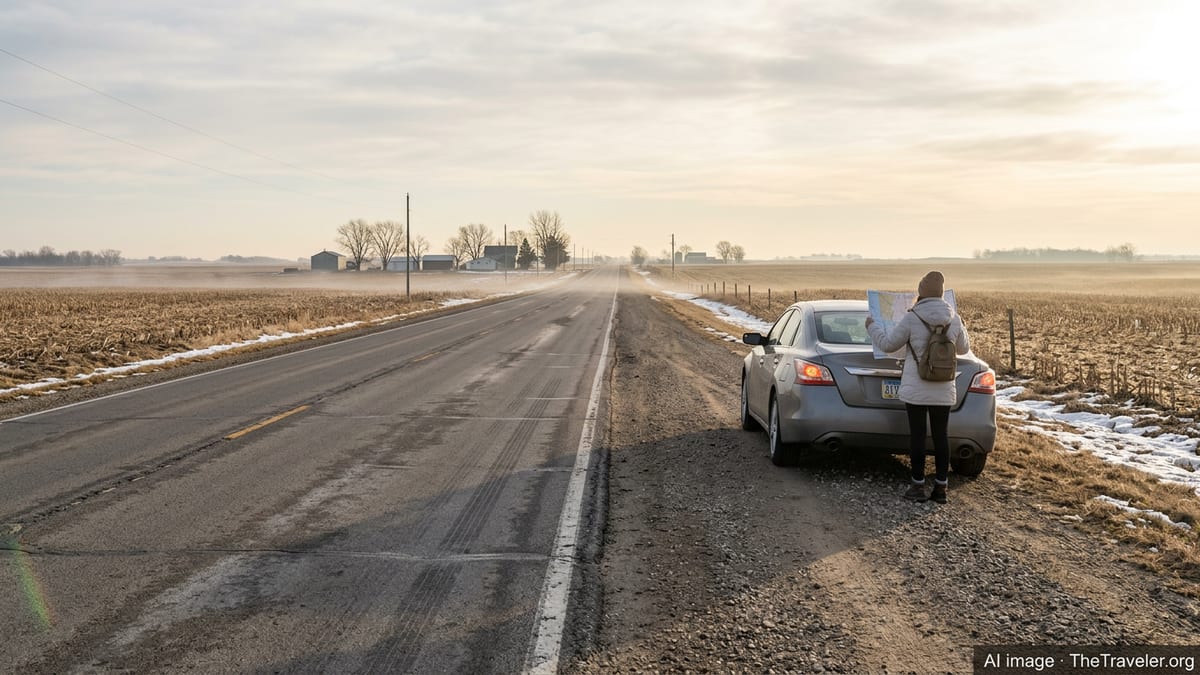
For many travelers, the most significant risks in Iowa are tied to the weather and the roads. Winters are cold and frequently snowy, with ice, freezing rain, and strong winds creating challenging driving conditions from roughly November through March. The Iowa Department of Transportation emphasizes that speed limits are set for ideal conditions, not for days when snow and ice cover the pavement. Sudden whiteouts, drifting snow on rural highways, and black ice on bridges and overpasses appear every year and contribute to crashes. Preparation and patience are the two most important gifts you can give yourself before setting out on a winter road trip.
State and local agencies maintain detailed winter road condition reports, and during storms the message from officials is often simple: delay travel if you can. When you must drive, equipping your vehicle with good all-season or winter tires, allowing extra stopping distance, and carrying a basic emergency kit can significantly reduce your vulnerability. Items such as blankets, a shovel, sand or cat litter for traction, a flashlight, and extra phone charging options can turn an inconvenience into a manageable delay rather than a dangerous situation. On long stretches of rural interstate, services can be sparse, so topping off fuel more often than you might in a more densely populated state is a wise habit.
Spring and summer come with different hazards. Severe thunderstorms can bring heavy rain, hail, strong winds, and occasional tornadoes, especially from April through June. Local meteorologists, the National Weather Service, and transportation agencies all issue warnings when storms threaten. If you receive a tornado warning while on the road, the safest course is usually to seek shelter in a substantial building rather than attempting to outrun the storm. Flash flooding on low-lying roads and at stream crossings can also occur after intense downpours; turning around instead of driving through water-covered roads is critical, as depth and current strength are often deceiving.
On clear days, long, straight roads and light traffic can tempt drivers into speeding or driving while fatigued. Distances between cities are modest by Western U.S. standards but still long enough to require attention, especially if you are driving after a full day of activities. Plan regular breaks at rest areas or small towns, share driving responsibilities when possible, and keep in mind that some rural highways have limited lighting and wildlife that may cross unexpectedly after dark. Deer, in particular, are active near dawn and dusk and can cause serious collisions if drivers are distracted or traveling too fast for conditions.
Health, Personal Security and Practical Safety Tips
Health and personal security in Iowa are largely about preparation and modest precautions rather than constant worry. Medical care is readily available in cities and regional centers, but rural clinics and hospitals can be far apart, so travelers with chronic conditions should bring medications, copies of prescriptions, and health insurance information. In summer, high humidity and heat can lead to dehydration and heat-related illness, particularly during festivals or outdoor work and recreation. Drinking water regularly, seeking shade during the hottest hours, and moderating alcohol intake are simple but effective protective steps.
Petty crime prevention comes down to standard travel practices. Keep wallets and phones in front pockets or zippered bags in crowded areas such as fairs, concerts, and markets. Do not leave purses or laptops unattended at cafes, hotel lobbies, or rest stops. When staying in vacation rentals, check that exterior doors and accessible windows have functioning locks, and store valuables out of sight rather than near ground-level windows. Many hotels and larger accommodations offer in-room safes, which are useful for passports, extra credit cards, and other items you do not need daily.
Digital safety deserves some attention as well. Free public Wi-Fi is available in many Iowa libraries, cafes, and hotels, but as with anywhere else, it is best to avoid accessing sensitive financial accounts on unsecured networks. Using a virtual private network or relying on your mobile data when handling banking and other personal information can reduce risk. Keeping your phone charged and location services enabled also allows you to share real-time locations with trusted contacts, which can be helpful both for navigation and for peace of mind during solo travel.
For solo travelers, including women and LGBTQ+ visitors, Iowa can be a comfortable destination, especially in larger cities and college towns that host diverse communities. Nevertheless, it is sensible to follow familiar precautions such as letting someone know your daily plans, avoiding excessive alcohol when alone in unfamiliar venues, and trusting your instincts about people and places. In an emergency, dial 911 for police, fire, or medical assistance; response times are typically quick in urban areas, with more variation in remote rural regions.
The Takeaway
Iowa is, for most visitors, a straightforward and safe place to explore. Violent crime rates tend to sit below national averages, and tourist-focused incidents are relatively uncommon. Where travelers do encounter trouble, it is more often tied to weather, driving conditions, alcohol misuse, or misjudging outdoor environments than to intentional targeting. Understanding how the seasons influence both city streets and rural roads is the single most important part of planning a secure trip, especially if you are visiting during winter or peak storm periods.
By combining basic urban common sense with respect for the state’s climate and landscapes, you can enjoy Iowa’s cities, small towns, and parks with confidence. That means checking forecasts and road reports before you drive, using well-lit routes in urban areas after dark, following park rules and ranger guidance, and staying aware of your surroundings without becoming anxious. With a bit of preparation and a flexible mindset, the odds are high that Iowa will greet you with quiet streets, open skies, and memories defined more by hospitality and scenery than by safety concerns.
FAQ
Q1. Is Iowa generally safe for tourists compared with other U.S. states?
Iowa is typically considered moderately safe for visitors, with violent crime rates often below national averages and most tourist areas experiencing routine, manageable levels of risk.
Q2. Which Iowa cities should I be most cautious in?
Larger cities such as Des Moines, Cedar Rapids, Davenport, and Sioux City warrant more awareness, particularly at night, but visitor areas are usually well monitored and safe when you use normal urban precautions.
Q3. Is it safe to drive across Iowa in winter?
Winter road trips can be safe if you monitor forecasts and road conditions, allow extra time, equip your vehicle well, and are willing to delay travel during major storms.
Q4. Are Iowa’s state parks safe for hiking and camping?
Yes, most visitors enjoy state parks without incident, but you should stay on marked trails, respect closures, watch footing on steep or icy sections, and follow any ranger advisories.
Q5. How worried should I be about tornadoes when visiting Iowa?
Tornadoes are possible mainly in spring and early summer, but direct encounters are rare; staying weather aware and following official alerts is usually enough to stay safe.
Q6. Is it safe to walk around downtown Des Moines or Iowa City at night?
Busy central districts in both cities are generally safe, especially on event nights, but it is wise to stick to well-lit streets, avoid alleys, and use rideshares if you feel uncomfortable.
Q7. Are there particular safety concerns around Iowa’s lakes and rivers?
The main risks involve drowning and boating accidents, often linked to alcohol or lack of life jackets, so wearing flotation gear and moderating drinking are key precautions.
Q8. Is solo travel, especially for women, safe in Iowa?
Many women travel solo in Iowa without issues, especially in cities and tourist areas, as long as they follow familiar precautions such as sharing itineraries and avoiding isolating situations at night.
Q9. What should I do in an emergency while visiting Iowa?
Call 911 for immediate police, fire, or medical assistance, seek help from nearby businesses or residents, and contact your embassy or consulate if you are an international visitor facing a serious incident.
Q10. How can I stay informed about local safety conditions while traveling in Iowa?
Check local news and weather broadcasts, monitor official state transportation and natural resources updates, and ask hotel staff, rangers, or hosts for real-time advice about roads, parks, and neighborhoods.