

Kingston is Jamaica’s restless capital, a city of sound systems, street food and mountain views that feels a world away from the country’s resort towns. But while Jamaica has a reputation for being pricey, Kingston itself sits in a middle ground: not a rock-bottom bargain, yet far from the most expensive city in the Caribbean. Whether Kingston feels expensive largely depends on how you sleep, eat and move around. This breakdown walks through real-world costs so you can decide if Kingston fits your budget and build a realistic daily spend before you land.
So, is Kingston actually expensive?
Compared with many Caribbean destinations dominated by resorts, Kingston is relatively affordable, especially if you are willing to stay in simple guesthouses and eat where locals do. Aggregated traveler data suggests that budget visitors in Kingston can get by on roughly 55 US dollars per person per day, mid-range travelers average around 125 to 130 dollars, and those looking for comfort and convenience without counting every penny might spend upward of 240 dollars per day. These ranges include accommodation, food, local transport and basic sightseeing.
In the wider Caribbean context, that places Kingston toward the more affordable end of major cities. You will still notice that imported goods, organized tours and hotel dining carry a premium, but there are enough local options that you rarely have to pay top-tier prices if you do not want to. Where Kingston can start to feel expensive is when visitors rely heavily on private taxis, international hotel brands and high-end restaurants, or when they only stay a day or two and pay a lot for short-notice bookings.
For most travelers, Kingston is best described as moderately priced: cheaper than many resort enclaves, but not a shoestring paradise. The key is understanding the cost drivers and making intentional choices. Once you know what a taxi ride, museum ticket or plate of jerk chicken should cost, it becomes easier to keep your spending in line with your expectations.
It is also important to remember that prices are usually quoted in Jamaican dollars, and inflation in recent years has nudged local costs upward. Exchange rates can shift, so it helps to think in ranges rather than fixating on an exact figure. With that in mind, the following sections break down what you are likely to pay in today’s prices if you visit Kingston in the near term.
Accommodation costs in Kingston
Accommodation is often the biggest line item in a Kingston budget, and it is where spending can vary the most. A citywide analysis of hotel prices suggests that mid-range three-star hotels in Kingston average around 120 to 130 US dollars per night, with some simpler properties dipping nearer 60 dollars and better-rated business hotels going well above that. Chain hotels, especially those with pools, breakfast and conference facilities, usually sit at the upper end of this band.
If you are traveling on a tighter budget, hostels and basic guesthouses bring costs down significantly. In and around Kingston, dorm beds typically run from about 10 to 25 US dollars per night depending on season, while simple private rooms and budget hotels often sit between 40 and 80 dollars. These options tend to be smaller, locally run places that may trade some polish for personality. You are unlikely to get resort amenities, but you can secure a clean room, fan or air conditioning, Wi-Fi and sometimes a basic breakfast within that price range.
At the other end of the spectrum, boutique hotels and upscale guesthouses in neighborhoods like New Kingston, Liguanea or the foothills of the Blue Mountains can cost 180 to well over 250 dollars per night. These properties often offer leafy gardens, secured parking, included breakfast, and more personal service. For travelers used to resort pricing elsewhere in Jamaica, Kingston’s top-end hotels may actually feel slightly less expensive than big-name beachfront resorts, but they are still a substantial daily cost.
Season, location and booking habits all influence what you pay. Winter months and major event periods, such as carnival season or big concert weekends, drive rates higher. Staying slightly away from New Kingston’s business core, booking at least a few weeks in advance, and being flexible with dates can yield worthwhile savings. Solo travelers can also look for accommodations that price by the room rather than per person, which keeps nightly costs lower when you are on your own.
Food and drink prices: from street stalls to sit-down dinners
Food is one area where Kingston can be as cheap or as expensive as you choose. Travelers who stick to jerk stands, patty shops and small local eateries often find that they spend surprisingly little, while those favoring hotel restaurants and international chains see their food budget rise quickly. Recent traveler reports suggest that a typical visitor spends around 20 to 45 US dollars per day on food, though you can go lower or higher depending on your habits.
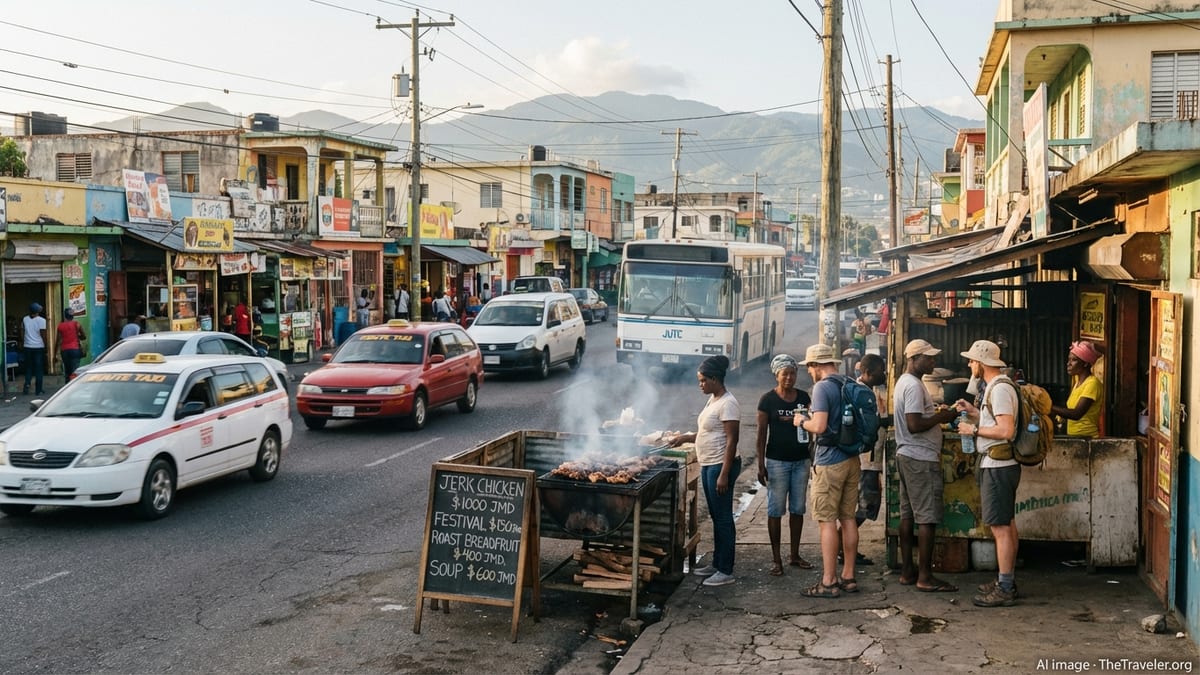
For budget-minded travelers, local street food and casual cookshops are your best allies. A simple meal such as jerk chicken with festival or rice and peas, a plate of curried chicken, or a hearty stew at a neighborhood spot can often cost in the range of 3 to 7 dollars. Fresh fruit, patties, and bakery items add affordable snacks for a couple of dollars each. Eat this way for most meals and you can comfortably keep daily food costs toward the lower end of the range.
Mid-range sit-down restaurants and popular spots in New Kingston or along major roads typically charge around 10 to 15 dollars for a main dish, with starters and desserts extra. A full dinner with a drink, starter and main can easily land between 15 and 30 dollars per person once you factor in tax and a standard service charge or tip. Grabbing a morning coffee at a café may cost around 3 to 5 dollars, while fast-food or quick-service chains often price combo meals in a similar band to North American equivalents.
Alcohol can either be a modest addition or a major budget item. Local beers in bars or relaxed restaurants might run 2 to 4 dollars, while cocktails and imported drinks in hotel lounges or rooftop bars will cost more. Ordering drinks where locals gather, limiting resort-style cocktails, and buying the occasional bottle of rum from a supermarket instead of by the glass all help keep costs sensible. As in many places, it is usually table service and ambiance that raise the price, rather than the raw ingredients.
Getting around: public transport, taxis and transfers
Transport within Kingston ranges from very inexpensive public options to more costly private taxis. For short journeys, shared minibuses and route taxis are the cheapest way to move around. These informal but widely used services typically charge the equivalent of about 1 to 2 US dollars per trip within the city. They can be crowded and a bit confusing for newcomers, yet they dramatically reduce daily costs if you use them regularly and stick to well-known routes.
The city’s official buses, such as those operated by the Jamaica Urban Transit Company, are another low-cost option. A typical one-way bus fare within Kingston is often around 100 to 200 Jamaican dollars, roughly under 2 US dollars, again depending on the route and any recent price adjustments. For travelers comfortable with a bit of urban navigation, using buses and shared taxis for most movements can keep your overall transport spending very modest.
Private taxis are more expensive but still affordable by international standards, particularly for short hops. Recent fare estimates suggest base charges in the region of a couple of US dollars, with per-kilometer rates that make a 5 to 10 kilometer ride cost roughly the equivalent of 10 to 25 US dollars, depending on the operator and level of service. Airport transfers from Norman Manley International Airport into central Kingston will generally fall at the upper end of that band, especially if pre-arranged with a private company.
Car rental is less common among short-stay visitors to Kingston itself, given city traffic and the need to adjust to driving on the left. Where travelers do rent a car, daily rates in Jamaica more broadly often range between about 60 and 80 dollars before insurance and fuel. For many visitors whose time is mainly within the city, taxis and public transport are simpler and often cheaper overall than renting a vehicle, especially once parking and stress are factored in.
Attractions, culture and entertainment costs
One of Kingston’s strengths for value-conscious travelers is that many of its highlights are inexpensive or free. Public spaces such as Emancipation Park and many viewpoints are open without charge, and exploring lively neighborhoods, markets and seaside promenades costs nothing beyond what you spend on food and transportation. Simply walking and watching daily life unfold is one of the city’s great pleasures and does not strain the budget.
For paid attractions, most entrance fees are moderate by international standards. As of recent published price lists, you can expect to pay in the region of 15 to 20 US dollars for major cultural sights such as the Bob Marley Museum or historic forts near Kingston. Other attractions, including heritage houses or botanical gardens around the city, may charge similar amounts for adult tickets, with reduced prices for children and seniors where applicable. Smaller museums and galleries sometimes ask for a small fee or suggested donation, typically under 10 dollars.
Evenings out can vary widely in cost. A casual night at a local bar or sound system event might only require paying for drinks and a modest cover charge, keeping the night’s expenses to perhaps 10 to 30 dollars per person. On the other hand, high-profile concerts, ticketed festivals or organized nightlife experiences can raise that figure significantly. It is also common for live music and club nights to operate on a tiered system, where early entry or standing areas are cheaper than VIP sections or table service.
Day trips from Kingston, such as excursions into the Blue Mountains or visits to waterfalls and countryside estates, add to the budget but need not break it. Shared tours booked through local operators or guesthouses are often more economical than private arrangements, though they still typically cost upward of 40 to 60 dollars for a full-day experience, depending on inclusions and group size. Checking what is included in the price, such as transport, entry fees and lunch, helps you evaluate whether a tour represents good value for what you want to see.
Daily budgets for different travel styles
To understand whether Kingston will feel expensive to you personally, it helps to frame costs in terms of a realistic daily budget rather than isolated prices. Based on recent traveler data and current price ranges, a shoestring backpacker who chooses hostel dorms, eats mostly street food, uses public transport and focuses on free or cheap activities might spend around 25 to 50 US dollars per day. This figure assumes careful spending, flexibility and a willingness to embrace local habits.
A mid-range traveler, by contrast, might sensibly budget about 120 to 150 dollars per day. This allows for a private room in a decent mid-range hotel or guesthouse, two or three meals out each day at casual restaurants, a mix of public transport and some taxi rides, and regular entry fees to museums and cultural sites. It also leaves room for the occasional splurge, whether that is an evening of cocktails, a guided day trip or a special dinner.
Travelers looking for greater comfort, convenience and privacy, or those visiting for business with limited time to seek out cheaper options, should think in terms of 220 dollars per day or more. In this bracket, you can stay in higher-end hotels, rely primarily on private taxis, dine at hotel restaurants or well-known international spots, and book guided experiences without watching every line item. For some, this is the threshold at which Kingston begins to feel genuinely expensive, particularly in comparison with cities in regions where wages and service costs are lower.
These budgets are per person, but couples or small groups sharing accommodation will find that their per-person accommodation cost drops. While food, transport tickets and entry fees remain per individual, splitting hotel rooms and rides can eliminate some of the per-person price pressure. It is also worth remembering that slowing your pace often saves money: spending several days in Kingston and exploring more deeply can result in a lower daily average than trying to fit everything into one rushed, taxi-heavy day.
Money-saving tips that make Kingston feel less expensive
Even if your initial impression is that Kingston might strain your budget, a few thoughtful strategies can bring overall costs down without diminishing the experience. The first is to embrace local patterns for eating and moving around. Following office workers to popular lunch spots, eating where queues of locals form, and riding buses or route taxis for straightforward journeys all help your budget stretch further while giving you a more authentic view of the city.
Booking accommodation strategically is another powerful lever. Staying in safe but less central residential neighborhoods, choosing guesthouses over international chains, and reserving rooms ahead of major holidays or festivals tends to yield much better value. Many mid-range properties include breakfast in the nightly rate, which effectively covers one of your daily meals at no extra cash outlay on the ground.
When it comes to attractions and activities, focus on a mix of paid highlights and free experiences. Plan to pay entry for a handful of must-see spots, then fill the remainder of your days with walks, markets, public art, coastal views and hillside neighborhoods that do not require tickets. If you are considering guided tours, comparing group options with private hires and asking clearly what is included can prevent unexpected costs later.
Finally, small habits add up: carry a reusable water bottle and top up where safe instead of buying frequent single-use bottles, keep an eye on service charges already added to restaurant bills before tipping extra, and confirm taxi fares in advance when using unmetered services. None of these steps feels particularly restrictive, but together they can make the difference between Kingston feeling comfortably priced and surprisingly expensive.
The Takeaway
Kingston is neither a bargain-basement destination nor a city that will inevitably empty your wallet. It sits in a practical middle ground: daily costs can be quite manageable if you lean into local ways of living, yet the city can also become expensive if you default to the most convenient, tourist-oriented options at every turn. Understanding the typical prices for beds, meals, rides and attractions allows you to see clearly where your own habits place you on the budget-to-luxury spectrum.
For many visitors, the city’s value lies in its intensity, culture and music rather than in luxury trimmings. You come to Kingston for sound systems, street-side jerk, galleries, hillside views and conversations, not for sprawling all-inclusive resorts. Fortunately, most of what makes Kingston memorable does not require lavish spending. With a sensible daily budget, an openness to public transport and local food, and some planning around accommodation, Kingston can feel fairly priced and deeply rewarding.
Whether the city is expensive ultimately depends less on Kingston itself and more on how you choose to experience it. If you arrive with realistic expectations, a flexible budget range and a willingness to adapt, Kingston is likely to surprise you more with its energy than with its costs.
FAQ
Q1. Is Kingston more expensive than Montego Bay or Ocho Rios?
Kingston is often slightly less expensive overall than resort-heavy areas like Montego Bay and Ocho Rios, particularly for accommodation and food outside tourist zones, though high-end options can still be costly.
Q2. How much should I budget per day in Kingston as a backpacker?
A careful backpacker who uses hostels, public transport and local food stalls can often manage on roughly 25 to 50 US dollars per day, depending on activities and how often they go out at night.
Q3. What is a realistic daily budget for a mid-range traveler in Kingston?
Mid-range travelers typically budget about 120 to 150 US dollars per day, which covers a decent private room, eating out at casual restaurants, some taxi use and paid attractions.
Q4. Are taxis in Kingston expensive?
Short taxi rides in Kingston are not cheap compared with buses or route taxis, but they are moderate by international standards. Using them selectively for late-night or complex trips keeps costs reasonable.
Q5. Can I eat well in Kingston without spending a lot?
Yes. Street food, cookshops and small local restaurants serve generous portions at low prices, so you can enjoy authentic Jamaican dishes without a large daily food budget.
Q6. Are major attractions in Kingston expensive to visit?
Most paid attractions in Kingston, such as museums and historic sites, charge moderate entry fees, often in the range of 10 to 20 US dollars for adults, with some free public spaces.
Q7. When is the cheapest time of year to visit Kingston?
Outside peak winter and major event periods, accommodation prices tend to ease, and you may find better deals in the shoulder seasons, though exact rates vary year by year.
Q8. Is Kingston a good value for digital nomads and long stays?
For longer stays, sharing accommodation, cooking some meals and using public transport can bring the average daily cost down, making Kingston a reasonable value if you are comfortable with an urban, high-energy environment.
Q9. Do I need to carry a lot of cash in Kingston?
You will need some cash for small vendors, route taxis and markets, but many hotels, larger restaurants and supermarkets accept cards. Using a mix of cards and cash helps you control spending.
Q10. What are the biggest expenses I should plan for in Kingston?
The largest costs are usually accommodation and private transport, followed by restaurant meals and organized tours. Managing these four categories thoughtfully has the biggest impact on your overall budget.