

Lindquist Beach on the east end of St Thomas has quietly built a reputation as the island’s most beautiful stretch of sand. Travelers who return year after year compare it to the better known Magens Bay or Coki Beach and still insist that Lindquist, also known as Smith Bay Park, is the one that feels closest to the Caribbean ideal.
But is it really the best beach in St Thomas, or simply the prettiest on a good day? This honest review looks at scenery, swimming conditions, amenities, crowds, access, and recent environmental challenges so you can decide if Lindquist deserves the top spot on your own St Thomas itinerary.
Setting the Scene: What Lindquist Beach Is Really Like
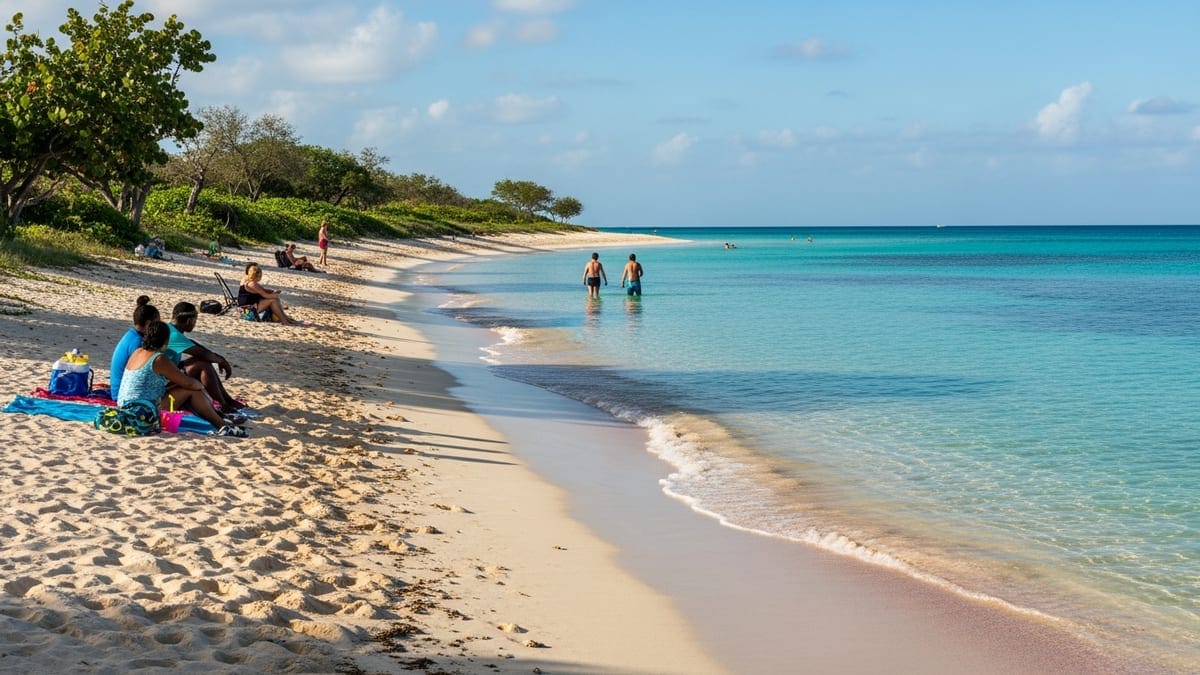
Lindquist sits within Smith Bay Park, a protected 21 acre coastal preserve on St Thomas’s northeast shore. The beach itself curves for roughly half a mile, a gently sloping ribbon of near white sand with a faint pink tint at certain times of day. Behind the shoreline, low sea grape trees and coastal shrubs offer pockets of shade, while the view from the water sweeps across nearby cays and the hills of neighboring islands. The overall impression is of a natural, unspoiled bay, noticeably less developed than many other beaches on the island.
Because the park is managed as a nature preserve, buildings and permanent commercial structures are intentionally limited. Visitors will find a small ranger station at the entrance, basic restroom and shower facilities, and a scattering of covered picnic areas set back from the sand.
There are no rows of bars or souvenir stands pushing up against the high water mark, and no resort towers looming over the tree line. For many travelers, that restraint is part of Lindquist’s charm. The beach feels secluded without being truly remote.
The atmosphere is generally low key, especially on weekdays. On a typical calm morning, you might see a few families setting up under the sea grapes, a couple of locals swimming laps close to shore, and small groups of cruise visitors who have come specifically to avoid the more crowded spots.
There is often a lifeguard on duty during park hours, and the bay is usually quiet enough that you can clearly hear the water, the breeze, and the occasional call of birds in the brush. It is an environment that rewards travelers looking for a slower day rather than a party scene.
Water, Sand, and Swimming Conditions
For many people, Lindquist’s claim to being the best beach in St Thomas begins and ends with the color and clarity of its water. On good days, the bay turns a layered palette of turquoise and electric blue, shallow over a wide sandbar and then deepening gradually.
The bottom near the center of the beach is mostly soft sand with a gentle slope, which means you can wade a long way from shore before the water reaches your shoulders. This makes it particularly popular with families who want calm conditions for children, as well as casual swimmers who prefer easy entry and exit.
The sand itself is fine and pale, comfortable underfoot and relatively free of the sharp coral rubble that can be common on some Caribbean beaches. At the northern and southern edges of the bay, patches of seagrass and scattered rocks support more marine life, while the central section remains largely open for swimmers.
The surf in normal weather is typically small and manageable. Combined with the lifeguard presence, this makes Lindquist one of the more forgiving beaches for inexperienced swimmers compared to spots with stronger shore break or currents.
Conditions, however, are not perfect every day. Like much of the northeastern Caribbean, St Thomas has seen periodic influxes of sargassum seaweed, particularly in recent years. In late July 2025, the Magens Bay Authority temporarily closed Lindquist to swimming due to a heavy sargassum accumulation that affected water quality and access to the sea.
Cleanup efforts allowed the beach to reopen for swimming in early August 2025, but the episode underscored a reality: natural conditions can and do change, and even the best beaches are not immune to regional environmental trends.
During periods of rougher weather or when regional marine advisories are in effect, visitors may also encounter stronger swells and rip currents along exposed coasts in the Virgin Islands.
While Lindquist’s bay shape offers some protection, it is still important to pay attention to posted signs, local guidance, and National Weather Service updates, particularly during winter swells or passing storms. On calm, typical days, though, the beach’s combination of clear water, soft entry, and relatively gentle surf remains one of its biggest selling points.
Amenities, Facilities, and What You Will Not Find Here
Lindquist’s infrastructure sits deliberately between rustic and comfortable. Visitors pay a modest entrance fee at the gate to Smith Bay Park, which helps fund maintenance of the beach and facilities.
As of late 2025, common published figures place the nonresident entry fee in the range of approximately 5 to 7 US dollars per adult, often including parking, with reduced rates for local residents and free entry for young children. Travelers should always check for the latest pricing upon arrival, as rates can be adjusted by the park authority over time.
Inside the park, a paved parking lot brings you within a short walk of the sand. There are restroom blocks and outdoor showers, usually kept in reasonably good condition, though as with many island facilities, their cleanliness can vary depending on recent visitor numbers and maintenance schedules.
A few shaded pavilions and picnic tables are spread along the tree line, which can be reserved for gatherings or simply claimed early by day visitors. Lifeguard coverage during standard daytime hours provides an additional layer of safety, especially for families.
What you will not find at Lindquist is equally important. There is no permanent beach bar pouring cocktails into plastic cups from morning to sunset, no restaurant kitchen serving a full menu just off the sand, and usually no fleet of roaming vendors selling everything from jewelry to hair braiding.
Some seasonal or small scale services may appear from time to time, and there are occasional reports of chair or umbrella rentals, but the baseline expectation should be self sufficiency. Most regulars recommend bringing your own cooler with drinks and snacks, reef safe sunscreen, and any beach gear you may want for the day.
This stripped back amenity set is one of the reasons many travelers praise Lindquist. Without amplified music, motorized water sports, or heavy commercial traffic along the shore, the beach retains a calm and uncrowded feel even when the parking lot fills in the middle of the day.
However, for vacationers who prefer the convenience of full service resorts or who enjoy the social atmosphere of beach bars, this minimalism can feel limiting. Whether that counts as a positive or a drawback depends entirely on your vision of the perfect Caribbean beach day.
Access, Location, and How Lindquist Compares to Other St Thomas Beaches
Lindquist’s location is one of its quiet strengths. The beach lies on the east end of St Thomas, roughly a 10 minute drive from Red Hook and around 20 to 25 minutes from Charlotte Amalie and the main cruise ship docks, depending on traffic.
Taxis are commonly available across the island and will bring visitors directly to the park entrance, although there is no large scale resort or commercial complex at Lindquist itself to act as a focal point. For travelers staying at vacation rentals or smaller properties on the east end, the beach can become a convenient neighborhood favorite.
Compared with the island’s most famous beach, Magens Bay, Lindquist offers a contrasting experience. Magens sits within a larger park and is justifiably celebrated for its sweeping heart shaped bay and safe swimming, but it is also a staple of cruise ship excursion schedules.
On busy days, Magens can feel crowded, with long lines of lounge chairs, multiple food and drink outlets, and a steady hum of activity. Lindquist, by contrast, typically sees fewer large groups and retains more open sand, particularly on weekdays and outside peak holiday periods. Travelers who have visited both often describe Lindquist as the more peaceful and natural of the two.
When measured against Coki Beach, another well known stop on St Thomas’s north shore, the differences are even more pronounced. Coki is renowned for its shore snorkeling, with easy access to coral and fish just off the beach, but it is also a lively, vendor driven strip lined with small bars, food shacks, and rental stands.
Music pulses from speakers, cruise excursion groups come and go throughout the day, and the atmosphere is unabashedly social. Visitors who relish that energy may find Lindquist almost too quiet. On the other hand, travelers seeking space, minimal hawking, and clear water without constant traffic usually gravitate toward Smith Bay Park.
Sapphire Beach, another east end favorite, sits closer to resorts and condo developments and can provide a middle ground between those extremes, with on site dining and water sports set against a scenic bay. Yet its proximity to accommodations also means that it sees regular traffic from overnight guests.
Lindquist’s comparative lack of development and its protected park status are what allow it to feel set apart, even though it is only a short drive from these other beaches. For visitors willing to bring their own supplies, that separation is a significant part of its appeal.
Environmental Stewardship, Sargassum, and Seasonal Realities
Lindquist’s status as part of Smith Bay Park is not just a bureaucratic detail. The decision by the territorial government to purchase and protect this stretch of coast in the mid 2000s helped ensure that large scale private development would not crowd the shoreline with high rises or intensive commercial projects.
Management by the Magens Bay Authority brings some of the same conservation ethos that has long safeguarded Magens Bay, with an emphasis on keeping facilities modest and the natural character of the area intact.
However, even well managed beaches face environmental challenges. In recent years, the wider Caribbean has experienced recurrent blooms of sargassum seaweed, vast mats of floating algae that drift on ocean currents and periodically wash ashore in heavy quantities.
At Lindquist, a significant sargassum event in July 2025 led authorities to close the beach to swimming due to thick accumulations along the shoreline and concerns about water quality and potential health impacts. Cleanup crews worked through early August to remove the seaweed, and the beach reopened to swimmers on August 6, 2025, with continued monitoring.
These episodes are a reminder that even the most photogenic beaches can look very different depending on the month and prevailing conditions. Sargassum can produce strong odors as it decomposes and can make water entry difficult or unappealing until it is cleared.
While such events are typically temporary and vary dramatically from year to year, travelers with flexible itineraries might consider checking recent reports or speaking with locals on arrival to understand current conditions before committing an entire day to any single beach, including Lindquist.
Beyond seaweed, visitors should also be aware of seasonal surf, weather patterns, and broader environmental conversations in the Virgin Islands. Regional initiatives are increasingly focused on water quality monitoring, reef protection, and the reduction of pollutants along coastlines.
Choosing reef safe sunscreens, avoiding contact with seagrass beds and corals while swimming, and packing out all trash are simple steps that help protect the delicate ecosystems that make places like Lindquist special in the first place. In many ways, the beach’s reputation as one of the island’s best depends on how respectfully it is used by the people who enjoy it.
Who Will Love Lindquist Beach and Who Might Not
Determining whether Lindquist is the best beach in St Thomas ultimately depends on what you want from a day by the sea. Travelers who tend to rank it at the top of their lists are usually those seeking a quieter, more natural experience.
If your ideal beach day involves swimming in clear water, reading in the shade of sea grapes, enjoying an unhurried picnic, and perhaps taking a leisurely walk along nearly empty sand, Lindquist will likely exceed expectations. Couples looking for a peaceful setting and photographers searching for postcard worthy backdrops often praise the beach for precisely these qualities.
Families with young children also tend to rate Lindquist highly. The combination of soft sand, calm water in usual conditions, and lifeguard oversight provides an inherently family friendly environment, as long as parents are prepared to bring snacks, drinks, and any toys or gear they might need.
The presence of basic amenities like restrooms and showers means the beach is not completely undeveloped, yet the absence of loud bars and motorized water sports reduces the kinds of distractions that can make managing small children more complicated.
On the other hand, Lindquist is less likely to impress visitors who equate “best beach” with a full menu of services. If you want to step onto the sand and immediately order frozen drinks, rent jet skis, or slide into a chair service lunch without leaving your spot, other beaches on St Thomas may suit you better.
Cruise passengers with limited time on island who prefer structured excursions and built in entertainment may find Lindquist too low key compared with busier places where vendors and tour operators line the shore.
The beach can also feel stark to travelers visiting on a day when conditions are not ideal, such as during a lingering sargassum event or after heavy rain that has stirred up sediment. Because there are no alternative attractions directly attached to the park, a compromised swimming day may leave some visitors wishing they had chosen a beach with more restaurants, shops, or diversions in walking distance.
For that reason, Lindquist often works best either as a primary destination for travelers who already know their own preferences or as part of a flexible, island wide beach hopping plan.
The Takeaway
So, is Lindquist Beach the best beach in St Thomas? For many repeat visitors, locals, and travelers who value natural beauty and relative solitude, the answer is an unqualified yes. The combination of pastel sand, luminous water, modest but adequate facilities, and a protected park setting gives Lindquist a character that feels increasingly rare in the modern Caribbean.
When conditions are favorable, it delivers a classic beach experience that has more in common with the islands of memory and imagination than with the busier, more commercialized strands that dominate social media feeds.
Yet “best” is always subjective. Compared with Magens Bay, Coki Beach, Sapphire, and the island’s resort front stretches, Lindquist is more restrained, less serviced, and at times more exposed to the whims of nature.
Travelers who crave amenities, nightlife, or dense social energy may find its quietness underwhelming. Those with limited time on St Thomas might prefer a beach that pairs sun and sea with easily accessible restaurants and structured activities.
In the end, Lindquist is arguably the best beach in St Thomas for travelers who are willing to bring what they need, accept a degree of unpredictability from the natural world, and allow the day to unfold at the pace of the tide.
If your idea of perfection is a largely undeveloped curve of sand, framed by low hills and clear water, with just enough human presence to feel safe but not enough to drown out the sound of the sea, then Lindquist will likely sit at the top of your personal list long after you have left the island.
FAQ
Q1: Where exactly is Lindquist Beach located on St Thomas?
Lindquist Beach is on the northeast, or east end, of St Thomas within Smith Bay Park, roughly a 10 minute drive from Red Hook and about 20 to 25 minutes from Charlotte Amalie and the main cruise ship docks, depending on traffic.
Q2: Is there an entrance fee to visit Lindquist Beach?
Yes. Visitors pay a small per person fee at the Smith Bay Park entrance, with nonresident adult rates generally in the mid single digit US dollars, reduced fees for local residents, and free entry for young children. Parking is typically included, but exact rates can change, so it is wise to confirm on arrival.
Q3: What amenities are available at Lindquist Beach?
The beach offers a paved parking lot, restrooms, outdoor showers, shaded picnic areas or pavilions, and usually a lifeguard on duty during daytime hours. You should not expect a full beach bar, restaurant, or extensive rental operations on the sand.
Q4: Can I buy food and drinks at Lindquist Beach?
In general, there are no permanent food or beverage outlets directly on the beach, and vendors are limited or absent on many days. Most visitors bring their own coolers with water, snacks, and picnic supplies, then stop for a sit down meal elsewhere on the island after their beach time.
Q5: Is Lindquist Beach good for snorkeling?
Lindquist is primarily known for swimming and its wide sandy bottom, but there is casual snorkeling along the edges of the bay where seagrass and scattered rocks shelter fish and other marine life. Dedicated snorkelers often choose Coki Beach or boat based excursions for richer coral reef experiences, then visit Lindquist for its overall tranquility and scenery.
Q6: How crowded does Lindquist Beach get?
On weekdays outside of peak holiday periods, Lindquist is often relatively uncrowded, with plenty of open sand and space between groups. It can become busier on weekends or when multiple cruise ships are in port, but even then it tends to feel less congested than Magens Bay or Coki Beach because of its limited commercial development and protected park setting.
Q7: Are there chairs and umbrellas for rent at Lindquist?
Reports of chair or umbrella rentals at Lindquist vary over time and by season, and there is no large, permanent rental concession in place as you might find at resort beaches. If shade and seating are important, it is safest to bring your own lightweight chairs or plan to arrive early to claim a spot under the natural shade of sea grape trees.
Q8: Is Lindquist Beach safe for children and less confident swimmers?
In typical calm weather, Lindquist’s gentle slope, sandy bottom, and usually mild surf make it a good choice for families and cautious swimmers, especially with a lifeguard often on duty. As with any beach, supervision is essential, and visitors should heed posted warnings, particularly during periods of strong swell, rip current advisories, or after storms.
Q9: How does Lindquist compare to Magens Bay and Coki Beach?
Magens Bay offers a larger park, more amenities, and a famous bay shape, but it also attracts heavier crowds and more structured commercial activity. Coki Beach is lively and known for shore snorkeling, with many vendors and a party friendly atmosphere. Lindquist is quieter, more natural, and less developed, appealing most to travelers who prioritize scenery, space, and relative solitude over bars and built in entertainment.
Q10: Are there any recent environmental issues visitors should know about?
Like many beaches in the region, Lindquist has experienced periodic sargassum seaweed influxes, including a significant event in mid 2025 that led to a temporary closure of the beach for swimming until cleanup was completed. Conditions vary seasonally and from year to year, so checking recent local reports or asking about current beach status on arrival in St Thomas is advisable before planning a full day at any one location.